
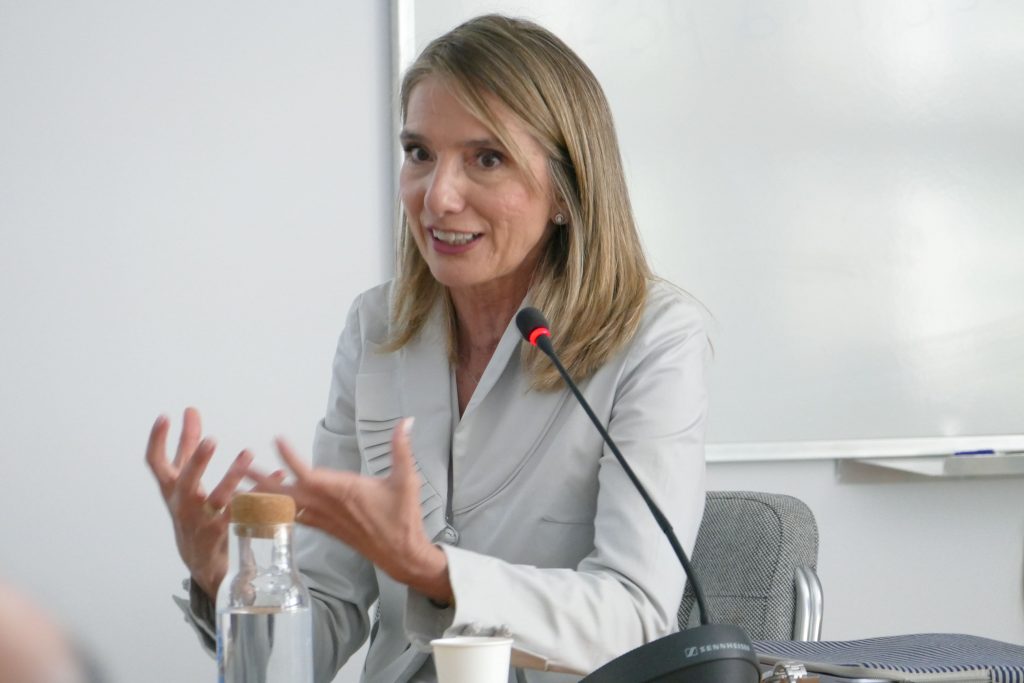
Rosa Gallardo, Director of the International Chair of Artifical Intelligence (University of Córdoba – Spain)
Professor Rosa Gallardo, Director of the International Chair on Artificial Intelligence and Agriculture at the University of Córdoba (Spain), has spoken with the GRASS CEILING communication team and has shared her vision on how to improve the relationship between rural female entrepreneurship, farm connectivity, and the public policies being implemented in various European countries. This prestigious academic is convinced that public policies must offer solutions that take into account the real-life experience of rural women. This means going beyond just providing technology and ensuring connectivity, offering adapted training, and fostering the active participation of rural entrepreneurs in digital rural networks using a gender approach.
The CAP 2023-2027 incorporates digital transformation as a fundamental element to achieve a more intelligent, sustainable, and competitive agriculture in Europe. Member States have the flexibility to design their own strategic plans to implement these measures and adapt them to their specific needs, however our project participants in 9 countries report that agricultural digital transformation hinges on reliable connectivity. You suggested that resolving this is simple. Could you explain further?
Indeed, connectivity is one of the obstacles we face in advancing the use of digital tools that allow crop and livestock farms to optimise their decisions. To overcome this challenge, new technologies are emerging that provide reliable and sufficient connectivity to these areas, many of which are combined with each other. These technologies already have real-world examples of application in rural areas where connectivity was posing a problem for the advancement of digital transformation.
The first of these is LPWAN (Low Power Wide Area Networks), which allows small amounts of data to be transmitted over long distances with very low energy consumption, making them ideal for sensors distributed across a farm. Examples of this type of network include LoRaWAN, Sigfox, and NB-IoT. Another possibility is satellite connectivity, with new Low Earth Orbit (LEO) satellite constellations such as Starlink (SpaceX) and OneWeb, changing the landscape of rural connectivity by providing high-speed internet access in areas where neither fibre nor 4G are available. Another technology is mesh networks, which are a local solution that extends a network’s coverage by creating nodes that communicate with each other. Combining several technologies is often the best strategy. For example, sensors that communicate via LoRaWAN with a gateway installed on the farm, which in turn transmits the data via 4G or satellite.
In any case, rural fibre optic infrastructure, although more costly and slow to deploy, remains the most robust and long-term solution. National and European plans are being developed to bring fibre to small municipalities and key agricultural areas.
In Zaragoza you talked about attracting young people to the agrifood system. What digital transformation elements in our sector and rural areas would most effectively draw younger individuals to primary industries?
Without a doubt, the pace of digital transformation will be directly linked to our capacity to attract and integrate young people into the sector. The digital transformation of the agrifood sector represents a key opportunity not only to improve farms’ efficiency and sustainability but also to address one of the greatest challenges facing rural areas: generational renewal. Digitalisation has the potential to change the perception that new generations have of the agricultural sector, as it involves the use of tools that transform the way of working, improve quality of life, and open up new professional profiles linked to agriculture: from innovation technicians to digital entrepreneurs.
Today, a young person can manage their farm remotely from a mobile phone, use drones to monitor crops, apply predictive models to inform agronomic decisions, or sell their products directly through digital channels. This reality also aligns with the values of new generations, particularly concerning environmental sustainability, animal welfare, and the fight against climate change. Furthermore, the improvement in connectivity in rural areas that we mentioned earlier facilitates access to digital services, online training, remote work, and collaborative networks, which reduces isolation and expands employment, entrepreneurial and professional development opportunities in rural areas.

For all of this to translate into a real incorporation of young people into the sector, it is necessary to ensure that all territories have adequate digital infrastructures, promote specialised training programmes, foster innovative business models, and give visibility to young people who are already transforming the countryside through technology and sustainability, as role models. It is essential to design and implement effective strategies for the integration of young people into agriculture. Addressing the generational renewal problem is not an easy task, as support for joining the agricultural sector is not just a matter of economic incentives; it is also necessary to raise general awareness about the economic, social, and environmental importance of replenishing the agricultural workforce.
Rosa Gallardo
University of Córdoba (Spain)
“Addressing the generational renewal problem is not an easy task, as support for joining the agricultural sector is not just a matter of economic incentives; it is also necessary to raise general awareness about the economic, social, and environmental importance of replenishing the agricultural workforce”.
You stress the importance of people in digital transformation. Rural women entrepreneurs highlight the difficulty of their entrepreneurial journeys. Being more social, community-oriented, and committed models, they don’t always receive the support they need, and suffer the consequences of excessive bureaucracy,. How can digitisation enhance their well-being and strengthen their business models?
If we start from the premise that digital transformation must focus on people, then supporting rural female entrepreneurs is not only fair and necessary but also strategic. These women represent a driving force for innovation, sustainability, and social cohesion. In this context, well-directed digitalisation can become a key ally to improve the living conditions and professional development of female entrepreneurs in rural areas. However, to achieve this, the reality they face must be taken into consideration. Many of them launch projects with a strong social, community, or environmental focus that don’t always fit into classic business models.
Digital tools can improve the well-being of rural entrepreneurs and help boost their business models by streamlining procedures, automating administrative processes, or enabling remote access to technical and legal advice. Furthermore, digitalisation allows access to support, training, and marketing networks that have traditionally been beyond the reach of many rural women. Through virtual environments, they can participate in learning communities, receive mentoring, attend online workshops, or forge partnerships with other entrepreneurs. These networks are not only key for professional growth but also for combating isolation, strengthening leadership, and building confidence. Economically, digital technologies allow entrepreneurs to expand the reach of their products and services beyond the local area. From creating online stores to managing social media, digitalisation can therefore open up new streams of income, differentiation, and market positioning without them having to leave their local area.
Artificial Intelligence (AI) can enhance weather forecasting, pest detection, administration, decision-making, analysis, and supply chains in the agrifood sector. In what ways can digital transformation support rural women’s entrepreneurship by facilitating a better work-life balance?
A proper digital transformation of rural areas can be a key lever for promoting work-life balance and, in turn, boosting female entrepreneurship in environments where caregiving obligations, lack of services, and geographical isolation clearly hinder women’s professional development.
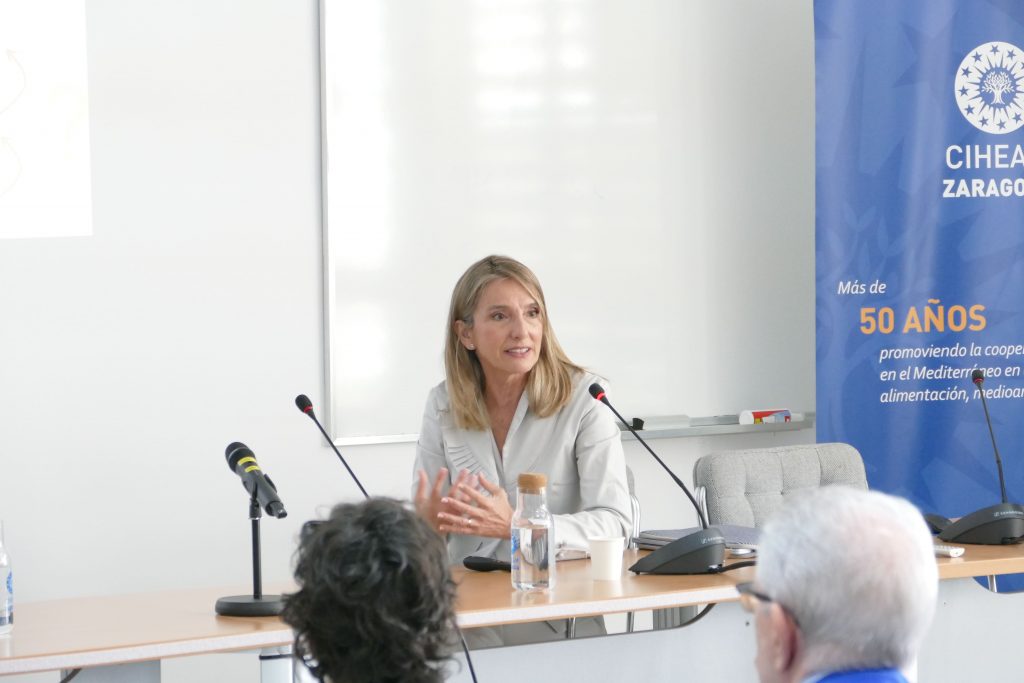
First, digitalisation reduces the need for constant physical presence in certain processes. Thanks to online management tools, e-commerce platforms, virtual customer service, or automated systems, many tasks can be performed from home or at more flexible times. This allows women to organise their time in a way that is more compatible with their family responsibilities, without having to give up their economic or entrepreneurial activity.
In addition, access to remote digital training is essential. Many rural women cannot frequently travel to urban centres for training or to participate in entrepreneurship programmes. The virtualisation of these resources—provided it is accompanied by good connectivity and technical support—allows them to continue learning, update their skills, and develop key competences without having to leave their local areas or their family responsibilities.
Another fundamental aspect, as previously mentioned, is access to online support and collaboration networks, which not only foster professional growth but also offer a space for listening and support. Feeling part of a community, even a virtual one, helps to reduce the feeling of isolation and to share strategies for managing both business and daily life challenges.
Moreover, digitalisation can also facilitate new forms of decentralised rural employment that adapt to work-life balance needs: project-based work, provision of digital services, remote work, or e-commerce of locally produced goods. These models make it possible to generate income without having to leave the area or suffer rigid working-hours.
However, for this to be truly effective, the digital transformation must be accompanied by appropriate public policies. It is not just about providing technology but about ensuring connectivity, facilitating access to devices, offering tailored training, and, above all, designing solutions based on the real experiences of rural women.
Rosa Gallardo
University of Córdoba (Spain)
The digital transformation must be accompanied by appropriate public policies. It is not just about providing technology but about ensuring connectivity, facilitating access to devices, offering tailored training, and, above all, designing solutions based on the real experiences of rural women.
Concerning bias in digital technologies and AI, are inclusive models being developed to prevent these technologies from exacerbating current inequalities in agriculture? If so, how are these models being integrated into European public policy?
Technologies should not create new gaps or exacerbate existing ones. This can happen if models ignore the heterogeneity of agricultural reality. It is true that in Europe, progress is being made towards a more inclusive and responsible development of AI in the agricultural sector.
The annual report from the European Parliament’s Panel for the Future of Science and Technology (STOA) on AI in the food sector emphasises the importance of incorporating ethical and social values such as reliability, transparency, fairness, and accountability, when designing AI systems. It explicitly raises the need for “people-centred” models that enhance local knowledge without displacing it. This translates into concrete regulatory instruments such as the EU Artificial Intelligence Act, in force since August 1, 2024. In this sense, the Common Agricultural Policy (2023-27) includes digitalisation as a cross-cutting objective, supporting AI projects that combine technological innovation with sustainability and equity criteria.
What factors or barriers might restrict women’s involvement in digital transformation within the agricultural sector, and what measures are being taken to minimise them (if any)?
The participation of women in digital transformation processes within the agricultural sector is limited by various types of barriers, which in some cases are self-reinforcing. One of the main barriers is unequal access to technology: many rural women still have less access than men to digital devices, internet networks, or digital services, which hinders their active integration into agricultural digitalisation processes. Another barrier is the lack of specific digital training, especially that which is adapted to their realities and needs. Training programmes often don’t take into account the need for work-life balance, flexible hours, or the prior knowledge levels that many rural women require. Furthermore, technical training sometimes fails to consider digital skills applicable to more social, sustainable, or community-based business models, in which many women are involved.
Gender stereotypes that continue to associate technology with masculinity also play a role. This perception limits many women’s digital self-confidence and their willingness to participate in innovative processes. Moreover, excessive digital bureaucracy and the lack of support services also act as a deterrent. Many female entrepreneurs feel overwhelmed by complex electronic procedures, unintuitive platforms, or the constant need for updates. Without support resources, this leads to frustration and exclusion.
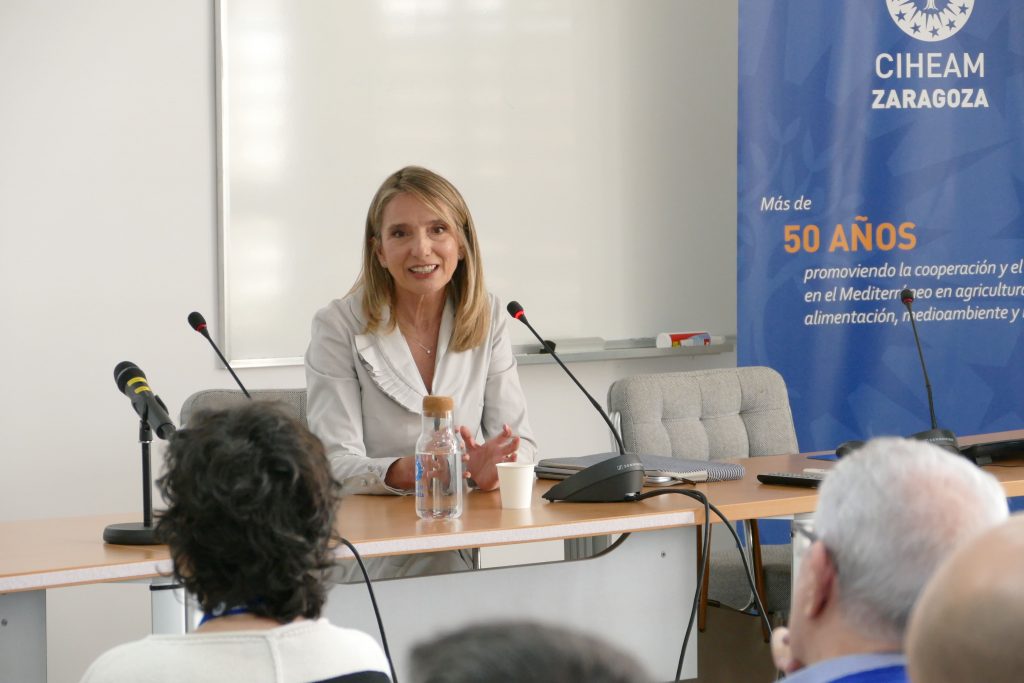
“It is necessary to combine access to technology, tailored training, technical support, the visibility of female role models in the technological field, and a profound review of the roles that limit the digital autonomy of women in rural areas”.
The barriers are real, and they are significant, but a number of initiatives and policies are being promoted to address this situation. For example, programmes supported by the CAP (Common Agricultural Policy) and the Spanish Recovery Plan are driving digital training initiatives with a gender focus. Training spaces are being promoted that are adapted for rural women, especially in technological skills applied to agrifood management, digital marketing, or traceability. There are also examples of social innovation pilot projects where digitalisation is linked to business models led by women, with a more sustainable and community-based approach.
Much remains to be done to reduce the gender digital divide in the agricultural sector. It is necessary to combine access to technology, tailored training, technical support, the visibility of female role models in the technological field, and a profound review of the roles that limit the digital autonomy of women in rural areas.
What positive message can we share with rural women entrepreneurs regarding the opportunities presented by digitalisation? Crucially, what avenues are available for them to improve these processes and actively participate in them?
Female entrepreneurs in rural areas are an essential element in the transformation of food systems and the development of rural territories. Digital transformation is one more dimension of these integral transformation processes, and rural female entrepreneurs must be an active and essential part of them.
The path isn’t easy, but technology, when put at the service of people, can open up previously impossible avenues: improving work-life balance, expanding markets, accessing support networks, making projects more sustainable, and gaining autonomy and visibility. It is possible to work to redefine the use of digital technology based on their own values, rhythms, and entrepreneurial styles.
The active participation of rural female entrepreneurs is both necessary and possible through various methods: participating in training programmes, promoting digital networks of rural women, strengthening relationships with cooperatives, universities, or technology centres, taking up space, and making their essential role more visible. Rural female entrepreneurs are vital, not only for sustaining the local economic fabric, but also for achieving a more people-focused digital transformation firmly rooted in local communities.
Rosa Gallardo
University of Córdoba (Spain)
Female entrepreneurs in rural areas are an essential element in the transformation of food systems and the development of rural territories“.