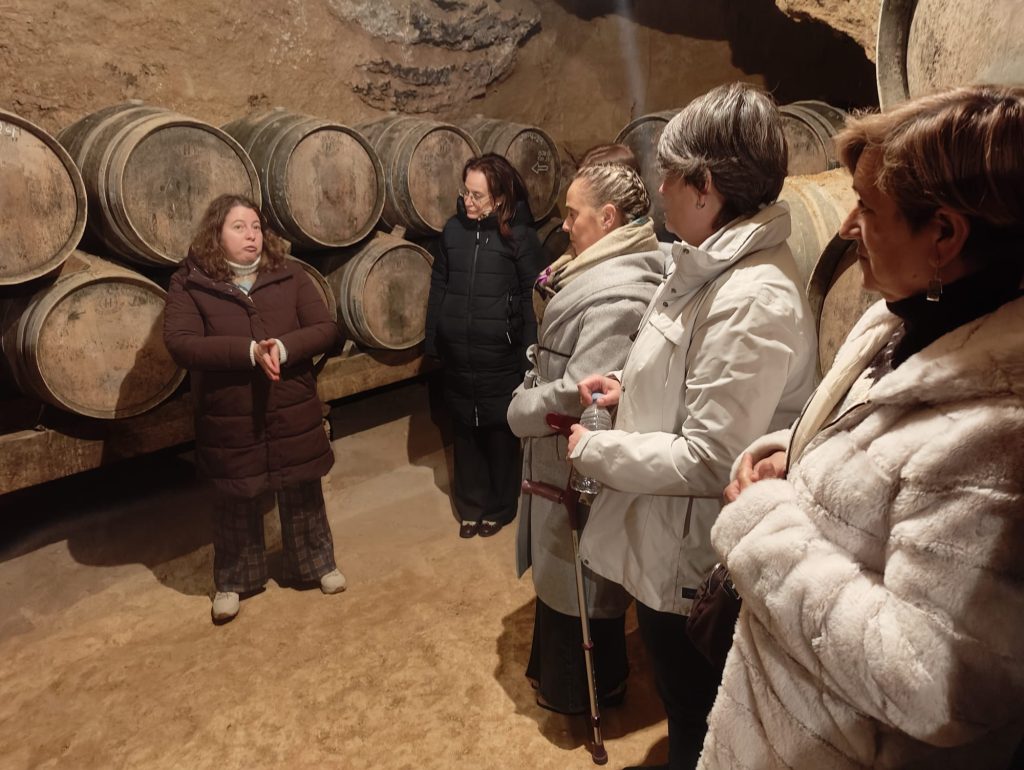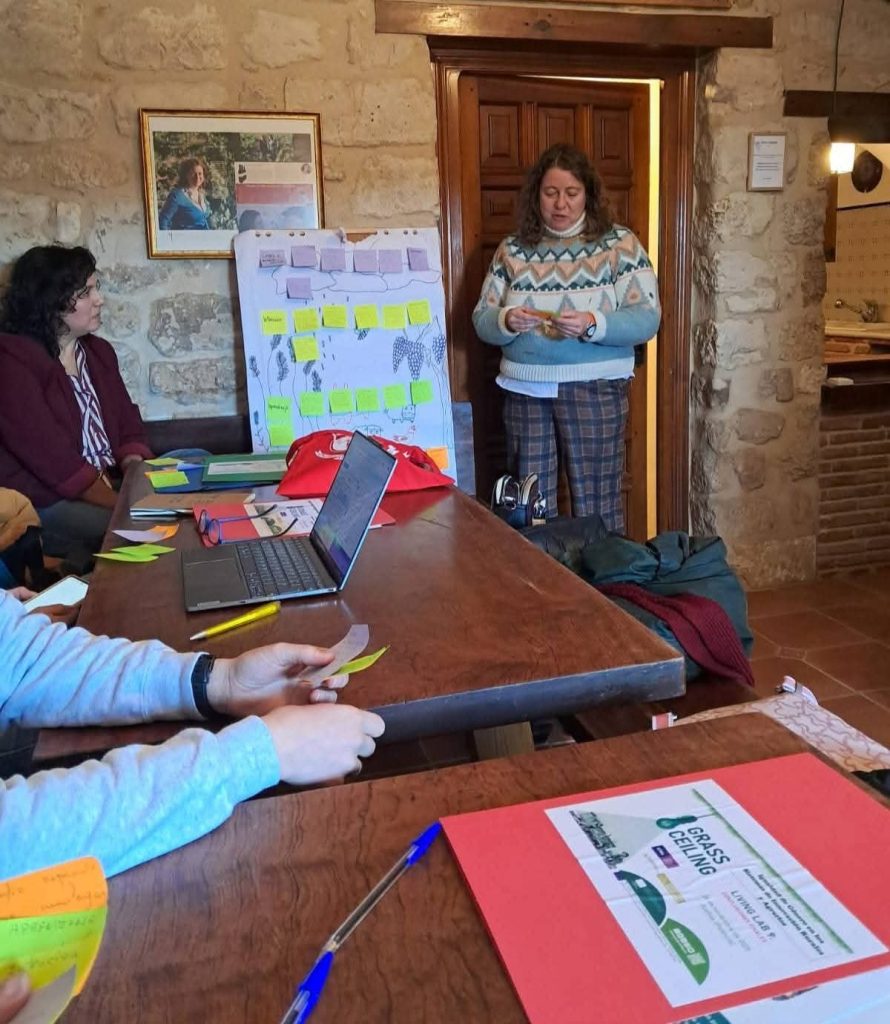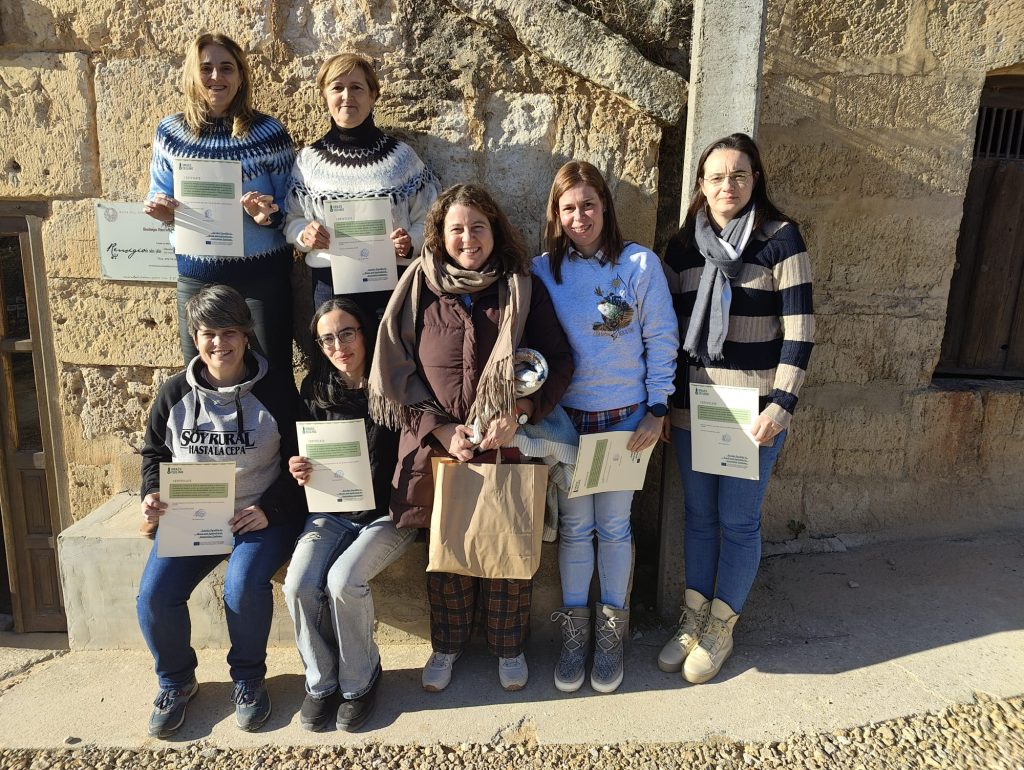
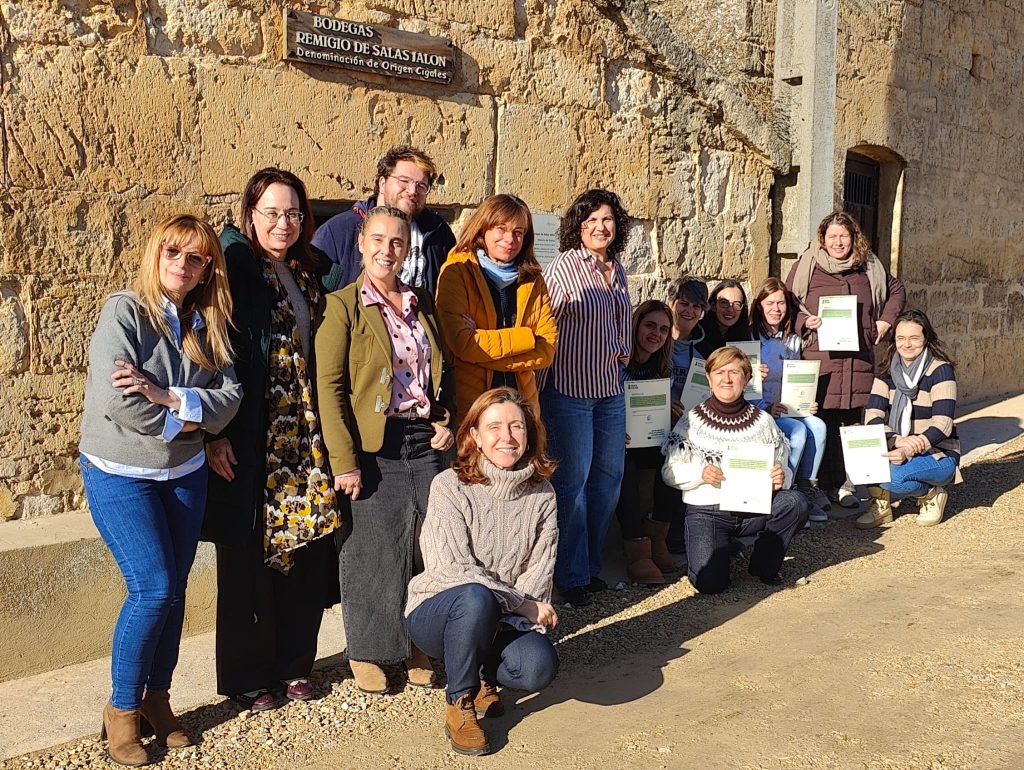
After three years of exchange, learning, and collaboration, the women of the Spanish Living Lab of the GRASS CEILING project held their final meeting at the Remigio Salas Winery, a space where they shared achievements, challenges, and future commitments.
The Spanish Living Lab of the European GRASS CEILING project, dedicated to promoting women-led innovation in the agricultural sector, held its ninth and final meeting this Wednesday. The event took place at the Remigio Salas Winery, a symbolic setting that reflects the territorial roots and success of an agri-food activity in a rural area that combines innovation and tradition, led by a woman, Amada de Salas, who has recently been recognized with several regional and national awards.
The meeting was attended by participating women farmers and livestock producers; the academic team from the Palencia University Campus (University of Valladolid), responsible for the scientific coordination of the Living Lab and led by Professor Margarita Rico; and a representative from Cooperativas Agro-alimentarias de España, another of the project’s partner entities.
The final session had a special tone, combining collective reflection with recognition of the path travelled during the three years of work. Throughout the day, a synthesis of some of the conclusions was presented, highlighting the diversity and relevance of the agricultural innovations led by women, which encompass not only technological dimensions but also sustainability, diversification, sector visibility, and network creation. The need to strengthen gender-sensitive public policies was also emphasized—policies that support women in accessing resources, training, financing, and work–life balance. Spaces like this Living Lab reflect the importance of networking to reinforce innovative identity, confidence, and cooperation among rural women in the agricultural sector.
Through a final dynamic, all participants expressed what this three-year journey of reflection had meant to them, making visible the human, professional, and emotional value of the process and reinforcing the sense of belonging to a network of women leaders in rural areas. Particular emphasis was placed on the significant changes still needed for these women to fully develop their work, with explicit reference to bureaucratic burdens, financial difficulties in making necessary investments to digitalize processes—given the medium size of their farms—and barriers to accessing management positions in sector organizations, often driven by established patriarchal power structures.
The representative from Cooperativas Agro-alimentarias de España highlighted the value of such initiatives in giving visibility to female leadership and strengthening women’s participation in decision-making bodies in the agricultural sector, particularly within cooperatives. The UVa team stressed that the learnings and connections generated go beyond the project itself and should serve to promote gender-sensitive public policies that support innovative processes led by women in rural areas most affected by depopulation and socioeconomic deterioration.
Next week, the final closing meeting of the project will take place in Brussels, with representatives from all GRASS CEILING consortium countries. The general conclusions reached will be presented, and an event showcasing women-led innovative best practices will be held. Representing Spain will be the project coordinator and Marta Llorente, a pig farmer and wine producer from Zazuar (Burgos), who will present her initiative and her experience as a participant in the Spanish Living Lab.