Lithuania

The innovator Eglė Valuckaitė-Stašauskienė, from our Lithuanian Living Lab, receives local recognition

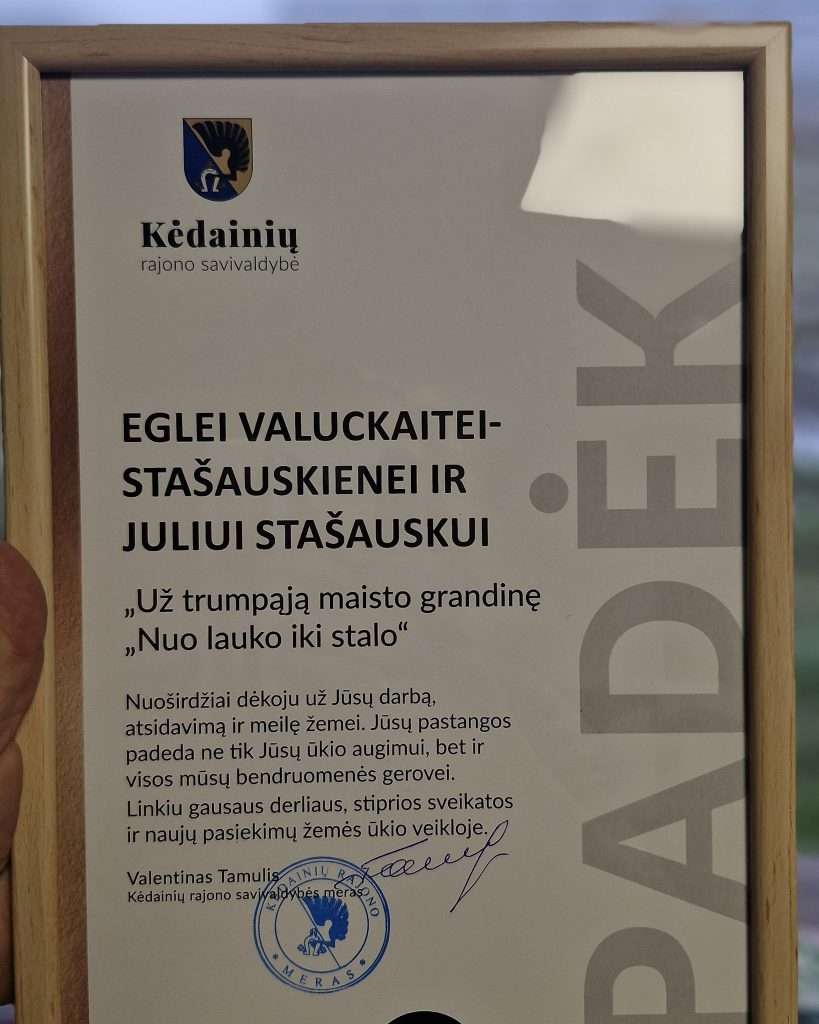
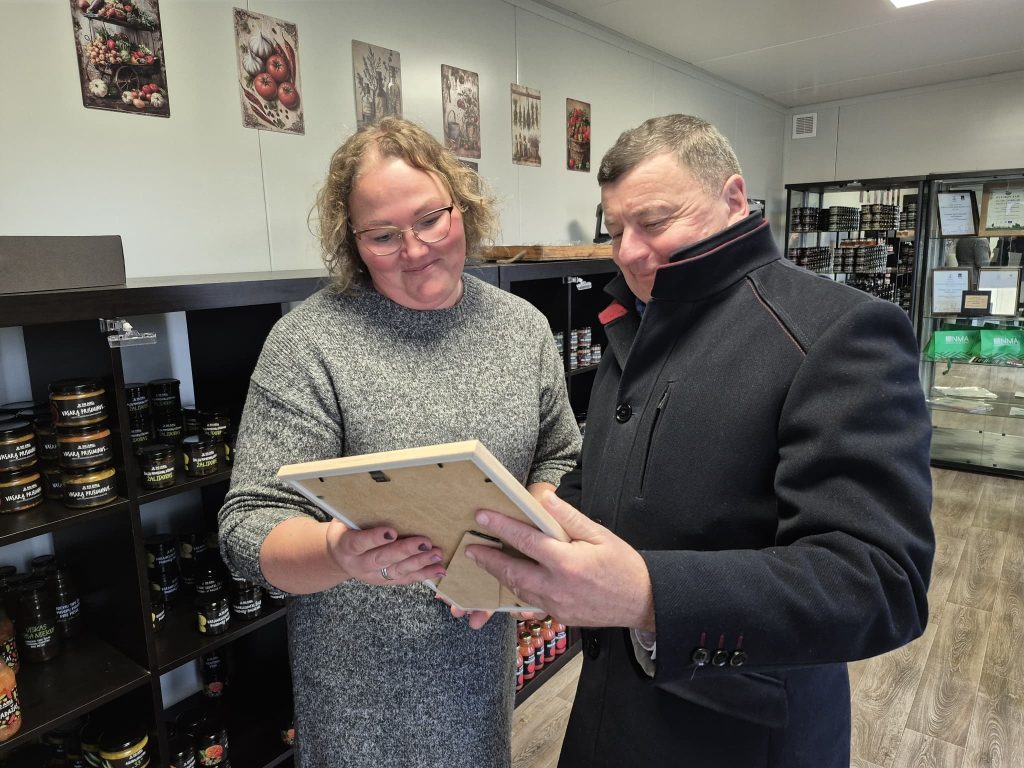
We are pleased to celebrate the achievement of Eglė Valuckaitė-Stašauskienė, participant of the GRASS CEILING Lithuanian Living Lab, whose family farm 50 Arų. Darbo ir džiaugsmo ūkis has been recognised by the Mayor of the Kėdainiai District.

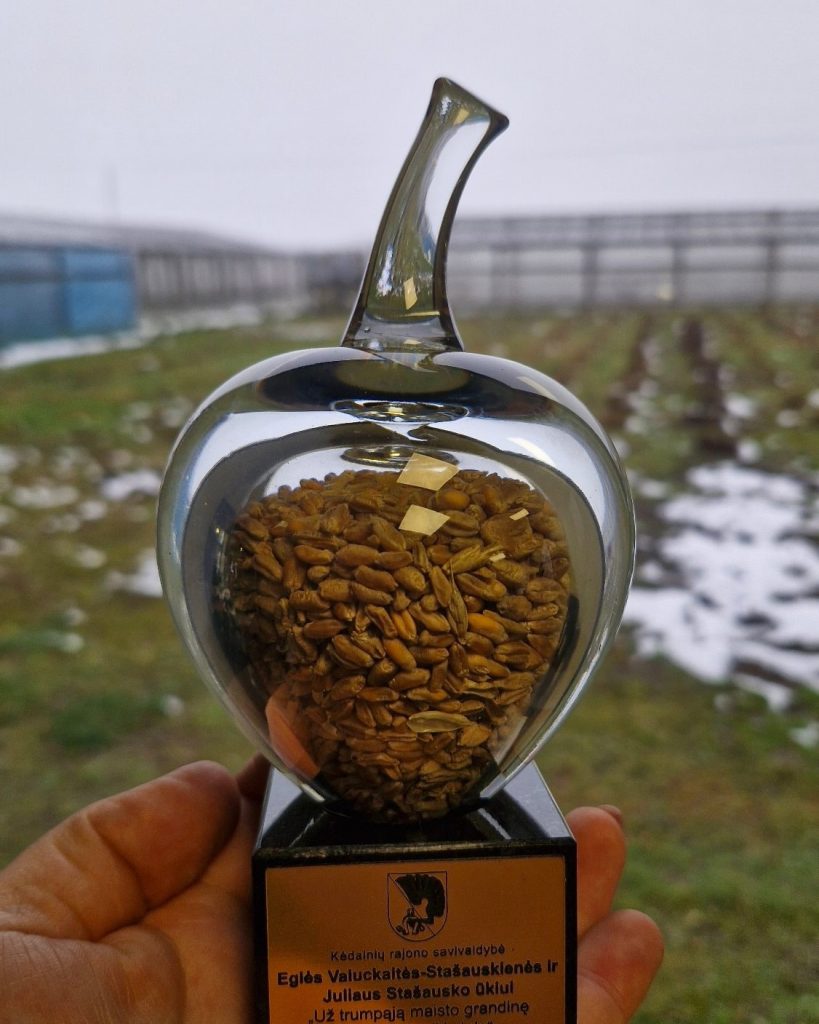
The award highlights the farm’s work in developing a short food supply chain, embracing a true “from field to table” model. Eglė noted how meaningful it is “to be noticed in the context of the entire Kėdainiai region”, particularly as a small but highly dedicated and responsible farm.

We warmly congratulate Eglė for her perseverance, commitment to sustainability, and innovative approach—an inspiring example of women-led rural innovation.

Egle receiving local recognition - award itself
Egle receiving local recognition - certificate
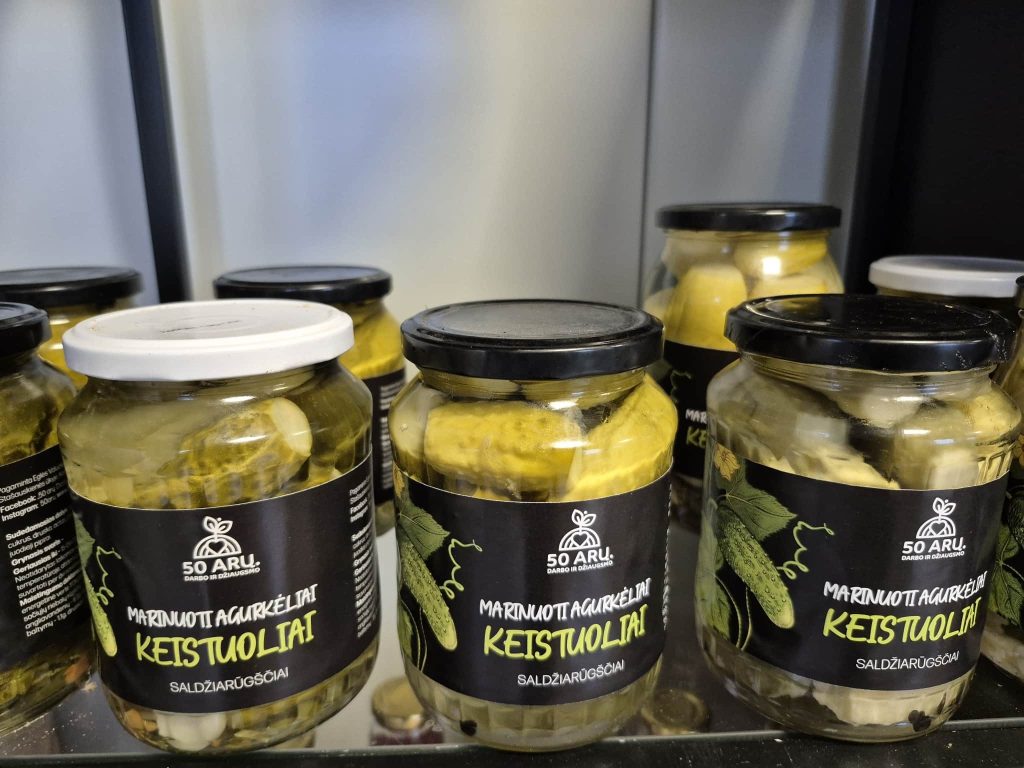
food jars from Egle's farm
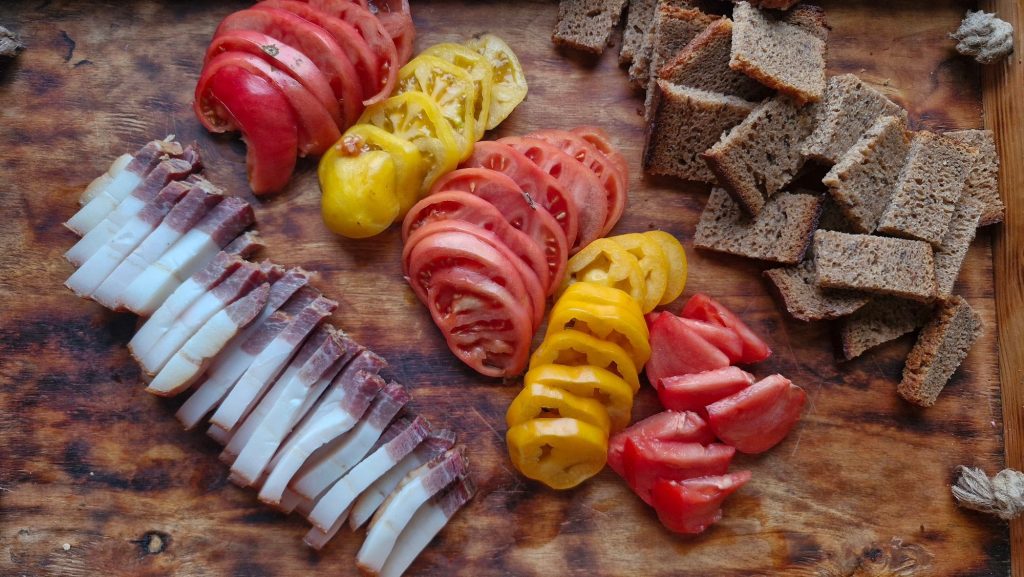
Food from Egle's farm

The innovator Eglė Valuckaitė-Stašauskienė, from our Lithuanian Living Lab, receives local recognition Read More »

Las Lithuanian Living Lab

Įgalinimo sesija: 9-asis GRASS CEILING gyvosios laboratorijos susitikimas (Kaunas, Lietuva)

Lapkričio 14 d., KTU Santakos slėnis

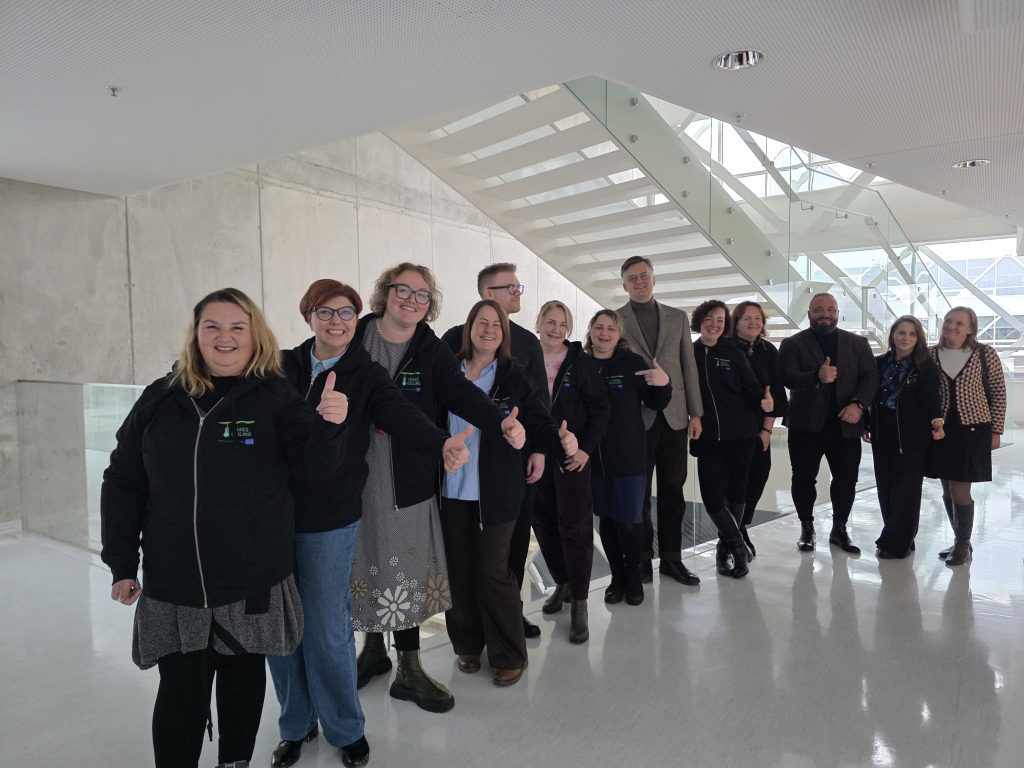
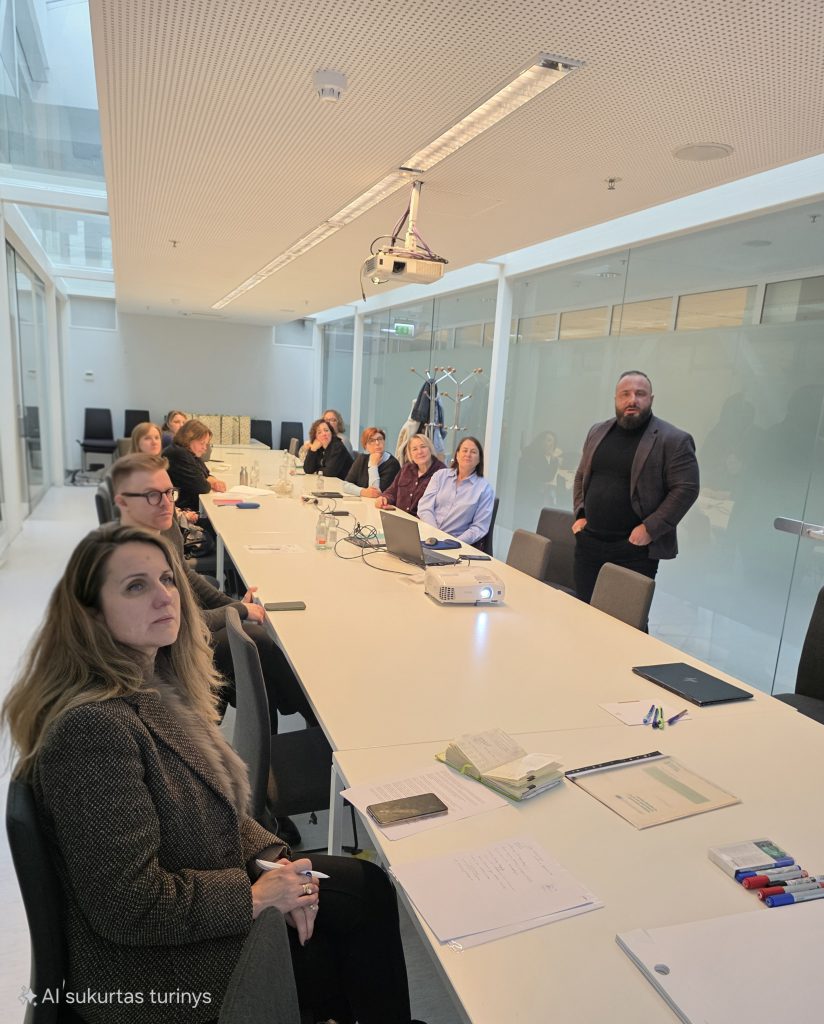
Džiaugiamės galėdami pasidalinti akimirkomis iš devintojo – ir paskutiniojo – GRASS CEILING Lietuvos moterų novatorių gyvosios laboratorijos susitikimo, vykusio tema Įgalinimas. Šis baigiamasis susitikimas pažymėjo ne tik trejų metų kelionės pabaigą, bet ir moterų inovacijų, drąsos bei bendrystės žemės ūkyje šventę.

Kiekviename gyvosios laboratorijos susitikime mokėmės, dalijomės patirtimi, eksperimentavome ir augome kartu. Šis paskutinis susitikimas nebuvo išimtis.

Susitikime dalyvavo LSMC EKVI GRASS CEILING projekto komandos nariai: Tomas Baležentis (komandos vadovas), Dalia Štreimikienė, Justas Štreimikis, Vaida Šapolaitė ir Vida Dabkienė.

Susitikimo programoje buvo pristatyti šie pranešimai:

Vida Dabkienė, LSMC EKVI, gyvosios laboratorijos akademinė vadovė – Nuo idėjos iki pokyčio: gyvųjų laboratorijų patirtys skatinant inovacijas Lietuvos moterų ūkiuose
Vaida Šapolaitė, LSMC EKVI tyrėja – GRASS CEILING projekto atviro masinio nuotolinio mokymo kursų pristatymas
Tomas Karpavičius, verslo angelas, profesionalus valdybų narys ir inovacijų ekosistemų ekspertas, aktyviai įsitraukęs į akademinę veiklą – Nuo startuolių iki sisteminių pokyčių: verslo vaidmuo inovacijų ekosistemose
Renata Rudnicka, gyvosios laboratorijos praktinė vadovė, AgriFood Lithuania DIH – AgriFood Lithuania veikla ir naujienos/projektai, galimas įsitraukimas
Erika Ribašauskienė, LSMC EKVI tyrėja – Sumanaus kaimo link

Ši kelionė būtų buvusi neįmanoma be nuostabių moterų, dalyvavusių Lietuvos gyvojoje laboratorijoje. Nuoširdžiai dėkojame:

Karališka Uoga, Daiva Šinkevičienė, Šeimos ūkis „Geltoni botai“, Ina Grecka, Bačkonių ekologinis ūkis, Rasa Prusakova, 50 Arų. Darbo ir džiaugsmo, Eglė Valuckaitė-Stašauskienė, Saldūs žiedai, Justė Jankauskienė, Gurkė, Justina Kočetova, Rūta Aliukonienė, Lina Vyšniauskaitė, Aliejus – sveikatai ir grožiui.

Jūsų drąsa, idėjos, atvirumas, kūrybiškumas ir atsidavimas pavertė šią gyvąją laboratoriją tikra įgalinančia erdve.

Viso GRASS CEILING projekto metu Lietuvos gyvoji laboratorija tapo vieta, kur moterys ūkininkės stiprina pasitikėjimą, įgyja naujų žinių, eksperimentuoja su inovacijomis, randa sąjungininkų ir mentorių, bei atranda naujas kryptis savo ūkiams ir bendruomenėms. Sukaupta patirtis praplėtė gebėjimus ir žinias, sustiprino pasitikėjimą ir atvėrė naujas galimybes ateičiai. Įgalinimas gimsta ten, kur žmonės susitinka, mokosi, dalijasi ir drįsta veikti kartu.
Ir ši gyvoji laboratorija tapo būtent tokia vieta.

Last Living Lab Lithuania
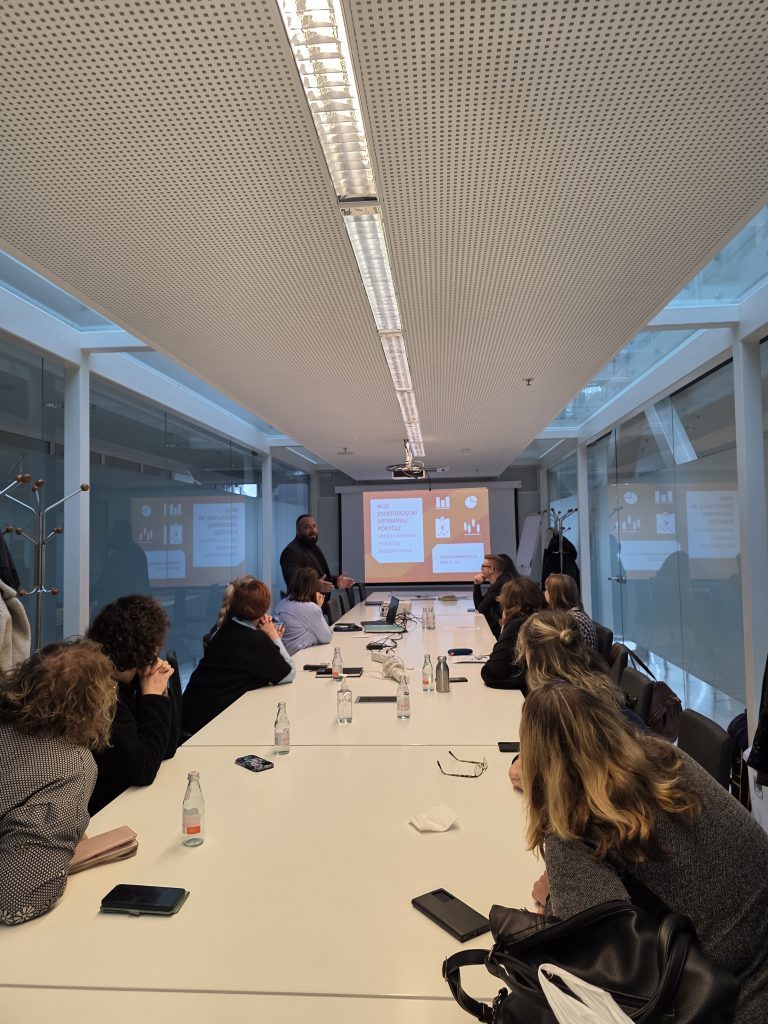
Final meeting (lithuanian living lab)

Įgalinimo sesija: 9-asis GRASS CEILING gyvosios laboratorijos susitikimas (Kaunas, Lietuva) Read More »

Las Lithuanian Living Lab

Empower Session: 9th GRASS CEILING Living Lab Meeting (Kaunas, Lithuania)

14 November, KTU Santaka Valley

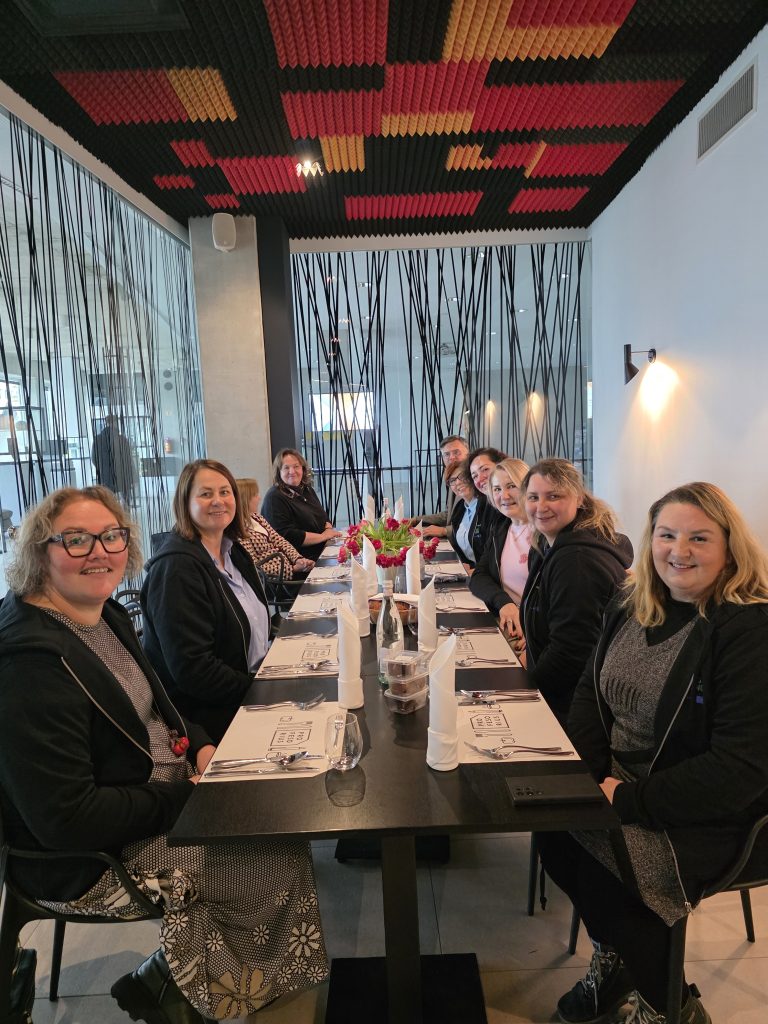
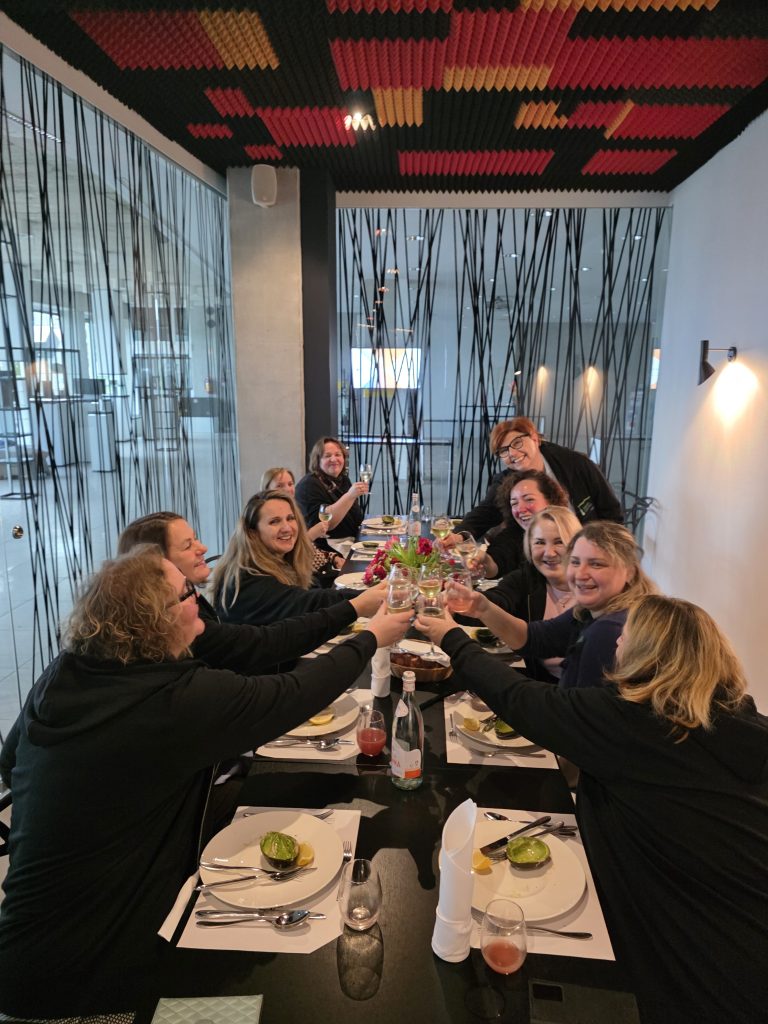
We are delighted to share highlights from the ninth — and final — meeting of the Lithuanian GRASS CEILING Women Innovators Living Lab, held under the theme EMPOWER. This closing session marked not only the culmination of a three-year journey but also a celebration of women’s innovation, courage, and community in agriculture.

At each Living Lab meeting they learned, exchanged, experimented, and grew together. This final gathering was no exception.

The members of the LCSS GRASS CEILING research team took part in the meeting: Tomas Baležentis (team leader), Dalia Štreimikienė, Justas Štreimikis, Vaida Šapolaitė, and Vida Dabkienė.

The meeting programme included inspiring presentations from:

• Vida Dabkienė, LCSS, academic co-lead – From Idea to Change: Living Lab experiences in fostering innovation in Lithuanian women-led farms
• Vaida Šapolaitė, LCSS researcher – Introducing the GRASS CEILING MOOC: Open online training programme
• Tomas Karpavičius, business angel, professional board member, and innovation ecosystem expert with strong engagement in academic activities – From start-ups to system transformation: the role of business in innovation ecosystems
• Renata Rudnicka, practical co-lead, AgriFood Lithuania DIH – Activities, new projects and opportunities for collaboration
• Erika Ribašauskienė, LCSS researcher – Towards the Smart Village

This journey would not have been possible without the incredible women who took part in the Lithuanian Living Lab. We warmly thank:

Karališka Uoga, Daiva Šinkevičienė, Šeimos ūkis „Geltoni botai“, Ina Grecka, Bačkonių ekologinis ūkis, Rasa Prusakova, 50 Arų. Darbo ir džiaugsmo, Eglė Valuckaitė-Stašauskienė, Saldūs žiedai, Justė Jankauskienė, Gurkė, Justina Kočetova, Rūta Aliukonienė, Lina Vyšniauskaitė, Aliejus – sveikatai ir grožiui.

Your courage, ideas, honesty, creativity, and commitment shaped this Living Lab into a true space of empowerment.

Throughout the GRASS CEILING project, the Lithuanian Living Lab has become a space where women farmers build confidence, gain new knowledge, experiment with innovations, find allies and mentors, and discover new pathways for their businesses and communities. The experiences gained have expanded skills and knowledge, strengthened trust, and opened new directions for the future.

Empowerment grows where people meet, learn, share, and dare together. And this Living Lab became exactly that.

Last Living Lab Lithuania
Final meeting (lithuanian living lab)

Empower Session: 9th GRASS CEILING Living Lab Meeting (Kaunas, Lithuania) Read More »

GRASS CEILING innovator Justina Kočetova wins culinary innovation award in Lithuania

On 14 November, during the Business Day celebration in Kėdainiai District, the local business community gathered to honour entrepreneurs of all kinds — from small business owners to company leaders, business clubs, associations, and service providers.

We are delighted to share that GRASS CEILING participant Justina Kočetova received this year’s Culinary Innovation Award.

The recognition is especially symbolic, as Justina noted, because the celebration coincided with International Pickled Cucumber Day. For the competition, she presented her latest creation: white chocolate with freeze-dried fermented cucumbers: a bold and original product that impressed the jury.

Warmest congratulations to Justina on this well-deserved achievement!

GRASS CEILING innovator Justina Kočetova wins culinary innovation award in Lithuania Read More »

Ina Grecka receiving the 'Best farmer of Zujunai Eldership 2025" award

Recognition and gratitude to farmers in Vilnius District: Ina Grecka named Best Farmer of Zujūnai Eldership 2025

On September 13th, beneath the grandeur of the historic Baltosios Vokės Manor, residents and guests of Vilnius District gathered to celebrate the 30th Harvest Festival – a vibrant tradition that honors the unity of local cultures, gratitude for the land, and those who care for it.

In recognition of their dedication to the land, commitment to farming, and respect for cultural traditions, Vilnius District Municipality paid tribute to the true heroes of the day – its farmers.

Mayor Robert Duchnevič presented acknowledgments and financial awards to 23 outstanding farmers representing different elderships.

Among them was Ina Grecka, proudly representing Zujūnai Eldership – a GRASS CEILING Living Lab participant and a woman farmer known for her hard work, innovation, and community engagement.

These awards are more than a token of appreciation – they are a sincere acknowledgment of the ongoing efforts and valuable contribution of farmers to the well-being and sustainability of the Vilnius region.

Picture of the best farmer award of Ina Grecka
Picture of Ina Grecka holding her award (best farmer award) on stage

Recognition and gratitude to farmers in Vilnius District: Ina Grecka named Best Farmer of Zujūnai Eldership 2025 Read More »

Ina Grecka receiving the 'Best farmer of Zujunai Eldership 2025" award

Padėka ir pripažinimas Vilniaus rajono ūkininkams: Ina Grecka paskelbta geriausia Zujūnų seniūnijos ūkininke 2025 metais

Rugsėjo 13 d., prie didingo Baltosios Vokės dvaro, Vilniaus rajono gyventojai ir svečiai susirinko švęsti 30-osios Derliaus šventės – spalvingos tradicijos, kuri puoselėja vietinių kultūrų bendrystę, dėkingumą žemei ir pagarbą tiems, kurie ją dirba.

Įvertindama jų atsidavimą žemei, ūkininkavimo darbams ir pagarbią laikyseną kultūros tradicijų atžvilgiu, Vilniaus rajono savivaldybė pagerbė tikruosius šios dienos herojus – ūkininkus.

Rajono meras Robertas Duchnevičius įteikė padėkas ir piniginius apdovanojimus 23 iškiliausiems seniūnijų ūkininkams.

Tarp jų – Ina Grecka, atstovaujanti Zujūnų seniūnijai, aktyvi GRASS CEILING gyvosios laboratorijos dalyvė ir ūkininkė, žinoma dėl savo darbštumo, inovatyvumo bei įsitraukimo į bendruomenės veiklą.

Šie apdovanojimai – tai ne tik simbolinė padėka, bet ir nuoširdus pripažinimas už nuolatinį darbą bei svarų indėlį į Vilniaus rajono gerovę ir tvarumą.

Picture of the best farmer award of Ina Grecka
Picture of Ina Grecka holding her award (best farmer award) on stage

Padėka ir pripažinimas Vilniaus rajono ūkininkams: Ina Grecka paskelbta geriausia Zujūnų seniūnijos ūkininke 2025 metais Read More »

Juste Jankauskienė

Juste Jankauskienė: “Family life is tricky in the summer, with more work and the children off school”

Juste Jankauskienė , a beekeeper from Lithuania, has chosen a life deeply connected to nature. With a focus on sustainable beekeeping, her work is not about competing with large producers but about keeping her bees happy and healthy. To achieve this, she plants specific flowers that help her bees collect high-quality honey and promotes eco-friendly practices within her community. “We’re trying to be small, but in that sense, we’re trying to keep our bees happy,” Juste explains.

In addition to caring for her bees, Juste dedicates herself to educating her community about the importance of beekeeping. She participates in local fairs, where she teaches people about the ecological role of bees, how they produce honey, and why it is crucial to protect them. This educational effort also includes promoting innovative products like whipped honey. “We’re trying to go to these fairs and explain to them what bees do, how they do it, what’s going on, and the ecological side of keeping bees.”

However, Juste’s life as a beekeeper is not without its challenges. Balancing her work in the fields with family responsibilities is particularly difficult in summer when schools and kindergartens close. “It’s a massive issue. In summer, while the bees are collecting honey, you have to look after your children, and you don’t know where to put them. Grandparents are also working… It’s chaos,” she admits. While her older children are more independent, her youngest daughter requires constant attention, adding another layer of complexity to her already busy days.

Despite the difficulties, Juste finds joy and peace in working with bees. “I love being in nature, working with the bees, and just hearing all that buzz. It makes you so relaxed. And the smell of honey… it’s amazing.”

Juste is also part of Grass Ceiling, a network of entrepreneurial women that has provided her with invaluable knowledge and support. “I’m so happy to participate in Grass Ceiling. There are so many ladies who share all their knowledge. They give you a lot of advice on how to do this or that,” she says gratefully. This community has enabled her to access information that would otherwise be scattered and hard to find, strengthening her work and confidence.

Juste shows that beekeeping is not just an economic activity but a lifestyle combining sustainability, a connection to nature, and mutual support among women. Her message underscores the importance of valuing bees and fostering strong, supportive rural communities.

Juste Jankauskienė: “Family life is tricky in the summer, with more work and the children off school” Read More »

Lina Vyšniauskaitė

Lina Vyšniauskaitė: “The adoption of modern technologies has been essential to my business model”

Lina Vyšniauskaitė, a farmer from northern Lithuania, has transformed her 2006-established farm in Joniškis into a leading cold-pressed oil producer since 2019. Her primary focus is on hemp, flax, and milk thistle seed oils, which she grows and processes entirely on her family farm.

The production of these oils involves cold pressing, ensuring the preservation of their natural properties. Every stage, from seed cultivation to the final product, is meticulously supervised to guarantee exceptional quality. This commitment to excellence has positioned Lina’s oils as a healthy and natural choice for consumers seeking nutritious alternatives in their daily diets.

In addition to production, Lina is dedicated to educating the public about the benefits of these oils, which, although traditional, are less known among younger generations. Through workshops and community events, she shares knowledge about incorporating these products into everyday cooking, revitalising old recipes with a modern twist. “Currently, we are organising classes to teach people how to use products from rural areas in their daily lives, apply them in the kitchen, and use old recipes by producing something modern. For instance, we organise education events for baking tree cakes, making cheese, or cold-pressing oil.”

Family integration into farm activities is fundamental for Lina. Each family member contributes to the production process, strengthening family bonds and ensuring sustainable and efficient farm management. This family dynamic optimises production and creates a harmonious and collaborative working environment.

Lina has found that community support and lifelong learning are key to overcoming obstacles, such as initial lack of knowledge and balancing family responsibilities with work. She actively participates in the rural community of Stupurai, collaborating with other entrepreneurial women on projects that strengthen the local economy and promote social cohesion.

The adoption of modern technologies has been essential to her business model. Online sales of her products have expanded her reach, making it easier for consumers to access high-quality oils. Additionally, Lina shows a keen interest in artificial intelligence, exploring how these tools can enhance communication and efficiency in her agricultural business. “I am also highly interested in AI and have attended various courses. Believe it or not, it greatly helps communication, and I use these tools. I try to catch up with technologies. The Grass Ceiling Project has worked as a great motivation to enter online sales and start looking into new solutions, clients, and opportunities.”

Lina exemplifies how combining traditional agricultural methods with modern innovations can lead to success in the farming sector. Her dedication to quality, consumer education, and community integration makes her a remarkable role model for other farmers and rural entrepreneurs.

Lina Vyšniauskaitė: “The adoption of modern technologies has been essential to my business model” Read More »

Ina Grecka - Grass Ceiling Living Lab participant - Lithuania

Ina Grecka (GRASS CEILING participant): Empowering through education and innovation on a Lithuanian farm

Ina Grecka, originally from Vilnius, founded “Yellow Boots,” a family farm just 15 minutes from Lithuania’s capital. Despite its proximity to the bustling city, the farm offers a retreat into nature, where Ina and her family grow various products, including vines, blackberries, blackcurrants, raspberries, shiitake mushrooms, and fish from their pond.

The farm began its journey four years ago when Ina and her family bought a plot of land in poor condition, without any farming equipment or experience. Ina recalls how, as a woman from the city, she faced scepticism from locals when seeking help to prepare the land. “You’re from the city, and you’re a girl. You want to start a farm business?” they would say, dismissing her at first. However, their perspective changed over time as Ina proved her resilience and commitment to the farm.

The European Union supported the farm’s initial funding through a programme for young farmers. This financial assistance allowed Ina and her family to start the business when they had no money left after purchasing the land. Despite facing challenges, including a lack of equipment and needing to connect with others for help, Ina persevered. Ina likes to participate in programmes and would like to form more bonds with the community. “We are very small in our country, so we cannot survive alone. We need to connect,” she notes.

Balancing motherhood and running a business has not been easy, especially when her children were young. With two boys still in secondary school, Ina credits the support of her mother and her husband’s mother for helping her manage the farm and childcare. “If I didn’t have any help, I think our business would have been delayed until the children grew up,” she reflects.

Innovation is central to the farm’s operations, from the equipment Ina and her husband seek out at fairs to enhance productivity to the educational programmes they offer visitors. “It’s very easy for people from the city to visit us, and they learn about nature and farming,” she says. Schoolchildren, corporate teams, and other groups come to the farm to experience the hands-on activities and taste the farm’s produce. During harvest season, particularly for grapes, the farm becomes a lively festival where visitors can join in the excitement of gathering crops.

The farm’s connection to the GRASS CEILING programme has provided Ina valuable training, particularly in marketing. “Marketing is very difficult, but the training helped me understand how to promote ourselves better,” she shares. Through this programme, Ina learned strategies that have directly benefited her business.

Ina’s advice to women considering a career in farming is clear: “Don’t be afraid. You can do everything. Start little by little, step by step. If you sit and think, life will pass you by. We have only one life.” Her message is one of courage, patience, and persistence, and this mindset has helped her farm thrive.

Ina Grecka (GRASS CEILING participant): Empowering through education and innovation on a Lithuanian farm Read More »

Eglė Valuckaitė-Stašauskienė

Eglė Valuckaitė-Stašauskienė: “Networks like GRASS CEILING are vital for women facing these challenges.”

Eglė Valuckaitė-Stašauskienė lives in a small village in the Kedainiai district of Lithuania, where she established her farm two years ago. She cultivates vegetables free from agrochemicals and processes them into jams, sauces, spices, and other healthy foods on her land. Her work focuses on offering natural, high-quality products tailored especially for children and families.

Eglė and her family moved to the countryside a decade ago for a healthier lifestyle. What started as a small garden to feed her family eventually became their livelihood. Today, they cultivate over 200 varieties of tomatoes and 20 types of peppers, among other products. “Everything started exactly because of the children so they could eat more delicious, higher-quality food without excessive agrochemicals,” she explains.

Eglė’s approach revolves around producing chemical-free food and processing it to make it healthier. Among her products are sugar-free food and low-salt crackers designed for children. She also uses social media to showcase the transparency of her practices and connect with her customers, promoting the consumption of local and sustainable products. “This is our unique selling point, and I always try to show on Facebook and Instagram how we manage this,” she tells us.

However, the journey has not been easy. Eglė faces the challenge of balancing work with the demands of family life and her professional responsibilities. Despite having the support of her husband, who helps care for their children, managing a farm while being a mother and wife remains a complex task. “The kids, the husband, the household chores… everything falls on the woman. But I’m very happy that my husband supports me and helps me and my children understand how hard you must work to make a living,” she says, highlighting her family’s essential role in her success.

Thanks to European subsidies, Eglė has significantly improved her farm by installing a greenhouse and a well. Recently, she received support to purchase a dehydrator, enabling her to process her products more efficiently. For Eglė, these grants are essential for modernising and expanding small farms, and she encourages other women to take advantage of such opportunities, even offering her help in completing applications.

Eglė also emphasises the importance of female community networks. As a member of “Grass Ceiling,” she finds support, idea-sharing, and motivation to
overcome challenges. According to her, these networks are crucial, as women are
better equipped to understand the unique difficulties of juggling roles as
mothers, wives, and professionals. “Only a woman can understand another woman and her feelings. Only they know what it takes to be a mother, daughter,
wife…” she states with conviction.

Although rural ageing and depopulation threaten businesses like hers, Eglė has found ways to adapt, bringing her products to urban markets in Vilnius, Kaunas, and Trakai. Her ability to innovate and her commitment to sustainable agriculture have made her farm a model to follow.

For Eglė, success lies in her agricultural work and her ability to inspire other women. Her message is clear: with effort, mutual support, and a strong community, any challenge can be overcome.

Eglė Valuckaitė-Stašauskienė

Eglė Valuckaitė-Stašauskienė: “Networks like GRASS CEILING are vital for women facing these challenges.” Read More »

Lithuanian research team meeting Grass Ceiling

Lithuanian study reveals “GRASS CEILING” for women in agriculture: Societal norms, family burdens, and bureaucracy hold back innovation

Why do women often remain on the “margins” of innovation?

The Lithuanian research team of the Grass Ceiling project—T. Baležentis, V. Dabkienė, I. Šikšnelytė-Butkienė, D. Štreimikienė, and V. Šapolaitė—explores this question in their article From glass to grass ceiling: addressing gender barriers in agricultural innovation. 

The article not only highlights the obstacles women face to establish themselves in agricultural innovation but also points at broader systemic shortcomings that impact all agricultural innovators.https://www.ekvi.lt/mokslo-darbuotojas/dalia-streimikiene

Barriers of Social and Domestic Responsibilities
The study reveals that women often bear a disproportionate share of household chores, childcare, and other family obligations. As respondents note:

When you drop out for a few years because you have children, it is a challenge to catch up, because the skills are lost, you have to update your knowledge.
If kids are sick, it is impossible to work.
All the burden of the household falls on the woman, so there is no time to generate new ideas.

Societal Norms
Deeply ingrained perceptions that agricultural innovation is a “men’s field” sometimes do women and make it challenging for them to gain recognition as equal partners or innovators in this area.

Bureaucracy
Another significant obstacle is bureaucracy, which currently poses particular challenges for innovation implementation in Lithuania. Respondents emphasized that bureaucracy should be minimized, and greater flexibility should be introduced into all processes to facilitate breakthroughs in the sector.

Access to Information
The study underscores another critical area for improvement: creating a clear, user-friendly, and targeted information dissemination system. This issue affects not only women but also men—indeed, all agricultural innovators and farmers wishing to participate in various agricultural innovation support programs and initiatives.

Lithuanian study reveals “GRASS CEILING” for women in agriculture: Societal norms, family burdens, and bureaucracy hold back innovation Read More »

Rasa Prusakova: “advisory services to support women farmers are needed”

Rasa Prusakova, a farmer in the Šiauliai region of Lithuania, has managed her small farm with creativity and dedication, turning it into an example of sustainable agriculture. Her approach combines technological innovation and a passion for overcoming the challenges of rural life.

Managing a small farm poses significant challenges, mainly when no additional employees exist. Rasa highlights the difficulty of juggling multiple responsibilities, such as caring for children, planting crops and organising sales. “Tackling everything is not easy for one person,” she explains. She emphasises the importance of advisory services to support farmers (especially women) from the very beginning, for whom a clear and practical plan can be crucial in ensuring the success and sustainability of their ventures.

Despite managing a small farm, Rasa has made innovation her main ally. She consistently strives to incorporate the latest solutions at every stage of the farming process, from seeding to harvesting. “As this is a small farm and our labour force is limited, it is essential to embark on innovation. Every time, we look for the newest solutions that could be applied on our farm, from seeding to weeding and harvesting.”

However, her journey has not been without its challenges. These include barriers to entrepreneurship in rural communities due to an ageing population and, at times, a lack of interest in improvement; operating within an individualistic social context that doesn’t always foster synergies through cooperatives or associations; excessive bureaucracy that reduces the time available for productive activities; the difficulty for traditional family businesses to compete with large multinational corporations; a scarcity of sufficient incentives for medium- and long-term investments, coupled with high taxation; and a lack of qualified personnel for jobs related to agriculture and tourism.

Given the lack of technological suppliers in the Lithuanian market, Rasa often imports equipment from countries such as France, Germany, or the United States, which allows her to reduce manual labour and optimise resources. Additionally, her commitment to sustainability is evident in her use of solar panels to power the farm—a tangible example of integrating eco-friendly practices into daily operations.

What Rasa enjoys the most is interacting with people. She is passionate about selling her products at the local market and receiving positive customer feedback. This connection with the community reinforces her motivation to keep going and gives her a clear purpose: producing food that people expect and need. Here is where Rasa finds the most challenging part of her work. “We would love to know what products will be in demand a season before planting them so we can plan ahead. There’s a disconnection between production and sales—some products are requested too late to plant, while others that we grow are difficult to sell. We’d greatly appreciate guidance in this area”.

When asked what advice she would give other women looking to start a business, Rasa is clear: don’t be afraid. She recommends careful planning followed by decisive action, showing that even in a demanding environment like farming, finding opportunities to innovate, thrive, and create a positive impact is possible.

Rasa Prusakova: “advisory services to support women farmers are needed” Read More »

Rural women take center stage at GRASS CEILING showcase in Vilnius

The GRASS CEILING Project consortium is excited to announce its participation in AgriFood Lithuania 2024. The event will serve as the backdrop for the project’s second Showcase event, highlighting the remarkable achievements of its first year.


Showcase and Consortium Meeting. The annual Showcase event will take place on 26th November, followed by the 3rd Consortium meeting on 27th November. The Showcase will offer a platform to inform partners and external stakeholders about the project’s progress, including key deliverables and the pivotal role of Living Labs. Here you will find the agenda for this event.

Spotlight on Women Entrepreneurs. A particular highlight of the event will be the inspiring stories of nine women entrepreneurs participating in national Living Labs. These women will share their entrepreneurial journeys, goals, and how their involvement in the Living Lab is supporting their aspirations. Participants include Ines Dundovic (Croatia), Karen Keane (Ireland), Annalisa Pellegrini (Italia), Juste Jankauskiene (Lithuania), Anita Rennemo Galaen (Scotland), Aoife Gould (Scotland), Amada de Salas (Spain), Emma Hartelius (Sweden), and Irene Beukeveld-Evers (Netherlands).

Project Results and Future Directions GRASS CEILING will also present findings from various work packages. Topics include:

The consortium meeting on 27th November will delve deeper into the project’s work plan, with a special focus on the Online Training Academy and MOOC modules workshop, led by Laura Quijano from CIHEAM Zaragoza.

Rural women take center stage at GRASS CEILING showcase in Vilnius Read More »

GRASS CEILING Lithuanian Living Lab gains insight into marketing and the circular economy in the agro-food sector

In 2024, the second meeting of the GRASS CEILING Living Lab took place in Zapyškis, Lithuania, featuring eight women innovators (Karališka Uoga, Šeimos ūkis “Geltoni botai”, Bačkonių ekologinis ūkis, Rasa Prusakova, 50 Arų. Darbo ir džiaugsmo, Saldūs žiedai, Justė Jankauskienė, Šamūkis, Gurkė, Justina Gikniūtė Kočetova, Rūta Aliukonienė, Lina Vysniauskaite, Aliejus- sveikatai ir grožiui) and two experts in marketing and the circular economy.

Greta Stasiulevičienė, a marketing consultant, delivered a presentation on social networks and advertising opportunities for small businesses. She introduced us to concepts such as warm/cool audiences and how to shape the format of advertising, budgeting, and management. We also learned about the potential of free advertising.

Virginija Kargytė, a lecturer at the Vytautas Magnus University VDU Bioekonomikos plėtros fakultetas and representative of Lithuania BIO, presented the key insights from the ongoing study “Circular Economy Development in the Agro-food Sector: the Potential of Industrial Symbiosis”, which creates future opportunities for cooperation among farms based on the management of material flows, involving local authorities, communities, and other businesses. Industrial symbiosis is presented as a process whereby one producer’s material residue becomes another producer’s resource.

We received a warm and hospitable welcome in Zapyškis, near St. Peter’s Church Senoji Zapyškio bažnyčia, by the “Stuba, House of Activity and Creativity”. Its founder and director, Daiva Vaišnorienė, presented the activities of the women-founded organisation and shared her experience.

GRASS CEILING Lithuanian Living Lab gains insight into marketing and the circular economy in the agro-food sector Read More »

EU CAP Network workshop ‘Women-led innovations in agriculture and rural areas’

The EU CAP Network workshop ‘Women-led innovations in agriculture and rural areas’ will take place in Krakow, Poland from Wednesday 17 April to Thursday 18 April 2024.

Women play a vital role in civil society and economic growth in rural areas. They are at the helm of viable farm businesses, and vibrant rural areas and communities. Women are key actors in the rural economy as farmers and other entrepreneurs engaged in off-farm work in multiple sectors. Additionally, women often assume responsibility for the care and welfare of their family members. Yet, despite their crucial contribution, many women suffer from a rather ‘invisible role’, facing numerous challenges such as discrimination and difficulties in accessing the labour market. This situation is exacerbated by the prevalence of rural women participating in informal and vulnerable employment. Often, such employment is inadequately compensated and lacks connections to social protection or pension schemes, which could potentially leave women vulnerable to increased levels of poverty (OECD, 2019).

Women make up 51% of the EU population and, in 2021, 67.3% of all working age women (20-64 years) were employed in rural areas, yet the gender pay gap still stands at 12.7% (Eurostat, 2022). What’s more, in almost all Member States, the gender gap in employment rates is higher in rural areas than urban ones.

In particular, farming is viewed as a male-dominated profession, with women making up 31.6% of EU farmers (Eurostat, 2022). Additionally, women in farming face issues around access to land, training and education, and equal treatment from financial and farming organisations. To counteract this, gender mainstreaming has become an important principle in the CAP. The CAP Strategic Plans (2023-2027) promote the increased participation of women in farming and require a gender equality approach in addition to the assessment of the position of women in agriculture, forestry and rural areas, and the challenges they face.

Various projects, supported by different EU programmes show how barriers to the empowerment of women in rural areas can be mitigated or overcome, with socio-economic benefits through social and other types of innovations. Moreover, women represent a significant driving force for prosperity and social inclusion in rural areas, notably through innovative actions and entrepreneurship. This has been recognised by the European Commission in A Union of Equality: Gender Equality Strategy 2020-2025, which is committed to empowering women by supporting gender equality and entrepreneurship in Europe, including rural areas.

Taking into account the above, the EU CAP Network support unit for Innovation and Knowledge exchange | EIP-AGRI is organising a workshop on women-led innovations to demonstrate that farming and rural areas can be attractive places for women, especially for developing their business ideas and applying their innovative approaches.

Objectives

The overall aim of the workshop is to empower women in farming and rural areas by exchanging knowledge, identifying successful initiatives and projects led by female innovators, and networking.

Specific objectives:

  • Explore opportunities offered under different EU programmes to support women in agriculture and rural areas.
  • Showcase innovative initiatives, businesses and start-ups led by women entrepreneurs in rural areas with a particular focus on innovative farming practices and farm diversification strategies.
  • Identify the needs of and barriers to women entrepreneurs to develop their businesses in rural areas.
  • Promote women-friendly entrepreneurship ecosystems within local rural communities.
  • Activate networking among workshop participants in order to support women-driven innovation and entrepreneurship in rural areas.

The main target groups:

This workshop will focus on good practices of women-led initiatives from EU rural areas, at different stages of development. This includes, but is not limited to, farming, forestry, and environmental productions and services. Other participants that we are looking for include advisors, researchers, representatives from farmers associations, chambers of agriculture, industry, managing bodies, local authorities, press, etc. from across Europe.

EU CAP Network workshop ‘Women-led innovations in agriculture and rural areas’ Read More »

Eglė Valuckaitė-Stašauskienė wins the ‘Created in Kėdainiai district’ Award

Congratulations to Eglė Valuckaitė-Stašauskienė, a participant of the Lithuanian Living Labaratory, who won the competition “Created in Kėdainiai district”, organised by the Kėdainiai branch of the Kaunas Chamber of Commerce, Industry and Crafts in cooperation with the Kėdainiai district municipality. According to Eglė, she submitted 4 of her products for evaluation. The tomato crisps „Paduok pomidorų„ (in English „Pass the tomatoes“) and „Paduok aštrumo“ (in English „Pass the spiciness“) created on her farm were the winners.

This is the farm’s newest product, one of 74 available. It was created out of a desire to create a healthy, tasty snack with no added sugar, suitable for both children and adults – colourful and full of flavours. The crisps come in three different flavours and are made exclusively from the different varieties of tomatoes and herbs grown on the farm: with green tomatoes and basil; with red tomatoes, garlic and chilli peppers (for adults); with yellow tomatoes and garlic.

This type of appreciation encourages the development of other exceptional products. It encourages you to improve, to move forward and to keep going. It gives us confidence, but it also gives our customers confidence, because it means that the products are worth trying and tasting.

Eglė Valuckaitė-Stašauskienė wins the ‘Created in Kėdainiai district’ Award Read More »

Rasa Prusakova wins the Future Rural Creators Award

This year we would like to congratulate Rasa Prusakova, a participant of the Lithuanian Living Lab, and her family farm for winning the Future Rural Creators Awards presented by the Lithuanian Rural Network, which unites state and local self-government institutions, bodies and public legal entities involved in rural development processes related to agriculture, food, forestry and rural development. Here, the farm was recognised as the second best “Progressive Farm” for introducing innovations in agriculture.

This is not the only award for Rasa’s farm this year. Her family farm was also the winner of the “Good Farmer” championship. The championship is an initiative that brings together and showcases examples of farmers who farm in harmony with nature. Farmers are nominated by the public, then a panel of organisers selects the farms they visit and chooses them as ambassadors of the “Good Farmer” Championship. Rasa Prusakova’s farm, a participant in the Living Laboratory in Lithuania, has been nominated as one of the three Good Farmer Ambassadors for 2023 for its nature-friendly farming principles. The farm also won the event’s special nomination “Audience’s Sympathy”, i.e. Rasa’s farm received the most support from the voting public. The 40 hectare certified organic farm combines crop and livestock farming with a wide range of vegetables, chickens, turkeys and Highland cows. The farm’s aim is to create a food basket of healthy food for sale, primarily dominated by what they would love to eat themselves. Rasa says that taking part in competitions is like getting free advertisement, her family’s farm has become recognisable and new customers want to get to know and taste the products they grow.

The prize is presented to Rasa’s farm by the patron of the championship, Beata Nicholson, a culinary and environmental enthusiast.

Rasa Prusakova wins the Future Rural Creators Award Read More »

Supporting rural communities by improving women’s access to financial services

  • The UN theme for this year’s International Day of Rural Women is “Financing for rural women’s empowerment”.
  • 15 October recognises the work of rural women in the food systems of the world, and claims rural areas with equal opportunities for all.

The International Day of Rural Women is an opportunity to celebrate women and girls who play a key role in rural areas, developing innovations in response to socio-ecological challenges and strengthening the resilience of rural areas.

According to the Committee on World Food Security (CFS, 2023), the lack of financial capital and financial inclusion are significant constraints to women’s entrepreneurial activities and engagement all along the food system and value chains, from investment in land to agrifood businesses. Structural constraints to women’s access to financial services such as credit and insurance are often based on restricted access to assets, including land and property, that could be used as collateral for loans; family indebtedness; limited knowledge and training of financial services; restricted availability of appropriate loan products for women led micro, small, medium businesses and smallholders; statutory and customary laws that are discriminatory and/or do not respond adequately to women’s needs and priorities; and negative social norms that prevent women from developing and growing their enterprises and productivity. At the same time, fair and equitable access to financial services is a prerequisite for overall societal economic security and prosperity.

While women often lead on socio-ecological transitions and progressive farming methods, they often face significant discrimination when it comes to land ownership, equal pay, participation in decision-making entities, and access to resources, credit and markets. GRASS CEILING is working with women socio-ecological innovators across nine European countries and facilitating interactions with bank managers, agricultural advisers and entrepreneurial experts, and on the occasion of this International Day the project would like to showcase the women in the Living Labs who are breaking new ground, developing innovations and co-learning through mutual support. They are sowing the seeds for future generations of women to lead rural development and agriculture innovations by sharing their stories on how they have overcome challenges accessing financial services:

Birgit Boljun, owner of Val Madorso olive farm in Istria (Croatia) decided to continue the family tradition of olive oil production and was faced with several challenges when trying to raise the necessary funds. Since the bank could not support her, and she did not have sufficient resources for investment, Birgit looked for other funding opportunities and finally decided to apply for an EU project. Based on her experience, she recommends setting multi-year goals, planning well in advance, making adjustments to be eligible to obtain EU funding, as it usually takes a long time to fulfil the tender conditions, reviewing past year’s tenders to see what is generally needed, continuing the basic work to avoid being left without income until the obstacles are overcome, and not being disappointed when things take longer and don’t go according to plan. According to Birgit, it is important to have a vision and be realistic about physical and financial possibilities and set a series of smaller attainable goals.

Letizia Cuonzo took over the family business Azienda Agricola Cuonzo in Puglia (Italy) and used subsidised finance and bank credit tools to expand and transform the company. The major challenges she faced were related to the lengthy bureaucratic procedures, but she was lucky to count on the support of the bank; in her experience, many institutional entities, even at the regional level, now support women’s entrepreneurship and startups, but nonetheless she recommends trying to secure funds by networking with other businesses and building synergies with competent people and entities who can guide entrepreneurs towards the best solutions. The success criteria for addressing and overcoming the main barriers in accessing financial instruments are, in her opinion: developing financial skills and literacy and being able to engage competent people who can provide advice in fields where their specific skills are needed.

Annalisa Pellegrini decided in 2020 to recover an unused family plot and grow lavender to produce essential oils. Her company, Lavanda Ruvo di Puglia, is also based in Puglia (Italy) and focuses on environmental sustainability and circular economy. In her experience, having had access to technical information on production earlier and more easily would have helped her to optimise the timing of the project. As she didn’t meet the age requirements, Annalisa was not able to use most public funds, and thus suggests exploring these options, especially if own initial capital is not available. For her, having a good business plan helps, as well as support from professionals, who know how to navigate public funding programmes. In her opinion, the fundamental criterion for securing economic resources should be the ethicality of the project, its commitment to the environment, respect for biodiversity, and reliability.

Daiva Šinkevičienė has been running the organic blueberry farm Karališka uoga in Lithuania for the past 10 years. She cultivates 14 varieties of royal berries on a four-hectare plot. Over this time span, Daiva has received 15,000 euro support under a single measure of the CAP. Access to the support is still complicated as the farm is small and it is hard to meet the eligibility criteria for the support measures. The major source of the investments and, hence farm growth, is her own investment. Each year, Daiva allocates 40 % of her income for investments. She considers financial planning, budgeting, and saving as the core elements in achieving the goals of the activities. She provides an example of preventing birds from picking at the harvest, where acquiring a drone appeared to be a viable solution.

Sonja van Uden is the founder of the Landdrift Foundation in the Netherlands and has used her experience as an entrepreneur and manager in various industries and countries to develop a concept for multifunctional land use that promotes biodiversity. In her opinion, it is challenging to access any form of financial services when the innovation does not fit the standard model of economic value creation, which is the case for the multifunctional land use concept of Landdrift. She talks of the difficulty in obtaining funds and raising interest among potential investors in Landdrift, especially when it involves explaining that there is no economic return on investment within the Landdrift concept. She shows inspiring examples of combined land use in other parts of the world and how these projects have created much value for the natural environment and the people in these areas. Sonja suggests refraining from allowing dreams or visions for a better future to be diluted by the difficulties faced regarding access to financial services, and keep searching for the needles in the haystack! When encountering a challenge, she always tries to think out of the box to find a solution and adapt to the situation. A success criterion for Sonja is to stay flexible and open throughout the entrepreneurship journey.

Torunn Hernes Bjerkem owns Bjerkem Farm, an organic farm in Norway growing ancient heirloom grains, making healthy food, healthy soils, healthy plants, and healthy environments. The biggest challenge is that the farm is organised as a sole proprietorship. Because of the old Norwegian property law, where the oldest child in the family inherits the farm (called ‘odel’), any investment in a big project is dependent on the individual; the sole proprietor. For that reason she doesn’t have access to the big funds in agriculture and farming. According to the sole proprietorship system, people wishing to expand their business have to put their farm on the line for bigger loans and investments, which makes them very vulnerable, so Torunn opted for organising the farm into a Limited Liability Company. She considers that people who create jobs in rural areas shouldn’t have to take the risk all by themselves: They ought to be supported by a network where they can find solutions together. This is the case of Øyna Kulturlandskapshotell, a sustainable hotel wedged into nature overlooking the ocean, serving local food and beverages, a project in which owners have partnered with other collaborators so that they can take care of the natural resources, create jobs and livelihoods, and build a dream together.

Marta Llorente manages a family-owned intensive pig farm located in Zazuar (Burgos, Spain), in an integrated system with over 60 hectares of crop land and 20 hectares of vineyards. One of the issues she considers most relevant when embarking upon innovative projects within the livestock sector are the high costs that must be assumed. In her case, she did not have problems obtaining a loan from the bank, but points out the need for a prior analysis of profitability. There are public financial tools, such as subsidised interest loans, but on many occasions these require complying with numerous conditions and bureaucratic procedures, making it challenging to benefit from them. Her recommendation to women looking to make an investment to improve their farm is to conduct an analysis of the expenses and income that the improvement will entail in advance, to assess its profitability. Detailed administrative and financial management of the agricultural enterprise, as with any other business, is essential. The advice of consultants in this field is crucial to assist in making economic and financial decisions.

Further reading

CFS (2023). Voluntary Guidelines on Gender Equality and Women’s and Girls’ Empowerment in the Context of Food Security and Nutrition, agreed by the Open-Ended Working Group (OEWG) on Gender Equality and Women’s and Girls’ Empowerment.

FAO (2019). Women’s access to rural finance: challenges and opportunities. Rome. Licence: CC BY-NC-SA 3.0 IGO.

Supporting rural communities by improving women’s access to financial services Read More »

First meeting of the GRASS CEILING Living Lab in Lithuania

On June 12th, the Lithuanian Centre for Social Sciences and AgriFood Lithuania organised the first session of the Living Lab established under the Horizon Europe project GRASS CEILING. The Living Lab has eight women farmers engaged in agricultural and rural innovations.

Male farmers also took part in this session and contributed to revealing the differences between men and women regarding innovation. The participants conducted a focus group exercise to identify the role of women innovators in agriculture and rural areas and discuss the major drivers and expectations. The results will be compared across the countries represented in the GRASS CEILING project to develop policy recommendations for EU agriculture and rural development.

First meeting of the GRASS CEILING Living Lab in Lithuania Read More »