Croatia

Upoznajte Tatjanu Klepo: znanstvenicu, aktivisticu i čuvaricu maslinarske baštine

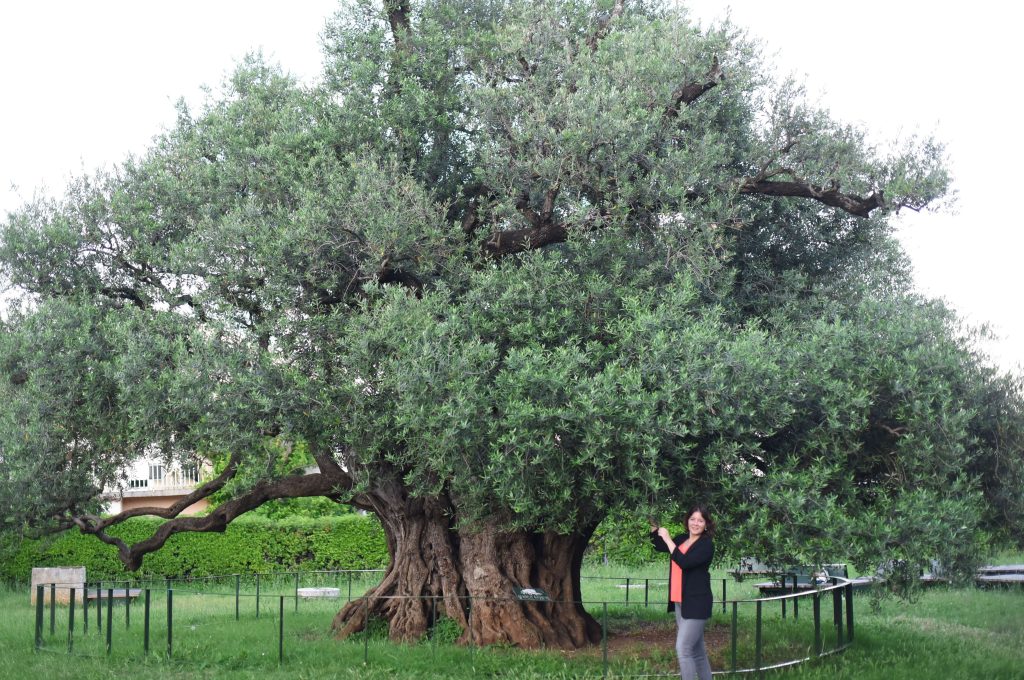
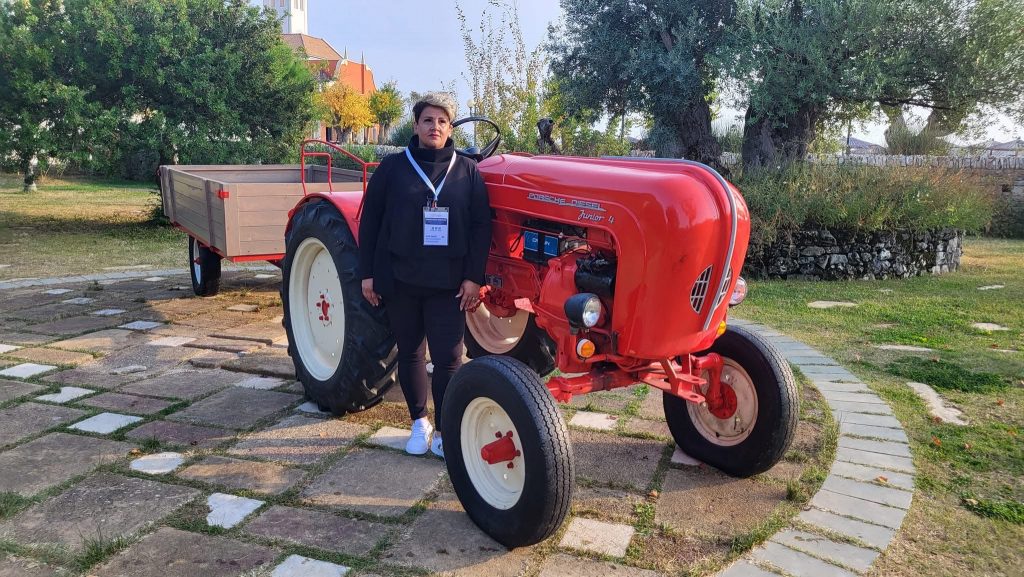
Tatjana Klepo dolazi iz Kaštela u Dalmaciji, regije duboko ukorijenjene u maslinarsku tradiciju. Ona je znanstvenica i docentica na Sveučilištu u Splitu, a ujedno i strastvena ekološka aktivistica.

Kao potpredsjednica Udruge maslinara Kaštela “Mastrinka” i članica Upravnog odbora Društva za očuvanje kulturne baštine Kaštela – “Bijaći”, Tatjana je posvećena očuvanju i promicanju prirodne i kulturne baštine Hrvatske. Njezin rad usmjeren je na zaštitu i revitalizaciju tradicionalnih hrvatskih sorti maslina, kako bi se ovo dragocjeno nasljeđe prenijelo budućim generacijama.

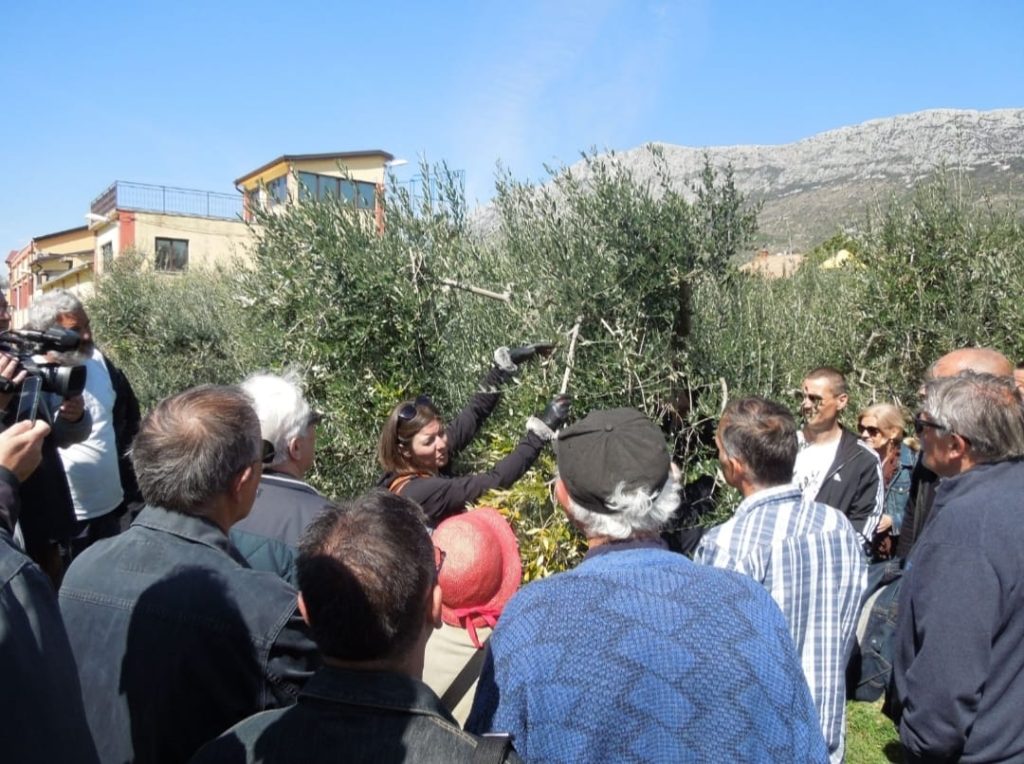
Uz znanstvena istraživanja, Tatjana je osnovala ekološki maslinik koji služi kao edukativno mjesto za maslinare. Kroz ovu inicijativu pruža praktična znanja i iskustvo izravnog rada, podržavajući održive poljoprivredne prakse. Vođena uvjerenjem da je znanje ključ bolje budućnosti, Tatjana nastavlja nadahnjivati druge i stvarati pozitivne promjene u svojoj zajednici i šire.

Upoznajte Tatjanu Klepo: znanstvenicu, aktivisticu i čuvaricu maslinarske baštine Read More »

Meet Tatjana Klepo: scientist, activist, and guardian of olive heritage

Tatjana Klepo comes from Kaštela in Dalmatia, a region deeply rooted in olive-growing traditions. She is a scientist and assistant professor at the University of Split. Tatjana is also a passionate environmental activist.

As vice-chair of the Association of Olive Growers of Kaštela “Mastrinka” and a member of the Steering Committee of the Society for the Preservation of Cultural Heritage of Kaštela – “Bijaći”, Tatjana is dedicated to preserving and promoting Croatia’s natural and cultural heritage. Her work focuses on protecting and reviving traditional Croatian olive cultivars, ensuring that this valuable legacy is passed on to future generations.

In addition to her research, Tatjana established an organic olive farm that serves as a training ground for olive growers. Through this initiative, she provides practical knowledge and hands-on experience to support sustainable farming practices. Driven by the belief that knowledge is the key to a better future, Tatjana continues to inspire others and create positive change in her community and beyond.

Meet Tatjana Klepo: scientist, activist, and guardian of olive heritage Read More »

Silvija Terlević, članica hrvatskog Living Laba, pobijedila na županijskom natjecanju u oranju u Poreču

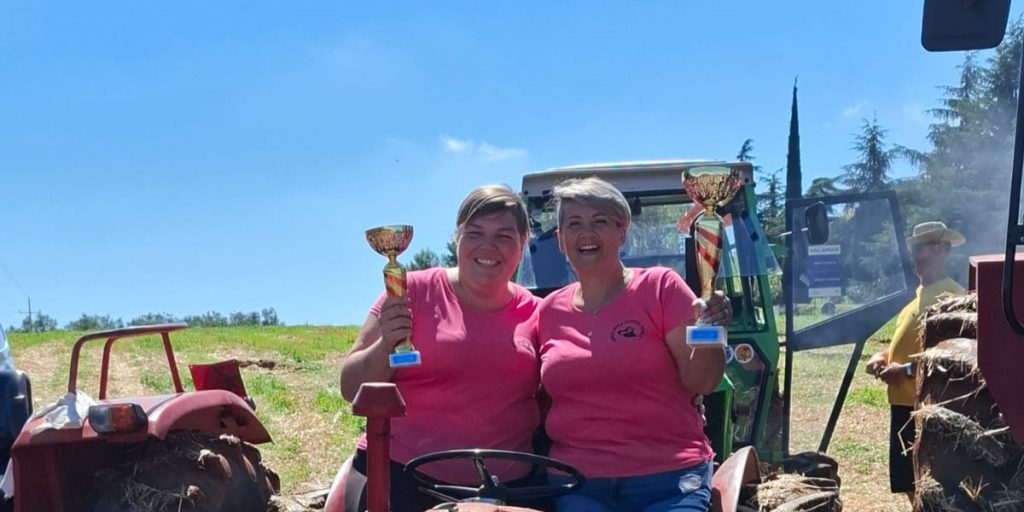
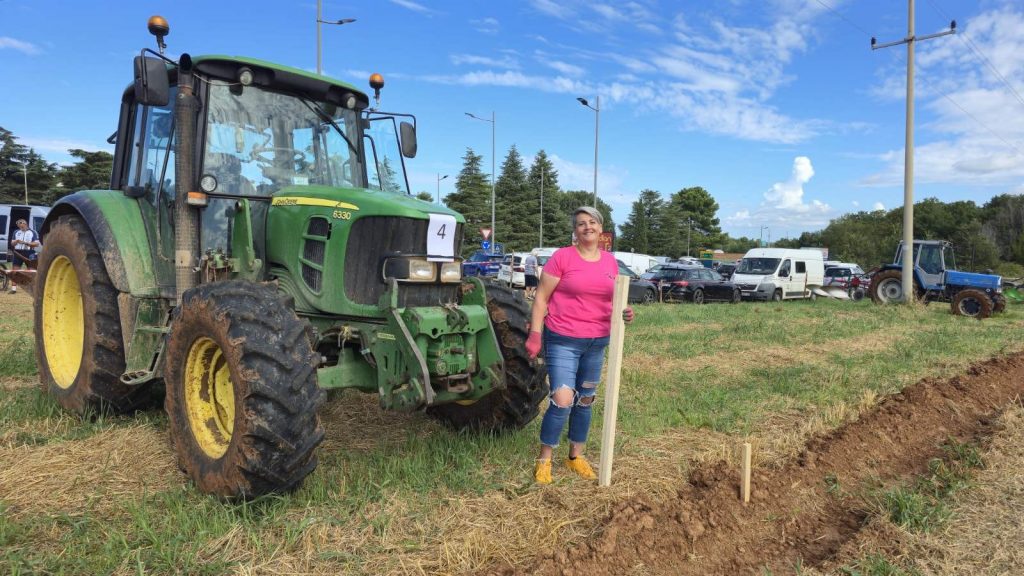
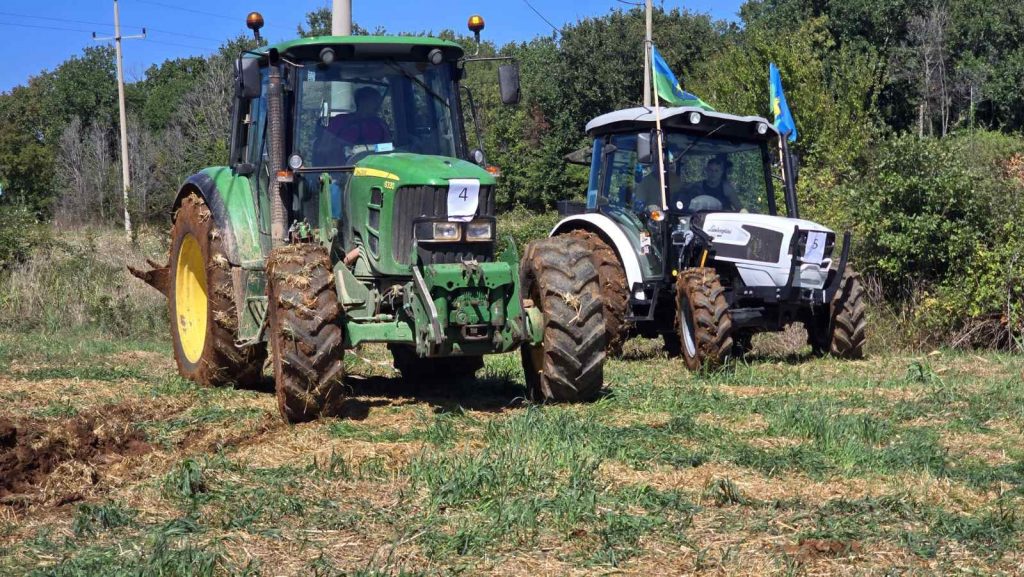
Dana 31. kolovoza 2025. u Poreču (Istra) održano je županijsko natjecanje u oranju. Ukupno 12 najboljih orača pokazalo je svoje vještine u dvije kategorije: oranje plugom ravnjakom i oranje plugom okretačem (premetnjakom). Po prvi put je održano i žensko natjecanje u oranju, a pobjedu je odnijela naša članica Living Laba, Silvija Terlević.

Zanimljivo je da je njezin sin osvojio drugo mjesto u kategoriji pluga premetnjaka te će predstavljati Istru na državnom prvenstvu. Sljedeće godine Hrvatska će s ponosom biti domaćin Svjetskog natjecanja u oranju 2026.

Silvija Terlević, članica hrvatskog Living Laba, pobijedila na županijskom natjecanju u oranju u Poreču Read More »

Silvija Terlević, Croatian Living Lab member, triumphs at County Ploughing Championship in Poreč, Croatia

On August 31, 2025, the County Ploughing Championship took place in Poreč (Istria). Twelve of the best ploughmen showcased their skills in two categories: conventional ploughing and reversible ploughing.

For the first time, a women’s competition was also held, with our croatian Living Lab member, Silvija Terlević taking the victory. Interestingly, her son secured second place in the reversible plough category and will go on to represent Istria at the national championship.

Next year, Croatia will proudly host the World Ploughing Contest.

Silvija Terlević, Croatian Living Lab member, triumphs at County Ploughing Championship in Poreč, Croatia Read More »

Od skepticizma do uspjeha: Silvijino postignuće u poljoprivredi

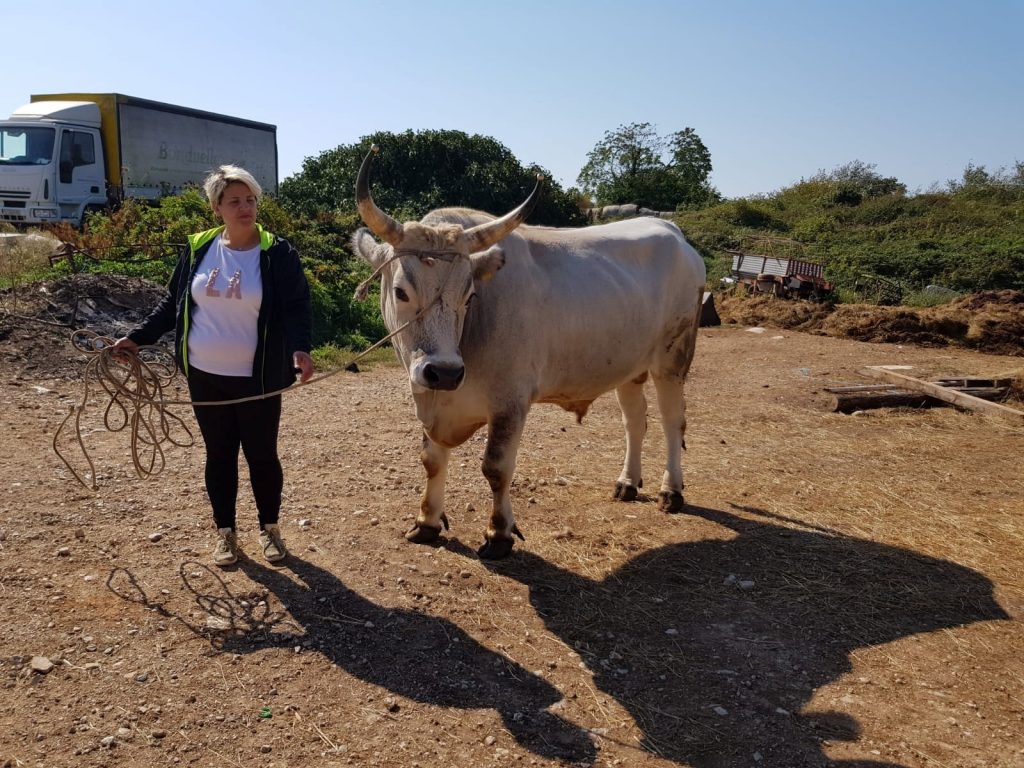
Silvija Terlević je dinamična inovatorica iz idilične Istre. Uspjela je spojiti tradiciju i suvremenu poljoprivredu na vlastitom gospodarstvu. Uzgaja ovce, konje te autohtonu istarsku pasminu goveda – boškarin.

Silvijin poduzetnički duh temelji se na dugogodišnjem iskustvu vođenja uspješne trgovine voćem i malog kafića. Unatoč izazovima ulaska u tradicionalno mušku sferu animalne proizvodnje, Silvija je stvorila vlastiti prostor u kojem strast i upornost vode prema uspjehu.

Pokretanje gospodarstva nije prošlo bez prepreka. Lokalna zajednica je njezine ambicije često dočekivala sa skepticizmom i teško je mogla zamisliti da žena može uspjeti u području koje mnogi smatraju „muškim poslom“. No Silvija je te izazove pretvorila u poticaj za uspjeh. Njezina odlučnost i inovativan pristup ne samo da su održali posao, nego su i promijenili shvaćanje što znači biti uspješna žena u poljoprivredi.

Silvija čvrsto vjeruje da žene obogaćuju poljoprivredu posebnom kreativnošću i inovativnošću. Iako se njihov doprinos često podcjenjuje, njezina je priča dokaz rušenja barijera, pomicanja granica i potvrde da tradicija i inovacija mogu ići ruku pod ruku – osobito kada se promatraju kroz prizmu odlučnosti i vizije.

Silvija je istinski primjer žena inovatorica koje nastavljaju inspirirati, uvoditi novitete i slaviti jedinstvenu baštinu Istre.

Od skepticizma do uspjeha: Silvijino postignuće u poljoprivredi Read More »

From scepticism to success: Silvija Terlevic’s triumph in agriculture

Silvija Terlević is a dynamic innovator from the picturesque region of Istria. On her farm, she has cultivated a harmonious blend of tradition and modern farming. Silvija breeds sheep, majestic heavy draught horses and a traditional Istrian breed of cattle (Boškarin).

Silvija’s entrepreneurial spirit is based on years of practical experience running a thriving fruit store and a cosy coffee bar. Despite the challenges of entering the traditionally male-dominated field of animal production, Silvija has created a space for herself where passion and resilience lead to success.

Starting her farm was not without its hurdles. The local community often met her ambition with scepticism and had difficulty imagining that a woman could succeed in a field that many consider a “man’s business”. But Silvija turned these challenges into impetus for growth. Her determination and innovative approach not only sustained her business, but also redefined what it means to be a successful woman in agriculture.

Silvija firmly believes that women bring unparalleled creativity and innovation to agriculture. Although women’s contribution is often underestimated, her story is a testament to breaking barriers, redefining norms and proving that tradition and innovation can go hand in hand, especially when viewed through the lens of determination and vision.

Silvija is a true example of female innovators who continue to inspire, innovate and celebrate the unique heritage of Istria.

From scepticism to success: Silvija Terlevic’s triumph in agriculture Read More »

Croatian Living Lab with Marko VEŠLIGAJ

GRASS CEILING Croatian Living Lab advocates for rural women’s empowerment at the European Parliament in Strasbourg.

On July 7-9, 2025, representatives from the Croatian Grass Ceiling Living Lab visited the European Parliament in Strasbourg. The visit aimed to promote gender equality and highlight the role of women innovators in rural areas.

The trip was organised in collaboration with the Croatian Chamber of Agriculture and the Faculty of Agriculture at the University of Zagreb. A key supporter of this initiative was European Parliament member Marko Vešligaj, who is a member of the Committee on Women’s Rights and Gender Equality in the European Parliament, as well as a substitute in the Committee on Agriculture. The Croatian Living Lab reached out last year to Mr. Vešligaj to advocate for the interests of women in rural communities at the EU level and to facilitate this important visit.

The delegation included representatives from the Living Lab and over 40 women from various regions, who had the opportunity to exchange experiences and perspectives during their stay in Strasbourg. This visit provided an excellent platform for participants to familiarise themselves with the workings of the European Parliament and to discuss critical issues related to women’s empowerment, particularly those of female innovators and sustainable development leaders in rural Croatia.

This event was not only a valuable networking opportunity but also a step toward strengthening support for women in rural innovation sectors across Europe. The initiative underscores the importance of gender equality in fostering sustainable development and innovation in rural communities.

GRASS CEILING Croatian Living Lab advocates for rural women’s empowerment at the European Parliament in Strasbourg. Read More »

Jasminka Gršković

Jasminka Gršković: Creating a sustainable business from recycled sheep wool

Jasminka Gršković, a 50-year-old family farm manager, has built a unique business that combines tradition, sustainability, and innovation. She specialises in processing sheep wool into eco-friendly products such as dryer balls and lavender-scented anti-stress balls for therapeutic use. In addition, she produces high-quality extra virgin olive oil, making the most of the natural resources available on her farm.

Her journey into entrepreneurship began eight years ago when she noticed something most people overlooked—the vast amount of wool discarded after sheep shearing. “I watched my husband shear the sheep and throw away the wool, considering it useless because it was smelly and dirty”, she recalls. “That’s when I realised this so-called waste could be turned into something valuable”. Driven by this idea, she started working on ways to process the wool and officially launched her business that same year. She then took the next step and decided to brand her products, ensuring they stood out in the market.

However, running a small business comes with challenges; for Jasminka, bureaucracy has been one of the biggest obstacles. “I am often told that my business is too small to receive any kind of support or encouragement”, she says. The complex administrative procedures required to access funding and assistance make it difficult for small producers like her to expand or maintain their operations. When asked about the support she needs to overcome these challenges, she highlights several key areas: “Balancing family life and business is a constant struggle. I also need further training to develop new skills, and most importantly, I wish the paperwork and bureaucracy could be reduced. I don’t want to become a large-scale business—I just want to sustain my small enterprise without unnecessary hurdles”.

Despite these difficulties, her love for her work keeps her going. “I love spending most of my time in nature and especially enjoy working with children through wool workshops. It’s gratifying to teach them about traditional crafts and sustainability. I also love that my business is based on reusing waste in an environmentally friendly way”.

One of the most significant advantages of her participation in the GRASS CEILING project has been the opportunity to connect with other women entrepreneurs in her area. “Thanks to this initiative, I’ve strengthened my relationships with other women farmers and business owners. It has helped me stay informed and solve problems more quickly.” 

Jasminka Gršković

Jasminka Gršković: Creating a sustainable business from recycled sheep wool Read More »

Silvija Terlević, Weekend Food Festival Rovinj

Croatian Living Lab member Silvija Terlević takes part in a panel discussion on ‘From Farm to Hotel’ at the Weekend Food Festival in Rovinj.

Silvija Terlević, a farmer from Istria, preserves the tradition and identity of the Istrian region through her work in breeding the indigenous Boškarin cattle.


Speaking at the “From Farm to Hotel” panel during the Weekend Food Festival in Rovinj, Croatia she emphasised that local stories and quality are the key to an authentic tourism offer.


She highlighted the high demand for Boškarin meat among tourists, but also stressed the need for better organisation, more accessible farmland, and stronger support for producers to enable further growth.


Silvija believes that small producers hold the power to tell big stories about Croatian food – stories that guests remember and return for.


Through her dedication, she demonstrates how passion, local roots, and perseverance can connect farming and hospitality, enriching the tourist experience with the authentic flavours of Croatia.

Croatian Living Lab member Silvija Terlević takes part in a panel discussion on ‘From Farm to Hotel’ at the Weekend Food Festival in Rovinj. Read More »

Ana Kovačić

Ana Kovačić: “GRASS CEILING is eye-opening because it connects us with decision-makers”

Ana Kovačić, a farmer and artisan from Zagreb and one of the Croatian Living Lab women participants, runs a farm in Vrbovec on the city’s outskirts, where she cultivates berries and aromatic plants. Passionate about tradition, she processes her fruits at home, using old family recipes to create unique, handcrafted products.

Her farming journey began in 2009, driven by necessity after losing her job. “There was no work for me, so I started my plantation. Soon after the first harvest, I realised that selling raw fruit wasn’t financially viable, so I turned to processing”, she explains. From there, her business evolved organically, one product at a time.

According to Ana, what sets her work apart is the deep connection to heritage: “I produce something beautiful and natural—something people love. All our products are made using my grandmother’s recipes”. She also personalises her products with hand-painted bottles and eco-friendly packaging, ensuring that every item is both delicious and visually captivating. However, her biggest challenge was introducing her product to a market that didn’t yet appreciate them. “At the time, blueberries weren’t well-known or valued in Croatia. I had to teach people about their benefits and convince them that my products were worth trying”.

Ana’s business grew through word-of-mouth marketing, reaching customers of all ages—from children to older people. Now she wants to expand further by opening a tasting point but faces challenges due to a lack of support from the local government. “I need backing from the local administration to take that next step”, she explains. Despite her dedication, she struggles to access EU agricultural funding due to the small scale of her business. “I would love to receive support, but I don’t qualify. Being part of the GRASS CEILING project is eye-opening because it connects us with decision-makers. I hope we can find solutions together”.

Ana is deeply engaged in supporting other women in agriculture. She serves on committees for women, youth, and fruit producers. In 2018, she was recognised as an Exemplary Rural Woman by the City of Zagreb. “From these positions, I help other women by sharing experiences and creating opportunities for collaboration.”

Ana Kovačić: “GRASS CEILING is eye-opening because it connects us with decision-makers” Read More »

Ines Dundović

Ines Dundović: “We all have innovative ideas, but the key is determination”

Ines Dundović, a passionate agronomist from Croatia and participant in the Croatian Living Lab of the GRASS CEILING project, has dedicated her career to sustainable vegetable production, processing, and distribution. At 38—almost 39—she has built a business around locally grown food, ensuring that fresh, high-quality produce reaches the tables of families, kindergartens, and schools in her community.

Her journey began in 2015 when she and her family purchased an estate and cultivated vegetables. “Growing food locally was always my goal,” she explains. “I wanted local citizens to have access to fresh, healthy food and, at the same time, encourage others to do the same. It’s not just about farming—it’s about changing awareness and fostering a stronger agricultural community”.

What makes her business unique is its deep-rooted commitment to sustainability and local supply chains. By prioritising short distribution routes, she ensures that her produce maintains its nutritional value while reducing environmental impact. More importantly, her work serves as a model for others, proving that small-scale farming can thrive when integrated into local food systems.

However, the road to success has not been without challenges. “When I first started, agriculture in my area was dominated by older men,” she recalls. “As a young woman, I wasn’t taken seriously. When I got on a tractor for the first time, people assumed I was just pretending. They thought I didn’t belong.” Over time, however, attitudes shifted. As more women entered the industry and proved their capabilities, the landscape of Croatian agriculture began to change.

Despite this progress, bureaucratic hurdles remain one of the biggest obstacles for small farmers. “Paperwork and long administrative processes slow everything down. Many great projects have failed because it can take a year or two just to get approval. By then, many farmers run out of financial resources or lose motivation,” she says. While her location in Križ, just 20 km from Zagreb, provides good logistical connections, access to funding remains a critical issue. “Local funds exist, but they’re small. National and EU agricultural funds are available, but they are underutilised. Farmers need more support”.

For Ines, the most rewarding part of her work is knowing that she is contributing to the health of her community. “I produce healthy food, and I see the impact it has. We always say that food is the best form of prevention—eating fresh, local food keeps us healthy and reduces the need for medicine. I love knowing that people recognise what we’re doing and that others are starting to follow the same path”.

She is also well-connected with other women in agriculture. “Many female farmers are in our area, and we support each other. Initially, some of them were sceptical about how I was doing things, but now we collaborate and share our experiences”. Across Croatia, more and more women are stepping into leadership roles in agriculture, proving that farming is no longer just a man’s world.

Her advice to other women looking to start their businesses? “Find your idea and believe in it. We all have innovative ideas, but the key is determination. Start doing, don’t give up, and keep pushing forward. The challenges will come, but so will the rewards.”

Ines Dundović

Ines Dundović: “We all have innovative ideas, but the key is determination” Read More »

Silvija Terlević

Silvija Terlević: “Women need to be well informed about opportunities and resources”

Silvija Terlević, a farmer from the Poreč area in Istria, has dedicated her life to breeding autochthonous livestock. She raises the Istrian Boškarin cattle breed and the Croatian Coldblood horse, both deeply rooted in the region’s heritage. She is one of the Croatian Living Lab members of the GRASS CEILING project.

Her farming journey began after closing the fruit and vegetable shops she had run for years. “When we closed the shops, we started the farm with Istrian cattle breeds. It completely changed our way of life”, she explains. By focusing on these traditional breeds, she continues the legacy of her ancestors, ensuring the survival of animals that were once essential to Istrian agriculture. One of the biggest challenges she has faced is securing land. “The hardest part was obtaining land from Croatian forests or agricultural land from the municipality. That was the main struggle”, she recalls. Resource access remains a significant barrier for many small farmers, particularly women.

Silvija believes better access to information would be the most valuable support for women in agriculture. “You can never have too much information. Women need to be well informed about opportunities and resources”, she emphasises. Education, training, and guidance on agricultural policies could significantly improve conditions for female entrepreneurs in rural areas. She sees collaboration with other women as an essential part of progress. “It’s always easier to find solutions through communication with women. Working together would be motivating and encouraging”, she notes. Strengthening networks among female farmers could lead to new opportunities and shared solutions to common challenges.

What she loves most about her work is her deep connection with animals. “I love my animals, being with them day and night. I love to ride, hug the horses, and feed them. You can’t describe it; you have to experience it”, she says. Her passion for farm life reflects a broader commitment to preserving traditional rural practices.

Her advice for those considering starting a rural business is clear: “Life in the countryside, working with animals, is a great choice, and also an important one. If there are no villages, there is no life.” Her words highlight the importance of maintaining rural communities and traditions, ensuring they remain vibrant for future generations.

Silvija Terlević

Silvija Terlević: “Women need to be well informed about opportunities and resources” Read More »

Vesna Jakić

Vesna Jakić: “the most important thing is networking, learning from others, and having support when facing challenges”

Vesna Jakić, a textile designer from the Croatian island of Cres, has been working on wool-related projects for 24 years. Her journey began in 2000 with the Ruta Association. “Sheep wool in Croatia is still wasted; it is not properly processed and is only seen in a few woollen jackets and hats”, she explains. Determined to change this, Vesna introduced felting techniques, demonstrating wool’s potential beyond traditional uses.

Education is at the heart of her work. She organises workshops for children and adults, teaching them wool processing, creativity, and sustainability. “By processing wool and using new designs, we show that all kinds of things can be made”. She goes on to say, “These workshops preserve traditional skills and promote sustainable practices”.

She recalls that building her business was not easy. “No one understood, accepted, or supported it at first. Progress was slow in introducing innovative ways to work with wool”. Despite these challenges, she expanded her network, gained experience, and eventually founded her brand, Ruta Wool & Design.

Vesna explains that she comes from an artistic background, and has had to learn business skills to sustain her enterprise. “I had to master finances, which was essential for my business. But the most important thing is networking—meeting people, learning from their experiences, and having support when facing challenges”.

Actively involved in rural development projects, particularly those supporting women, Vesna believes in paving the way for future generations. “We create a new path, carry out our projects, and make way for others, so eventually, discussions about gender will no longer be needed”.

One of the most fulfilling aspects of her work is sharing knowledge. She teaches children, design students, and even tourism students about the importance of craftsmanship. “It’s essential to show visitors who we are and what we do”.

Her advice for women starting their own business is clear: “What you know now is not enough. You need time to learn many things. The key is patience and having a strong network. Every challenge is part of your personal and professional growth.”

Vesna Jakić

Vesna Jakić: “the most important thing is networking, learning from others, and having support when facing challenges” Read More »

Marijana Svetić, Croatia

Marijana Svetić: “to improve my products, I need better engraving equipment, but access to funding can be complicated”

Marijana Svetić is a multifaceted entrepreneur from the village of Lički Novi in Lika-Senj County, Croatia. At 40, she balances multiple roles—mother, student, civil service officer, and manager of a family farm. Established in 2017, the farm focuses on cattle breeding, vegetable production, and, more recently, the creation of handcrafted wooden products.

The business began with livestock, including the native Buša cattle, a small, autochthonous breed known for its rich but limited milk production. Over time, the farm expanded into greenhouse vegetables and later into woodworking. “We started making wooden table lamps from old oak beams, incorporating engraved images and quotes from Nikola Tesla. Living just 10 kilometres from his birthplace, it felt natural to honour him in our designs,” Marijana explains. This unique touch has set her products apart and highlights the cultural significance of her region.

Like many rural entrepreneurs, she has faced significant challenges. “Balancing family, work, and business is demanding, but I see it as a normal part of life rather than an obstacle,” she says. However, financial constraints remain a significant hurdle. “To improve my products, I need better engraving equipment, but accessing funding can be complicated.” She has previously used EU agricultural funds for greenhouse development and remains optimistic about future opportunities despite the bureaucratic barriers.

Marijana finds greatest fulfilment in passing knowledge and skills to her children. “My 15-year-old daughter is now the main producer of our lamps. She’s taken pride in what I started, and seeing her enthusiasm makes every challenge worthwhile”. This intergenerational transfer of skills is key to preserving traditional craftsmanship while fostering innovation.

Networking is another vital element of her success. She is an active member of Cluster Lika Destination, an organisation promoting local businesses and agricultural ventures. “It helps connect farmers and artisans, making our products more visible,” she notes. However, she points out the absence of specialised local women’s associations, which led her to seek external opportunities like the GRASS CEILING Project. Her advice to women starting a business is clear: “If you have a strong idea and believe in your product, don’t give up. The desire to succeed will push you past obstacles. Persistence is key—sooner or later, the community will recognise your effort and dedication.”

Marijana Svetić

Marijana Svetić: “to improve my products, I need better engraving equipment, but access to funding can be complicated” Read More »

Jasminka Gršković

Jasminka Gršković, an inspiring blend of sustainability and tradition, in Grass Ceiling’s Croatian Living Lab

Jasminka Gršković from the picturesque island of Krk, is a kindergarten teacher and campaigner for sustainable living. In her work, she combines education, nature and craftsmanship. She runs a family farm and makes lavender-scented wool sensory balls to strengthen hand muscles.

She also produces environmentally friendly wool dryer balls that shorten drying time, save energy and reduce waste. By using these natural alternatives, households can reduce their reliance on chemical-laden fabric softeners and opt for a more sustainable way of life. Through her work, Jasminka promotes sustainability in everyday life, especially among the younger generation, and encourages them to make conscious choices that benefit both people and the planet.

Jasminka is a driving force for positive change by showing that sustainability and tradition can coexist harmoniously. She encourages meaningful steps towards a future where nature and society thrive together, proving that even small, conscious efforts can have a big impact.

Jasminka Gršković
Jasminka Gršković
Jasminka Gršković
Jasminka Gršković

Jasminka Gršković, an inspiring blend of sustainability and tradition, in Grass Ceiling’s Croatian Living Lab Read More »

Jasminka Gršković

Jasminka Gršković, inspirativni spoj održivosti i tradicije, u Živom laboratoriju projekta Grass Ceiling u Hrvatskoj

Jasminka Gršković s pitoresknog otoka Krka odgajateljica je u vrtiću i zagovornica održivog načina života. U svom radu spaja edukaciju, prirodu i rukotvorine. Vodi obiteljsko poljoprivredno gospodarstvo i razvija mirisne senzorne loptice od lavandom obogaćene vune koje pomažu jačanju mišića ruku.

Također proizvodi ekološki prihvatljive vunene kuglice za sušilicu, koje skraćuju vrijeme sušenja, štede energiju i smanjuju količinu otpada. Korištenjem ovih prirodnih alternativa kućanstva mogu smanjiti upotrebu omekšivača s kemijskim sastojcima i odabrati održiviji način života.

Kroz svoj rad Jasminka promiče održivost u svakodnevnom životu, posebice među mlađim generacijama, potičući ih na svjesne odluke koje pozitivno doprinose i ljudima i planetu. Jasminka je pokretačka snaga pozitivnih promjena, dokazujući da održivost i tradicija mogu harmonično surađivati. Svojim djelovanjem potiče značajne korake prema budućnosti u kojoj priroda i društvo napreduju zajedno, pokazujući da i mali, svjesni napori mogu imati velik utjecaj.

Jasminka
Jasminka
Jasminka Gršković
Jasminka Gršković

Jasminka Gršković, inspirativni spoj održivosti i tradicije, u Živom laboratoriju projekta Grass Ceiling u Hrvatskoj Read More »

Living Laba GRASS CEILING

Networking, visibility, and collaboration: key challenges for participants in GRASS CEILING Croatian Living Lab

As the new year begins, the Living Labs within our project are reactivating after the Christmas break.

The Croatian team was the first to do so, seizing this initial meeting of the year to maintain direct contact with local stakeholders. See the meeting agenda here.

The Croatian Living Lab has set itself the task of holding the majority of Living Lab meetings in the local communities of the innovators involved in the project. Thus, on 24 January, 2025, the Living Lab meeting took place in Gospić, where Marijana Svetić, who was recently introduced on the project website https://www.grassceiling.eu/marijana-svetic-croatia-livinglab/ , comes from. The meeting with stakeholders was particularly successful, primarily due to the great interest of local stakeholders in the project and then also due to their active participation in the workshop. It was noted that the progress made over the last two decades is remarkable, but there are still many problems in the Lika region that need to be worked on to improve the status of women, especially in the areas of infrastructure, economy, politics and family. Rural poverty and the needs of the elderly population, especially older women, as well as the digital divide and the lack of microfinance were particularly highlighted. Some of the services that are lacking in the rural region of Lika are kindergartens, facilities for the elderly, microfinance for small crafts, businesses and family farms, more accessible public transportation and fast network signals.

Representatives from Lika-Senj County Development Centre (the host), The Croatian Chamber of Economy, the Ivo Pilar Institute of Social Sciences, the Croatian Employment Service (Gospić branch), the Association GTF-Initiative for Sustainable Growth, City of Gospić, Polytechnic “Nikola Tesla”, LAG Lika and Lika-Senj County itself, had the opportunity to gain firsthand knowledge of the Grass Ceiling project and, more specifically, how it is impacting rural Croatia through the group of women entrepreneurs participating in it.

Professor Nataša Bokan from the Faculty of Agriculture at the University of Zagreb was responsible for presenting the project’s content and the Living Lab methodology being implemented in various parts of the country.

Innovation training took place in the afternoon session, focusing on the testing phase of the innovation process as part of the design thinking methodology. In an open discussion, the innovators shared their experiences of testing their products with the customers. The innovators reported that they received constructive critical feedback with new perspectives on their products or approach. The final session was an open discussion about the overall innovation process and their own progress (personal and business) that they have made so far in the Grass Ceiling project. The most important outcome for them is support and networking. In second place is learning about the innovation process and realising that their own perspective is not enough and how important it is to talk to others and incorporate their opinions into their own ideas/projects.

This meeting spanned over two days and included, among other activities, a visit to the Nikola Tesla Memorial Center. The gathering also served as an opportunity to share with all the women participating in the project the results of the 2nd showcase event, which took place in late November 2024 in Vilnius (Lithuania) and was attended by Ines Dundović.

Networking, visibility, and collaboration: key challenges for participants in GRASS CEILING Croatian Living Lab Read More »

Living Laba GRASS CEILING

Ključni izazovi za sudionice hrvatskog Living Laba GRASS CEILING: umrežavanje, vidljivost i suradnja

S početkom nove godine Živi laboratoriji (Living lab) u okviru našeg projekta ponovno se aktiviraju nakon božićnih praznika.

Hrvatski tim bio je prvi koji je to učinio, iskoristivši ovaj prvi ovogodišnji sastanak za održavanje izravnog kontakta s lokalnim dionicima. Dnevni red sastanka pogledajte ovdje.

Hrvatski Living lab si je zadao zadatak da velik dio svojih sastanaka održi u lokalnim zajednicama inovatorica uključenih u projekt. Tako se 24. siječnja 2025. održao susret Living Lab-a u Gospiću, odakle dolazi Marijana Svetić, koja je nedavno predstavljena na web stranici projekta (https://www.grassceiling.eu/marijana-svetic-croatia-livinglab/. Sastanak s dionicima bio je posebno uspješan, prvenstveno zbog velikog interesa lokalnih dionika za projekt, a zatim i zbog njihovog aktivnog sudjelovanja u radionici. Istaknuto je da su pomaci ostvareni u posljednja dva desetljeća veliki, ali da u Lici još uvijek ima mnogo problema na kojima treba raditi kako bi se poboljšao položaj žena, posebice u područjima infrastrukture, gospodarstva, politike i obitelji. Posebno je istaknuto ruralno siromaštvo i potrebe starijeg stanovništva, posebice starijih žena, te digitalni jaz i nedostatak mikrofinanciranja. Neke od usluga koje nedostaju ruralnom području Like su dječji vrtići, domovi i sadržaji za starije osobe, mikrofinanciranje malih obrta, poduzeća i OPG-ova, dostupniji javni prijevoz i brzi mrežni signal.

Predstavnici Razvojnog centra Ličko-senjske županije (koji je bio domaćin skupa), Hrvatske gospodarske komore, Instituta društvenih znanosti Ivo Pilar, Hrvatskog zavoda za zapošljavanje (podružnica Gospić), Udruge GTF-Inicijativa za održivi rast, Grada Gospića, Veleučilišta “Nikola Tesla”, LAG-a Lika i same Ličko-senjske županije, imali su priliku iz prve ruke upoznati projekt Grass Ceiling te čuti kako on utječe na ruralnu Hrvatsku kroz skupinu poduzetnica koje u njemu sudjeluju.

Profesorica Nataša Bokan s Agronomskog fakulteta Sveučilišta u Zagrebu bila je zadužena za predstavljanje sadržaja projekta i metodologije Living lab-a koja se provodi u različitim dijelovima zemlje.

U poslijepodnevnoj sesiji održana je obuka o inovacijama, s fokusom na fazu testiranja inovacijskog procesa kao dio metodologije dizajnerskog mišljenja. U otvorenoj raspravi inovatorice su podijelile vlastita iskustva testiranja svojih proizvoda s kupcima. Inovatorice su izvijestile da su dobile konstruktivne kritičke povratne informacije s novim pogledima na svoje proizvode. Završna sesija bila je otvorena rasprava o ukupnom procesu inovacija i vlastitom napretku (osobnom i poslovnom) koji su inovatorice do sada ostvarile u projektu Grass Ceiling. Najvažniji rezultat za njih je podrška i umrežavanje. Na drugom mjestu je učenje o procesu inovacija i shvaćanje da vlastita perspektiva nije dovoljna te koliko je važno razgovarati s drugima i njihovo mišljenje ugraditi u vlastite ideje/projekte.

Susret je trajao dva dana i uključivao je, između ostalog, posjet Memorijalnom centru Nikola Tesla. Okupljanje je također poslužilo kao prilika da se sa svim ženama koje sudjeluju u projektu podijele rezultati 2. showcase event-a koji se održao krajem studenog 2024. u Vilniusu (Litva), a na kojem je sudjelovala Ines Dundović.

Ključni izazovi za sudionice hrvatskog Living Laba GRASS CEILING: umrežavanje, vidljivost i suradnja Read More »

7th Croatian Living Lab meeting

The GRASS CEILING Croatian Living Lab kicks off 2025 with its seventh gathering of innovative women and local stakeholders.

As the new year begins, the Living Labs within our project are reactivating after the Christmas break.

The Croatian team was the first to do so, seizing this initial meeting of the year to maintain direct contact with local stakeholders. See the meeting agenda here.

Representatives from entities such as the Lika-Senj County Development Centre, the Croatian Chamber of Economy, the Ivo Pilar Institute of Social Sciences, the Croatian Employment Service (Gospić branch), the Lika-Senj County Development Agency, the company GTF-Initiative for Sustainable Growth, and Lika-Senj County itself, had the opportunity to gain firsthand knowledge of the Grass Ceiling project and, more specifically, how it is impacting rural Croatia through the group of women entrepreneurs participating in it.

Professor Natasa Bokan from the Faculty of Agriculture at the University of Zagreb was responsible for explaining the project’s content and the Living Lab methodology being implemented in various parts of the country.

This initial meeting spanned two days in January and included, among other activities, a visit to the Nikola Tesla Memorial Center. The gathering also served as an opportunity to share with all the women participating in the project the results of the 2nd showcase event, which took place in late November 2024 in Vilnius (Lithuania) and was attended by Inés Dundovic.

In the coming days, we will expand on this information with more details about everything discussed during this seventh meeting of the Croatian Living Lab of the Grass Ceiling project.

The GRASS CEILING Croatian Living Lab kicks off 2025 with its seventh gathering of innovative women and local stakeholders. Read More »

Rural women take center stage at GRASS CEILING showcase in Vilnius

The GRASS CEILING Project consortium is excited to announce its participation in AgriFood Lithuania 2024. The event will serve as the backdrop for the project’s second Showcase event, highlighting the remarkable achievements of its first year.


Showcase and Consortium Meeting. The annual Showcase event will take place on 26th November, followed by the 3rd Consortium meeting on 27th November. The Showcase will offer a platform to inform partners and external stakeholders about the project’s progress, including key deliverables and the pivotal role of Living Labs. Here you will find the agenda for this event.

Spotlight on Women Entrepreneurs. A particular highlight of the event will be the inspiring stories of nine women entrepreneurs participating in national Living Labs. These women will share their entrepreneurial journeys, goals, and how their involvement in the Living Lab is supporting their aspirations. Participants include Ines Dundovic (Croatia), Karen Keane (Ireland), Annalisa Pellegrini (Italia), Juste Jankauskiene (Lithuania), Anita Rennemo Galaen (Scotland), Aoife Gould (Scotland), Amada de Salas (Spain), Emma Hartelius (Sweden), and Irene Beukeveld-Evers (Netherlands).

Project Results and Future Directions GRASS CEILING will also present findings from various work packages. Topics include:

The consortium meeting on 27th November will delve deeper into the project’s work plan, with a special focus on the Online Training Academy and MOOC modules workshop, led by Laura Quijano from CIHEAM Zaragoza.

Rural women take center stage at GRASS CEILING showcase in Vilnius Read More »

From Law to olive groves: Birgit Boljun’s journey of tradition, passion and empowerment from the Living Lab of the GRASS CEILING project

Birgit is a dynamic, determined woman from Istria, with a diverse background that spans law, business, and agriculture. Until recently, Birgit worked as a lawyer, while managing a successful security company with a team of 110 employees, predominantly men. However, her true passion lays elsewhere—olive growing, a hobby she inherited from her grandmother.

For Birgit, olive growing is a way to honour her grandmother’s legacy and preserve a piece of Istrian culture. It represents sustainability, tradition, and a personal commitment to cultivating something lasting and meaningful. Through her dedication to the craft, Birgit found a new passion, one that is as rich and enduring as the olive oil she produces.

After receiving a grant for young farmers through the Rural Development Programme, Birgit made the decision to transform her hobby into a full-fledged profession. Birgit had no formal background in agriculture, but her determination fuelled her to dive into the world of olive growing with full commitment. She sought out mentors, attended workshops, and learned everything from the science of soil health to the art of producing high-quality olive oil. Every step along the way was a learning process, but one Birgit embraced with enthusiasm.

Despite facing scepticism and derogatory remarks about women working in agriculture, Birgit never wavered.

Today, Birgit proudly identifies as a passionate advocate for justice, equality, animal rights, and women’s empowerment. She embodies the spirit of resilience.

The GRASS CEILING project is helping Birgit expand her network of Croatian women entrepreneurs. She’s also gaining valuable insights and knowledge that will undoubtedly support the growth of her olive tree business.

From Law to olive groves: Birgit Boljun’s journey of tradition, passion and empowerment from the Living Lab of the GRASS CEILING project Read More »

Marijana Svetić: The heartbeat of rural entrepreneurship in Lika (Croatia) and member of the Croatian Living Lab of GRASS CEILING

Located near the birthplace of the great Nikola Tesla, often credited as the inventor of the electric motor, Marijana’s family business thrives on innovation and tradition.

Marijana is a mother, human rights defender, student, farmer and innovator. On her path to rural entrepreneurship, she has combined the old with the new to create something truly unique and meaningful.

Her latest project involves breathing new life into discarded oak wood to create stunning table lamps, each named after the visionary Nikola Tesla. Marijana has also started to explore wood jewellery making and the endless possibilities of this beautiful, natural material.

She works in disaster management, making sure her community is safe and prepared every day. But her passion for sustainability and creativity doesn’t stop there! She produces fresh vegetables and high-quality meat on her family’s farm. She is also the proud winner of second place in the competition for the most exemplary village women in Croatia in 2021.

She believes in the power of education and wants to connect her work with educational institutions. She is a true inspiration for the next generation of rural entrepreneurs.

Marijana’s main message is: let’s be open-minded, innovative and support each other. Our potential is limitless and our contributions are invaluable!

Marijana Svetić: The heartbeat of rural entrepreneurship in Lika (Croatia) and member of the Croatian Living Lab of GRASS CEILING Read More »

GRASS CEILING Croatian Living Lab convenes to identify megatrends and key players in addressing challenges faced by rural women entrepreneurs

The 5th meeting of the GRASS CEILING Croatian Living Lab took place on May 27 and 28, 2024. On the first day, the Living Lab participants were warmly welcomed by Living Lab participant Ana Kovačić in Ledina (Zagreb County) at the Kovačić family farm.

Ana gave us a tour of her blueberry and currant plantation and showed us the fruit products. The positive energy of the Living Lab women stimulated a fruitful discussion about rural women and their future. It was a pleasure to see how enthusiastically the Living Lab participants talked about their progress and how supportive they were of each other.

The second day was reserved for Razljev, where the Veggie company of our Living Lab participant Ines Dundović is located.

The main event of the fifth Living Lab was the foresight analysis, where the Living Lab participants and stakeholders (in groups) identified some political, administrative, economic, technical, technological, social and environmental megatrends and key players for future challenges. After the foresight analysis, the Living Lab participants held a workshop on digital marketing.

There were several stakeholders participating in the 5th Living Lab and they were excited to see how much knowledge about rural entrepreneurship and innovations these women have and how many plans they have for the future.

GRASS CEILING Croatian Living Lab convenes to identify megatrends and key players in addressing challenges faced by rural women entrepreneurs Read More »

Grass Ceiling project webinar focuses on enhancing social media management for rural businesses

The GRASS CEILING project hosted a webinar on improving social media management, bringing together project partners and innovative women from the project’s Living Labs. The webinar, led by CIHEAM Zaragoza, underlined the importance of starting with a solid strategic communication plan.

Throughout the session, three women entrepreneurs from the GRASS CEILING project’s Living Labs, with extensive experience in social media management, shared their experiences in managing their social media presence. These were Lucía Velasco, a rural influencer and a cowgirl from the Principality of Asturias (Spain) – as she likes to define herself, passionate about promoting rural life and traditions; Karen and Natalie Keane, two chocolatier sisters and promoters of the Bean and Goose brand in Ireland, known for their innovative and delicious creations; and Jasminka Gršković, a teacher and entrepreneur, inventor of lavender-scented wool sensory balls for hand muscles.

The importance of a strategic communication plan

“Effective social media management depends on a well-developed communication plan,” explained Laura Gil, a journalist from the CIHEAM Zaragoza Communication Unit and responsible for speaking on Social Media Content Strategy. “This plan should carefully consider the target audience, desired outcomes, communication channels, and messaging strategies. Identifying the right platform to reach your audience is crucial, and it can be a complex task.”

Laura Gil stressed the importance of consistently publishing content with a pre-established calendar because it helps to build audience loyalty and avoid losing momentum. She also spoke about continuously monitoring trends in each sector to stay up to date and adapt your own approach if necessary, aligning it with goals and interests of the target audience. Finally, knowing how to use the right tools is essential, taking advantage of social media management platforms to optimise tasks, scheduling and monitoring processes.

Lucía Velasco: authenticity and empathy for greater impact

Lucía Velasco offered a captivating presentation that served as a powerful reminder of several key principles. She emphasised the importance of authenticity, “being true to what you do and who you are”. Her message defended the value of positive communication, advocating for the use of motivating and inspiring language. Lucía also underlined the importance of empathy, urging the women to connect deeply with the work they do to achieve a more impactful outcome.

In addition, she highlighted the need to establish a clear communication process, “because it ensures that information is disseminated efficiently and accurately” and to always be very well informed “to avoid disinformation and be more credible.” Finally, Lucía emphasised the opportunity to be a spokeswoman for women in rural areas. “Our networks are a platform to amplify our voices and defend our causes.”

Bean and Goose, or the power of pursuing dreams from home

Sisters Karen and Natalie Keane, the creative minds behind Bean and Goose, exemplify the power of pursuing dreams from the heart of the home. Their passion for creating something meaningful and offering delicious chocolate experiences is evident in everything they do.

Driven by a clear vision of building a strong brand, the Keane sisters ingeniously use chocolate as a medium to celebrate Ireland’s rich cultural and natural heritage.

Social media is a vital platform for them. They use it to connect with customers and followers, highlighting the unique value proposition of their products. Their approach goes beyond simply selling chocolate. They strive to provide useful information and cultivate a sense of connection with their audience, ultimately generating trust and loyalty to the Bean and Goose brand.

Jasminka Gršković: constant learning

For Jasminka, the importance of mentors cannot be overstated when it comes to shaping the business model. She pointed out that their guidance can help us navigate challenges and pave the way to success. “Learning how to create a business plan that leverages the power of social media is essential”. Jasminka also highlighted the value of both professional training and observation. “By establishing a strong online presence and becoming a reliable source of information, we can position ourselves as thought leaders for our target audience, including potential customers seeking solutions.”

While she acknowledges that video content may not be her personal preference, Jasminka recognises the importance of exploring different communication channels. This openness to learning and embracing new approaches is a valuable lesson for any entrepreneur.

Jasminka’s perspective highlights the valuable insights we can gain from unexpected sources. Young people, often considered digital natives, can offer valuable guidance and expertise in navigating the ever-evolving landscape of social media. “I, in fact, learn every day from my daughter”.

Grass Ceiling project webinar focuses on enhancing social media management for rural businesses Read More »

Ana’s Berry Haven: A story of tradition and entrepreneurship in the Croatian Living Lab of the GRASS CEILING project

Ana’s Orchard, an oasis of berries, herbs and flowers, is located in the rural part of Zagreb County. Ana is a spirited and determined entrepreneur who has turned her grandmother’s recipes into a thriving business that celebrates the rich flavours and healing properties of nature. Ana Kovačić is also an active participant in the Croatian Living Lab of the GRASS CEILING project.

Ana’s Orchard is a symphony of colours and flavours. Rows of chokeberries, blackberries, raspberries and blueberries thrive under her careful watch. Fragrant mint, soothing lavender and elderberry bushes prosper amongst the berry bushes.

But Ana’s work does not end in the orchard. In her cosy, sun-drenched kitchen, she uses her grandmother’s recipes to make a variety of traditional products, such as jams, tinctures, liqueurs and syrups, all made by hand using natural preservation methods.

Ana is not only a farmer and entrepreneur, she is also a mentor and advisor. Her passion for her business goes hand in hand with a desire to pass on her knowledge. She has summarised her years of experience in a booklet, “Health through berries” (“Bobicom do zdravlja“), a comprehensive guide on the benefits and uses of berries.

Her vision also extends to the next generation. Ana gives workshops on wild fruits in her orchard. She teaches children about the wonders of nature and the importance of preserving traditional practices.

Ana believes that women are creators, capable of nourishing both the land and the community. Ana is the best example of the incredible potential of women in agriculture.

Ana’s Berry Haven: A story of tradition and entrepreneurship in the Croatian Living Lab of the GRASS CEILING project Read More »

“Yesterday shock, today sadness, tomorrow action and we move on!” Ines Dundović recounts the fire in her company

One of our friends, a participant in this Project and manager of an entrepreneurial company in Croatia, is going through a difficult time. From this page and on behalf of the entire GRASS CEILING consortium, we want to show our support and solidarity with her.

Just a few days ago we were talking about Ines Dundović, a Croatian producer and processor of plant products, entrepreneur and director of the Veggie Company, with three stores in the Zagreb region.

This week we learned that an unfortunate accident caused a fire in their facilities, resulting in the loss of a significant part of their stock and warehouses.

She herself has recounted the episode on social media with the strength and drive that characterises her: “Yesterday shock, today sadness, tomorrow action and we move on!” As Ines has said before, proclaiming to the four winds and with energy “WHAT DOESN’T KILL YOU, MAKES YOU STRONGER!” She went on to thank everyone for the demonstrations of the physical, technical and moral support she has received and the invaluable collaboration of the firefighters in her area.

From this project website we want to highlight that our exceptional entrepreneur, Ines, even though she experienced a fire on her property, which shook her up, she has also demonstrated remarkable strength and resilience, continuing to work with enthusiasm as she prepares the property for renovation. We wish her every success!

And this is the spirit of GRASS CEILING’s entrepreneurial women. Nothing stops them, they are always looking ahead, never back.

So, Ines, we send you our heartfelt encouragement in the recovery of your business. We know that you are going to do very well and from here we will continue to share the news about everything you do to make your work and achievements visible.

A big hug from the entire human team of GRASS CEILING. We are all with you!

“Yesterday shock, today sadness, tomorrow action and we move on!” Ines Dundović recounts the fire in her company Read More »

Ines Dundović, director of Veggie, a company with three shops in the Zagreb region, participates in the Croatian GRASS CEILING Living Lab

Veggie is a vegetable production and processing company co-founded by Ines Dundović, one of the youngest participants in the Croatian GRASS CEILING Living Lab.

Veggie started out drying tomatoes and today supplies fresh and processed vegetables to restaurants, schools and Gruntek, the largest marketer of organic vegetables with direct sales to the end consumer through weekly vegetable boxes.

Since its inception in 2015, Ines has managed to open three Veggie shops, where she sells her fresh and processed vegetables, to which she has added the products of other local producers. Undoubtedly, Ines is contributing a lot to the development of agriculture in the Zagreb region.

Ines has been working on her parents’ farm all her life and it was after finishing her studies in horticulture at the Faculty of Agriculture in Zagreb that she started Veggie. Recently, the business has expanded to include rural tourism. Ines is a communicative woman who likes to share her knowledge. She is very active in her local community. In fact, she chairs her community’s agricultural committee, which she helped to set up. She has participated in many European projects which have allowed her to acquire new knowledge and to travel abroad a lot to learn about good practices.  

Ines stresses that the greatest benefit of the GRASS CEILING project lies in the creation of networks of women innovators.

Ines Dundović, director of Veggie, a company with three shops in the Zagreb region, participates in the Croatian GRASS CEILING Living Lab Read More »

Vesna Jakić: A sheep wool ambassador on the Croatian island of Cres

Vesna Jakić is a Croatian entrepreneur who participates in the GRASS CEILING project’s Living Lab in Croatia. She works with local wool as a raw material in her company RUTA Wool & Design. In addition to creating original wool designs, Vesna recovers sheep wool that is often abandoned in the fields of the island of Cres (Croatia), thus providing a solution to a serious environmental problem and allowing her to produce island souvenirs by processing the original wool.

Vesna’s work is making a difference on the island of Cres and her products are certified as Croatian island products.

However, Vesna, a textile designer, never knows what her next wool inspiration will be. Before her current business, she led the Ruta association for 20 years, focusing on improving the quality of life on Cres. Already then, her projects were based on the use of wool as a raw material, she taught felting courses and organised numerous craft and art events.

It can be said that Vesna is an ambassador of sheep wool, a material that is no longer used on the island of Cres.

Her greatest passion is working with young people and children. That is why she teaches felting in schools and students come to her to practise. She has led many local and European projects where children have acquired felting and sewing skills. As part of these projects, children also explore the island of Cres and learn about local plants, nature, and the sea… All with the aim of helping them become more aware of the importance of nature, their local environment and sustainable development.

This innovative woman began drawing clothing models at the age of nine and received her first sewing machine at the age of fourteen. She later graduated in Textile Design and Fashion from the Faculty of Textile Technology in Zagreb. After completing her studies, she returned to the island of Cres, where she now lives and has made, in her words, a dream come true.

For Vesna, GRASS CEILING is “a great opportunity to network with innovative Croatian women” and she assures that the biggest benefit of the GRASS CEILING project is “the exchange of knowledge, especially of solutions to the many obstacles they face on a daily basis.”

Vesna Jakić: A sheep wool ambassador on the Croatian island of Cres Read More »

GRASS CEILING Croatian Living Lab’s 4th meeting hosted by two of its women innovators

The GRASS CEILING Croatian Living Lab (EWE) held its fourth meeting on the islands of Cres and Krk. These islands are home to two of our Living Lab participants, Vesna Jakić and Jasminka Gršković, who are innovators working with wool, olive oil, and wine production. The main programme took place at Moise Palace. Vesna hosted the Living Lab on Cres, and Jasminka hosted it on Krk.

Following the official meeting, which included an innovation process session and a stakeholder session, Vesna offered a wet felting workshop for the Living Lab participants and project team. She also introduced the team to her handicraft business and the Ruta Cres association.

On the second day, the Croatian Living Lab members visited Krk and Jasminka’s family farm. After a meeting with the city authorities, Jasminka hosted a dry felting workshop for their colleagues in her olive grove, where they learned how to make woollen Easter eggs.

GRASS CEILING Croatian Living Lab’s 4th meeting hosted by two of its women innovators Read More »

GRASS CEILING Living Lab Croatia third meeting with women rural innovators

In Living lab meeting 3 we dealt with the Reframe phase of the innovation process. The participants did a great job filling out the persona map and the empathy map for their current or prospective customers/users. They were also very articulate when it came to articulating their problems for which they will look for solutions (ideas) in the next step. The innovators seem to be prepared for making a POV statement at the next meeting.  Most of the innovators articulated problems for which they will look for solutions (ideas) in the next step (ideate).

As a part of the LL3 meeting, innovators attended the introductory training on digital marketing. Also, the short demonstration on operational groups (CAP) was presented to the innovators. The innovators expressed an interest for applying for operational groups (the call is expected in April 2024).

We have decided not to invite stakeholders to LL 3 meeting. It was an online meeting, and we had a lot to deliver (innovation process methodology – reframe phase).

LL3 meeting participants were: Jasminka Gršković, Ines Dundović, Birgit Boljun Čujo, Vesna Jakić, Marijana Svetić, Ana Kovačić, Tatjana Klepo.

The fourth Living lab workshop is scheduled for 21st – 22nd March 2024.

GRASS CEILING Living Lab Croatia third meeting with women rural innovators Read More »

EU CAP Network workshop ‘Women-led innovations in agriculture and rural areas’

The EU CAP Network workshop ‘Women-led innovations in agriculture and rural areas’ will take place in Krakow, Poland from Wednesday 17 April to Thursday 18 April 2024.

Women play a vital role in civil society and economic growth in rural areas. They are at the helm of viable farm businesses, and vibrant rural areas and communities. Women are key actors in the rural economy as farmers and other entrepreneurs engaged in off-farm work in multiple sectors. Additionally, women often assume responsibility for the care and welfare of their family members. Yet, despite their crucial contribution, many women suffer from a rather ‘invisible role’, facing numerous challenges such as discrimination and difficulties in accessing the labour market. This situation is exacerbated by the prevalence of rural women participating in informal and vulnerable employment. Often, such employment is inadequately compensated and lacks connections to social protection or pension schemes, which could potentially leave women vulnerable to increased levels of poverty (OECD, 2019).

Women make up 51% of the EU population and, in 2021, 67.3% of all working age women (20-64 years) were employed in rural areas, yet the gender pay gap still stands at 12.7% (Eurostat, 2022). What’s more, in almost all Member States, the gender gap in employment rates is higher in rural areas than urban ones.

In particular, farming is viewed as a male-dominated profession, with women making up 31.6% of EU farmers (Eurostat, 2022). Additionally, women in farming face issues around access to land, training and education, and equal treatment from financial and farming organisations. To counteract this, gender mainstreaming has become an important principle in the CAP. The CAP Strategic Plans (2023-2027) promote the increased participation of women in farming and require a gender equality approach in addition to the assessment of the position of women in agriculture, forestry and rural areas, and the challenges they face.

Various projects, supported by different EU programmes show how barriers to the empowerment of women in rural areas can be mitigated or overcome, with socio-economic benefits through social and other types of innovations. Moreover, women represent a significant driving force for prosperity and social inclusion in rural areas, notably through innovative actions and entrepreneurship. This has been recognised by the European Commission in A Union of Equality: Gender Equality Strategy 2020-2025, which is committed to empowering women by supporting gender equality and entrepreneurship in Europe, including rural areas.

Taking into account the above, the EU CAP Network support unit for Innovation and Knowledge exchange | EIP-AGRI is organising a workshop on women-led innovations to demonstrate that farming and rural areas can be attractive places for women, especially for developing their business ideas and applying their innovative approaches.

Objectives

The overall aim of the workshop is to empower women in farming and rural areas by exchanging knowledge, identifying successful initiatives and projects led by female innovators, and networking.

Specific objectives:

  • Explore opportunities offered under different EU programmes to support women in agriculture and rural areas.
  • Showcase innovative initiatives, businesses and start-ups led by women entrepreneurs in rural areas with a particular focus on innovative farming practices and farm diversification strategies.
  • Identify the needs of and barriers to women entrepreneurs to develop their businesses in rural areas.
  • Promote women-friendly entrepreneurship ecosystems within local rural communities.
  • Activate networking among workshop participants in order to support women-driven innovation and entrepreneurship in rural areas.

The main target groups:

This workshop will focus on good practices of women-led initiatives from EU rural areas, at different stages of development. This includes, but is not limited to, farming, forestry, and environmental productions and services. Other participants that we are looking for include advisors, researchers, representatives from farmers associations, chambers of agriculture, industry, managing bodies, local authorities, press, etc. from across Europe.

EU CAP Network workshop ‘Women-led innovations in agriculture and rural areas’ Read More »

Second Croatian LL EWE (LLHR) held on October 13 2023

The Living Lab Croatia (LLHR) called Eco-Women Entrepreneurs (EWE) held its second meeting. It was organized by the University of Zagreb Faculty of Agriculture and the Croatian Chamber of Agriculture (HPK) and took place on 13 October 2023 in Zagreb at the Department of Agricultural Economics and Rural Development.

The Living Lab meeting was divided into two parts. The first part was attended by women innovators (LL participants) and the second part by our innovators and stakeholders.

In the first part, after the introduction to the agenda, the previous and future activities of the project were briefly presented. One of the innovators presented her experiences from the Brussels Showcase event (September 2023).

The first part of the Living Lab meeting focused on the introduction to the innovation process with an emphasis on designer thinking and the double diamond methodology. Three main fears were also discussed: the fear that the idea is not innovative, the fear of criticism and the fear of uncertainty. It was agreed that in the time between Living Lab 2 and 3, each innovator should define a goal for the next year so that each woman’s needs and goals for the next year could be identified and explored.

The innovators identified their needs and/or ideas for future activities of the LL: (1) training on promotion in social networks, (2) the annual event where each woman can present herself and her products, (3) the establishment of an association to support women where Living Lab innovators can advise other women, (4) the development of a logo for the Croatian Living Lab. The need for networking was emphasized in the discussion.

The first part of the Living Lab meeting ended with an inventory of the participants’ activities between two Living Labs and the question of what goals and needs the participants currently have. All women have expanded their businesses or experienced changes in different areas of their lives (from brand registration of products to marriage). Their goals for the near future relate to the further expansion of their businesses. Their needs are mainly related to education and training: communication skills, stress management tools, digital marketing, agricultural knowledge, legislation, accounting basics.

In the second part of the Living Lab meeting, institutions that could provide educational content were discussed and identified together with the stakeholders. The innovators and stakeholders were divided into 4 groups. Discussion within the groups focused on identifying opportunities to meet educational needs. The discussion identified problems with information about different provision at a local level. The information about workshops in remote areas of Croatia is insufficient. The timing of workshops and the terminology used need to be adapted to the needs of rural areas (after 6pm, video material). One group expressed the intention and desire to share their knowledge and experience, pointing out problems with administration at the local level, land leasing, wool thrown into the environment and the idea of including felting in the education system.

The second part ended with the conclusion that the educational workshops (smaller groups) should not last longer than one hour, that the standard Croatian language should be used, that various study tours should be organized, that all educational materials/workshops should be recorded and available, and that the speakers should be experienced practitioners.

Second Croatian LL EWE (LLHR) held on October 13 2023 Read More »

Supporting rural communities by improving women’s access to financial services

  • The UN theme for this year’s International Day of Rural Women is “Financing for rural women’s empowerment”.
  • 15 October recognises the work of rural women in the food systems of the world, and claims rural areas with equal opportunities for all.

The International Day of Rural Women is an opportunity to celebrate women and girls who play a key role in rural areas, developing innovations in response to socio-ecological challenges and strengthening the resilience of rural areas.

According to the Committee on World Food Security (CFS, 2023), the lack of financial capital and financial inclusion are significant constraints to women’s entrepreneurial activities and engagement all along the food system and value chains, from investment in land to agrifood businesses. Structural constraints to women’s access to financial services such as credit and insurance are often based on restricted access to assets, including land and property, that could be used as collateral for loans; family indebtedness; limited knowledge and training of financial services; restricted availability of appropriate loan products for women led micro, small, medium businesses and smallholders; statutory and customary laws that are discriminatory and/or do not respond adequately to women’s needs and priorities; and negative social norms that prevent women from developing and growing their enterprises and productivity. At the same time, fair and equitable access to financial services is a prerequisite for overall societal economic security and prosperity.

While women often lead on socio-ecological transitions and progressive farming methods, they often face significant discrimination when it comes to land ownership, equal pay, participation in decision-making entities, and access to resources, credit and markets. GRASS CEILING is working with women socio-ecological innovators across nine European countries and facilitating interactions with bank managers, agricultural advisers and entrepreneurial experts, and on the occasion of this International Day the project would like to showcase the women in the Living Labs who are breaking new ground, developing innovations and co-learning through mutual support. They are sowing the seeds for future generations of women to lead rural development and agriculture innovations by sharing their stories on how they have overcome challenges accessing financial services:

Birgit Boljun, owner of Val Madorso olive farm in Istria (Croatia) decided to continue the family tradition of olive oil production and was faced with several challenges when trying to raise the necessary funds. Since the bank could not support her, and she did not have sufficient resources for investment, Birgit looked for other funding opportunities and finally decided to apply for an EU project. Based on her experience, she recommends setting multi-year goals, planning well in advance, making adjustments to be eligible to obtain EU funding, as it usually takes a long time to fulfil the tender conditions, reviewing past year’s tenders to see what is generally needed, continuing the basic work to avoid being left without income until the obstacles are overcome, and not being disappointed when things take longer and don’t go according to plan. According to Birgit, it is important to have a vision and be realistic about physical and financial possibilities and set a series of smaller attainable goals.

Letizia Cuonzo took over the family business Azienda Agricola Cuonzo in Puglia (Italy) and used subsidised finance and bank credit tools to expand and transform the company. The major challenges she faced were related to the lengthy bureaucratic procedures, but she was lucky to count on the support of the bank; in her experience, many institutional entities, even at the regional level, now support women’s entrepreneurship and startups, but nonetheless she recommends trying to secure funds by networking with other businesses and building synergies with competent people and entities who can guide entrepreneurs towards the best solutions. The success criteria for addressing and overcoming the main barriers in accessing financial instruments are, in her opinion: developing financial skills and literacy and being able to engage competent people who can provide advice in fields where their specific skills are needed.

Annalisa Pellegrini decided in 2020 to recover an unused family plot and grow lavender to produce essential oils. Her company, Lavanda Ruvo di Puglia, is also based in Puglia (Italy) and focuses on environmental sustainability and circular economy. In her experience, having had access to technical information on production earlier and more easily would have helped her to optimise the timing of the project. As she didn’t meet the age requirements, Annalisa was not able to use most public funds, and thus suggests exploring these options, especially if own initial capital is not available. For her, having a good business plan helps, as well as support from professionals, who know how to navigate public funding programmes. In her opinion, the fundamental criterion for securing economic resources should be the ethicality of the project, its commitment to the environment, respect for biodiversity, and reliability.

Daiva Šinkevičienė has been running the organic blueberry farm Karališka uoga in Lithuania for the past 10 years. She cultivates 14 varieties of royal berries on a four-hectare plot. Over this time span, Daiva has received 15,000 euro support under a single measure of the CAP. Access to the support is still complicated as the farm is small and it is hard to meet the eligibility criteria for the support measures. The major source of the investments and, hence farm growth, is her own investment. Each year, Daiva allocates 40 % of her income for investments. She considers financial planning, budgeting, and saving as the core elements in achieving the goals of the activities. She provides an example of preventing birds from picking at the harvest, where acquiring a drone appeared to be a viable solution.

Sonja van Uden is the founder of the Landdrift Foundation in the Netherlands and has used her experience as an entrepreneur and manager in various industries and countries to develop a concept for multifunctional land use that promotes biodiversity. In her opinion, it is challenging to access any form of financial services when the innovation does not fit the standard model of economic value creation, which is the case for the multifunctional land use concept of Landdrift. She talks of the difficulty in obtaining funds and raising interest among potential investors in Landdrift, especially when it involves explaining that there is no economic return on investment within the Landdrift concept. She shows inspiring examples of combined land use in other parts of the world and how these projects have created much value for the natural environment and the people in these areas. Sonja suggests refraining from allowing dreams or visions for a better future to be diluted by the difficulties faced regarding access to financial services, and keep searching for the needles in the haystack! When encountering a challenge, she always tries to think out of the box to find a solution and adapt to the situation. A success criterion for Sonja is to stay flexible and open throughout the entrepreneurship journey.

Torunn Hernes Bjerkem owns Bjerkem Farm, an organic farm in Norway growing ancient heirloom grains, making healthy food, healthy soils, healthy plants, and healthy environments. The biggest challenge is that the farm is organised as a sole proprietorship. Because of the old Norwegian property law, where the oldest child in the family inherits the farm (called ‘odel’), any investment in a big project is dependent on the individual; the sole proprietor. For that reason she doesn’t have access to the big funds in agriculture and farming. According to the sole proprietorship system, people wishing to expand their business have to put their farm on the line for bigger loans and investments, which makes them very vulnerable, so Torunn opted for organising the farm into a Limited Liability Company. She considers that people who create jobs in rural areas shouldn’t have to take the risk all by themselves: They ought to be supported by a network where they can find solutions together. This is the case of Øyna Kulturlandskapshotell, a sustainable hotel wedged into nature overlooking the ocean, serving local food and beverages, a project in which owners have partnered with other collaborators so that they can take care of the natural resources, create jobs and livelihoods, and build a dream together.

Marta Llorente manages a family-owned intensive pig farm located in Zazuar (Burgos, Spain), in an integrated system with over 60 hectares of crop land and 20 hectares of vineyards. One of the issues she considers most relevant when embarking upon innovative projects within the livestock sector are the high costs that must be assumed. In her case, she did not have problems obtaining a loan from the bank, but points out the need for a prior analysis of profitability. There are public financial tools, such as subsidised interest loans, but on many occasions these require complying with numerous conditions and bureaucratic procedures, making it challenging to benefit from them. Her recommendation to women looking to make an investment to improve their farm is to conduct an analysis of the expenses and income that the improvement will entail in advance, to assess its profitability. Detailed administrative and financial management of the agricultural enterprise, as with any other business, is essential. The advice of consultants in this field is crucial to assist in making economic and financial decisions.

Further reading

CFS (2023). Voluntary Guidelines on Gender Equality and Women’s and Girls’ Empowerment in the Context of Food Security and Nutrition, agreed by the Open-Ended Working Group (OEWG) on Gender Equality and Women’s and Girls’ Empowerment.

FAO (2019). Women’s access to rural finance: challenges and opportunities. Rome. Licence: CC BY-NC-SA 3.0 IGO.

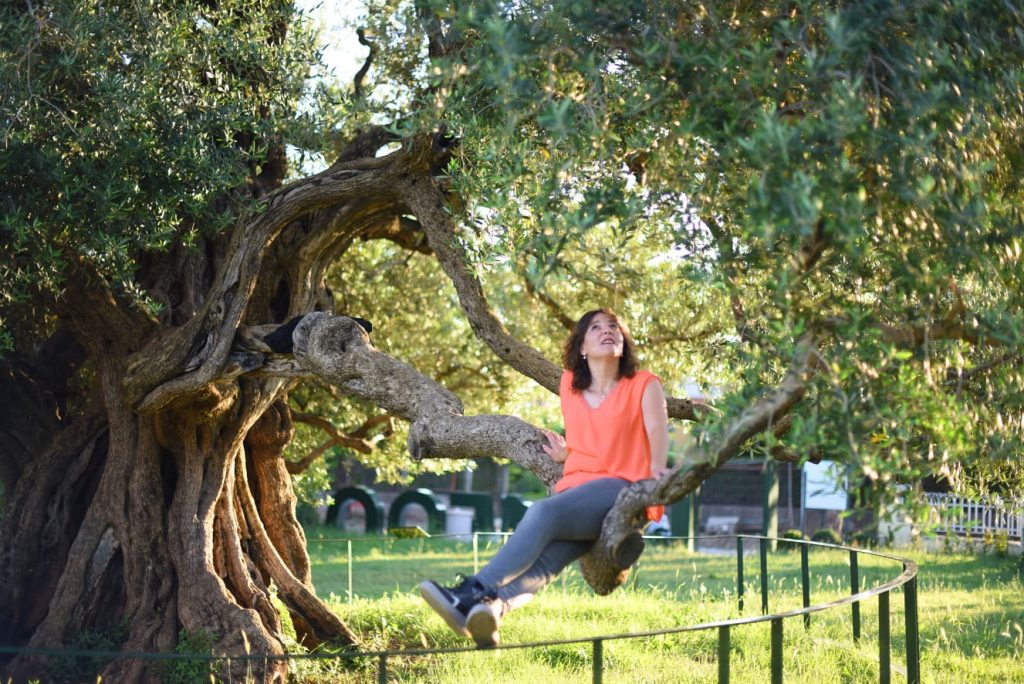
Supporting rural communities by improving women’s access to financial services Read More »

First Croatian Living Lab “Eco-Women Entrepreneurs”

The Living Lab Croatia (LLHR), named Eco-Women Entrepreneurs (EWE), has held its first meeting. It was organised by the Faculty of Agriculture of the University of Zagreb and the Croatian Chamber of Agriculture (HPK) and held in Šibenik on June 16, with the support of the Public Institution Development Agency of Šibenik Knin County.

Eight rural women set out to develop their ideas and entrepreneurships for social-ecological innovations over the next three years. During this first LL HR event, the participants presented their innovation ideas and shared their experiences in terms of business, introduction of innovations and commented on the obstacles they encountered while starting their entrepreneurships.

They spoke of changing environmental awareness, hunger for knowledge and sharing knowledge for a better world, changing traditions, a healthier living environment, reviving childhood stories and living with nature, all factors that encouraged them to innovate in their rural setting. They also highlighted that on their way to success they encountered a considerable lack of understanding in their social environment, as well as numerous administrative obstacles, frequent changes in laws and regulations, and a lack of adequate support for knowledge transfer and research. In the second part of the one-day EWE workshop, stakeholders from academia, civil society and the public sector joined the workshop and together with EWE participants identified the key shortcomings in the institutional support available for rural women entrepreneurs.

First Croatian Living Lab “Eco-Women Entrepreneurs” Read More »