General

Agenda of the final consortium meeting

GRASS CEILING Final Consortium Meeting highlights three years of empowering women innovators

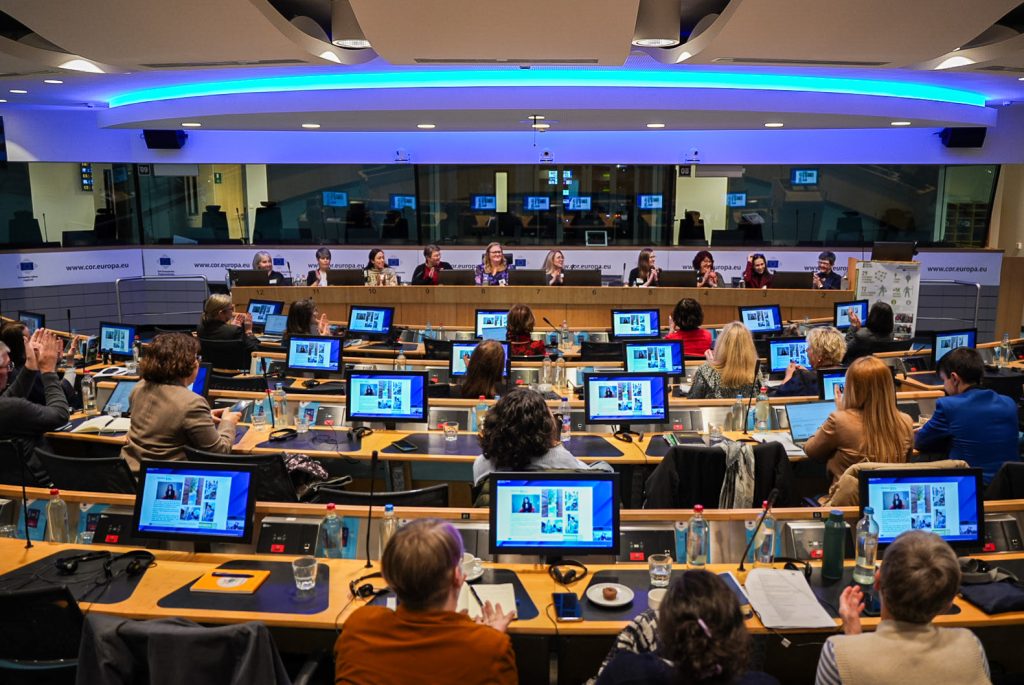
On 3 December 2025, the GRASS CEILING project held its final consortium meeting, reflecting on three years of work to advance gender equality and women-led innovation in agriculture and rural areas across Europe.

Thanks to the project, we have connected women innovators from across the continent with key stakeholders and policy makers through Living Labs and the European Policy Forum. These interactions have fostered knowledge exchange, collaboration, and the co-creation of solutions for rural communities.

During the final consortium meeting, we also presented the overall results of the project, including the launch of the Rural Pact Community Group of Women in Rural Areas, which will continue the dialogue and engagement initiated through the Policy Forum (link).

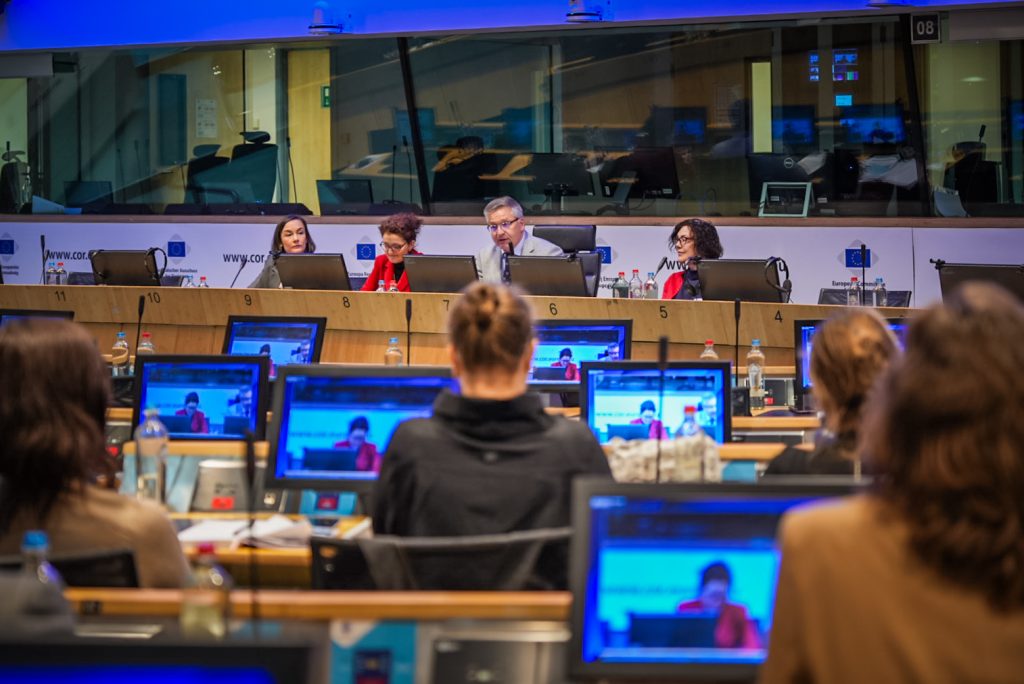
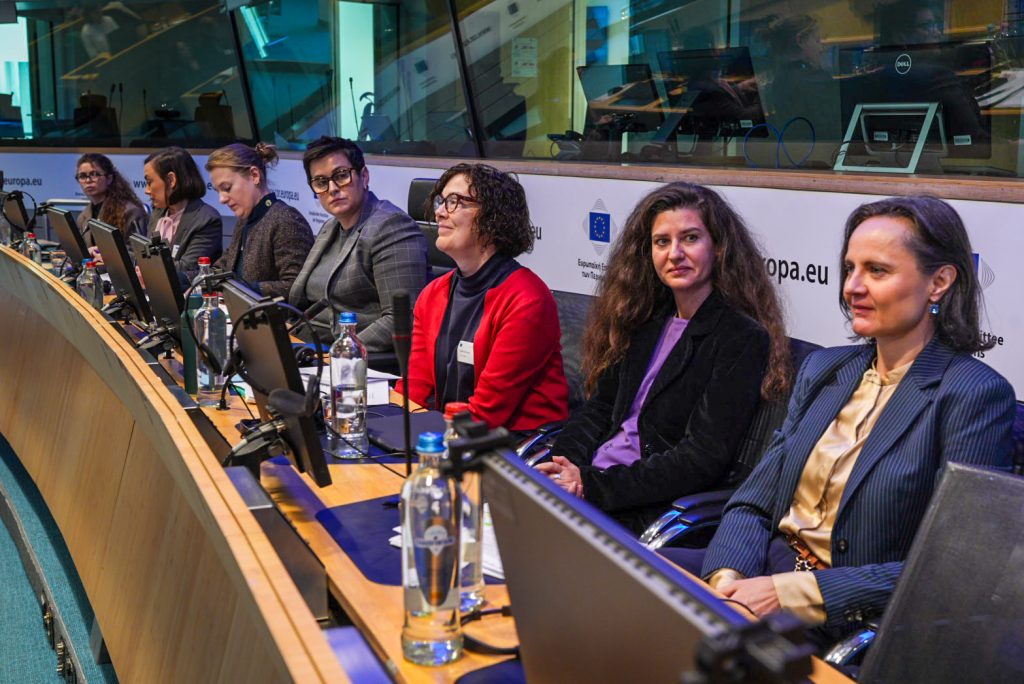
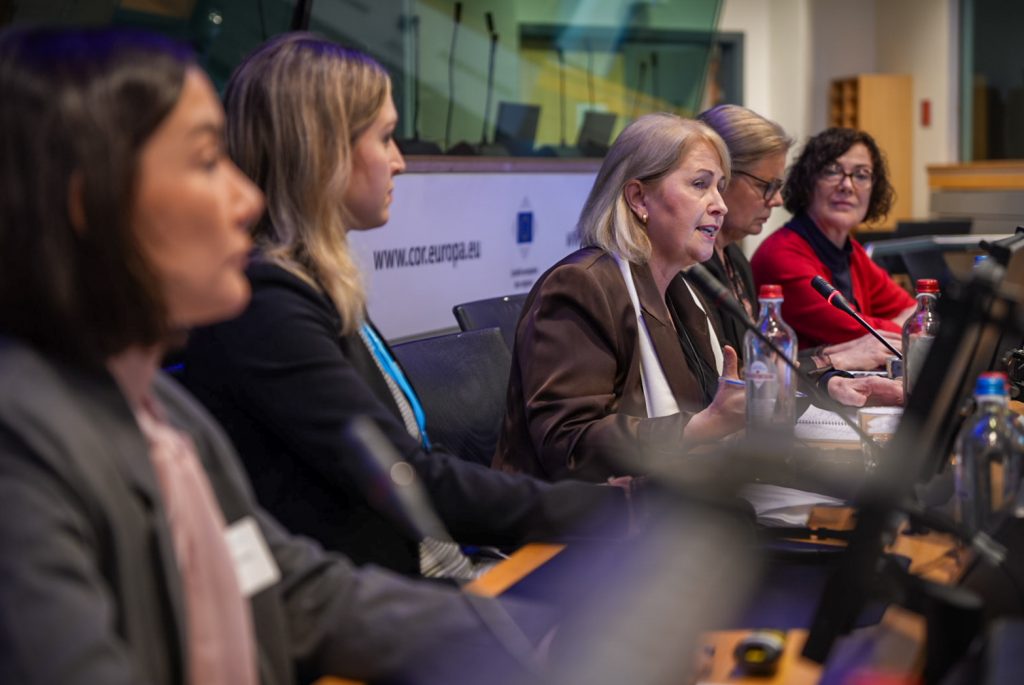
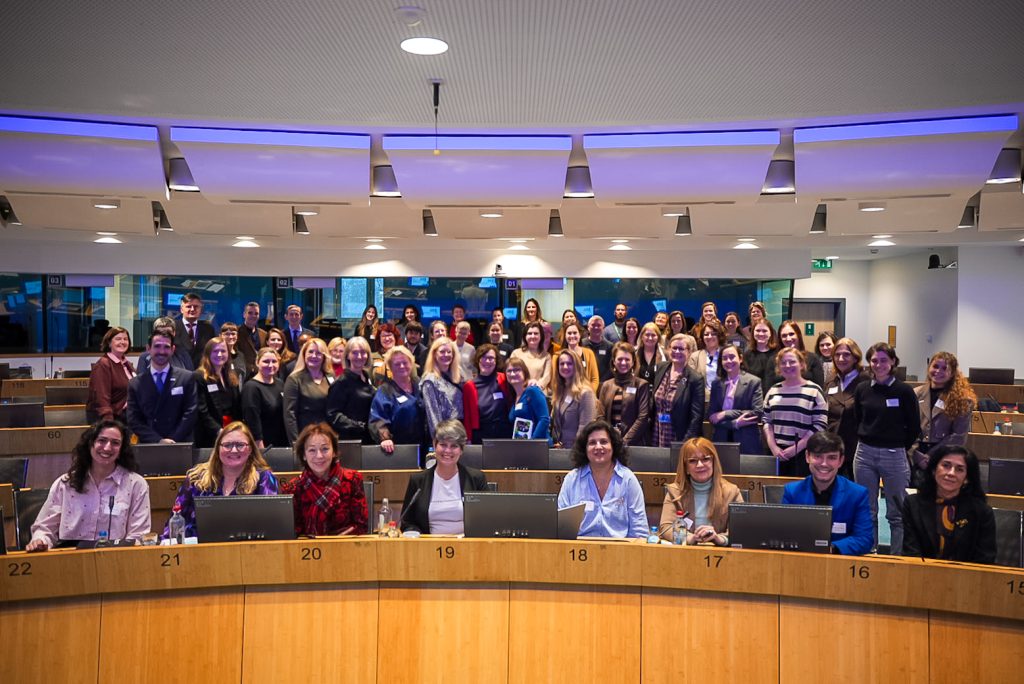
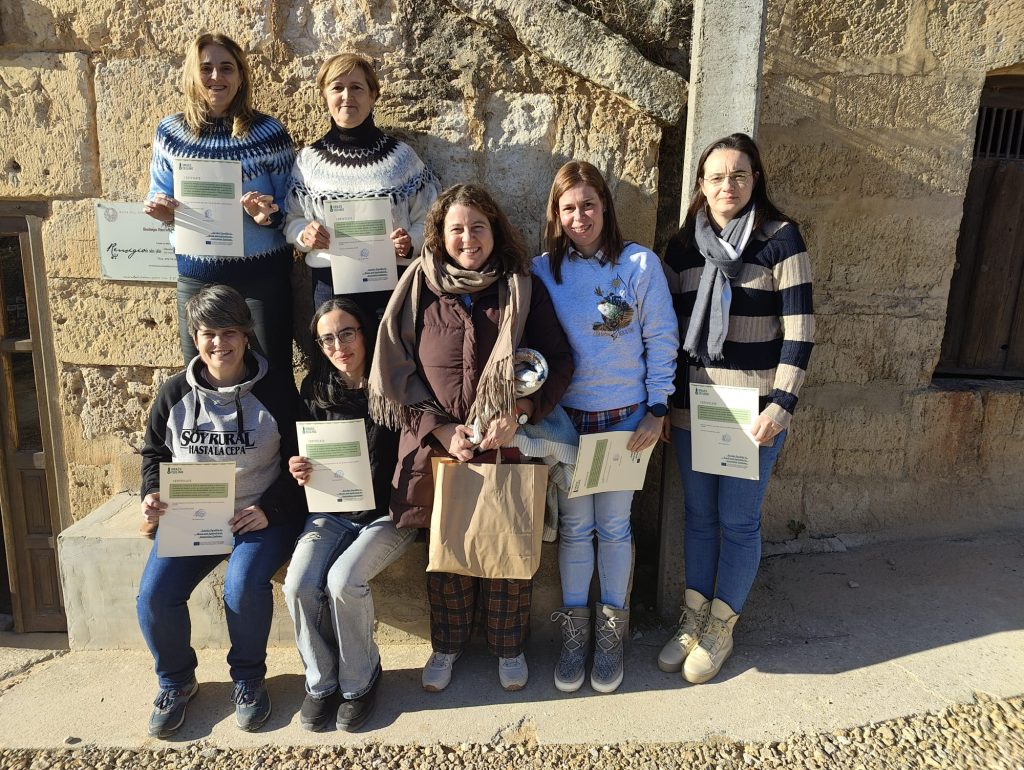
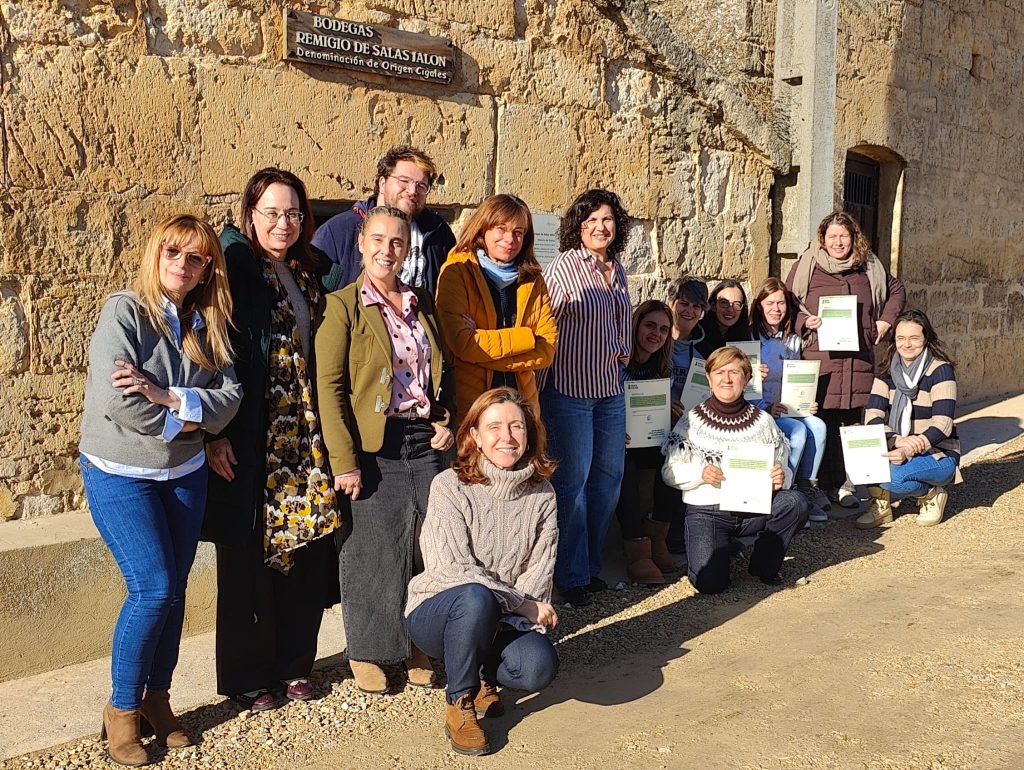
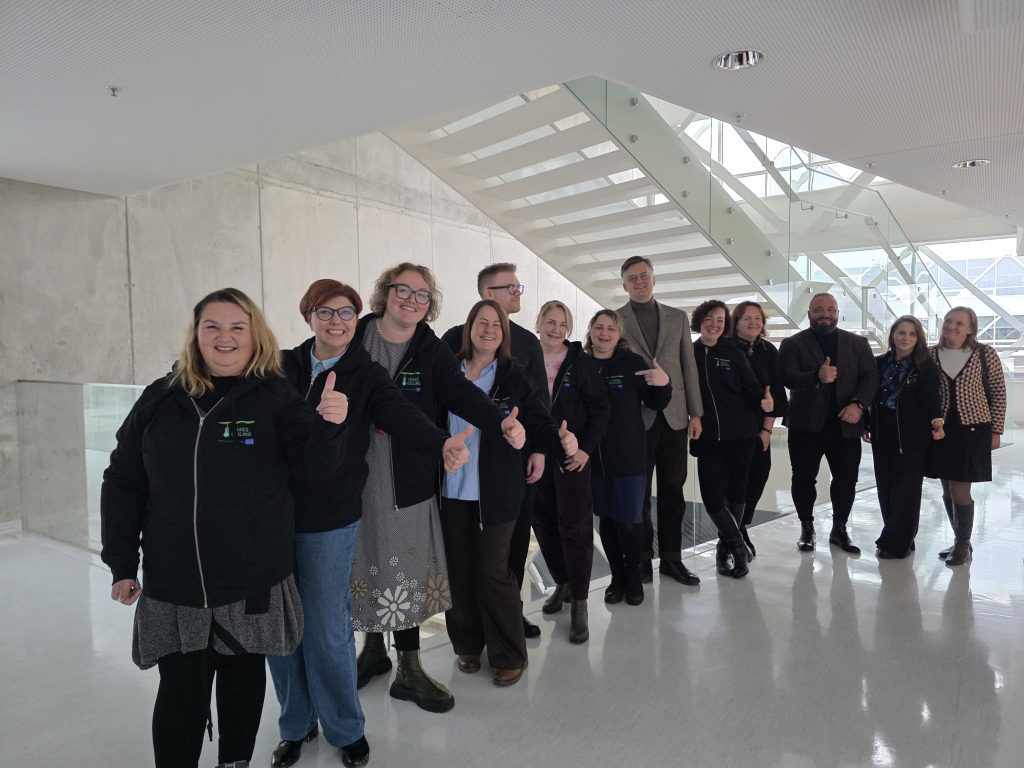
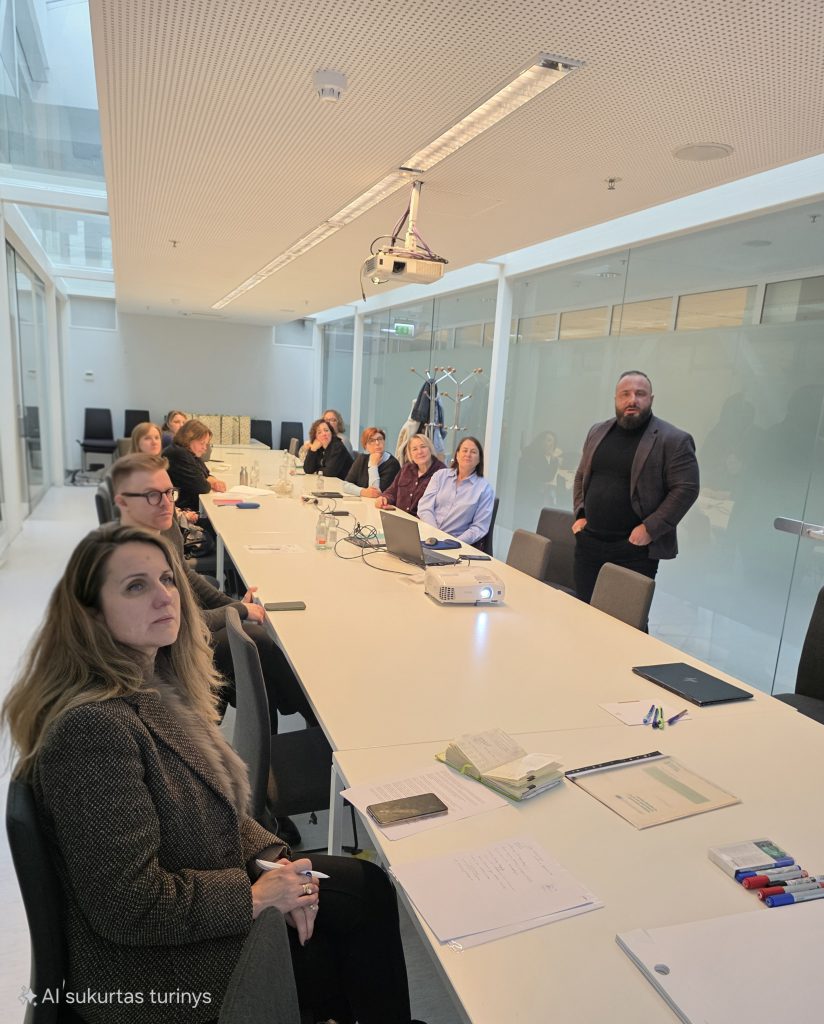
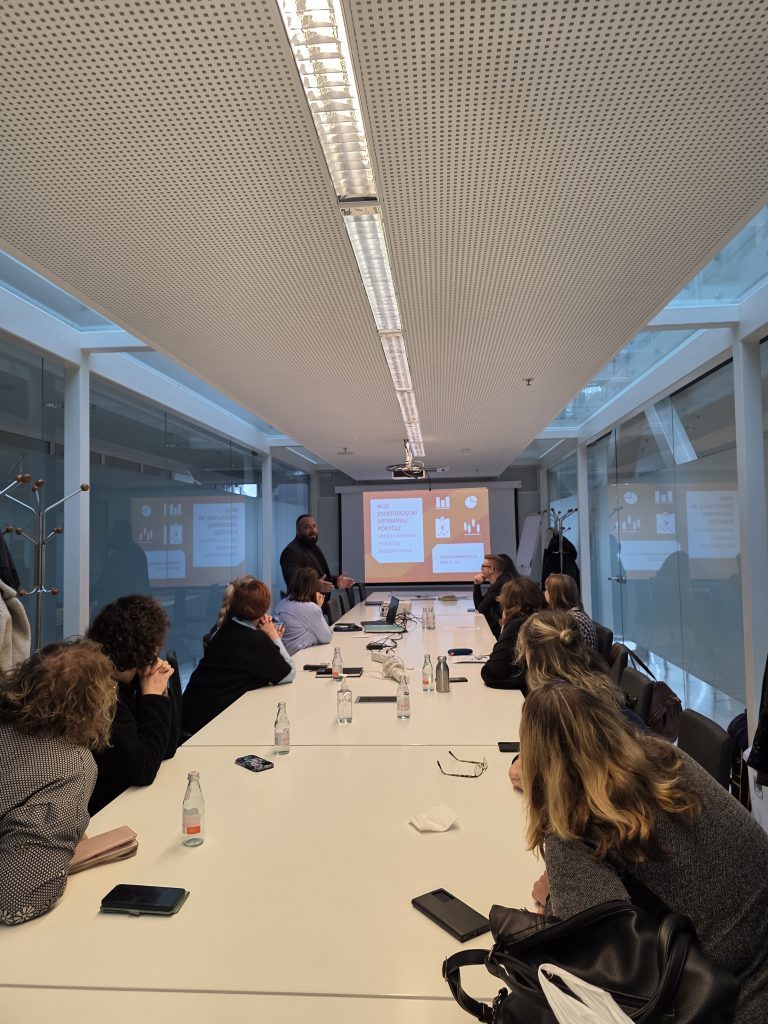
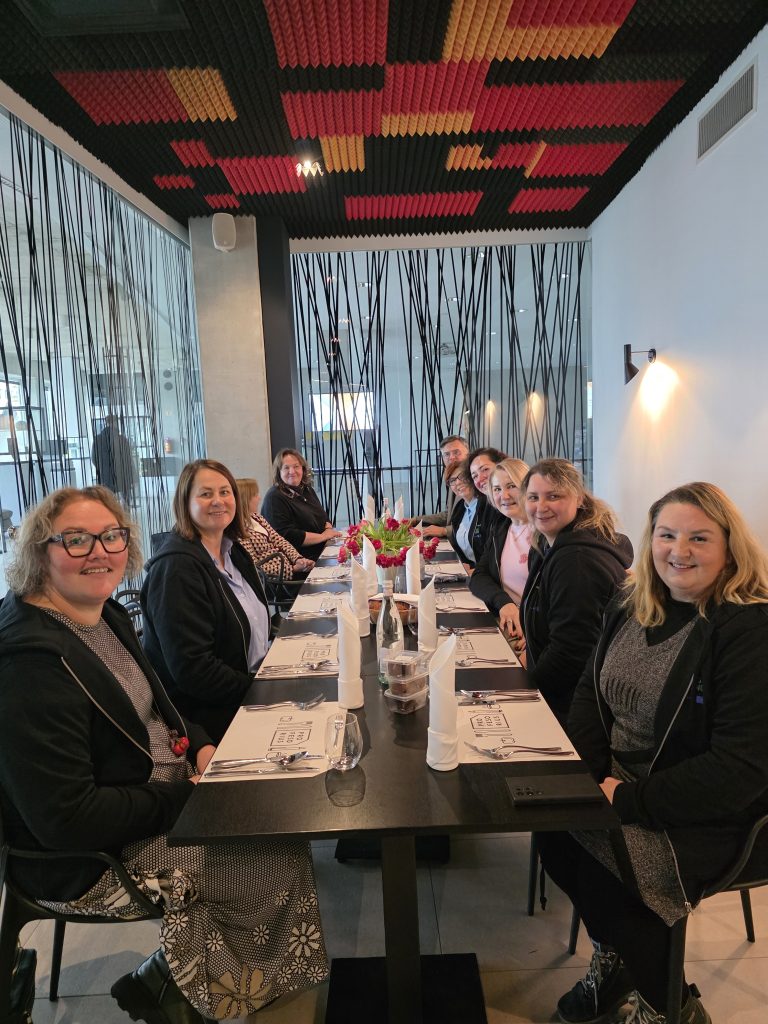
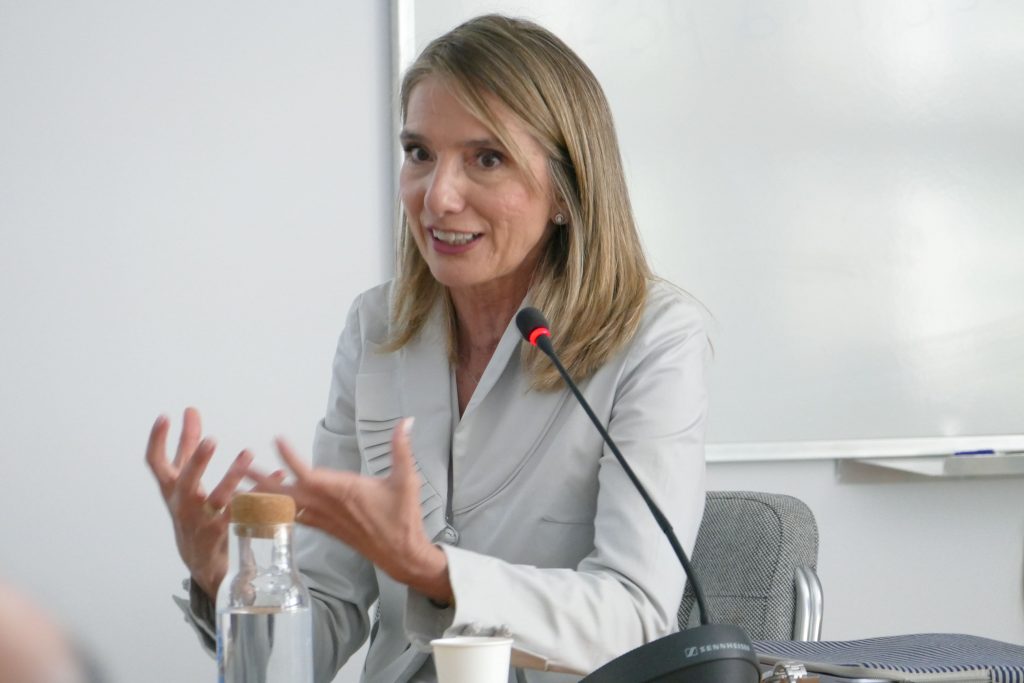
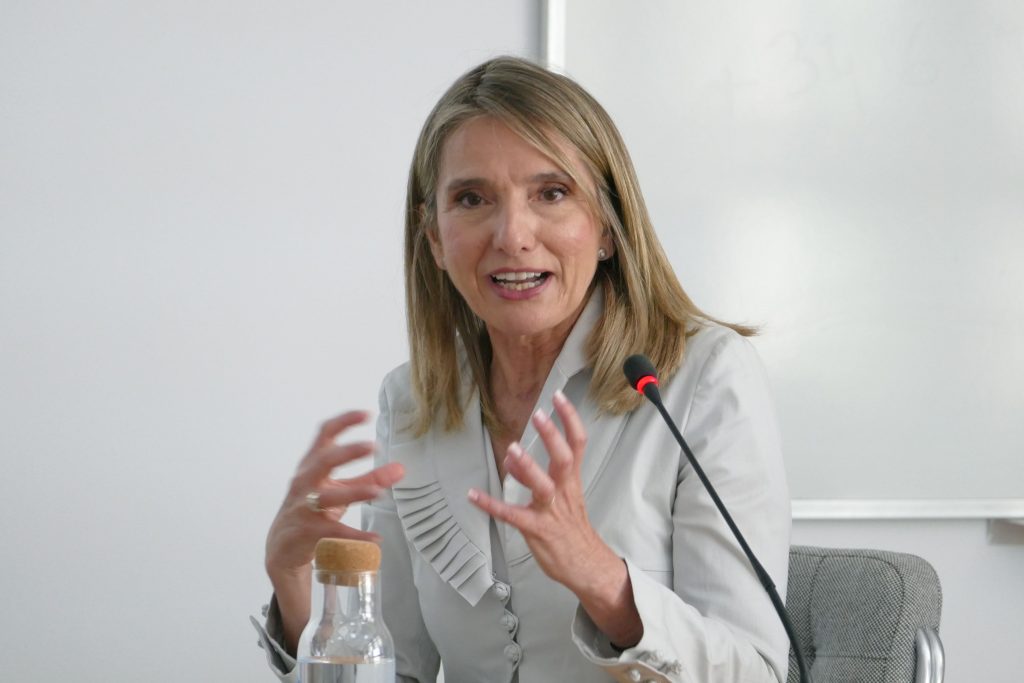
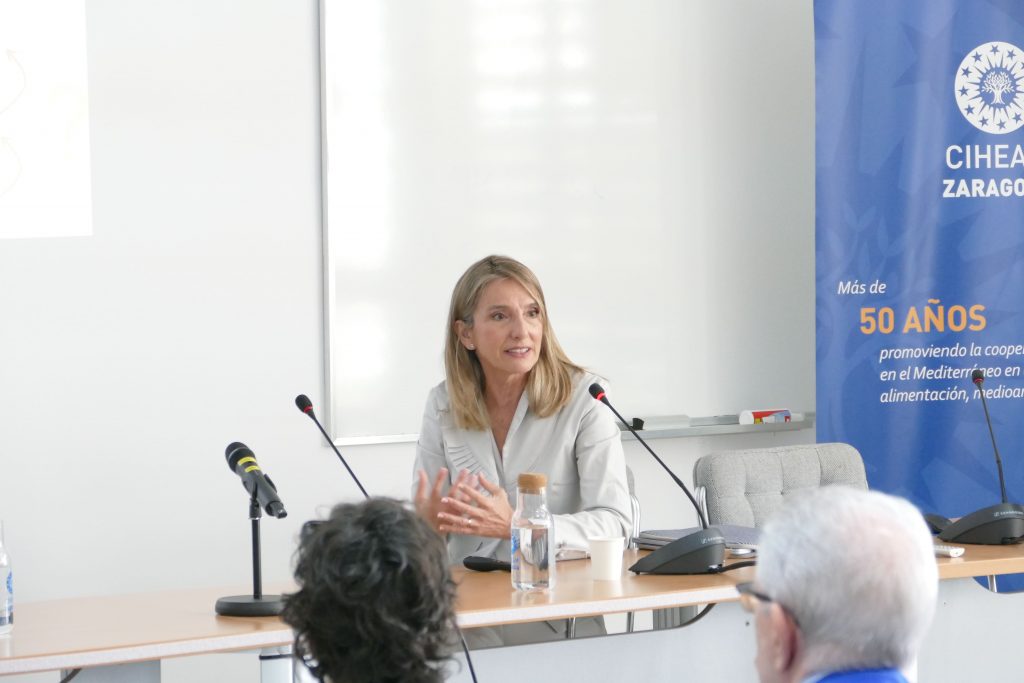
Pictre of project partners during the Final Consortium Meeting

The lessons learned throughout the project have been compiled in an online academy, giving rise to a MOOC accessible to anyone interested in learning about Gender Equality in Rural and Agricultural Innovation Systems (link). This platform shares best practices, insights, and practical guidance on the project’s approach, helping to inspire and support future women innovators.

To complement these outputs and showcase the project’s main conclusions and achievements, we have produced a new video featuring the experiences of several key project participants. In the video: Professor Sally Shortall outlines the project’s vision and achievements; Torunn Bjerkem from Norway reflects on her journey as a Living Lab innovator; Serafín Pazos-Vidal (AEIDL) discusses the European Policy Forum; Patrizia Pugliese (CIHEAM Bari) presents the online academy and MOOC; and Ksenija Simovi (Copa-Cogeca) highlights the importance of connecting women innovators with stakeholders.

As Professor Sally Shortall, GRASS CEILING coordinator, highlights, the project has shown the immense value of creating spaces where women can come together, share knowledge, and develop their skills—especially when supported by dedicated platforms and forums. Reflecting on the lessons learned, she notes the importance of listening to women farmers’ needs and adapting structures and processes to better support them. With the right encouragement and resources, there is no limit to what these women innovators could achieve, and GRASS CEILING has laid the groundwork for this future.

GRASS CEILING Final Consortium Meeting highlights three years of empowering women innovators Read More »

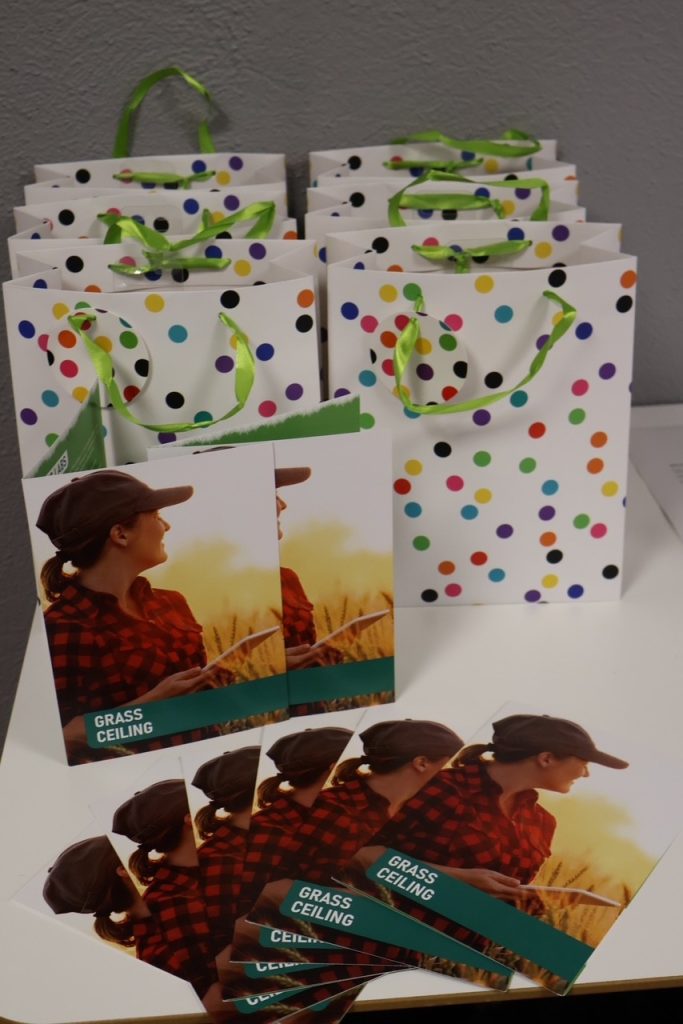
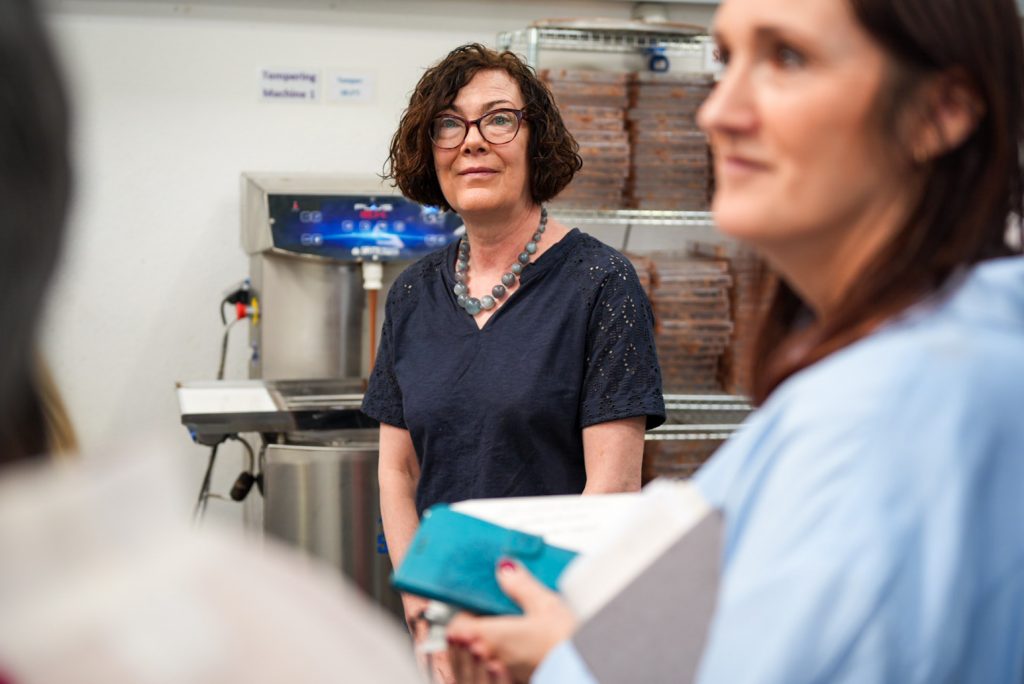
Grass Ceiling has been recognised as a Horizon Europe success story. In this image there is a woman holding a leaflet with the project outputs

GRASS CEILING recognised as a Horizon Europe Success Story

We are pleased to announce that GRASS CEILING has been featured as an official Horizon Europe Success Story under the title “Cutting a path through European agriculture’s ‘grass ceiling’“. Directorate-General for Research and Innovation (DG RTD) ‘success stories’ refer to real examples of impactful results from EU-funded research and innovation projects supported by the European Commission.

The article highlights the project’s contribution to making women’s roles in agriculture and rural innovation more visible, as well as the impact of our nine Living Labs and the work led by our coordinator, Professor Sally Shortall.

We are proud to see GRASS CEILING’s achievements recognised at European level and invite you to read the full Success Story on the European Commission website (“Cutting a path through European agriculture’s ‘grass ceiling’”) or on the Horizon Europe Ireland website (Boosting women-led innovation in farming and rural communities”).

GRASS CEILING recognised as a Horizon Europe Success Story Read More »

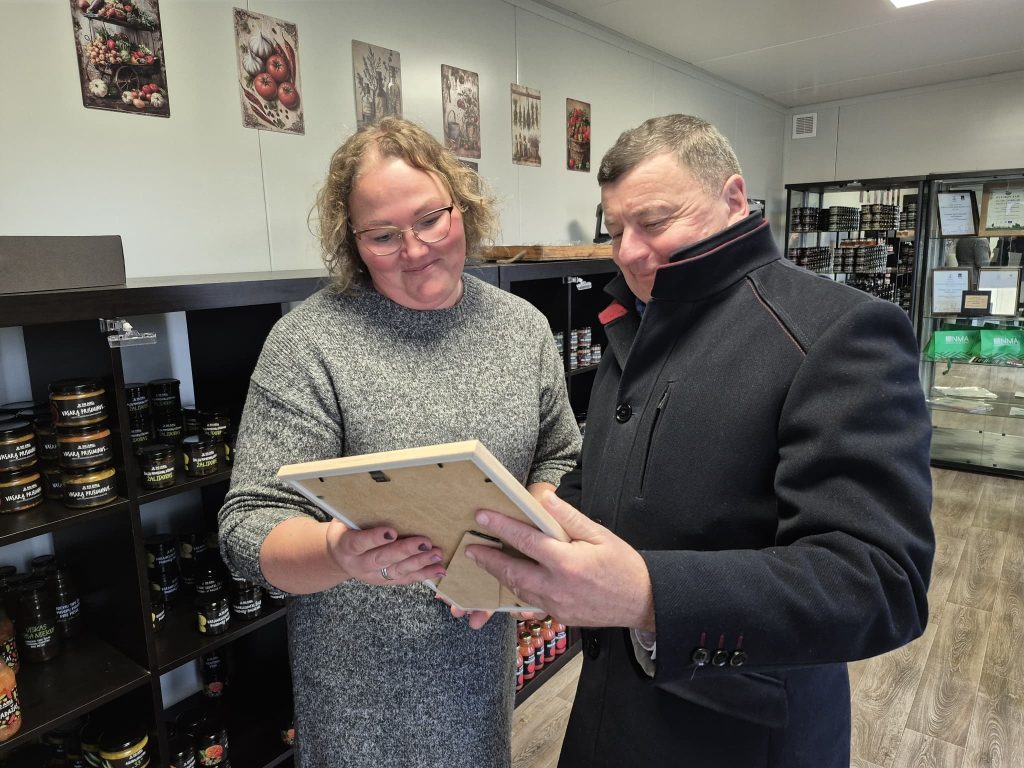
The innovator Eglė Valuckaitė-Stašauskienė, from our Lithuanian Living Lab, receives local recognition

We are pleased to celebrate the achievement of Eglė Valuckaitė-Stašauskienė, participant of the GRASS CEILING Lithuanian Living Lab, whose family farm 50 Arų. Darbo ir džiaugsmo ūkis has been recognised by the Mayor of the Kėdainiai District.

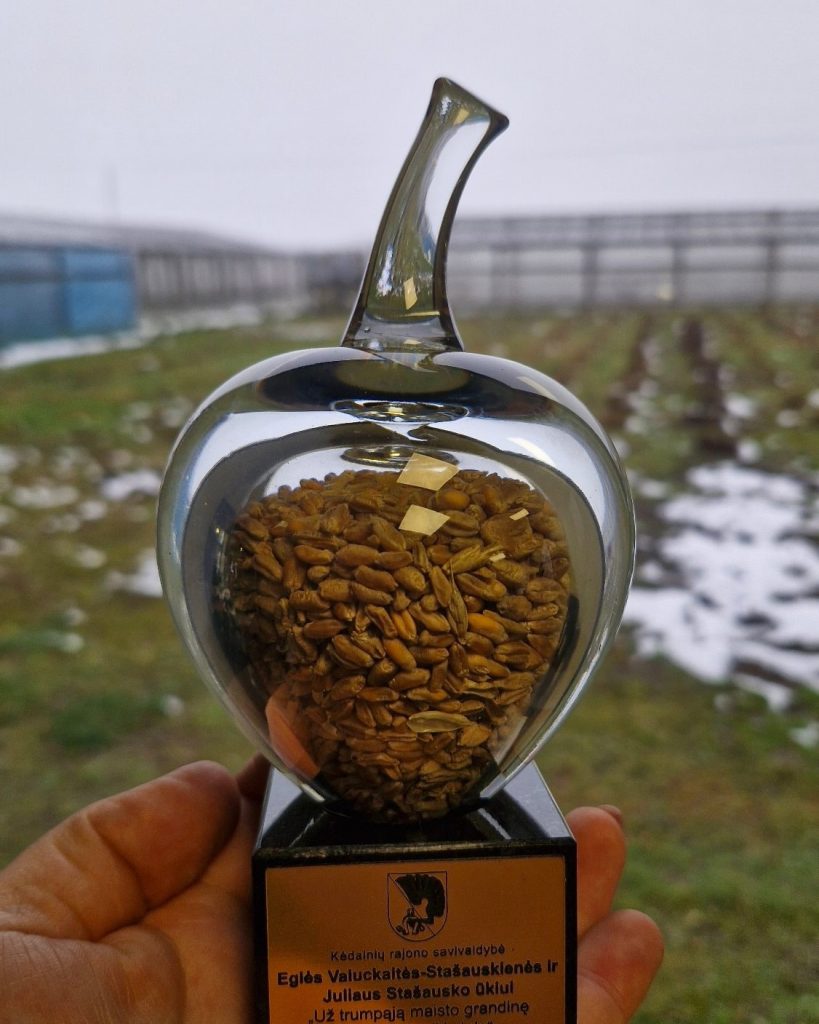
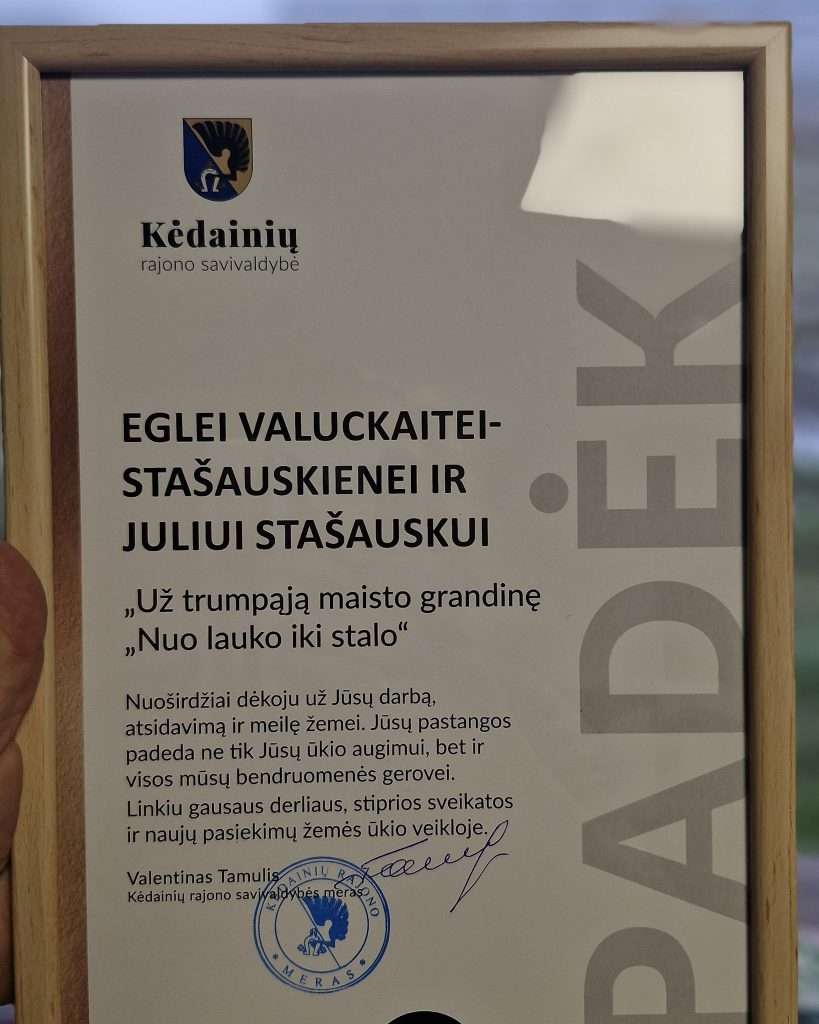
The award highlights the farm’s work in developing a short food supply chain, embracing a true “from field to table” model. Eglė noted how meaningful it is “to be noticed in the context of the entire Kėdainiai region”, particularly as a small but highly dedicated and responsible farm.

We warmly congratulate Eglė for her perseverance, commitment to sustainability, and innovative approach—an inspiring example of women-led rural innovation.

Egle receiving local recognition - award itself
Egle receiving local recognition - certificate
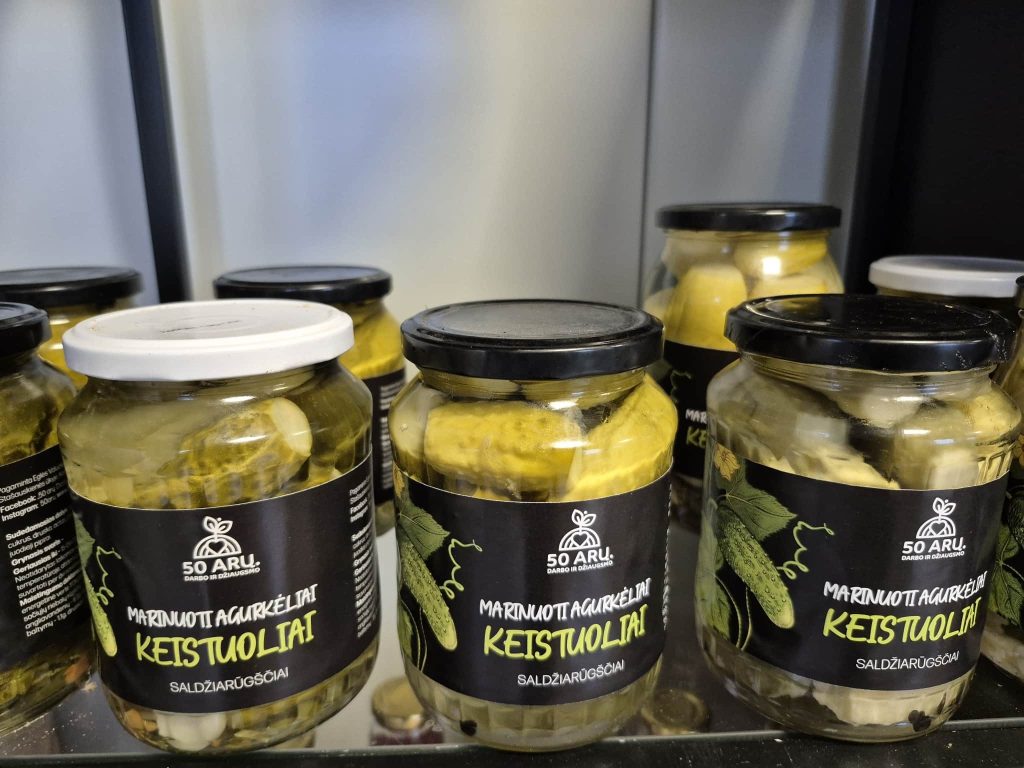
food jars from Egle's farm
Food from Egle's farm

The innovator Eglė Valuckaitė-Stašauskienė, from our Lithuanian Living Lab, receives local recognition Read More »

GRASS CEILING Final Showcase Event - general image

Three years of GRASS CEILING: Reflections from the Final Showcase Event in Brussels

Last week, we celebrated the GRASS CEILING Final Showcase Event at the European Economic and Social Committee (EESC) in Brussels, marking the culmination of three years of collaboration to advance women-led innovation in agriculture and rural areas across Europe.

The event opened with welcoming remarks by Oana Neagu (Copa-Cogeca) and Stoyan Tchoukanov (EESC), followed by an introduction from our project coordinator, Professor Sally Shortall (South East Technological University, SETU).

Final Showcase Event: Oana and Stoyan presenting the session
Opening of the GRASS CEILING Final Showcase Event.

We then explored the work of the European Policy Forum for Women-Led Innovation, including a Welcome Dialogue with MEPs Georgiana Teodorescu (ECR) and Maria Walsh (EPP).

Blanca Casares Guillén (European Association for Innovation in Local Development, AEIDL) presented the project’s policy recommendations, setting the scene for the first round table discussion led by Serafín Pazos (AEIDL), Inclusive pathways for farming and rural futures: EU policy solutions for the transition, featuring: Elena Schubert (European Commission, DG AGRI – Social Sustainability Unit), Maria Nikolopoulou (European Economic and Social Committee, EESC), Faustine Bas-Defossez (European Environmental Bureau, EEB), Maria Walsh (Member of the European Parliament, MEP), Sally Shortall (SETU – GRASS CEILING Coordinator), and Blanca Casares (AEIDL).

Blanca also presented the project’s policy tools, followed by the second round table, coordinated by Sally Shortall (SETU), Inclusive policy tools: integrating gender responsiveness into EU innovation and monitoring frameworks, with Giulia Bizzo, European Commission, DG RTD – Bioeconomy & Food Systems, Maura Farrell, University of Galway – FLIARA Project Coordinator Sari Rautio, Committee of the Regions (CoR) and Blanca Casares, European Association for Innovation in Local Development (AEIDL).

First round table
Final showcase event second round table

Policy forum round tables.

In the afternoon, we hosted the Living Lab Dialogue, highlighting the outcomes, impacts, and remarkable journeys of our nine women rural innovators through short presentations: Vesna Jakić (Croatia), Emer Lawrence (Ireland), Letizia Cuonzo (Italy), Daiva Šinkevičienė (Lithuania), Albertine Ekkels (The Netherlands), Torunn Hernes Bjerkem (Norway), Haley Shepherd (Scotland), Marta Llorente (Spain), Ulrica Björnhag (Sweden), with closing reflections by Felicity Kelliher (SETU).

innovators from the living labs
Women innovators from the Living Labs showcasing their work.

As a surprise, during this session, we also premiered the GRASS CEILING project results video, showcasing the main results and achievements from across our nine Living Labs—soon to be shared publicly on our social media channels!

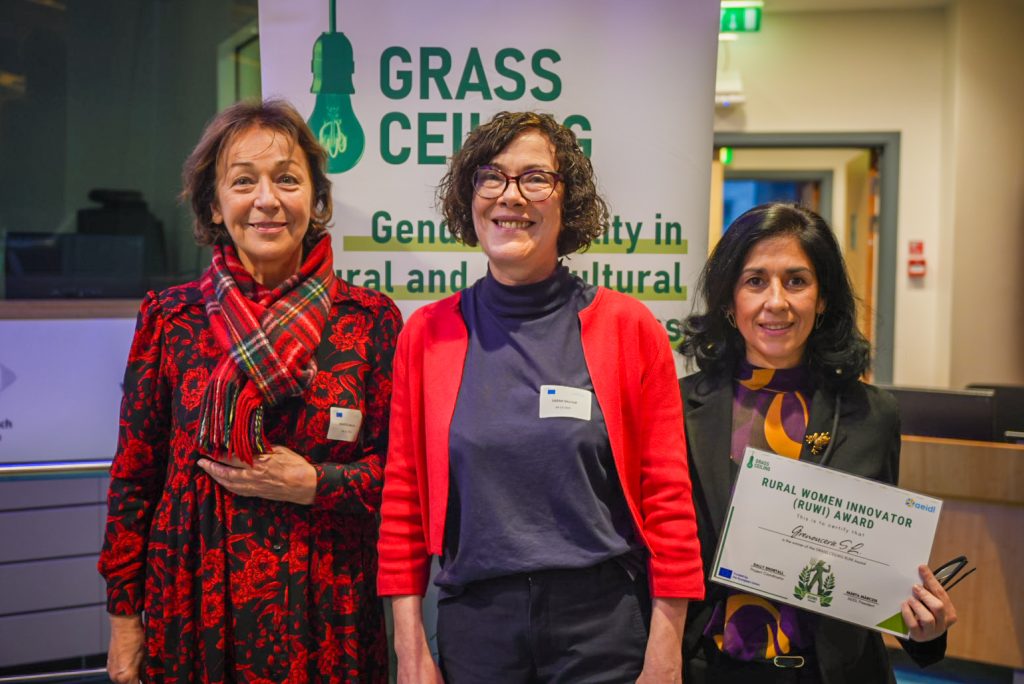
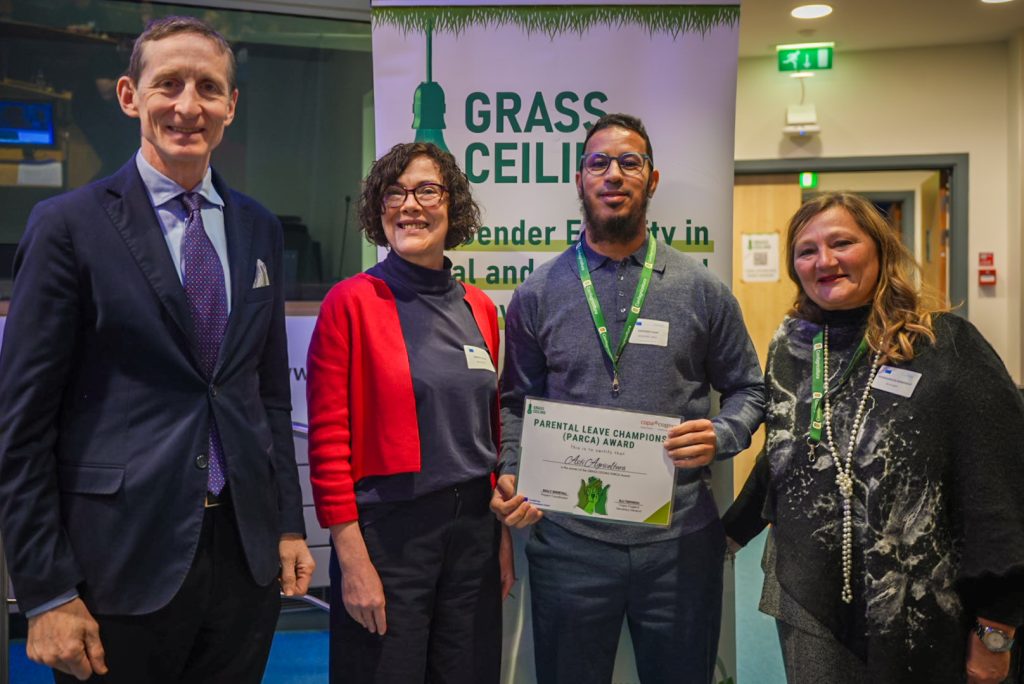
We also celebrated the ceremonies for the GRASS CEILING Rural Women’s Social Innovation (RUWI) Award and the Parental Leave Champions Award (PARCA), recognising outstanding leadership, resilience, and transformative rural innovation of Grenoucerie S.L. and Asti Agricoltura. These Awards were coordinated by AEIDL and Copa-Cogeca, respectively.

RUWI Award ceremony.
PARCA Award ceremony.

A heartfelt thank you to all speakers, partners, stakeholders, and especially the women innovators who shaped this project. Their work continues to pave the way toward more inclusive, equitable, and sustainable rural futures in Europe.

Final showcase event_ picture with all participants
All the participants of the GRASS CEILING Final Showcase Event.

Three years of GRASS CEILING: Reflections from the Final Showcase Event in Brussels Read More »

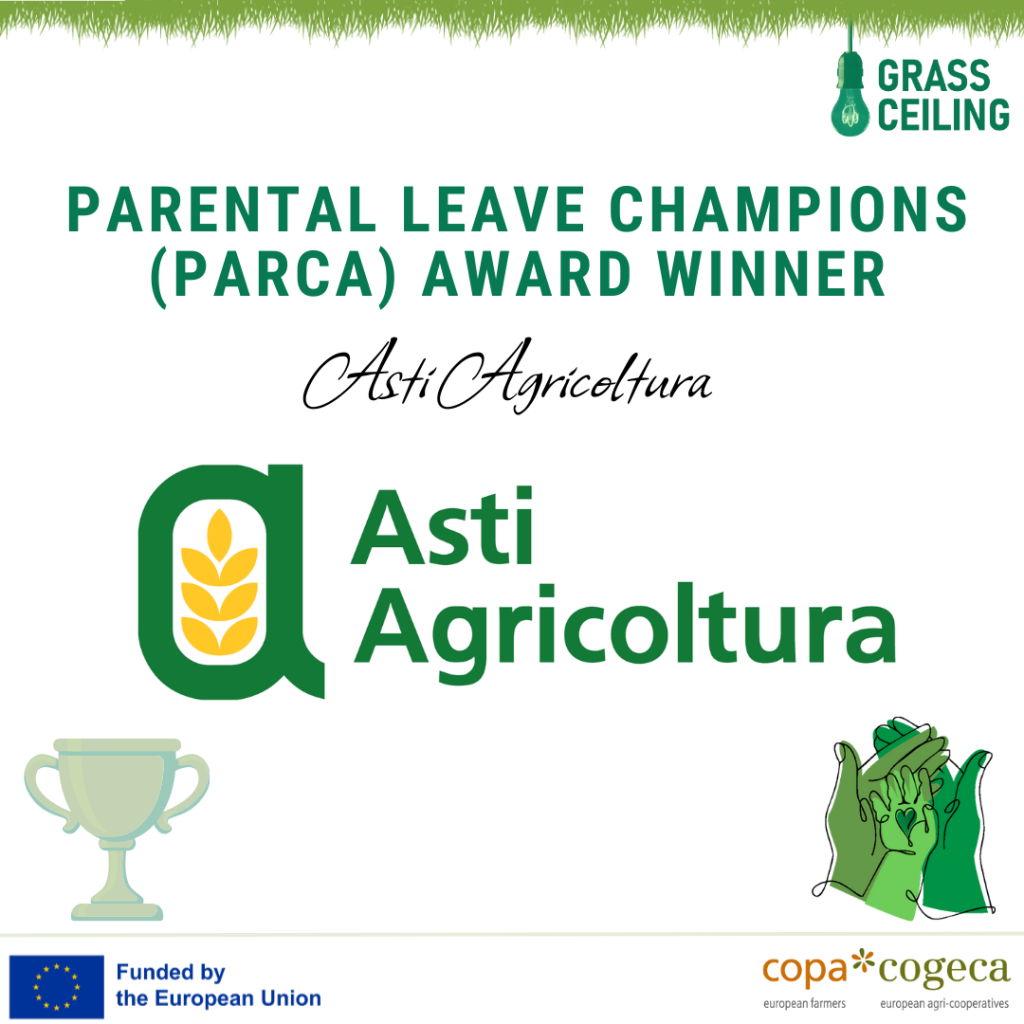
Asti Agricoltura wins the PARENTAl LEAVE Champions PARCA Award

Asti Agricoltura receives the Parental Leave Champions (PARCA) Award

GRASS CEILING is proud to announce that Asti Agricoltura has been selected as the recipient of the Parental Leave Champions (PARCA) Award, following an independent evaluation process carried out by Copa-Cogeca, the umbrella organisation representing European farmers and agri-cooperatives.

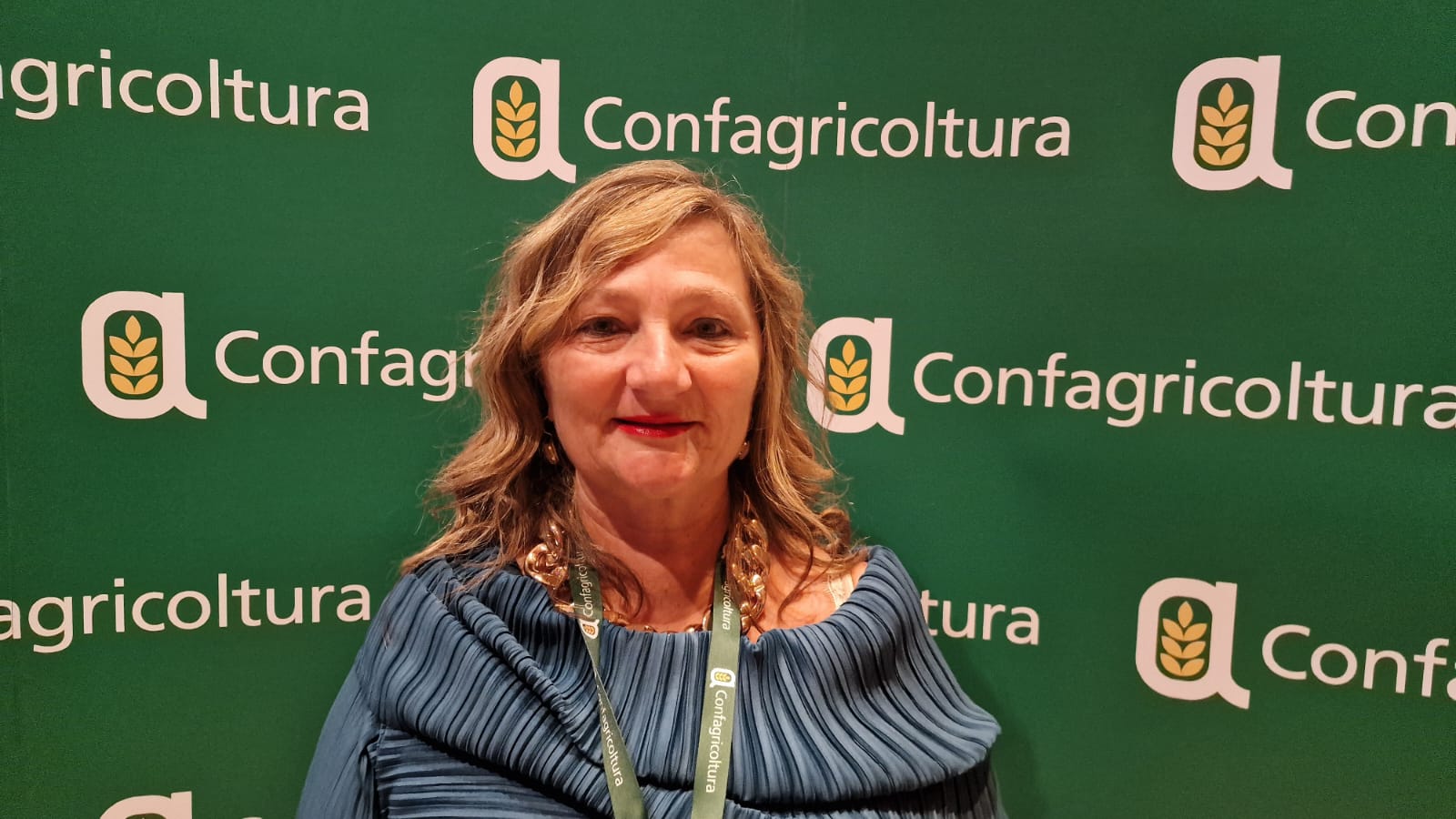
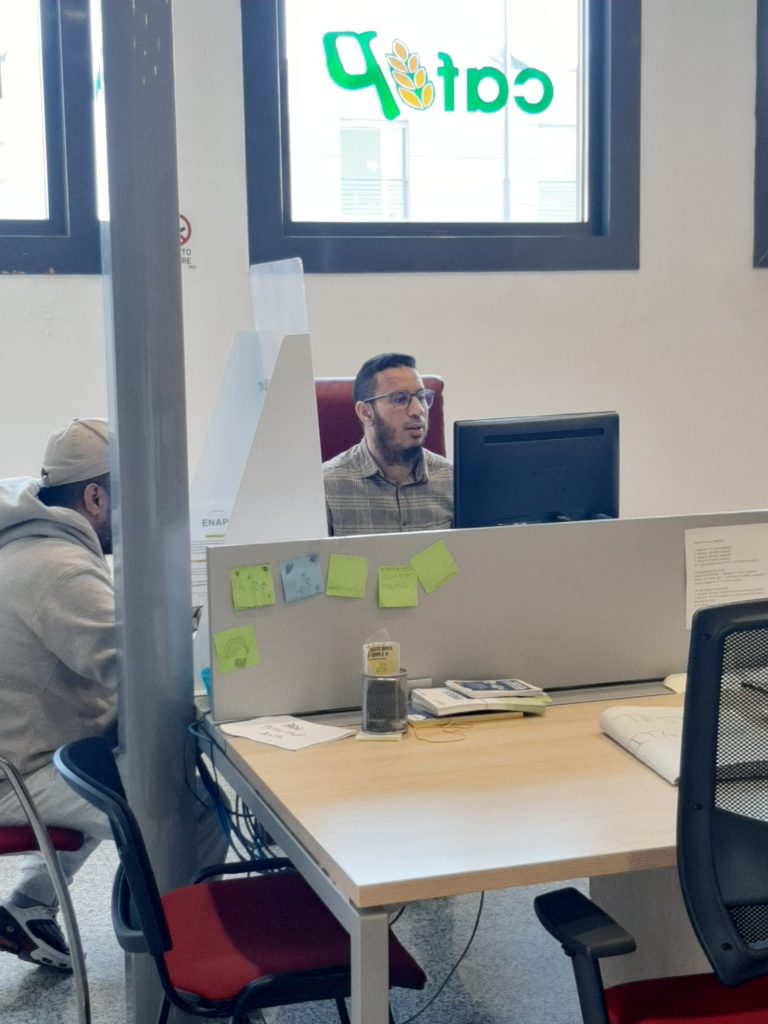
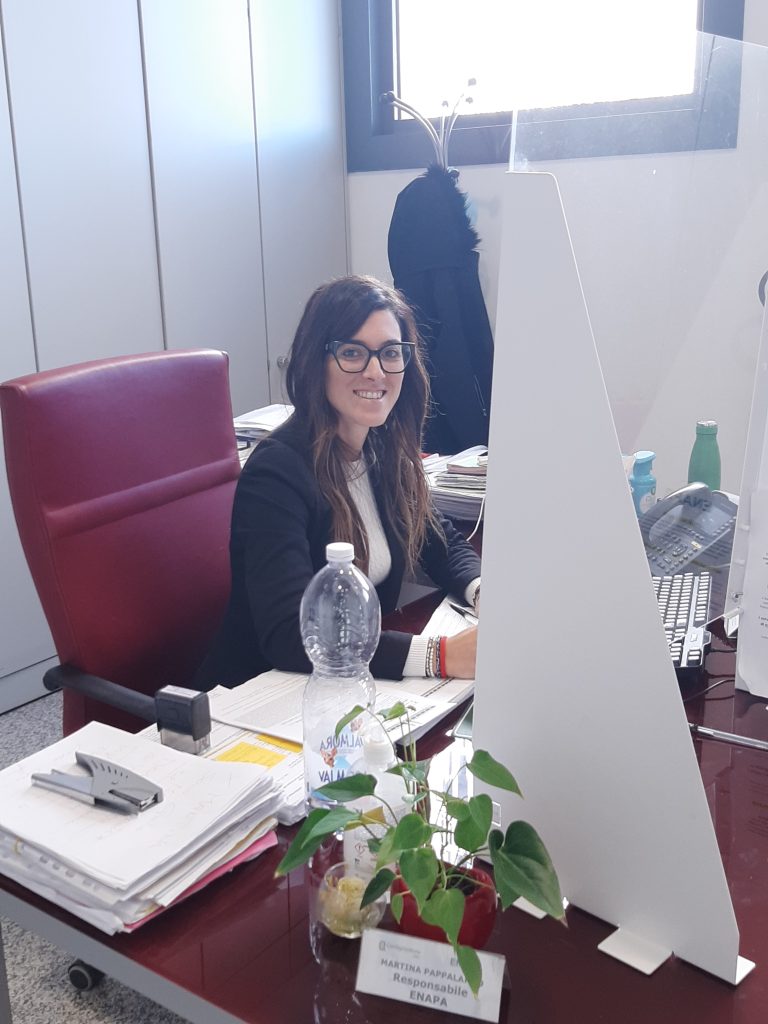
Asti Agricoltura has demonstrated exceptional commitment to supporting agricultural workers and self-employed farmers in understanding and accessing their parental leave rights. By offering clear guidance, personalised support and proactive communication, they have ensured that rural parents—from employees to self-employed agricultural entrepreneurs—receive accurate information and are better positioned to claim the benefits available to them.

Their work significantly contributes to gender equality, social inclusion and improved wellbeing for farming families across the region. The PARCA Award recognises organisations that deliver meaningful, positive change in rural communities, and Asti Agricoltura stands out as a model of excellent practice.

GRASS CEILING warmly congratulates Asti Agricoltura and thanks Copa-Cogeca for leading the selection process with independence and expertise. Together, we continue advancing a more inclusive and equitable future for Europe’s agricultural sector.

PARCA Award winner

For more information read the Asti Agricoltura Project Flyer: Italian version | Arab version

Asti Agricoltura receives the Parental Leave Champions (PARCA) Award Read More »

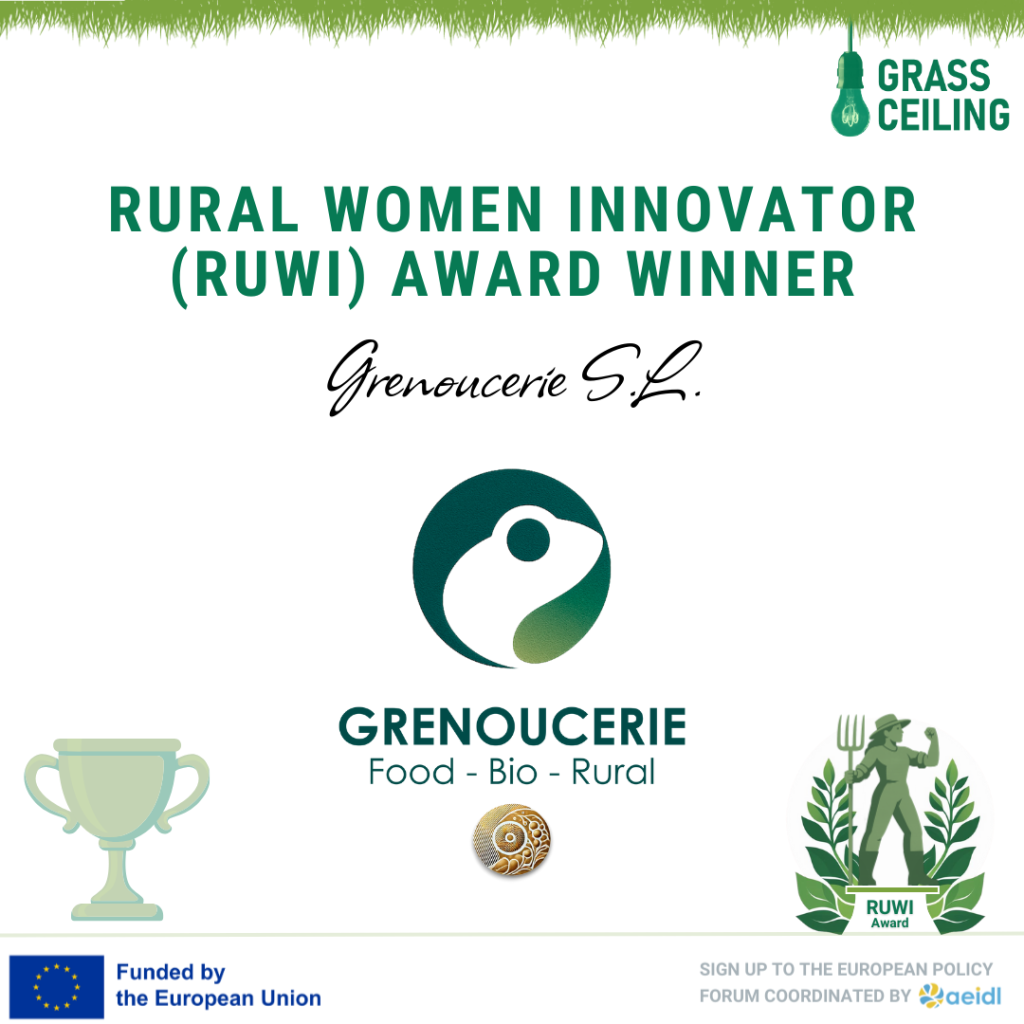
Visual to present the RUWI winner (singular by grenoucerie sl)

Grenoucerie SL wins the RUWI Award for Rural Women Innovators!

The GRASS CEILING project is delighted to announce that Grenoucerie SL, a micro-enterprise based in Zamora (Spain), has been selected as the winner of the Rural Women Innovators (RUWI) Award.

This competition received 64 high-quality applications from 28 countries, including several non-EU nations such as India, Sierra Leone, Malawi, and Uganda. The two-stage selection process was coordinated by AEIDL (European Association for Innovation in Local Development), ensuring a rigorous and transparent evaluation of all submissions.

Grenoucerie SL stood out for its innovative approach to the intensive farming of Iberian frogs, as well as its strong gender-responsive business model. The company not only promotes, but actively practices, women’s empowerment: 40% of its workforce is female, and its integration contract scheme enables women to become farm owners and economic leaders within their communities.

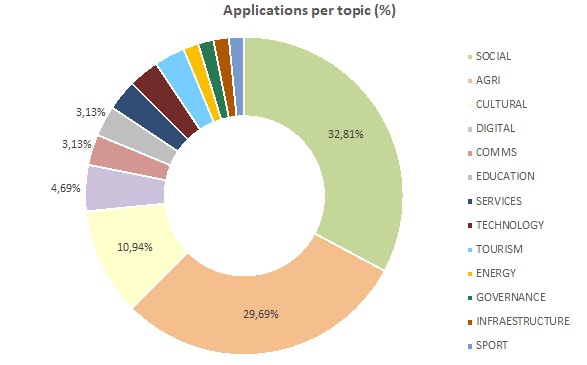
Applications covered a broad thematic range, with most initiatives linked to agriculture (23.44%), followed by training and capacity building (15.63%), social services (14.06%), and cultural activities (7.81%).

graph representing the percentage of total applications per topic for the RUWI arward

The RUWI Award aims to celebrate impactful, forward-looking projects led by women who are transforming rural futures. Grenoucerie SL embodies this mission with excellence.

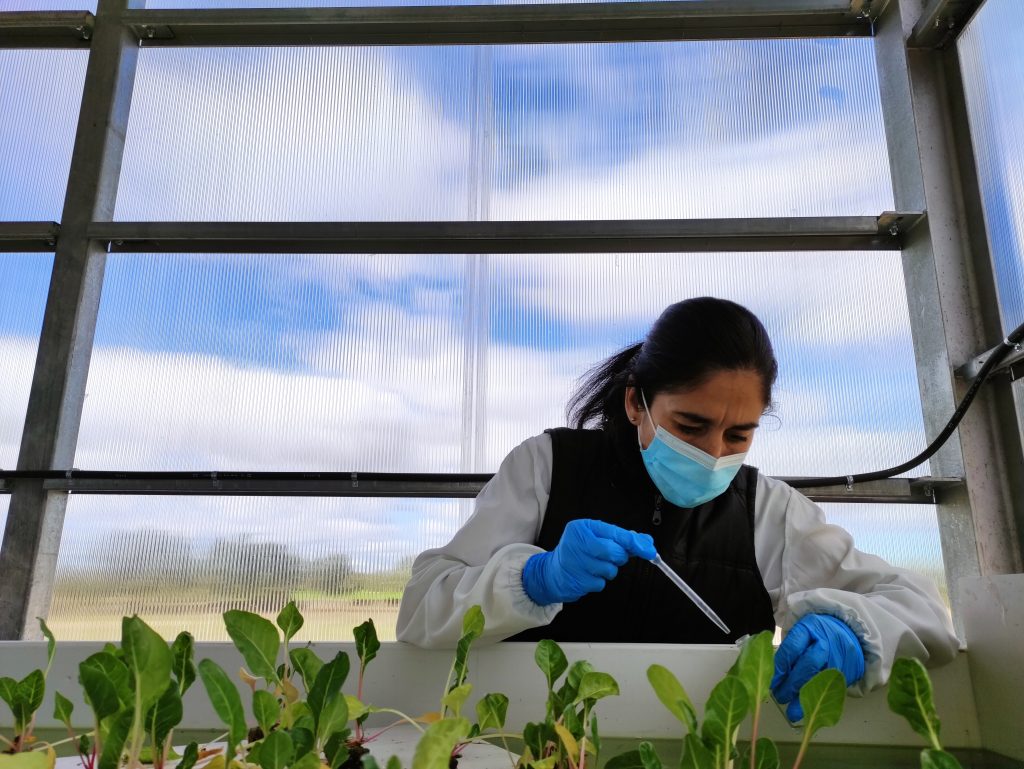
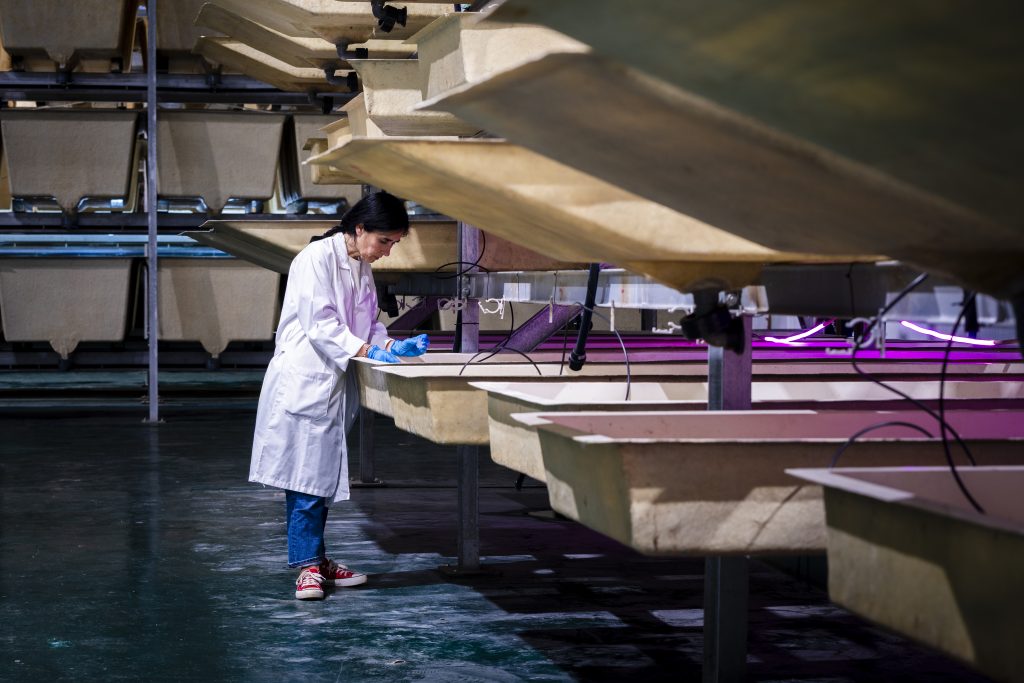
grenoucerie sil - plants

Grenoucerie SL wins the RUWI Award for Rural Women Innovators! Read More »

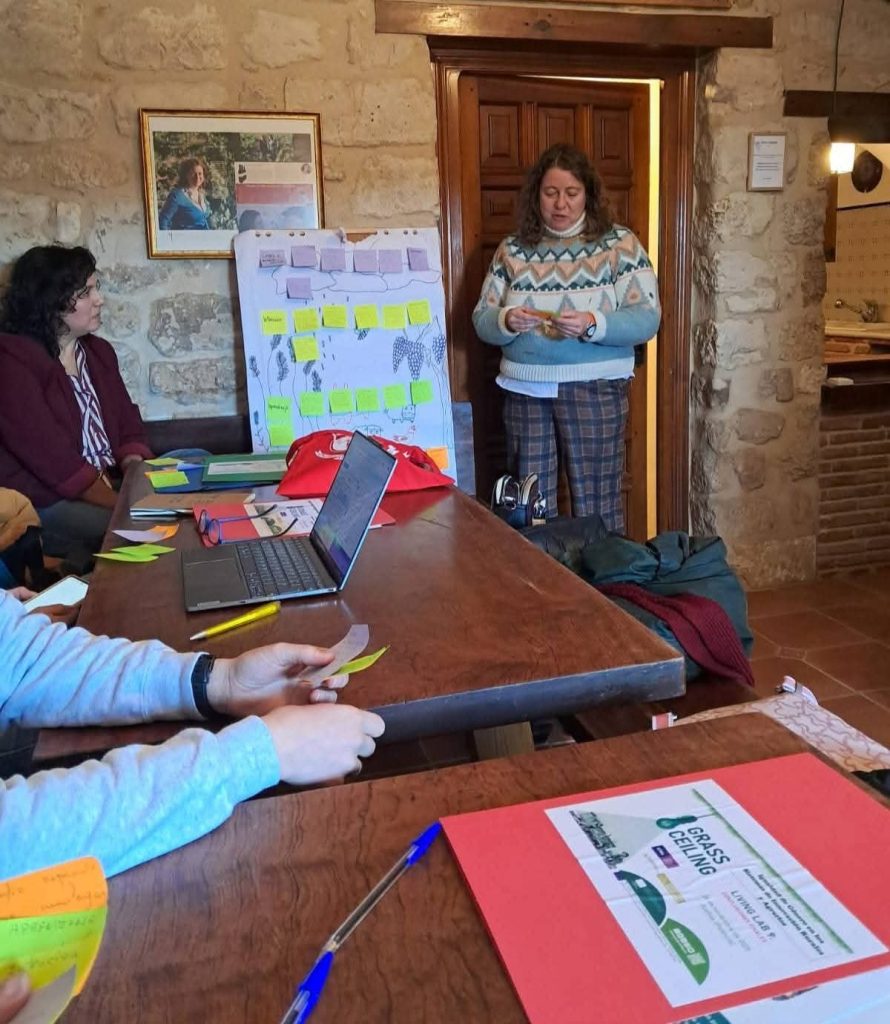
Woman innovators of the Spanish Living Lab (last meeting)

Three years of female-led innovation conclude at the final meeting of the Spanish GRASS CEILING Living Lab

After three years of exchange, learning, and collaboration, the women of the Spanish Living Lab of the GRASS CEILING project held their final meeting at the Remigio Salas Winery, a space where they shared achievements, challenges, and future commitments.

The Spanish Living Lab of the European GRASS CEILING project, dedicated to promoting women-led innovation in the agricultural sector, held its ninth and final meeting this Wednesday. The event took place at the Remigio Salas Winery, a symbolic setting that reflects the territorial roots and success of an agri-food activity in a rural area that combines innovation and tradition, led by a woman, Amada de Salas, who has recently been recognized with several regional and national awards.

The meeting was attended by participating women farmers and livestock producers; the academic team from the Palencia University Campus (University of Valladolid), responsible for the scientific coordination of the Living Lab and led by Professor Margarita Rico; and a representative from Cooperativas Agro-alimentarias de España, another of the project’s partner entities.

Final Spanish living lab meeting - innovators, academics, stakeholders...

The final session had a special tone, combining collective reflection with recognition of the path travelled during the three years of work. Throughout the day, a synthesis of some of the conclusions was presented, highlighting the diversity and relevance of the agricultural innovations led by women, which encompass not only technological dimensions but also sustainability, diversification, sector visibility, and network creation. The need to strengthen gender-sensitive public policies was also emphasized—policies that support women in accessing resources, training, financing, and work–life balance. Spaces like this Living Lab reflect the importance of networking to reinforce innovative identity, confidence, and cooperation among rural women in the agricultural sector.

Through a final dynamic, all participants expressed what this three-year journey of reflection had meant to them, making visible the human, professional, and emotional value of the process and reinforcing the sense of belonging to a network of women leaders in rural areas. Particular emphasis was placed on the significant changes still needed for these women to fully develop their work, with explicit reference to bureaucratic burdens, financial difficulties in making necessary investments to digitalize processes—given the medium size of their farms—and barriers to accessing management positions in sector organizations, often driven by established patriarchal power structures.

The representative from Cooperativas Agro-alimentarias de España highlighted the value of such initiatives in giving visibility to female leadership and strengthening women’s participation in decision-making bodies in the agricultural sector, particularly within cooperatives. The UVa team stressed that the learnings and connections generated go beyond the project itself and should serve to promote gender-sensitive public policies that support innovative processes led by women in rural areas most affected by depopulation and socioeconomic deterioration.

Next week, the final closing meeting of the project will take place in Brussels, with representatives from all GRASS CEILING consortium countries. The general conclusions reached will be presented, and an event showcasing women-led innovative best practices will be held. Representing Spain will be the project coordinator and Marta Llorente, a pig farmer and wine producer from Zazuar (Burgos), who will present her initiative and her experience as a participant in the Spanish Living Lab.

Final Spanish Living Lab meeting - winery picture
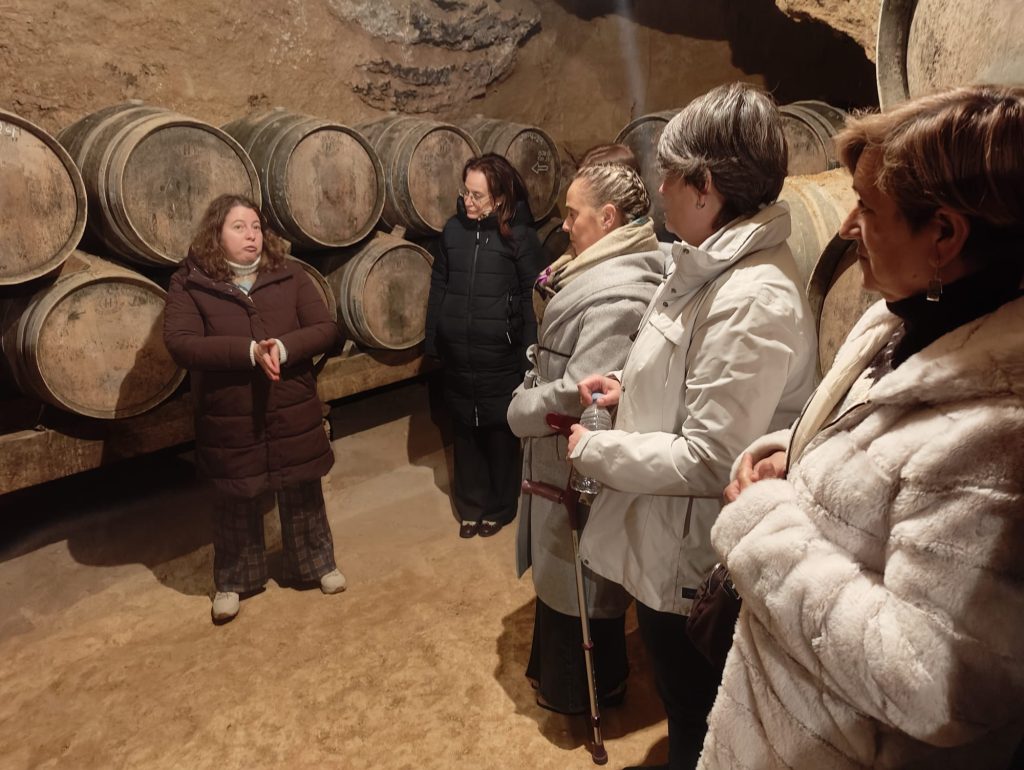
final Spanish living lab - meeting - innovators talking

Three years of female-led innovation conclude at the final meeting of the Spanish GRASS CEILING Living Lab Read More »

Woman innovators of the Spanish Living Lab (last meeting)

El Living Lab español de GRASS CEILING cierra tres años de innovación y liderazgo rural femenino

Tras tres años de intercambio, aprendizaje y colaboración, las mujeres del Living Lab español del proyecto GRASS CEILING celebraron su último encuentro en la Bodega Remigio Salas, un espacio donde compartieron logros, desafíos y compromisos de futuro.

El Living Lab español del proyecto europeo GRASS CEILING, dedicado a impulsar la innovación liderada por mujeres en el sector agrario, celebró este miércoles su noveno y último encuentro. La reunión tuvo lugar en la Bodega Remigio Salas, un escenario simbólico que refleja el arraigo territorial y el éxito de una actividad agroalimentaria en una zona rural, que combina innovación y tradición, al frente de la cual está una mujer, Amada de Salas, recientemente reconocida con varios premios regionales y nacionales.

Al encuentro asistieron las mujeres agricultoras y ganaderas participantes, el equipo académico del Campus Universitario de Palencia (Universidad de Valladolid), responsable de la coordinación científica del Living Lab y dirigido por la Profesora Margarita Rico y una representante de Cooperativas Agro-alimentarias de España, otra de las entidades socias del proyecto.

Final Spanish living lab meeting - innovators, academics, stakeholders...

La sesión final tuvo un carácter especial, combinando reflexión colectiva con reconocimiento del camino recorrido durante los tres años de trabajo. A lo largo de la jornada se presentó una síntesis de alguna de las conclusiones obtenidas, destacando la diversidad y relevancia de las innovaciones agrarias impulsadas por las mujeres, que abarcan no solo la dimensión tecnológica, sino también la sostenibilidad, la diversificación, la visibilidad del sector y la creación de redes. Además, se puso de manifiesto la necesidad de reforzar políticas públicas sensibles al género, que acompañen a las mujeres en el acceso a recursos, formación, financiación y conciliación. Espacios como este Living Lab reflejan la importancia del trabajo en red para fortalecer la identidad innovadora, la confianza y la cooperación entre mujeres rurales del sector agro.

A través de una dinámica final, todas las participantes del encuentro manifestaron qué había significado para ellas este viaje de reflexión a lo largo de tres años, lo que permitió hacer visible el valor humano, profesional y emocional del proceso y reforzó el sentimiento de pertenencia a una red de mujeres líderes en el medio rural. Se hizo especial hincapié en que aún se requieren cambios significativos para el pleno desempeño del trabajo de estas mujeres, haciendo referencia explícita a la carga burocrática, a la dificultad financiera para acometer inversiones necesarias para digitalizar procesos, dado el tamaño mediano de sus explotaciones y a las trabas para poder acceder a puestos de gestión en las organizaciones del sector, motivadas por las estructuras patriarcales de poder establecidas.

La representante de Cooperativas Agro-alimentarias de España destacó el valor de este tipo de iniciativas para dar visibilidad al liderazgo femenino y fortalecer la participación de las mujeres en los órganos de decisión agrarios y más concretamente en el ámbito de las cooperativas. El equipo de la UVa subrayó que los aprendizajes y vínculos generados trascienden el proyecto y han de servir para impulsar políticas públicas de apoyo con enfoque de género, que faciliten los procesos innovadores de las mujeres en los territorios rurales más afectados por la despoblación y el deterioro socioeconómico.

A partir de aquí, la semana próxima se celebrará en Bruselas la reunión final del cierre del proyecto, en la que participarán representantes de todos los países del consorcio GRASS CEILING. Se expondrán las conclusiones generales alcanzadas y se celebrará un evento de muestra de buenas prácticas innovadoras lideradas por mujeres. En el caso español acudirá la coordinadora del proyecto y Marta Llorente, ganadera de porcino y viticultora en Zazuar (Burgos), que expondrá su iniciativa y su experiencia como participante del Living Lab español.

Final Spanish Living Lab meeting - winery picture
final Spanish living lab - meeting - innovators talking

El Living Lab español de GRASS CEILING cierra tres años de innovación y liderazgo rural femenino Read More »

Las Lithuanian Living Lab

Empower Session: 9th GRASS CEILING Living Lab Meeting (Kaunas, Lithuania)

14 November, KTU Santaka Valley

We are delighted to share highlights from the ninth — and final — meeting of the Lithuanian GRASS CEILING Women Innovators Living Lab, held under the theme EMPOWER. This closing session marked not only the culmination of a three-year journey but also a celebration of women’s innovation, courage, and community in agriculture.

At each Living Lab meeting they learned, exchanged, experimented, and grew together. This final gathering was no exception.

The members of the LCSS GRASS CEILING research team took part in the meeting: Tomas Baležentis (team leader), Dalia Štreimikienė, Justas Štreimikis, Vaida Šapolaitė, and Vida Dabkienė.

The meeting programme included inspiring presentations from:

• Vida Dabkienė, LCSS, academic co-lead – From Idea to Change: Living Lab experiences in fostering innovation in Lithuanian women-led farms
• Vaida Šapolaitė, LCSS researcher – Introducing the GRASS CEILING MOOC: Open online training programme
• Tomas Karpavičius, business angel, professional board member, and innovation ecosystem expert with strong engagement in academic activities – From start-ups to system transformation: the role of business in innovation ecosystems
• Renata Rudnicka, practical co-lead, AgriFood Lithuania DIH – Activities, new projects and opportunities for collaboration
• Erika Ribašauskienė, LCSS researcher – Towards the Smart Village

This journey would not have been possible without the incredible women who took part in the Lithuanian Living Lab. We warmly thank:

Karališka Uoga, Daiva Šinkevičienė, Šeimos ūkis „Geltoni botai“, Ina Grecka, Bačkonių ekologinis ūkis, Rasa Prusakova, 50 Arų. Darbo ir džiaugsmo, Eglė Valuckaitė-Stašauskienė, Saldūs žiedai, Justė Jankauskienė, Gurkė, Justina Kočetova, Rūta Aliukonienė, Lina Vyšniauskaitė, Aliejus – sveikatai ir grožiui.

Your courage, ideas, honesty, creativity, and commitment shaped this Living Lab into a true space of empowerment.

Throughout the GRASS CEILING project, the Lithuanian Living Lab has become a space where women farmers build confidence, gain new knowledge, experiment with innovations, find allies and mentors, and discover new pathways for their businesses and communities. The experiences gained have expanded skills and knowledge, strengthened trust, and opened new directions for the future.

Empowerment grows where people meet, learn, share, and dare together. And this Living Lab became exactly that.

Last Living Lab Lithuania
Final meeting (lithuanian living lab)

Empower Session: 9th GRASS CEILING Living Lab Meeting (Kaunas, Lithuania) Read More »

GRASS CEILING innovator Justina Kočetova wins culinary innovation award in Lithuania

On 14 November, during the Business Day celebration in Kėdainiai District, the local business community gathered to honour entrepreneurs of all kinds — from small business owners to company leaders, business clubs, associations, and service providers.

We are delighted to share that GRASS CEILING participant Justina Kočetova received this year’s Culinary Innovation Award.

The recognition is especially symbolic, as Justina noted, because the celebration coincided with International Pickled Cucumber Day. For the competition, she presented her latest creation: white chocolate with freeze-dried fermented cucumbers: a bold and original product that impressed the jury.

Warmest congratulations to Justina on this well-deserved achievement!

GRASS CEILING innovator Justina Kočetova wins culinary innovation award in Lithuania Read More »

Ireland's 9th living lab gift

Ireland’s 9th Living Lab engages with stakeholders for policy change

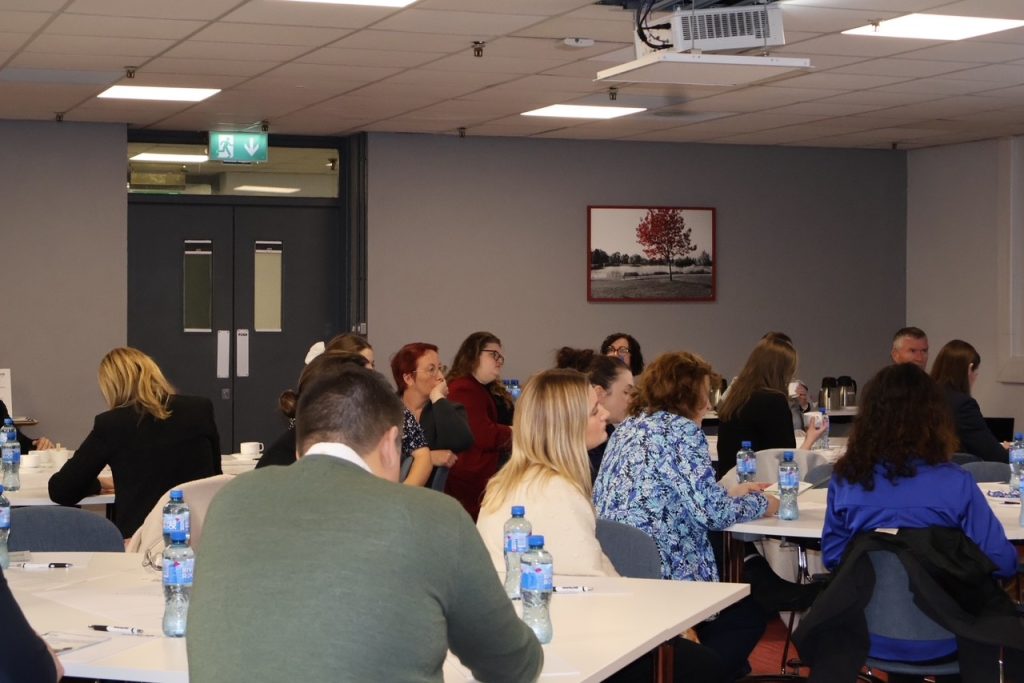
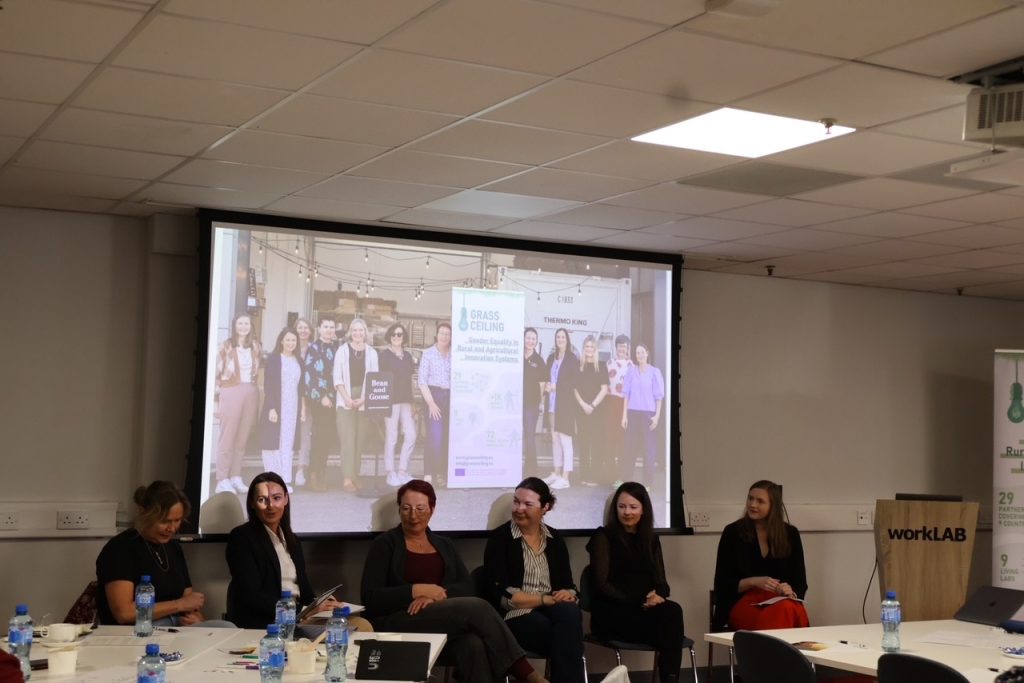
Ireland’s 9th Living Lab took place in the IDA Business Park’s WorkLab on October 23rd. The event brought together the six participants over the three years of the Labs and a range of relevant stakeholders with the aim of transforming project recommendations into policy change.

The final Lab showcased the innovations of the six women: Catherine Kinsella, Gina Ryan, Aileen Barron, Gail Daniels, Emer Lawrence and Karen Keane, who also spoke about the main barriers and key opportunities they encountered in their entrepreneurial processes. Challenges included balancing innovations with caring responsibilities, patriarchal assumptions around entrepreneurship and the lack of effective mentoring to meet the needs of women. The cumbersome and repetitive nature of funding applications was also noted, but Catherine Kinsella highlighted the Circular Economy Innovation Grant Scheme (CEIGS) led by the Department of Climate, Energy and the Environment (DCEE), offering grants of between €40,000 and €50,000, as an effective example of a simplified application process that could be replicated for other funding schemes.

Stakeholders were present from the Department of Agriculture, Food and the Marine, the Department of Rural and Community Development and the Gaeltacht, Skillnet Ireland, the Local Enterprise Office (LEO), the South East Regional Skills Forum, and colleagues at SETU. Stakeholders, women innovators, and the Irish GRASS CEILING research team participated in round table discussions aimed at communicating key project results and identifying actions based on these findings.

The keynote address was delivered by Paula Fitzsimons, director of the ACORNS programme (Accelerating the Creation of Rural Nascent Start-ups), funded under the Rural Innovation and Development Fund through the Department of Agriculture, Food and Marine (DAFM). ACORNS started in 2014 and is now in its 11th iteration. 550 women innovators have completed a cycle of the programme, among them three participants in the Irish Living Lab. Paula spoke about the importance of peer-to-peer learning among women that is both a feature of the ACORNS programme and the Living Labs.

The final Lab concluded by highlighting the importance of developing the collaborations formed at the event so that supports can be improved at a regional level and policy change can be achieved on a national basis.

Gifts were presented to the women to thank them for their invaluable participation in the project and contributions to key recommendations. These were baubles by the Waterford-based Irish Hand Made Glass Company History engraved with the GRASS CEILING logo.

ireland's 9th living lab presentation
Ireland's 9th living lab attendees
women entrepreneurs presenting
two of the entrepreneurs
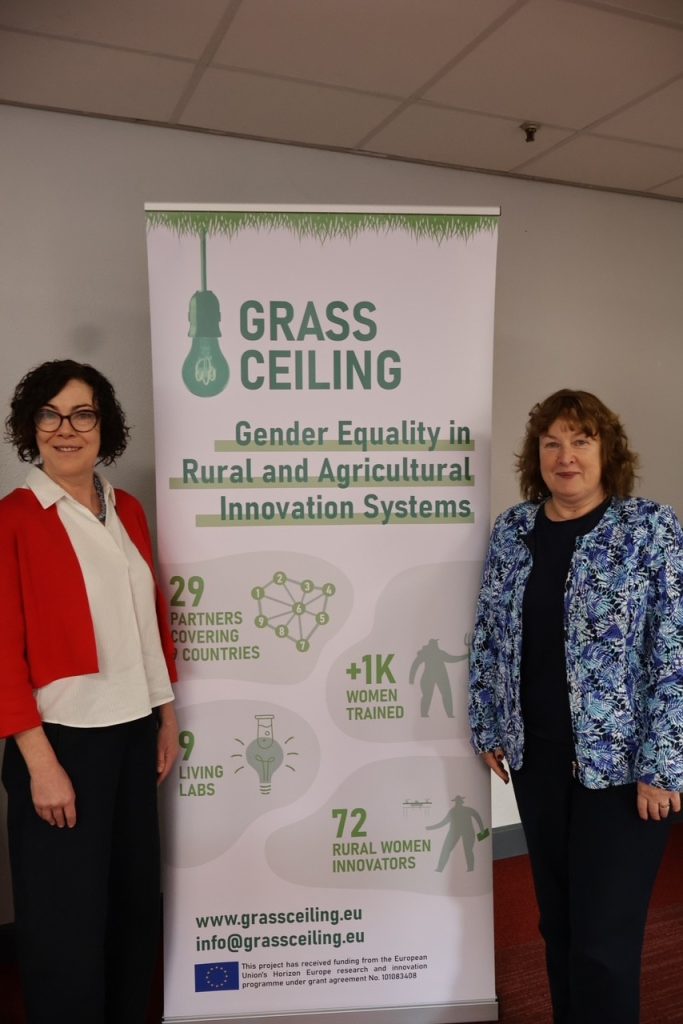
Project coordinator and academic standing next to Grass Ceiling Roll-up
ireland's 9th living lab gift bag

Ireland’s 9th Living Lab engages with stakeholders for policy change Read More »

Picture of Jenny grant

Rooted in the Highlands: Jenny Grant’s vision for Croft and the Loch

On the shores of Loch Broom, near Ullapool, Jenny Grant is slowly weaving together a life and business that reflects her deep connection to the land. Her enterprise, Croft and the Loch, launched in 2021, is not just a croft but a holistic project that brings together food production, environmental education, and art.

For Jenny, the seeds of this journey were sown in childhood. Growing up, she was captivated by natural heritage, eager to help neighbouring farmers with lambing and assisting her mother in growing vegetables. “Anything to do with the land and being outdoors fascinated me”, she recalls. Alongside this passion was a strong creative streak: she spent hours sketching animals, merging her love of nature with artistic expression. These two elements—land and creativity—would eventually become the backbone of her crofting vision.

The path to establishing a croft, however, was anything but straightforward. After years of travelling and searching for a place to settle, Jenny realised how difficult it was to secure a croft tenancy. She attended courses, asked for advice, and persisted, even while raising her young son. “It was a real moment of determination”, she says, describing how motherhood fuelled her resolve. “I wanted this not just for me, but for him too”. Eventually, a series of fortunate turns led her to the land she now manages—a stunning croft with ancient oak, ash, birch, and hazel trees, flower meadows, and a shoreline that runs directly into the sea loch.

Since then, Jenny has been steadily developing the project. She has fenced the land, planted fruit trees and bushes, and is preparing to install a polycrub to extend her growing season. She also raises seedlings from native trees to enrich biodiversity. “It doesn’t make money yet”, she admits, “so I fit it in when I can”. Alongside crofting, she works, studies to become a teacher, and raises her son as a single mother.

What makes Croft and the Loch unique, Jenny explains, is its interwoven nature. It is not a single activity, but a network of interconnected elements. As an environmental educator, she incorporates her expertise into the croft through illustration, nature journaling, and wildlife books. She envisions the site becoming a place where people can not only learn about nature but also connect with it on a deep level. This could mean schoolchildren discovering crabs on the shore, individuals seeking mental health support in a calming space, or visitors contributing to the project through agritourism.

“The golden thread is the land”, she says. “Everything comes back to appreciating and caring for it: for wildlife, for future generations, and for ourselves”.

Innovation, in her case, lies in bridging tradition and modernity. A Highlander by birth, Jenny draws on her rural roots while bringing in ideas gathered from travel and education. She applies forward-thinking approaches to biodiversity and sustainability, ensuring her croft reflects both heritage and future needs.

Yet, the challenges she faces are significant. Chief among them is childcare. As a single mother, the lack of support systems limits the time she can dedicate to the croft. Financial sustainability is another hurdle, as crofting rarely offers immediate returns. “I could take a better-paid job and walk away”, she acknowledges, “but it’s important to me that crofting continues, and that women can continue to croft despite the barriers”.

For Jenny, Croft and the Loch is more than a livelihood; it is a calling shaped by resilience, creativity, and the determination to carve a future where land, people, and community remain deeply connected.

Rooted in the Highlands: Jenny Grant’s vision for Croft and the Loch Read More »

Karis Beattie picture

Karis Beattie’s journey: Sustaining tradition and community through crofting on the Isle of Lewis

Karis Beattie is a dedicated crofter living on the Isle of Lewis, a remote and beautiful island in Scotland’s Outer Hebrides. Since taking on her croft tenancy in 2017, Karis has been committed to nurturing the land and sustaining a way of life that balances tradition with community focus and personal passion.

Her croft covers two hectares and includes a small flock of sheep, hens, and a polycrub used for growing vegetables. Karis’s approach to crofting reflects a deep connection to the land and an appreciation for the communal aspects of rural living. She learned from years tending an allotment in Aberdeen before deciding to expand her involvement with the land by taking on a whole croft. This step marked the start of a meaningful journey toward creating a sustainable and fulfilling rural livelihood. As she says, “I feel very fortunate for how I got access to a croft, which is very difficult for a lot of young people”.

When asked about innovation in her work, Karis offers a thoughtful perspective. While some might see crofting as traditional rather than innovative, she points out that the practice requires constant adaptability. The unpredictable weather and the isolation of island life demand creative problem-solving and resilience. Karis highlights the challenge and opportunity of living on a remote island, which shapes the very nature of crofting as a dynamic and evolving practice: Crofting is innovative in the way that you never know what the weather is going to chuck at you”.

A key aspect of Karis’s story is that she gained access to a croft, an opportunity that many young people find hard to come by. She also secured social housing on the island, which supported her transition to crofting life. Motivated by her own experience, Karis has become involved in community projects aimed at increasing access to social housing and crofts for others. She is passionate about fostering opportunities for new generations to engage with rural life, helping to ensure the continuity and vitality of her island community. “I am inspired by that and want to help others to be able to do the same thing”, she explains.

Karis does not focus on radically differentiating her products. Instead, she is dedicated to learning and preserving the traditional practices of crofting from her village and neighbours. She emphasises managing the croft well, handling sheep properly, and working collaboratively within the community, values that underline the social fabric of crofting life.

Challenges certainly exist. Funding, for example, can be a significant hurdle, as accessing Crofting Agricultural Grants (CAGS) requires upfront capital that not all can afford. While this is not a challenge unique to women, it is a significant barrier for many aspiring crofters. However, Karis is quick to acknowledge the strong support she has received from her local community, which has helped her overcome obstacles and feel welcome in the crofting world. “I find the community has been incredibly supportive of me coming into crofting anyway”.

What Karis enjoys most about her work is the sheep. She describes working with them as a source of happiness and fulfilment. The connection to the land, the physical activity of walking the hills, and the daily interactions with neighbours enrich her life. This joy and sense of belonging are core motivations behind her dedication.

Community involvement is central to Karis’s vision. She actively participates in the local community council. She supports projects that aim to build social housing, improve early years education, and sustain vital community services such as the shop, hostel, and café. She believes that working collectively through group projects is key to keeping rural communities vibrant and resilient.

For women starting their rural businesses, Karis’s advice is practical and encouraging: learn from others, collaborate, but also be brave enough to try your way and innovate where you see fit. She stresses the importance of taking breaks and recharging, recognising that entrepreneurship is a demanding path that requires balance and self-care.

Karis Beattie’s journey: Sustaining tradition and community through crofting on the Isle of Lewis Read More »

Picture from Jenny Hart on Scotland Living lab encounter

Jenny Hart: Cultivating community and innovation through crofting in the Scottish Highlands

Jenny Hart is a passionate crofter living and working in the south-west Highlands of Scotland. Since moving to the croft in 2021, Jenny and her family have dedicated themselves to regenerating the land and producing local, sustainable food for their community (Cormonachan Croft). Their journey reflects a commitment not only to agriculture but to preserving a way of life deeply connected to nature and local traditions.

When asked about the origins of her business, Jenny admits that it was “what I’ve always wanted to do”. The opportunity to establish their croft was a fortunate moment that allowed her to follow this lifelong ambition. From the start, the goal was simple yet powerful: to grow and produce food sustainably for themselves and their neighbours, creating a living that is closely tied to the land.

What distinguishes Jenny’s products in the marketplace is their transparency and authenticity. Customers have the unique advantage of knowing exactly where their food comes from. They can visit the croft, meet the animals, and witness first-hand the care and respect given to every aspect of production. This openness has garnered positive feedback, particularly about the quality of the meat and the other products derived from the croft.

Innovation is also a significant part of Jenny’s crofting approach. In 2022, they expanded into beekeeping, despite facing difficult weather conditions that prevented a honey harvest. Rather than letting this setback discourage them, Jenny and her family seized the opportunity to utilise the by-product of beeswax creatively. They developed a small line of beeswax-based cosmetic products, transforming what could have been a loss into a valuable new offering. This kind of resourcefulness is emblematic of the adaptive and sustainable ethos that underpins their business.

Navigating the crofting industry as a female entrepreneur has not been without challenges. Jenny acknowledges that entering a traditionally male-dominated sector meant facing a lack of confidence and difficulty in accessing industry knowledge and networks. Finding reliable sources of information and connecting with supportive groups took time, but these efforts were crucial to building her confidence and advancing the business.

Jenny emphasises that peer support is crucial for growth, especially for women in rural entrepreneurship. “Having a network of other women doing similar things is the richest source of support, enthusiasm, and inspiration”, she says. Financial challenges are also a reality, especially for small innovative projects. Jenny emphasises the difficulty in securing funding for grassroots ideas, which is crucial for transforming visions into tangible outcomes.

Beyond the business side, Jenny cherishes the lifestyle that crofting offers. The daily experience of working outdoors, caring for animals, and breathing fresh Highland air is “enriching for the soul”. Living in a small community naturally fosters daily interactions and connections, creating a network of mutual support among local businesses. Jenny notes that local establishments, such as pubs and bed-and-breakfasts, have taken an interest in and shown support for their work, reinforcing the sense of shared purpose and community.

Jenny Hart’s story is one of dedication, innovation, and community spirit. It offers a hopeful example of how rural women can thrive by blending traditional practices with modern entrepreneurship and mutual support, enriching both their lives and their communities.

Jenny Hart: Cultivating community and innovation through crofting in the Scottish Highlands Read More »

Picture of Marloes van Schaik - to promote more women in agricultural boards | Meer vrouwen in agrarische besturen

Meer vrouwen in agrarische besturen

Als deelneemster aan het Europese onderzoek GRASS CEILING heeft melkveehoudster Marloes van Schaik een flyer ontwikkeld om organisaties te ondersteunen naar meer diversiteit in agrarische besturen.

In de flyer staan 15 praktische tips voor agrarische coöperaties, verenigingen en stichtingen; Wat levert het op om (meer) vrouwelijke bestuurders te hebben, hoe werf je (meer) vrouwelijke bestuurders en wat zijn de drijfveren van deze vrouwen? Ook voor de vrouwen zelf is het belangrijk om inzicht te hebben in deze zaken. Zij zetten zich in voor thema’s die ertoe doen voor hun gezin, bedrijf én de volgende generatie.

In de afgelopen drie jaar heb ik interviews gehouden met vrouwen en mannen uit de agrarische sector. Boeren en boerinnen met een bestuurlijke rol of juist niet, agrarische coaches, onderzoekers, medewerkers van brancheorganisaties en provincies. Uit deze interviews kon ik een beeld opmaken van de behoeftes van vrouwen waaraan voldaan moet worden voordat ze een rol in een bestuur overwegen. Deze behoeftes heb ik uiteindelijk omgezet in tips. Met deze tips kun je op een praktische manier aan de slag.

In het boek ‘De Melkveerevolutie’ van Jan Willem Erisman beschrijft hij dat het betrekken van de vrouwen van de boeren in het (gebieds)proces heeft geleid tot meer openheid en andere omgangsvormen. Meer diversiteit in agrarische besturen zorgt voor een betere vertegenwoordiging van je ledenbestand, meer perspectieven en daardoor betere besluiten. Daarnaast ervaar ik zelf in bestuursfuncties dat er weinig diversiteit is. Vrouwen twijfelen soms ook of ze wel geschikt zijn. En dat terwijl er veel getalenteerde potentiële vrouwelijke bestuurders zijn!

Dat meer vrouwen enthousiast raken voor een bestuursfunctie op lokaal, regionaal of landelijk niveau, doordat organisaties hen beter weten te vinden en betrekken.

Flyer ‘3x 5 Tips Meer vrouwen in agrarische besturen’ – er is een Nederlandse en Englese versie beschikbaar.

Europees onderzoek ‘GRASS CEILING’ Netherlands LL – GRASS Ceiling

Meer vrouwen in agrarische besturen Read More »

Picture of Marloes van Schaik - to promote more women in agricultural boards | Meer vrouwen in agrarische besturen

More women in agricultural boards

As a participant in the European GRASS CEILING project, dairy farmer Marloes van Schaik has developed a flyer to support organisations in promoting greater diversity in agricultural boards.

The flyer contains 15 practical tips for agricultural cooperatives, associations, and foundations. What are the benefits of having (more) female board members, how do you recruit (more) female board members, and what motivates these women? It is also important for the women themselves to understand these issues. They are committed to issues that matter to their families, their businesses, and the next generation.

Over the past three years, I have conducted interviews with women and men from the agricultural sector. Farmers and farm women with or without an administrative role, agricultural coaches, researchers, employees of industry organizations, and provinces. From these interviews, I was able to form a picture of the needs of women that must be met before they consider a role on a board. I ultimately converted these needs into tips. You can use these tips in a practical way.

In his book ‘De Melkveerevolutie’ (The Dairy Revolution), Jan Willem Erisman describes how involving farmers’ wives in the (regional) process has led to greater openness and different ways of interacting. Greater diversity in agricultural boards ensures better representation of your membership, more perspectives, and therefore better decisions. In addition, I myself have experienced a lack of diversity in board positions. Women sometimes doubt whether they are suitable, even though there are many talented potential female directors!

That more women become enthusiastic about board positions at the local, regional, or national level, because organizations are better at finding and involving them.

Flyer ‘3x 5 Tips for More Women in Agricultural Boards’ – available in Dutch and English.

European study ‘GRASS CEILING’ Netherlands LL – GRASS Ceiling

More women in agricultural boards Read More »

Portrait of Ivonne White

The story of Ivonne White: passion and perseverance in highland cattle farming on the Isle of Skye

Ivonne White is the driving force behind Romesdal Highlanders, a family-owned business dedicated to raising Highland cattle on a croft on the picturesque Isle of Skye. With deep roots in farming and a lifelong connection to the land, Ivonne has built a business based on tradition, care, and high standards.

Growing up around livestock, Ivonne was “earmarked to spot” from a young age; a phrase that hints at her early involvement in farming life. Although she worked outside agriculture for many years, she returned to her family’s croft and formally started her own business in 2012 after leaving her previous employment. This transition marked the beginning of a passionate commitment to the Highland cattle breed and crofting way of life.

What sets Ivonne’s Highland cattle apart is their pedigree, health, and natural upbringing. She emphasises that the animals are never forced or pushed but are “well-handled” and bred to the highest standards of welfare. This careful approach ensures that her livestock thrives in the rugged island environment while maintaining the qualities that make Highland cattle unique.

Innovation plays a crucial yet subtle role in Ivonne’s work. While crofting is steeped in tradition, keeping up to date with scientific advances and new technology is vital for animal welfare and efficient farming. She stays informed about new technical equipment and methods that can support the health and well-being of her herd. This blend of respect for tradition and openness to innovation defines her farming philosophy.

Ivonne openly acknowledges that one of her biggest challenges as a female entrepreneur and crofter has been her attitude, both within her community and beyond. Many questioned why she chose to raise Highland cattle instead of more commercially popular breeds, and some doubted the viability of her approach. Although those attitudes were often polite rather than overtly dismissive, they reflected an underlying scepticism that she has had to overcome throughout her career.

In addition to social challenges, Ivonne faces practical obstacles linked to the environment and geography of Skye. The island’s remote location means greater distances to markets and agricultural shows, higher expenses, and more logistical challenges compared to mainland farming. These factors increase costs and complicate business growth, demanding resilience and careful planning.

Despite these hurdles, Ivonne credits community connections as a vital support network. She engages with neighbours through local forest trusts and regularly meets other farmers at cattle sales. These relationships provide not only camaraderie but also valuable knowledge sharing and validation, which Ivonne found especially empowering through her participation in the GRASS CEILING project. Attending cattle shows with other experienced Highland cattle breeders reinforced her confidence and helped her refine her practices.

When asked what she enjoys most about her work, Ivonne says simply: “Everything”. She treasures being outdoors regardless of the weather and finds deep satisfaction in working closely with her livestock. This passion is the engine that drives her business forward, through both challenges and successes.

Her advice for women starting their rural businesses is straightforward and heartfelt: “Don’t be put off”. Ivonne encourages aspiring entrepreneurs to follow their passion while remaining pragmatic. She advises learning from others but not allowing negative attitudes or doubts to undermine personal vision and determination. Every journey is unique, and success often means adapting and evolving beyond original expectations.

Ivonne White’s story is a powerful example of perseverance, community, and commitment to rural traditions. On the Isle of Skye, her work with Highland cattle honours a legacy while building a sustainable future, inspiring others to pursue their dreams with passion and resilience.

The story of Ivonne White: passion and perseverance in highland cattle farming on the Isle of Skye Read More »

Sowing change with Haley Shepherd: Scotland’s only seed farm champions local, climate-adapted agriculture

In a quiet corner of rural Scotland, Seeds of Scotland is growing something rare—both literally and figuratively. Co-founded by Haley Shepherd in 2023, the small farm is the only seed producer in the country dedicated to increasing open-pollinated, organic vegetable seeds specifically adapted to the Scottish climate.

“We grow seeds for people to grow vegetables at home”, says Haley. “They’re a mix of Scottish varieties and other types selected from similar short-season climates. The goal is to grow varieties that will thrive here”.

The idea took root after Haley and her partner spent years learning how to grow vegetables commercially. “We realised that most seeds come from far away and aren’t adapted to Scottish conditions. There was no one producing seeds here anymore—something that used to be common”. Haley finds joy in her work. Her favourite part? Watching plants go through a full life cycle. “Seeing a leek grow for two years, flower, and produce seed again—it’s amazing. Most people never see that. It makes you appreciate the whole process”.

Now, Seeds of Scotland is not only filling that gap but doing so in a way that blends traditional knowledge with a spirit of innovation. “Saving seeds isn’t new—it’s a practice that’s thousands of years old”, Haley explains. “But doing it in Scotland is the innovation. It’s not easy here with the climate. You have to get creative just to dry the seeds properly because of all the rain”.

To combat the damp conditions, the farm has added extra drying stages and is building a custom seed drying machine based on a design from the United States. “We adapted it for our needs and had someone build it here”, she says. “And we plan to share it with other small growers. It’s part of creating a more resilient network”.

That network is already taking shape. Seeds of Scotland works with other small farms across the country to grow seed crops, helping to decentralise production and support Scotland’s food sovereignty. “A farm might grow one seed crop alongside their vegetables, and we all contribute to a more resilient seed system”, Haley notes.

But running such a business isn’t without its hurdles, especially for women in farming. “It’s a male-dominated industry”, Haley says. “It can be intimidating, and I don’t always feel confident calling myself an entrepreneur or innovator, even though I suppose I am”. Beyond gender dynamics, there are more structural issues. “Access to land is complicated, and we’ve received no government funding”, she explains. “We’ve only been able to start thanks to the support of our landowner and some private charities. Without them, we couldn’t have done this”.

One dream that Haley believes could transform businesses like hers is a basic income for farmers. “It would give us stability and the ability to reinvest in the business. Weather is increasingly unpredictable, and that kind of safety net would let us build something sustainable that could outlast us”.

Community engagement is also a central part of their mission. Seeds of Scotland recently took part in an exhibition at the V&A, and they’re working with Trellis Scotland to provide discounted seeds to community gardens. “Helping community gardens grow more, and more climate-adapted vegetables is a big goal”, she says. Haley and Seeds of Scotland are demonstrating that meaningful change can begin with a single seed, especially when it’s planted close to home.

Sowing change with Haley Shepherd: Scotland’s only seed farm champions local, climate-adapted agriculture Read More »

Picture of Beth Rose during the Scotish Living lab

Innovation from the land: How the Scottish crofter Beth Rose turned variety into strength

Nestled just south of Inverness, Beth Rose runs Birch Wood, a croft that reflects both the resilience of rural life and the creativity of its people. What began as a desire to “work the land” has evolved into a multifaceted business, and a way of life, that includes livestock, crops, wool, preserves, and community-led initiatives.

“Our main product is beef from the cows”, Beth explains, “but we also keep sheep, grow crops, use the wool, and make by-products like chutneys and jams. It all depends on the season and what’s needed in the community”.

Beth’s croft is a story of adaptation. With no single focus, she responds to local needs, allowing the business to remain flexible and sustainable. This responsiveness is especially evident in the way she applies innovation. One unexpected tool in her arsenal is Strava —a fitness tracking app typically used by runners. Beth uses it to log her time on the tractor, which helps her calculate the actual cost of producing hay. “Otherwise, it’s hard to know how to price things,” she says. “Strava helps me keep track of the hours spent on each task”.

Her journey from nursing to crofting wasn’t just a career shift; it was a lifestyle transformation. Like many women in rural enterprises, Beth has faced the challenge of juggling work, family, and community responsibilities. “Probably the hardest thing as a woman entrepreneur is just managing everything—childcare, work, and the community work I do at the hall”, she says.

That community involvement is a central pillar of Beth’s life. She volunteers at the local hall and helps run a community café, a space that brings people together and ensures inclusivity. “The croft is part of it, but the community is what helps us all thrive”, she reflects. “Doing things at the hall makes it a functioning place. It secures the future not just for now, but for the next generation”.

The GRASS CEILING project, which aims to empower women in rural innovation, has played a pivotal role in shaping Beth’s perspective on her work. “Before the GRASS CEILING, I saw the croft as a business, but I didn’t have much knowledge behind it”, she admits. Now, I use my time better and I’ve become more business-minded”.

Support tailored to small-scale and diverse rural enterprises like hers remains scarce. “Most farming training and support is aimed at much bigger, commercial farms”, Beth says. “What we need is help with pricing, marketing, and knowing how to take an idea forward”.

Although Beth doesn’t have a strong network of business peers in her immediate area, the GRASS CEILING project has helped her forge new connections. “Locally, there’s not much, but through GRASS CEILING, I now know other women running businesses and we share advice and ideas”. With a unique blend of innovation, adaptability, and a commitment to her community, Beth represents a new kind of rural entrepreneur, one rooted in tradition, yet looking to the future with creativity and purpose.

Innovation from the land: How the Scottish crofter Beth Rose turned variety into strength Read More »

Picture of Aoife Gould during the last Scotish Living Lab

Turning waste into worth: Aoife Gould’s wool revolution on the Isle of Skye

On the remote and windswept Isle of Skye, Aoife Gould is quietly transforming what was once seen as agricultural waste into something of beauty and value. A crofter and textile producer, Aoife had no agricultural background when she and her husband moved to the Isle of Skye. However, their shared desire to keep sheep led them down an unexpected entrepreneurial path (Facebook).

“When we took ownership of the flock in 2020, we couldn’t find shearers because of the pandemic”, Aoife recalls. “There was no outlet for the wool, and it would have gone to waste”. Instead of letting it pile up unused, Aoife began researching Hebridean fleece —from the breed they raise— and discovered it was perfect for felting.

What began as a hobby during lockdown has since evolved into a fully-fledged business. Aoife now processes the fleece entirely by hand, using only rainwater, soap, and a considerable amount of elbow grease. Every stage, from shearing to crafting, is handled by her and her husband. “Everything is done locally, and all our fields are within half a mile of our house”, she says with pride.

It’s this complete control over the production process that makes Aoife’s products so unique. “They are deeply tied to the land. Each piece reflects the place it comes from”, she explains. Her creations —felted rugs and practical woollen items— carry the natural colour variations of each sheep, offering buyers a tangible connection to the croft.

Though she never saw herself as an innovator, Aoife now embraces the label. “I’ve learned techniques through online communities and applied ideas from different areas of life”, she says. “We wanted zero waste, so I looked for ways to turn wool, often viewed as a waste product, into a valuable income stream”.

But running a small rural enterprise comes with its own set of challenges, especially as a woman. “Self-belief and access to finance have been the biggest hurdles”, she admits. Aoife is not chasing rapid growth or big profits; her goal is simple: to make enough to contribute to the mortgage and sustain the croft. Yet, most funding models reward scale, not sustainability. “I don’t want to turn over a million or employ 20 people. I just want to employ myself. But there’s little support for that”.

All the investment in her workshop has been privately funded, something she acknowledges wouldn’t have been possible without her partner’s steady income and inheritance money. “It shouldn’t require this level of personal sacrifice to build something so valuable to the community and the environment”, she says.

Looking ahead, Aoife sees mentorship and digital support as key to her business’s growth. She’s working on launching a website —something that was previously eligible for funding but is no longer— and is seeking shops to stock her products. “I often spend more time on peripheral business tasks than actually working with the fleece”, she laughs. “Support to go digital and keep making a living would help”.

Despite the obstacles, Aoife finds deep satisfaction in her work. “I love Hebridean wool, the colours, the texture. Seeing people’s reactions to my products and the connection they feel to the animals is the most rewarding part”.

From humble beginnings and a pandemic-induced challenge, Aoife has woven a story of resilience, creativity, and meaningful entrepreneurship, rooted in tradition, driven by passion, and sustained by community.

Turning waste into worth: Aoife Gould’s wool revolution on the Isle of Skye Read More »

Ina Grecka receiving the 'Best farmer of Zujunai Eldership 2025" award

Recognition and gratitude to farmers in Vilnius District: Ina Grecka named Best Farmer of Zujūnai Eldership 2025

On September 13th, beneath the grandeur of the historic Baltosios Vokės Manor, residents and guests of Vilnius District gathered to celebrate the 30th Harvest Festival – a vibrant tradition that honors the unity of local cultures, gratitude for the land, and those who care for it.

In recognition of their dedication to the land, commitment to farming, and respect for cultural traditions, Vilnius District Municipality paid tribute to the true heroes of the day – its farmers.

Mayor Robert Duchnevič presented acknowledgments and financial awards to 23 outstanding farmers representing different elderships.

Among them was Ina Grecka, proudly representing Zujūnai Eldership – a GRASS CEILING Living Lab participant and a woman farmer known for her hard work, innovation, and community engagement.

These awards are more than a token of appreciation – they are a sincere acknowledgment of the ongoing efforts and valuable contribution of farmers to the well-being and sustainability of the Vilnius region.

Picture of the best farmer award of Ina Grecka
Picture of Ina Grecka holding her award (best farmer award) on stage

Recognition and gratitude to farmers in Vilnius District: Ina Grecka named Best Farmer of Zujūnai Eldership 2025 Read More »

Ina Grecka receiving the 'Best farmer of Zujunai Eldership 2025" award

Padėka ir pripažinimas Vilniaus rajono ūkininkams: Ina Grecka paskelbta geriausia Zujūnų seniūnijos ūkininke 2025 metais

Rugsėjo 13 d., prie didingo Baltosios Vokės dvaro, Vilniaus rajono gyventojai ir svečiai susirinko švęsti 30-osios Derliaus šventės – spalvingos tradicijos, kuri puoselėja vietinių kultūrų bendrystę, dėkingumą žemei ir pagarbą tiems, kurie ją dirba.

Įvertindama jų atsidavimą žemei, ūkininkavimo darbams ir pagarbią laikyseną kultūros tradicijų atžvilgiu, Vilniaus rajono savivaldybė pagerbė tikruosius šios dienos herojus – ūkininkus.

Rajono meras Robertas Duchnevičius įteikė padėkas ir piniginius apdovanojimus 23 iškiliausiems seniūnijų ūkininkams.

Tarp jų – Ina Grecka, atstovaujanti Zujūnų seniūnijai, aktyvi GRASS CEILING gyvosios laboratorijos dalyvė ir ūkininkė, žinoma dėl savo darbštumo, inovatyvumo bei įsitraukimo į bendruomenės veiklą.

Šie apdovanojimai – tai ne tik simbolinė padėka, bet ir nuoširdus pripažinimas už nuolatinį darbą bei svarų indėlį į Vilniaus rajono gerovę ir tvarumą.

Picture of the best farmer award of Ina Grecka
Picture of Ina Grecka holding her award (best farmer award) on stage

Padėka ir pripažinimas Vilniaus rajono ūkininkams: Ina Grecka paskelbta geriausia Zujūnų seniūnijos ūkininke 2025 metais Read More »

Picture of Elin Skörde during the 8th Swedish living lab

From forest to freedom: Elin Skörde’s vision for a regenerative rural life in Sweden

Elin Skörde, a 44-year-old teacher and forester, lives in a quiet village in Sweden. Balancing a career in education with a deep-rooted passion for sustainable forestry, she is building a unique business that connects people with nature while respecting the land’s rhythms.

“I started my business because I have a forest farm, and I want to use it for more than just forestry”, she explains. Elin’s desire to spend more time at home and less on salaried work led her to explore creative ways to develop her land. Her ventures include a forest garden, silent walks in the woods, and a unique solo camping experience—all designed to offer people a meaningful connection with nature.

One of the cornerstones of her business is the “Eremit” app (Android, iOS), which allows guests to book a secluded parking spot for camper vans in her forest. “You’re completely alone in the woods. No one else will come there,” Elin says. This promise of solitude and stillness is a powerful draw for those looking to disconnect from everyday noise.

Elin also cultivates a forest garden—a self-sustaining system where everything she grows is edible or useful. “There’s no watering, no added nutrients. It takes care of itself”, she says. The garden features a variety of perennial plants, vegetables, and crops that benefit pollinators, including bees and bumblebees. “I grow things you can eat or make something edible out of”, she adds. Her goal is not only to feed people, but also to regenerate the ecosystem around her.

Another innovative project is “Forest Hang-out With Elin”, a sensory forest experience where small groups walk silently among the trees. “You use your sight, hearing, taste—all your senses”, she explains. The experience ends with a meal prepared in the forest, reinforcing her belief in nature as both a healer and a host.

Despite her enthusiasm, Elin acknowledges the challenges of launching a rural business. “Time is the biggest problem. I want to spend more time on the farm and less in my salaried job”, she admits. She also mentions the need for start-up capital and access to training. “I would need help to join courses, and money to dare to invest and get started”.

Her participation in the Living Labs programme has been a source of inspiration and motivation. “I’m in the early stages of my business. Listening to the other women—who are much further along—has been educational and encouraging”, she says.

When asked what advice she would give to a friend considering a similar path, Elin doesn’t hesitate: “Take your time. Know what you want to do and how to do it”. For her, success isn’t about rushing into entrepreneurship, it’s about basing the process on clarity and intention. Elin’s story is one of quiet innovation. It is not driven by scale or speed but by a thoughtful approach to land, life, and livelihood. She represents a growing movement of women in rural Sweden who are redefining entrepreneurship on their terms, rooted in place, sustainability, and self-determination.

From forest to freedom: Elin Skörde’s vision for a regenerative rural life in Sweden Read More »

The world is taking notice: new article highlights GRASS CEILING’s impact on women-led rural innovation

We are thrilled to announce that a new article, Breaking through barriers: the women driving rural innovation in Europe“, has been published, shining a powerful spotlight on the transformative work of the GRASS CEILING project and our incredible women innovators.

The article, which explores how rural Europe thrives when women’s ideas and leadership are recognised, features several success stories emerging directly from our nine European Living Labs. It validates our core premise: that the most significant untapped resource in European agriculture is the talent of the women already working in the sector.

Our innovators in the spotlight

The piece highlights the journey of women like Albertine Ekkels from the Netherlands. Albertine’s experience is a testament to the power of the Living Labs; after years of juggling farm life and her dream, the network gave her the confidence to launch a successful booking platform for farm-based events. Her nomination for the Young Agricultural Talents award is a source of immense pride for the entire GRASS CEILING consortium.

The article also recognises the impact of innovators in other labs, including the Keane sisters in Ireland (Bean and Goose Chocolate), and Silvia González and Amada de Salas in Spain, showcasing a diverse range of socio-ecological innovations—from digital forestry to agro-tourism.

As Professor Sally Shortall, our project coordinator, is quoted in the article: “The Living Labs show what women can do despite the obstacles. They also show how much more they could do if they were properly supported”. We are proud to be the catalyst for these successes.

Driving Policy Change

Crucially, the article details how GRASS CEILING is moving beyond individual support to systemic change. It underscores the persistent “grass ceiling” that limits women’s influence—a barrier compounded by a lack of gender-sensitive data in many national and EU monitoring systems.

Our work, led by policy expert Blanca Casares Guillén, is directly addressing this data gap by developing tools to propose the inclusion of better gender data into the EU’s Rural Observatory. The article provides visibility to our policy roadmap, which calls for binding commitments on gender equality in EU funding, gender-responsive finance, and better support for rural childcare.

This media coverage is a crucial step in raising awareness about these vital policy recommendations. It demonstrates that our findings, derived from intensive research across nine Living Labs, are resonating on a wider European level.

We encourage all our partners, stakeholders, and community members to read the full article to appreciate the depth of the work being done to break barriers and build new, resilient futures for rural Europe.

Read the full article: “Breaking through barriers: the women driving rural innovation in Europe

The world is taking notice: new article highlights GRASS CEILING’s impact on women-led rural innovation Read More »

Main visual of the campaign for International day of rural women

From the ground up: GRASS CEILING celebrates the rural women who shape our world

On 15 October 2025, we join the global community in celebrating the International Day of Rural Women, a day to honour the incredible women who are the backbone of our rural communities. This year is particularly significant as we also commemorate 30 years since the Beijing Declaration and Platform for Action, a landmark blueprint for gender equality and women’s empowerment.

This year’s theme, “Rural women rising: Shaping resilient futures with Beijing+30”, is both a celebration and a powerful call to action. Despite significant progress over the past three decades, rural women continue to face multiple challenges, including limited access to resources, unequal participation in decision-making, and a disproportionate exposure to the impacts of climate change and economic shocks.

The GRASS CEILING project is proud to be part of the global effort to address these issues. We believe that empowering rural women is not just a matter of justice; it’s a crucial driver for sustainable development, food security, and prosperity. Our work highlights how women are at the forefront of socio-ecological innovation, yet still face systemic barriers that prevent them from reaching their full potential.

On this International Day of Rural Women, we reaffirm the vital role rural women play in caring for people and the planet. We are committed to accelerating our efforts to eliminate barriers, expand opportunities, and ensure that no rural woman is left behind. Join us in celebrating their resilience, creativity, and unwavering contribution to a more sustainable and equitable world.

Main visual of the campaign for International day of rural women

From the ground up: GRASS CEILING celebrates the rural women who shape our world Read More »

Picture of Josefin Levinsson at her family business

A new generation: Josefin Levinsson and her sisters breathe new life into their family farm

On a quiet stretch of countryside in southern Sweden, three sisters are redefining what it means to run a modern rural business. Josefin Levinsson, 30, along with her two sisters, has turned the family farm where they grew up into a thriving enterprise that blends tradition with innovation and community with sustainability (Flättinge Gård web).

“We started the company in 2014, when we were all still studying”, Josefin explains. “It began as a summer job; we just wanted to see if we could create something of our own on the farm”. What began as a seasonal experiment quickly evolved into a full-time endeavour. Today, the sisters operate a farm shop and café, grow and process lupin beans, and produce a range of homemade products, including juices, chutneys, and pastries.

A key feature of their business is the use of lupin-based food. “The new part is when we started growing lupin beans”, says Josefin. “It’s still quite unusual in Sweden, especially to grow and process them on-site and use them as the main protein source in food products”. From these beans, they make burgers and patties that are sold to cafés, restaurants, and shops. The sisters do every step—from growing and drying to processing—on the farm itself. “It doesn’t leave the farm until it’s a finished product”, Josefin points out.

This hands-on, circular approach applies to everything they do. Their café serves pastries made from scratch with local and Swedish ingredients, and the farm shop offers not only prepared foods but also eggs from their chickens and beef from their cattle. “We try to use what we have here as much as possible”, she adds.

Her motivation goes beyond profit. “We like this place. We grew up here and want to preserve it, but not necessarily in the traditional way it’s been done before”, Josefin explains. Instead, they’ve carved out their path—one that values both sustainability and creativity. “Baking one day, building furniture the next, taking care of the animals… It’s the variety that makes it so fun”.

While their journey has been largely positive, it hasn’t been without challenges. “Some people assume our father built everything and gave us jobs, that we’re just tinkering”, she says. “They think we can’t handle the animals or the machines. But honestly, we hear that less and less”. For the most part, their experience as women entrepreneurs has been empowering, if occasionally marked by outdated assumptions.

One ongoing difficulty lies in navigating rural development policies. Because their business is not classified as agricultural—despite being located on a farm—they fall between categories and are therefore ineligible for certain EU subsidies. “It’s more difficult to apply for those funds”, Josefin notes. “We’re somewhere in between”. Support, she says, would be most helpful in helping to structure the many parts of their business and reach a wider audience. “Like many rural businesses, we do a bit of everything. Finding effective ways to manage that and scale up would help”.

A bright spot has been their involvement in local networks. Through the “Food Around Gränna” project, they collaborate with nearby businesses and farms. “It’s great to be able to cooperate with others and help each other”, says Josefin. “That kind of collaboration is wonderful”.

A new generation: Josefin Levinsson and her sisters breathe new life into their family farm Read More »

Picture of Emma Hartelius during the 8th Swedish Living Lab

Rooted in responsibility: How Emma Hartelius is reimagining cattle farming in Sweden

At Grimstorps farm in Sandhem, 36-year-old Emma Hartelius is leading a quiet revolution. As the head of an organically certified beef production business, she is building not just a farm but a new way of living—rooted in sustainability, resilience and community.

“I started in 2019 because I wanted to keep farming on my parents’ land”, Emma explains. From that desire grew a multifaceted business that now includes direct meat sales and even a restaurant run by her siblings. “We sell meat directly to the customer, and we’ve also started a farm restaurant. My brother is the chef, my sister grows the vegetables, and I deliver the meat”, she says with pride.

Her business stems from a deep respect for animals and the land. “We’re organically certified, and our production is based on letting the animals graze outside as much as possible”, she says. This method ensures high animal welfare standards and supports biodiversity on the farm. It also aligns with growing consumer interest in sustainable and ethical food sources.

But Emma’s work doesn’t stop at the gates of the pasture. She’s also innovating in how she brings her product to market. “Some say it’s an innovation that I sell some of my meat through a box system via social media”, she says. Customers place orders online and receive meat packages directly from the farm, eliminating intermediaries and fostering a stronger connection between producers and consumers.

Like many rural entrepreneurs, Emma faces the constant challenge of balancing work and life. “I don’t know if I have any challenges as a woman specifically”, she reflects. “It’s about combining the puzzle of life with entrepreneurship”. She adds that in her field, she’s treated equally: “In the green industries, I feel that I am treated just like my father, who is also involved in the company”.

Still, the workload is intense. When asked what kind of support she would need, Emma answers candidly: “Am I allowed to say ‘an extra mum’? Someone who can take care of my family?” She quickly adds, “No, but better profitability so I can hire someone and not have to work quite so many hours”.

Emma finds the greatest joy in the hands-on nature of her work. “Working outside with the animals, and that I get to learn so many new things—that’s what I love most”, she says.

Her sense of connection extends beyond the farm. She is active in multiple organisations that support the local community, including farmers’ groups and producer associations. Her involvement in the GRASS CEILING project has been particularly valuable. “Being able to be honest and open about how you feel and what you think, without feeling labelled as weak—that’s been the best part”, she says.

Her story is one of quiet determination, steady innovation, and deep respect—for tradition, for family, and for the land. In building a modern farm rooted in organic principles and family collaboration, Emma Hartelius is showing that sustainable farming is not just possible—it’s powerful.

Rooted in responsibility: How Emma Hartelius is reimagining cattle farming in Sweden Read More »

Picture of Annika Palmer - Swedish living lab

Breaking stereotypes: Annika Palmér brings smart tech to Swedish dairy farming

In the heart of Sweden’s agricultural landscape, Annika Palmér is challenging outdated perceptions of what a farmer looks like, and how modern dairy farming is done. Together with her husband, she manages a third-generation dairy farm that is home to 165 Swedish Red Breed (SRB) cows. But what sets her apart isn’t just the herd, it’s her passion for animals, her embrace of innovation, and her quiet determination to reshape the image of rural entrepreneurship.

“I have a big interest in animals”, Annika says simply. “That’s why I started”. Her farming journey wasn’t inherited or expected, but rather a personal calling to work with nature and livestock. Though the farm has been passed down on her husband’s side, the couple now co-manages the daily operations, blending tradition with cutting-edge practices.

When asked what she enjoys most about her work, her answer comes easily: “The freedom to work with animals and nature. To be able to develop your business, see it improve, and know that you’re making a difference”.

Like many contemporary farmers, Annika integrates technology into her daily routine. “We use GPS in our tractors and have a robot that milks the animals”, she explains. They’ve also adopted AI-powered activity tracking to monitor the health and behaviour of their herd. While she downplays the novelty of these tools— “Not very innovative”, she says modestly— they reflect a forward-thinking approach that prioritises efficiency and animal welfare.

Still, not all challenges are technical. Annika notes that the biggest obstacle she faces as a female farmer isn’t physical labour or complex machinery—it’s perception. “People have preconceived ideas about what a farmer is like”, she says. “That can be a challenge. I am not the stereotypical image of a farmer”.

Her concerns also reflect broader issues in Swedish agriculture. “There is a huge shortage of skilled labour”, Annika explains. “We need more training opportunities so that we can employ competent staff and make the business more sustainable”. She emphasises the need for financial support and community-based solutions to help farms like hers thrive.

Annika is active in several organisations, including LRF (the Federation of Swedish Farmers), the SRB breeders’ association, and a dairy cooperative. For her, these networks provide not only practical support but also connection and inspiration, especially in initiatives that bring together women in the agricultural sector.

She also joined the GRASS CEILING project. “It has been fun and interesting”, she says. “Meeting others in the green industries, especially women, and getting inspired by their stories—that’s been the best part”.

In a field often dominated by traditional expectations, Annika Palmér Werthén is a reminder that farming today is as much about innovation and mindset as it is about land and livestock. With her commitment to animal care, openness to technology, and grounded leadership, she is helping build a more inclusive and resilient future for Sweden’s rural economy.

Breaking stereotypes: Annika Palmér brings smart tech to Swedish dairy farming Read More »

Ulrica, sustainable farmer, in a garden

Ulrica Björnhag: Pioneering sustainable meat production with retired dairy cows in southern Sweden

Ulrica Björnhag runs a unique and sustainable farm just south of Jönköping in southern Sweden, dedicated to raising retired dairy cows for meat. Her innovative approach gives a new lease of life to cows that have spent years producing milk, turning them into sources of high-quality, grass-fed meat.

“We run a retreat for dairy cows”, Ulrica explains. “They move to us, and we feed them only grass. They grow fat and make lovely meat”. This practice differs significantly from conventional meat production, as it utilises animals that have already contributed to milk production, providing an ethical and sustainable alternative to the typical beef industry.

Ulrica and her team started the business with a clear mission: to create a meat production system that respects the animals’ lifetime contribution while producing healthy, sustainable meat. “This is kind of a way of saying thank you for all they have delivered over time” she says, “but also of producing healthy, sustainable meat. We thought we could make a win-win with this: a win for the animals and a win for us with good, healthy meat”.

What sets Ulrica’s product apart is its focus on retired dairy cows, which are fed exclusively on grass, allowing them to develop muscle and fat naturally over time. Unlike some farmers who may process one or two animals sporadically, her farm maintains continuous production throughout the year, ensuring a consistent supply of high-quality meat that has become highly appreciated by local restaurants.

Despite her success, Ulrica has faced notable challenges as a female entrepreneur in a predominantly male farming sector. “Mainly, it’s men that have a farm and work like this”, she remarks. Additionally, she was not raised on a farm herself but transitioned into agriculture from a different profession, which initially raised doubts among her peers. “People have been suspicious, thinking that you cannot do this, mainly because they say that you cannot take an old dairy cow and transform her from giving milk to eating grass and growing fat. It’s not possible. But we have proven them wrong”.

Growth and expansion remain essential goals. Ulrica emphasises the need for more resources to further develop the farm, particularly to accommodate visitors and increase sales through the farm shop. Increasing public awareness about food origins and production methods is a key aspect of her business vision.

Networking and learning from others are also fundamental to Ulrica’s approach. She actively seeks connections with other producers and entrepreneurs, recognising the value of exchanging knowledge and skills to foster innovation. “More than ever, you need to do that to succeed”, she states. She highlights the importance of meeting female entrepreneurs and others working in different fields, as this diversity of ideas can inspire new solutions and improvements.

Ulrica credits the GRASS CEILING project with providing a safe environment to share experiences, challenges, and ideas with other women entrepreneurs in rural areas. “It has helped me to build a new network with other female entrepreneurs and discuss things that are issues for us or that we are trying to develop”, she explains. The project offers not just professional support but also a chance to relax and openly discuss business in a supportive community.

In Ulrica’s words, success in rural entrepreneurship is not only about the business itself but also about community, learning, and courage. Her work with retired dairy cows represents a thoughtful, sustainable model that honours the animals and connects consumers to the true origins of their food.

Ulrica Björnhag: Pioneering sustainable meat production with retired dairy cows in southern Sweden Read More »

Ida Besten: a farmer’s commitment to community and social innovation in rural Netherlands

Ida Besten, a 59-year-old dairy farmer from Haarle, a small village in the Netherlands, is deeply committed not only to her family farm but also to the well-being of her local community. Her journey as a farmer and community leader exemplifies the vital role women play in rural areas, bridging agriculture, social care, and local activism.

Ida began her involvement with the GRASS CEILING project two and a half years ago, after years of developing a “farmers pilgrimage” initiative. Initially aiming to expand her farming activities, she soon realised her true passion was to care for her community and to ensure that residents and farmers had a voice in political decisions affecting their area.

In response to political developments that overlooked the input of farmers and residents, Ida took the initiative to foster close cooperation among local farmers and residents. Together, they created a shared vision for the future of their agricultural region, emphasising community involvement and sustainable land management. Through cultural-historical research and collaboration with experts, the group analysed the area’s heritage and current challenges, building a comprehensive understanding to guide plans.

Ida’s role as a female farmer and community advocate emerged naturally from her love for the land and her desire to secure a place for future generations of farmers. She describes her work as a form of social innovation—bringing people together to collaboratively shape the future of their rural environment with respect and care.

Despite her achievements, Ida acknowledges the challenges she faces as a woman in a traditionally male-dominated field. She often worries about maintaining the integrity of her family and the well-being of those around her. Political and business interests add complexity to her efforts, making her commitment all the more significant.

What has helped Ida the most is the support she found within the GRASS CEILING group for women, as well as mentorship from Bettina Bock, who guided her throughout the project. These connections strengthened her resolve and reminded her of the importance of vulnerability, courage, and mutual encouragement among women.

From her experience, Ida encourages other women in rural areas to step forward as guardians of their communities. She emphasises the importance of women’s sensitivity to social bonds and their ability to connect with political decision-makers. For Ida, women’s leadership is essential in preserving community cohesion and ensuring that rural voices are heard in times of change. Ida Besten’s story is a testament to the power of social innovation and female leadership in rural farming communities. Her dedication extends not only to agriculture but also to nurturing the social fabric that sustains her village, demonstrating how farming can be both a livelihood and a force for community resilience.

Ida Besten: a farmer’s commitment to community and social innovation in rural Netherlands Read More »

Upoznajte Tatjanu Klepo: znanstvenicu, aktivisticu i čuvaricu maslinarske baštine

Tatjana Klepo dolazi iz Kaštela u Dalmaciji, regije duboko ukorijenjene u maslinarsku tradiciju. Ona je znanstvenica i docentica na Sveučilištu u Splitu, a ujedno i strastvena ekološka aktivistica.

Kao potpredsjednica Udruge maslinara Kaštela “Mastrinka” i članica Upravnog odbora Društva za očuvanje kulturne baštine Kaštela – “Bijaći”, Tatjana je posvećena očuvanju i promicanju prirodne i kulturne baštine Hrvatske. Njezin rad usmjeren je na zaštitu i revitalizaciju tradicionalnih hrvatskih sorti maslina, kako bi se ovo dragocjeno nasljeđe prenijelo budućim generacijama.

Uz znanstvena istraživanja, Tatjana je osnovala ekološki maslinik koji služi kao edukativno mjesto za maslinare. Kroz ovu inicijativu pruža praktična znanja i iskustvo izravnog rada, podržavajući održive poljoprivredne prakse. Vođena uvjerenjem da je znanje ključ bolje budućnosti, Tatjana nastavlja nadahnjivati druge i stvarati pozitivne promjene u svojoj zajednici i šire.

Upoznajte Tatjanu Klepo: znanstvenicu, aktivisticu i čuvaricu maslinarske baštine Read More »

Meet Tatjana Klepo: scientist, activist, and guardian of olive heritage

Tatjana Klepo comes from Kaštela in Dalmatia, a region deeply rooted in olive-growing traditions. She is a scientist and assistant professor at the University of Split. Tatjana is also a passionate environmental activist.

As vice-chair of the Association of Olive Growers of Kaštela “Mastrinka” and a member of the Steering Committee of the Society for the Preservation of Cultural Heritage of Kaštela – “Bijaći”, Tatjana is dedicated to preserving and promoting Croatia’s natural and cultural heritage. Her work focuses on protecting and reviving traditional Croatian olive cultivars, ensuring that this valuable legacy is passed on to future generations.

In addition to her research, Tatjana established an organic olive farm that serves as a training ground for olive growers. Through this initiative, she provides practical knowledge and hands-on experience to support sustainable farming practices. Driven by the belief that knowledge is the key to a better future, Tatjana continues to inspire others and create positive change in her community and beyond.

Meet Tatjana Klepo: scientist, activist, and guardian of olive heritage Read More »

Sonja van Uden: “I wanted to create something that reflects a new relationship with land”

At 45, Sonja van Uden lives in a small Dutch village just five kilometres from the farmland where she’s launching her boldest project yet. After working as a freelancer, Sonia has spent the last four years designing an innovative land-use model that combines agriculture, nature, and temporary living, all in one place.

“I wanted a different kind of life”, she says. “Years ago, I lived off-grid in a small cabin in Norway, surrounded by nature. That experience completely changed how I viewed society and land. I came back to the Netherlands wanting to recreate something similar, but in a way that would also contribute to this place, where I come from”.

That desire sparked Landdrift Foundation, an initiative that challenges conventional land use in the Netherlands. “Here, everything is divided: you either have farmland, or nature, or a place to live. You can’t combine them. That separation is written into law”, she explains. “What I’m doing is bringing those elements together in one shared space. It’s never been done here before”.

The idea may sound simple, but putting it into practice is anything but. “People struggle to understand the concept”, Sonia admits. “Farmers, municipalities, even neighbours, they’re used to thinking in fixed categories. It takes time to explain that what I want is not chaotic, but a model for more flexible, sustainable living”.

One of the most significant barriers has been access to land and money. “You either buy it, which is extremely expensive, or rent it — but then the landowner must share your vision, and that’s rare,” she says. “And the income models for land use today are mostly bankrupt. There’s very little financial logic to support new ideas”.

Sonia doesn’t come from an agricultural background, which has also raised eyebrows. “People see me as an outsider, and there’s scepticism. Like, ‘Who is she to question this system?’ That makes it even harder to get a foot in the door”.

But it hasn’t stopped her. It’s what fuels her drive to build something radically different, not just for herself, but for others looking for alternatives. “I think it’s challenging as a woman to find space in innovation, especially in rural areas. That’s why we need more support, not only financial, but in the form of coaching, networks, and being taken seriously”.

The GRASS CEILING project became a key source of support. “At first, I wasn’t sure if I fit in, because it was so focused on agriculture. But it’s been great. We support each other as women, and that matters”. What Sonia enjoys most about her work is the challenge it presents. “No day is the same. I’m trying to do something that hasn’t been done before, and that means solving a lot of problems creatively. I love that process, the inventiveness it requires”.

Sonja van Uden: “I wanted to create something that reflects a new relationship with land” Read More »

Irene Beukeveld: “I wanted to do something of my own, with our milk”

At 45, Irene Beukeveld lives with her family on a dairy farm in Holthon, a small village in the northeastern Netherlands. The milk from their cows has long been at the heart of their livelihood, but for Irene, it also became the starting point for something more personal: a new ice cream business.

“I had been thinking about making ice cream for years”, she explains. “The milk from our cows is such a beautiful product, and I wanted to create something of my own with it. That was my dream”.

The opportunity came when a local ice cream parlour shut down. Irene saw the chance and took it, but she credits the GRASS CEILING project for helping her make that decision. “The project gave me structure, a network, and above all, the confidence to take the first step”.

Before launching her business, Irene had worked outside the farm. “I needed to find something that was mine. Something I could build myself”, she says. That personal motivation, combined with the desire to connect visitors with the land and the farm’s story, shaped the concept of her ice cream parlour.

Today, she has developed over 40 recipes using natural ingredients: from classic vanilla to strawberry, lemon, and other seasonal flavours. “I test them one by one, and customers love them”, she says. The farm now includes a cosy terrace, a play area for children, and even fresh flowers from Irene’s garden. “It’s a welcoming place where people can enjoy the ice cream and also learn about the history of the farm”.

Still, the road wasn’t easy. “The biggest challenge was my insecurity, and the fact that people around me weren’t very optimistic about my idea”, she recalls. “But thanks to GRASS CEILING, I found a support network and gained the confidence I needed”.

For women considering launching a business in a rural area, Irene is clear: “Just start. Everyone feels insecure at the beginning. Find people you trust, talk about your ideas, and take small steps. You can do more than you think”.

Irene Beukeveld: “I wanted to do something of my own, with our milk” Read More »

Marloes Van Schaik: “We need to adapt policies so women can feel confident on agricultural boards”

Marloes Van Schaik is a 40-year-old organic dairy farmer based in the Dutch province of Utrecht. Alongside her daily work managing the family farm, she also serves as a policy advisor for the Dutch Agriculture and Horticulture Organisation, focusing on multifunctional agriculture. This field of study examines how farming can provide environmental and economic benefits in food production.

Her involvement in the GRASS CEILING project began when she came across a book that briefly mentioned the role of women in shaping agricultural processes in an area on an island in the Netherlands. “It was just a few sentences”, she explains, “but it struck a chord”. The author stated that women, whether as farmers themselves or as their spouses, had a significant impact on the success of these processes: “I wanted to understand why and how”. That moment of curiosity became the seed for her project.

Her initiative is centred on increasing the presence of women on agricultural boards, spaces where key decisions are made and where female voices are still underrepresented. What sets her project apart is its practical, grassroots methodology. “It’s very hands-on”, she says. “I’ve interviewed many people — both women and men, some of whom are already on boards, and others who aren’t — to understand the motivations, barriers and perceptions around these positions”.

From these conversations, she has compiled a set of clear, actionable recommendations that she now offers to cooperatives and agricultural associations. “Saying that you want more women on boards is not enough. You have to change internal policies, structures, and culture to create an environment where women feel welcome, safe, and confident that their contributions will be valued”.

Although the topic can be sensitive, she found people were open and willing to share their experiences. “At first, I was worried people might be reluctant to speak. But actually, they were enthusiastic. They recognised the issue and wanted to help. The biggest obstacle wasn’t resistance, it was time”.

Like many rural women, Marloes juggles multiple roles: the farm, her external job, her children, household duties, and social life. “Time is always a challenge”, she says. “But I get so much energy from the project that I try to make time for it, even if it’s not easy”.

The GRASS CEILING project has played a crucial role in keeping her on track. “This project gives me individual support through mentoring, but also collective support. We share challenges, exchange experiences, and use each other’s talents. It helps to know I’m not doing this alone. And when there’s a meeting coming up, it motivates me to make progress”.

Marloes Van Schaik: “We need to adapt policies so women can feel confident on agricultural boards” Read More »

Albertine Ekkels, pioneers innovative rural experiences to reconnect with nature

For Albertine Ekkels, farming is about more than food production, it’s about connection. At 34, she runs a mixed farm in the northern Netherlands alongside her husband and two other partners. Together, they care for 70 cows and almost 700 sheep, selling products such as meat, milk, and cheese directly from their small farm shop. But the farm is not just a food place, it’s a destination. “It’s a place for tourists”, she explains, “where people can come, see what we do and enjoy nature”.

This belief in the power of the countryside to inspire and connect people has led Albertine to her newest project: an online platform where people can book meeting spaces on farms. “There are a lot of beautiful, unused spaces on farms across the Netherlands”, she says. “I want to make them visible and bookable — for business meetings, training sessions, or simply for people to spend time in nature”.

The idea came to her after many years of contemplating a personal project. “Last year, everything came together”, she recalls. She shared the idea with her mentor from the GRASS CEILING project, and this year she was nominated as one of the talents in the “Young Farmer Talent 2025” competition. “That was the moment I decided: yes, I’m going to do this”.

The platform’s goal extends far beyond bookings. For Albertine, it’s about helping people reconnect with the land. “I want people to come to the farm and feel what it’s like. To learn, to feel the nature, the animals — everything”. She dreams of a world where people from cities and rural areas alike have easy access to farm life, not just as spectators, but as participants.

Currently, Albertine is working on developing the website, contacting other farmers to gauge interest in listing their spaces, and promoting the idea to potential visitors. “This year is a big one”, she says with excitement. “It will either go well… or not. But we have to try”.

Her initiative is grounded in a deep desire to open the doors of the countryside and create a bridge between rural and urban communities. As she puts it: “I dream that people see what we do on the farm, and like what we do”.

Albertine Ekkels, pioneers innovative rural experiences to reconnect with nature Read More »

From farmer to teacher: Petra Commijs’ mission to prepare the next generation

At just 28 years old, Petra Commijs has already experienced the highs and lows of running a family farm, and the painful decision to let it go. She was part of the fourth generation of dairy farmers in her family. Together with her brother, she ran a mixed business producing milk, yoghurt, ice cream, and butter, which they sold directly to consumers. “The passion was big”. she recalls. “I liked working outside, with cows and with people”.

But despite their dedication, growing financial insecurities and policy uncertainties forced them to make the difficult decision to sell their farm near Rotterdam. Now, her family keeps a few cows as a hobby — a far cry from their former herd of 200.

Rather than stepping away from agriculture entirely, Petra chose a new path. Today, she works as a teacher at an agricultural school, where she instructs young people — many of whom come from farming families — on dairy production and essential soft skills for the future. “They are 16 or 17 years old”, she explains. “They’ve chosen this path with passion, but I want to help them make clear, carefully considered choices”.

Petra knows first-hand how overwhelming it can be for young farmers to navigate the sector. She highlights several of the most pressing issues facing agriculture in the Netherlands today: “The insecurities from government regulations, new laws, the difficulty of taking over the farm from their parents, the high cost of feed, and environmental pressures like manure regulations”. These uncertainties, she says, can be paralysing for students trying to plan their future.

When asked what kind of support would be most helpful, Petra is clear: “Clarity. They need a goal to work towards”. She wants to equip her students not only with technical knowledge but with the ability to step back from pure passion and evaluate the risks and realities of farming. “They want to take over no matter what it costs, but I want to teach them to look further, to make decisions that are sustainable for their future”.

Petra also participates in the GRASS CEILING project, a rural development initiative that has provided her with the tools and support she needs during this transitional period. Although she no longer owns a farm, she remains connected to the farming world and is committed to shaping its next generation.

Her advice for young women considering launching an agriculture business? “Don’t get defeated. Stay strong, get back on your feet, choose a new path, and, with passion, you’ll get to wherever you want to be”.

From farmer to teacher: Petra Commijs’ mission to prepare the next generation Read More »

Professor Sally Shortall sheds light on gender inequality in agriculture in new article

Our coordinator, Professor Sally Shortall, has published a new article on the vital research of the GRASS CEILING project. The article, titled “Breaking the grass ceiling: Gender inequality in agriculture”, provides a comprehensive overview of our findings and mission.

In her article, Professor Shortall highlights a critical issue: agriculture has the highest levels of gender inequality globally. She explains how, despite progress, traditional biases in land ownership and policy continue to create barriers for women. The piece showcases how our Living Labs, established across nine European countries, are working not only to research these inequalities but also empower women innovators to drive socio-ecological change.

We invite you to read the full article for a deeper understanding of the challenges women in rural areas face and how the GRASS CEILING project is working to build a more equitable and sustainable future.

Read the full article by Professor Sally Shortall here: https://doi.org/10.56367/OAG-047-12106

Professor Sally Shortall sheds light on gender inequality in agriculture in new article Read More »

Dorieke Goodjik: from camels to leadership, a vision for social innovation in agriculture

In the rural town of Berlicum, Netherlands, Dorieke Goodijk is redefining what it means to be a farmer, and a leader. A camel farmer and entrepreneur, Dorieke is building a unique bridge between hands-on agricultural work and broader policy engagement, driven by her conviction that social innovation is just as crucial as technical know-how in the future of farming.

The camel farm was started 15 years ago by her husband, but Dorieke joined the business 12 years ago and soon launched her entrepreneurial ventures alongside it. “I’ve always loved to be an entrepreneur”, she explains. One of her key initiatives is a leadership training programme aimed at developing both farmers and farm leaders, based on the belief that “if the farm leaders advance in their development, they inspire farmers to do the same”.

Unlike traditional agricultural enterprises, Dorieke’s vision includes a “living lab”: a space to explore how rural families, especially those with children, can better balance business demands with family life. “The balance between being a farmer, having your own business, and having kids is an interesting one” she notes. It was this challenge that led her to reflect on work conditions and family roles, not just on her farm but as a model for others.

While technological innovation plays a crucial role in modern agriculture, Dorieke believes that focusing solely on machines and methods overlooks the broader perspective. “In the Netherlands, we know so much about technical stuff already but the real problem is that we don’t have the social connection to go with it”. For her, innovation means connecting technological solutions with social context to make real, sustainable progress.

Unlike many rural entrepreneurs, Dorieke has deliberately chosen to stay independent. She collaborates with governments, consultants, and stakeholders, but prefers not to join formal associations. “I love to be independent”, she says, “so, I will never have any personal favours for either governments or for policy”.

Her participation in the GRASS CEILING project has been transformative. It helped her clarify her role on the farm and rethink the division of responsibilities with her husband and team. “My role at the farm was not clear”, she admits. “Now it’s clearer for me: I’m an advisor at the farm, and I help my husband to develop further, while I also continue to develop as an entrepreneur”.

When asked what she enjoys most about her work, Dorieke highlights the unique intersection between practice and policy. “Most people are either policymakers or farmers, but I love being in between. Then you can get results”.

Her advice for other women considering rural entrepreneurship is profound but straightforward: “Think about what you love most. Don’t start with ‘How can I earn money?’ or ‘How can I help my husband?’ Start with yourself, your values, your passions. Then you can always make a business with that”.

Dorieke Goodjik: from camels to leadership, a vision for social innovation in agriculture Read More »

Rosa Gallardo

Rosa Gallardo: “La transformación digital necesita políticas públicas con soluciones pensadas desde la experiencia de la mujer rural”

Rosa Gallardo, Directora de la Cátedra Internacional de Inteligencia Artificial y Agricultura (Universidad de Córdoba – España)

Efectivamente la conectividad es uno de los obstáculos a los que nos enfrentamos para avanzar en la utilización de herramientas digitales que permitan a las explotaciones agrícolas y ganaderas optimizar sus decisiones. Para superar este reto, están surgiendo tecnologías que permiten llevar conectividad fiable y suficiente a estas zonas, muchas de ellas combinadas entre sí. Son tecnologías para las que ya existen ejemplos reales de aplicación en zonas rurales, donde la conectividad estaba representando un problema para el avance de la transformación digital.

La primera de ellas son las Redes LPWAN (Low Power Wide Area Networks), que permiten transmitir pequeñas cantidades de datos a largas distancias con un consumo energético muy bajo, lo que las hace ideales para sensores distribuidos por toda una explotación. Ejemplos de este tipo de redes son LoRaWAN, Sigfox o NB-IoT. Otra posibilidad es la conectividad por satélite, son nuevas constelaciones de satélites de órbita baja (LEO), como Starlink (SpaceX) o OneWeb, que están cambiando el panorama de la conectividad rural, proporcionando acceso a internet de alta velocidad en zonas donde no llegan ni la fibra ni el 4G. Otra tecnología son las redes malladas (mesh networks), que representan una solución local que permite ampliar la cobertura de una red creando nodos que se comunican entre sí. La combinación de varias tecnologías suele ser la mejor estrategia. Por ejemplo, sensores que se comunican por LoRaWAN con una gateway instalada en la finca, que a su vez transmite los datos mediante 4G o satélite.

De cualquier forma, la infraestructura de fibra óptica rural, aunque más costosa y de despliegue lento, sigue siendo la solución más robusta y a largo plazo. Se están desarrollando planes nacionales y europeos para llevar la fibra a municipios pequeños y áreas agrícolas clave.

Sin duda el ritmo de avance de la transformación digital será similar a la capacidad que tengamos para atraer e incorporar jóvenes al sector. La transformación digital del sector agroalimentario representa una oportunidad clave no solo para mejorar la eficiencia y sostenibilidad de las explotaciones, sino también para abordar uno de los grandes desafíos del medio rural: el relevo generacional. La digitalización tiene el potencial de cambiar la percepción que las nuevas generaciones tienen del sector agrario, ya que implica la utilización de herramientas que transforman la manera de trabajar, mejoran la calidad de vida y abren el camino a nuevos perfiles profesionales vinculados al agro, desde técnicos en innovación hasta emprendedores digitales.

Hoy, un joven puede gestionar su explotación desde el móvil, usar drones para monitorizar cultivos, aplicar modelos predictivos para tomar decisiones agronómicas o comercializar sus productos directamente a través de canales digitales. Esta realidad se alinea también con los valores de las nuevas generaciones, especialmente en lo referente a la sostenibilidad ambiental, el bienestar animal o la lucha contra el cambio climático. Por otra parte, la mejora de la conectividad en zonas rurales a la que hemos hecho referencia antes, facilita el acceso a servicios digitales, formación online, trabajo remoto y redes de colaboración, lo que reduce el aislamiento y amplía las oportunidades de empleo, emprendimiento y desarrollo profesional en el medio rural.

Para que todo esto se traduzca en una incorporación real de jóvenes al sector, es necesario garantizar que todos los territorios cuenten con infraestructuras digitales adecuadas, impulsar programas de formación especializada, fomentar modelos de negocio innovadores y visibilizar referentes jóvenes que ya están transformando el campo desde la tecnología y la sostenibilidad. Es necesario diseñar e implementar estrategias efectivas para la incorporación de jóvenes a la agricultura. Dar respuesta a la problemática del relevo generacional no es tarea fácil, ya que el apoyo a la incorporación a la actividad agraria no es un tema sólo de incentivos económicos, es necesario concienciar a todos sobre la importancia económica, social y medioambiental que tiene la renovación de la población agraria.

Rosa Gallardo

Universidad de Córdoba (España)

Dar respuesta a la problemática del relevo generacional no es tarea fácil, ya que el apoyo a la incorporación a la actividad agraria no es un tema sólo de incentivos económicos, es necesario concienciar a todos sobre la importancia económica, social y medioambiental que tiene la renovación
de la población agraria”

Si partimos de la idea de que la transformación digital debe poner a las personas en el centro, apoyar a las mujeres emprendedoras rurales no es solo justo y necesario, sino también estratégico: ellas representan una fuerza motriz de innovación, de sostenibilidad y de cohesión social. En este contexto, la digitalización, bien orientada, puede convertirse en una aliada clave para mejorar las condiciones de vida y el desarrollo profesional de las mujeres emprendedoras en el medio rural. Pero para lograrlo, debe considerarse la realidad a la que ellas se enfrentan. Muchas de ellas ponen en marcha proyectos con fuerte componente social, comunitario o medioambiental, que no siempre encajan en los modelos clásicos de emprendimiento.

Las herramientas digitales pueden facilitar el bienestar de las emprendedoras rurales y pueden ayudar a impulsar sus modelos de negocio facilitando trámites, automatizando procesos administrativos o permitiendo el acceso remoto a asesoramiento técnico y jurídico. Además, la digitalización permite acceder a redes de apoyo, formación y comercialización que tradicionalmente han estado fuera del alcance de muchas mujeres rurales. A través de entornos virtuales, pueden participar en comunidades de aprendizaje, recibir mentoría, asistir a talleres en línea o establecer alianzas con otras emprendedoras. Estas redes son clave no solo para el crecimiento profesional, sino también para combatir el aislamiento, reforzar el liderazgo y generar confianza. En el plano económico, las tecnologías digitales permiten a las emprendedoras ampliar el alcance de sus productos y servicios más allá del entorno local. Desde la creación de tiendas online hasta la gestión de redes sociales… la digitalización puede, por tanto, abrir nuevas vías de ingresos, diferenciación y posicionamiento, sin necesidad de abandonar su territorio.

Una adecuada transformación digital del medio rural puede ser una palanca clave para favorecer la conciliación familiar y, con ello, impulsar el emprendimiento femenino en entornos donde las cargas de cuidado, la falta de servicios y el aislamiento geográfico dificultan de forma clara el desarrollo profesional de las mujeres.

En primer lugar, la digitalización reduce la necesidad de presencia física constante en ciertos procesos, ya que gracias a herramientas de gestión online, plataformas de e-commerce, atención virtual al cliente o sistemas automatizados, muchas tareas se pueden realizar desde casa o en horarios más flexibles. Esto permite a las mujeres organizar su tiempo de una forma más compatible con sus responsabilidades familiares, sin tener que renunciar a su actividad económica o emprendedora.

Además, el acceso a la formación digital en remoto es fundamental. Muchas mujeres rurales no pueden desplazarse con frecuencia a núcleos urbanos para formarse o participar en programas de emprendimiento. La virtualización de estos recursos —siempre que se acompañe de buena conectividad y apoyo técnico— les permite seguir aprendiendo, actualizándose y desarrollando habilidades clave sin tener que alejarse de su entorno ni de sus responsabilidades familiares.

Otro aspecto fundamental, como se ha señalado anteriormente, es el acceso a redes de apoyo y colaboración online, que no solo favorecen el crecimiento profesional, sino que también ofrecen un espacio de escucha y acompañamiento. Sentirse parte de una comunidad, aunque sea virtual, ayuda a reducir la sensación de aislamiento y a compartir estrategias para gestionar tanto los retos del negocio como los de la vida cotidiana.

Por otra parte, la digitalización también puede facilitar nuevas formas de empleo rural descentralizado que se ajusten a las necesidades de conciliación: trabajos por proyecto, prestación de servicios digitales, teletrabajo o comercio electrónico de productos elaborados localmente. Estos modelos permiten generar ingresos sin necesidad de abandonar el territorio ni encajar en modelos rígidos de jornada laboral.

Ahora bien, para que esto sea realmente efectivo, la transformación digital debe ir acompañada de políticas públicas adecuadas: no se trata solo de proporcionar tecnología, sino de asegurar conectividad, facilitar el acceso a dispositivos, ofrecer formación adaptada y, sobre todo, diseñar soluciones pensadas desde la experiencia real de las mujeres rurales

Rosa Gallardo

Universidad de Córdoba (España)

La transformación digital debe ir acompañada de políticas públicas adecuadas: no se trata solo de proporcionar tecnología, sino de asegurar conectividad, facilitar el acceso a dispositivos, ofrecer formación adaptada y, sobre todo, diseñar soluciones pensadas desde la experiencia real de las mujeres rurales

Las tecnologías no deben abrir nuevas brechas o no deben ampliar las ya existentes. Esto puede suceder si los modelos ignoran la heterogeneidad de la realidad agraria. Es cierto que en Europa se está avanzando hacia un desarrollo más inclusivo y responsable de la IA en el agro. El informe anual del Panel for the Future of Science and Technology (STOA) del Parlamento Europeo sobre IA en el sector alimentario destaca la necesidad de incorporar valores éticos y sociales, como fiabilidad, transparencia, equidad y responsabilidad, al diseñar sistemas de IA. Plantea explícitamente la necesidad de modelos “centrados en las personas” que potencien el conocimiento local sin desplazarlo. Esto se traduce en instrumentos regulatorios concretos como la Ley de Inteligencia Artificial de la UE, vigente desde el 1 de agosto de 2024. Por su parte la Política Agrícola Común (2023‑27) incluye la digitalización como objetivo transversal, respaldando proyectos de IA que combinan innovación tecnológica con criterios de sostenibilidad y equidad.

La participación de las mujeres en los procesos de transformación digital en el sector agrario se ve limitada por diferentes tipos de barreras, que en algunos casos se retroalimentan. Una de las principales es el acceso desigual a la tecnología: muchas mujeres rurales siguen teniendo menos acceso que los hombres a dispositivos digitales, redes de internet o servicios digitales, lo que dificulta su incorporación activa a procesos de digitalización agrícola. Otra barrera es la falta de formación digital específica, especialmente adaptada a sus realidades y necesidades. La oferta formativa a menudo no contempla la conciliación, los horarios flexibles o los niveles de conocimiento previos que muchas mujeres rurales requieren. Además, la formación técnica a veces no considera las competencias digitales aplicables a modelos de negocio más sociales, sostenibles o comunitarios, en los que muchas mujeres están implicadas.

También influyen los estereotipos de género que siguen asociando la tecnología a lo masculino. Esta percepción limita la autoestima digital de muchas mujeres y su disposición a participar en procesos innovadores. Por otro lado, el exceso de burocracia digital y la falta de servicios de acompañamiento también suponen un freno. Muchas mujeres emprendedoras se ven desbordadas por trámites electrónicos complejos, plataformas poco intuitivas o la necesidad constante de actualización. Sin recursos de apoyo, esto genera frustración y exclusión.

Rosa Gallardo

Por tanto, las barreras sí existen, y son importantes, pero se están impulsando algunas iniciativas y políticas que están tratando de hacer frente a esta situación. Por ejemplo, programas apoyados por la PAC y el Plan de Recuperación español están impulsando acciones de formación digital con enfoque de género. Se promueven espacios de capacitación adaptados a mujeres rurales, especialmente en habilidades tecnológicas aplicadas a la gestión agroalimentaria, la comercialización digital o la trazabilidad. También existen ejemplos de proyectos piloto de innovación social en los que la digitalización se vincula a modelos de negocio liderados por mujeres, con un enfoque más sostenible y comunitario.

Queda mucho por hacer para ir reduciendo la brecha digital de género en el sector agrario. Es necesario combinar el acceso a tecnología, la formación adaptada, el acompañamiento técnico, la visibilidad de referentes femeninos en el ámbito tecnológico y una revisión profunda de los roles que limitan la autonomía digital de las mujeres en el medio rural.

Las mujeres emprendedoras del medio rural son un elemento esencial de la transformación de los sistemas alimentarios y del desarrollo de los territorios rurales. La transformación digital es una dimensión más de estos procesos de transformación integrales y las emprendedoras rurales deben ser parte activa y esencial de ellos.

El camino no es fácil, pero la tecnología, cuando se pone al servicio de las personas, puede abrir caminos que antes parecían imposibles: mejorar la conciliación, ampliar mercados, acceder a redes de apoyo, hacer más sostenibles los proyectos, ganar autonomía y visibilidad. Es posible trabajar para redefinir el uso de lo digital desde sus propios valores, ritmos y formas de emprender.

La participación activa de las emprendedoras rurales es necesaria y posible a través de diferentes fórmulas: participando en programas de formación, impulsando redes de mujeres rurales digitales, estrechando relaciones con cooperativas, universidades o centros tecnológicos, ocupando espacios y visibilizando el papel esencial que desempeñan. Las emprendedoras rurales son clave no solo para sostener el tejido económico local, sino también para lograr una transformación digital más humana y más arraigada al territorio.

Rosa Gallardo

Universidad de Córdoba (España)

Las mujeres emprendedoras del medio rural son un elemento esencial de la transformación de los sistemas alimentarios y del desarrollo de los territorios rurales“.

Rosa Gallardo: “La transformación digital necesita políticas públicas con soluciones pensadas desde la experiencia de la mujer rural” Read More »

Rosa Gallardo

Rosa Gallardo: “Digital transformation needs public policies based on the real-life experience of rural women”

Rosa Gallardo, Director of the International Chair of Artifical Intelligence (University of Córdoba – Spain)

Indeed, connectivity is one of the obstacles we face in advancing the use of digital tools that allow crop and livestock farms to optimise their decisions. To overcome this challenge, new technologies are emerging that provide reliable and sufficient connectivity to these areas, many of which are combined with each other. These technologies already have real-world examples of application in rural areas where connectivity was posing a problem for the advancement of digital transformation.

The first of these is LPWAN (Low Power Wide Area Networks), which allows small amounts of data to be transmitted over long distances with very low energy consumption, making them ideal for sensors distributed across a farm. Examples of this type of network include LoRaWAN, Sigfox, and NB-IoT. Another possibility is satellite connectivity, with new Low Earth Orbit (LEO) satellite constellations such as Starlink (SpaceX) and OneWeb, changing the landscape of rural connectivity by providing high-speed internet access in areas where neither fibre nor 4G are available. Another technology is mesh networks, which are a local solution that extends a network’s coverage by creating nodes that communicate with each other. Combining several technologies is often the best strategy. For example, sensors that communicate via LoRaWAN with a gateway installed on the farm, which in turn transmits the data via 4G or satellite.

In any case, rural fibre optic infrastructure, although more costly and slow to deploy, remains the most robust and long-term solution. National and European plans are being developed to bring fibre to small municipalities and key agricultural areas.

Without a doubt, the pace of digital transformation will be directly linked to our capacity to attract and integrate young people into the sector. The digital transformation of the agrifood sector represents a key opportunity not only to improve farms’ efficiency and sustainability but also to address one of the greatest challenges facing rural areas: generational renewal. Digitalisation has the potential to change the perception that new generations have of the agricultural sector, as it involves the use of tools that transform the way of working, improve quality of life, and open up new professional profiles linked to agriculture: from innovation technicians to digital entrepreneurs.

Today, a young person can manage their farm remotely from a mobile phone, use drones to monitor crops, apply predictive models to inform agronomic decisions, or sell their products directly through digital channels. This reality also aligns with the values of new generations, particularly concerning environmental sustainability, animal welfare, and the fight against climate change. Furthermore, the improvement in connectivity in rural areas that we mentioned earlier facilitates access to digital services, online training, remote work, and collaborative networks, which reduces isolation and expands employment, entrepreneurial and professional development opportunities in rural areas.

For all of this to translate into a real incorporation of young people into the sector, it is necessary to ensure that all territories have adequate digital infrastructures, promote specialised training programmes, foster innovative business models, and give visibility to young people who are already transforming the countryside through technology and sustainability, as role models. It is essential to design and implement effective strategies for the integration of young people into agriculture. Addressing the generational renewal problem is not an easy task, as support for joining the agricultural sector is not just a matter of economic incentives; it is also necessary to raise general awareness about the economic, social, and environmental importance of replenishing the agricultural workforce.

Rosa Gallardo

University of Córdoba (Spain)

“Addressing the generational renewal problem is not an easy task, as support for joining the agricultural sector is not just a matter of economic incentives; it is also necessary to raise general awareness about the economic, social, and environmental importance of replenishing the agricultural workforce”.

If we start from the premise that digital transformation must focus on people, then supporting rural female entrepreneurs is not only fair and necessary but also strategic. These women represent a driving force for innovation, sustainability, and social cohesion. In this context, well-directed digitalisation can become a key ally to improve the living conditions and professional development of female entrepreneurs in rural areas. However, to achieve this, the reality they face must be taken into consideration. Many of them launch projects with a strong social, community, or environmental focus that don’t always fit into classic business models.

Digital tools can improve the well-being of rural entrepreneurs and help boost their business models by streamlining procedures, automating administrative processes, or enabling remote access to technical and legal advice. Furthermore, digitalisation allows access to support, training, and marketing networks that have traditionally been beyond the reach of many rural women. Through virtual environments, they can participate in learning communities, receive mentoring, attend online workshops, or forge partnerships with other entrepreneurs. These networks are not only key for professional growth but also for combating isolation, strengthening leadership, and building confidence. Economically, digital technologies allow entrepreneurs to expand the reach of their products and services beyond the local area. From creating online stores to managing social media, digitalisation can therefore open up new streams of income, differentiation, and market positioning without them having to leave their local area.

A proper digital transformation of rural areas can be a key lever for promoting work-life balance and, in turn, boosting female entrepreneurship in environments where caregiving obligations, lack of services, and geographical isolation clearly hinder women’s professional development.

First, digitalisation reduces the need for constant physical presence in certain processes. Thanks to online management tools, e-commerce platforms, virtual customer service, or automated systems, many tasks can be performed from home or at more flexible times. This allows women to organise their time in a way that is more compatible with their family responsibilities, without having to give up their economic or entrepreneurial activity.

In addition, access to remote digital training is essential. Many rural women cannot frequently travel to urban centres for training or to participate in entrepreneurship programmes. The virtualisation of these resources—provided it is accompanied by good connectivity and technical support—allows them to continue learning, update their skills, and develop key competences without having to leave their local areas or their family responsibilities.

Another fundamental aspect, as previously mentioned, is access to online support and collaboration networks, which not only foster professional growth but also offer a space for listening and support. Feeling part of a community, even a virtual one, helps to reduce the feeling of isolation and to share strategies for managing both business and daily life challenges.

Moreover, digitalisation can also facilitate new forms of decentralised rural employment that adapt to work-life balance needs: project-based work, provision of digital services, remote work, or e-commerce of locally produced goods. These models make it possible to generate income without having to leave the area or suffer rigid working-hours.

However, for this to be truly effective, the digital transformation must be accompanied by appropriate public policies. It is not just about providing technology but about ensuring connectivity, facilitating access to devices, offering tailored training, and, above all, designing solutions based on the real experiences of rural women.

Rosa Gallardo

University of Córdoba (Spain)

The digital transformation must be accompanied by appropriate public policies. It is not just about providing technology but about ensuring connectivity, facilitating access to devices, offering tailored training, and, above all, designing solutions based on the real experiences of rural women.

Technologies should not create new gaps or exacerbate existing ones. This can happen if models ignore the heterogeneity of agricultural reality. It is true that in Europe, progress is being made towards a more inclusive and responsible development of AI in the agricultural sector.

The annual report from the European Parliament’s Panel for the Future of Science and Technology (STOA) on AI in the food sector emphasises the importance of incorporating ethical and social values such as reliability, transparency, fairness, and accountability, when designing AI systems. It explicitly raises the need for “people-centred” models that enhance local knowledge without displacing it. This translates into concrete regulatory instruments such as the EU Artificial Intelligence Act, in force since August 1, 2024. In this sense, the Common Agricultural Policy (2023-27) includes digitalisation as a cross-cutting objective, supporting AI projects that combine technological innovation with sustainability and equity criteria.

The participation of women in digital transformation processes within the agricultural sector is limited by various types of barriers, which in some cases are self-reinforcing. One of the main barriers is unequal access to technology: many rural women still have less access than men to digital devices, internet networks, or digital services, which hinders their active integration into agricultural digitalisation processes. Another barrier is the lack of specific digital training, especially that which is adapted to their realities and needs. Training programmes often don’t take into account the need for work-life balance, flexible hours, or the prior knowledge levels that many rural women require. Furthermore, technical training sometimes fails to consider digital skills applicable to more social, sustainable, or community-based business models, in which many women are involved.

Gender stereotypes that continue to associate technology with masculinity also play a role. This perception limits many women’s digital self-confidence and their willingness to participate in innovative processes. Moreover, excessive digital bureaucracy and the lack of support services also act as a deterrent. Many female entrepreneurs feel overwhelmed by complex electronic procedures, unintuitive platforms, or the constant need for updates. Without support resources, this leads to frustration and exclusion.

Rosa Gallardo

The barriers are real, and they are significant, but a number of initiatives and policies are being promoted to address this situation. For example, programmes supported by the CAP (Common Agricultural Policy) and the Spanish Recovery Plan are driving digital training initiatives with a gender focus. Training spaces are being promoted that are adapted for rural women, especially in technological skills applied to agrifood management, digital marketing, or traceability. There are also examples of social innovation pilot projects where digitalisation is linked to business models led by women, with a more sustainable and community-based approach.

Much remains to be done to reduce the gender digital divide in the agricultural sector. It is necessary to combine access to technology, tailored training, technical support, the visibility of female role models in the technological field, and a profound review of the roles that limit the digital autonomy of women in rural areas.

Female entrepreneurs in rural areas are an essential element in the transformation of food systems and the development of rural territories. Digital transformation is one more dimension of these integral transformation processes, and rural female entrepreneurs must be an active and essential part of them.

The path isn’t easy, but technology, when put at the service of people, can open up previously impossible avenues: improving work-life balance, expanding markets, accessing support networks, making projects more sustainable, and gaining autonomy and visibility. It is possible to work to redefine the use of digital technology based on their own values, rhythms, and entrepreneurial styles.

The active participation of rural female entrepreneurs is both necessary and possible through various methods: participating in training programmes, promoting digital networks of rural women, strengthening relationships with cooperatives, universities, or technology centres, taking up space, and making their essential role more visible. Rural female entrepreneurs are vital, not only for sustaining the local economic fabric, but also for achieving a more people-focused digital transformation firmly rooted in local communities.

Rosa Gallardo

University of Córdoba (Spain)

Female entrepreneurs in rural areas are an essential element in the transformation of food systems and the development of rural territories“.

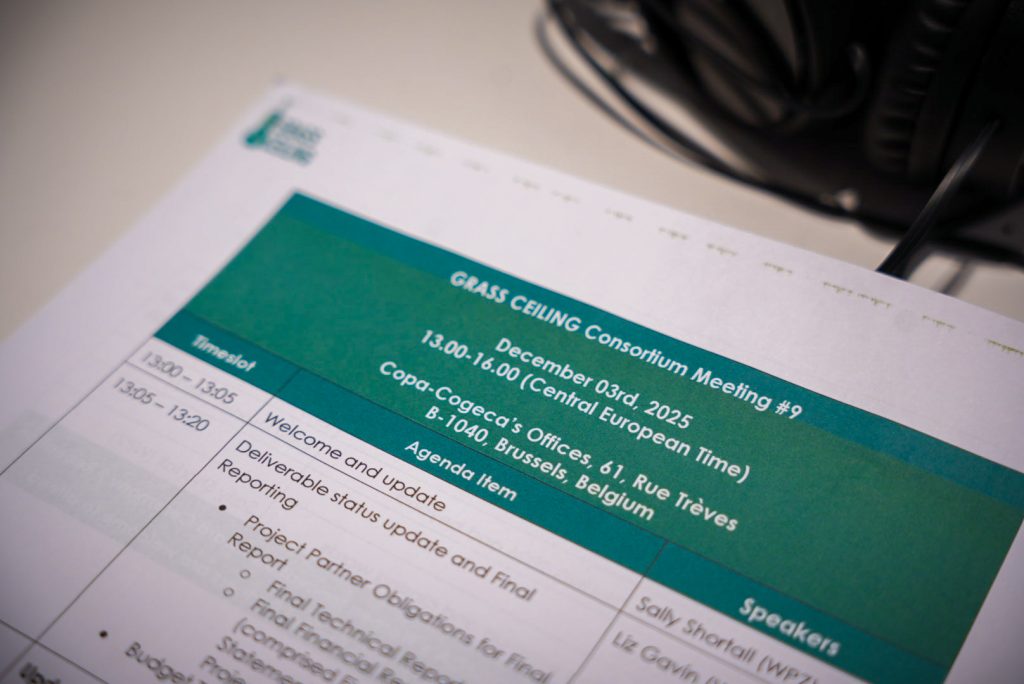
Rosa Gallardo: “Digital transformation needs public policies based on the real-life experience of rural women” Read More »

Silvija Terlević, članica hrvatskog Living Laba, pobijedila na županijskom natjecanju u oranju u Poreču

Dana 31. kolovoza 2025. u Poreču (Istra) održano je županijsko natjecanje u oranju. Ukupno 12 najboljih orača pokazalo je svoje vještine u dvije kategorije: oranje plugom ravnjakom i oranje plugom okretačem (premetnjakom). Po prvi put je održano i žensko natjecanje u oranju, a pobjedu je odnijela naša članica Living Laba, Silvija Terlević.

Zanimljivo je da je njezin sin osvojio drugo mjesto u kategoriji pluga premetnjaka te će predstavljati Istru na državnom prvenstvu. Sljedeće godine Hrvatska će s ponosom biti domaćin Svjetskog natjecanja u oranju 2026.

Silvija Terlević, članica hrvatskog Living Laba, pobijedila na županijskom natjecanju u oranju u Poreču Read More »

Silvija Terlević, Croatian Living Lab member, triumphs at County Ploughing Championship in Poreč, Croatia

On August 31, 2025, the County Ploughing Championship took place in Poreč (Istria). Twelve of the best ploughmen showcased their skills in two categories: conventional ploughing and reversible ploughing.

For the first time, a women’s competition was also held, with our croatian Living Lab member, Silvija Terlević taking the victory. Interestingly, her son secured second place in the reversible plough category and will go on to represent Istria at the national championship.

Next year, Croatia will proudly host the World Ploughing Contest.

Silvija Terlević, Croatian Living Lab member, triumphs at County Ploughing Championship in Poreč, Croatia Read More »

The Keane sisters’ sweet success: a story of an Irish chocolate brand rooted in sustainability and female leadership

Nestled in County Wexford, Ireland, Bean and Goose Chocolate has crafted distinctive, sustainable chocolates for over a decade. Co-founded by Karen and Natalie Keane, this family business has blossomed from a humble kitchen startup into a vibrant workshop employing a dozen people.

Karen, 54, shares how Bean and Goose began 11 years ago with a vision to create a chocolate brand that delighted the palate and celebrated Ireland’s unique landscapes and flavours. “We wanted to create a chocolate brand that was sustainable and ethical and celebrated Ireland, the landscape, and the form that we have”, she explains.

Innovation plays a crucial role in Bean and Goose’s identity. The Irish countryside inspires the chocolates’ shapes, and a dedicated design team carefully crafts designs. Karen and Natalie develop every flavour in-house, showcasing local ingredients and collaborating with Irish producers and illustrators to tell a story through their products.

However, Karen is candid about her challenges as a female entrepreneur in the food industry. “Being a female entrepreneur does have its challenges. I think you have to explain yourself and your business more than a man would have to”, she admits. Early on, their chocolate business was not always taken seriously, a situation Karen believes would have been different had they been men.

Balancing multiple roles is also a reality for many women on her team, who often juggle work with caregiving and other commitments. Bean and Goose strives to accommodate these demands with flexible working hours, fostering an inclusive environment that supports women’s workforce participation.

Reflecting on the support needed to grow the business, Karen highlights the importance of financial assistance and mentorship. “We have had financial help from Enterprise Ireland and our local leader funding, which is excellent. Mentorship is critical as well. Networking with people and having business mentors helps you along the journey”. Bean and Goose’s journey exemplifies how passion, innovation, and community support can transform a small home venture into a thriving business honouring its roots while pushing boundaries. Their story is not just about chocolate, it’s about resilience, female empowerment, and celebrating the richness of Ireland in every bite.

The Keane sisters’ sweet success: a story of an Irish chocolate brand rooted in sustainability and female leadership Read More »

Balancing family and entrepreneurship: the journey of Gina Ryan, the Microgreen Queen

Gina Ryan, a 39-year-old entrepreneur, shares her inspiring journey of building a successful business while prioritising her family. Starting in the network marketing industry ten years ago, Gina sought flexibility to recover from a serious surgery and generate income from home. This initial step into entrepreneurship planted the seeds for her passion project: microgreens.

Gina launched The Micro Green Queen three years ago, a business focused on growing and selling microgreen vegetables. She identified a clear market gap and was captivated by the nutritional benefits and ease of incorporating microgreens into daily diets. Her venture quickly outpaced her expectations, growing rapidly and gaining traction among health-conscious consumers.

However, Gina faced a critical decision. As a mother of two young children, she struggled to balance her ambitions with the demands of full-time childcare. The challenge of expanding her business clashed with her desire to dedicate more time to her children, leaving her at a crossroads. “There’s this expectation that women can do it all, but without a support system, it quickly becomes overwhelming”. Ultimately, she decided to step back from direct management and find someone ready to take the business to the next level, prioritising her family’s needs.

Gina’s story highlights female entrepreneurs’ unique challenges, especially when balancing family responsibilities. Reflecting on the lack of communal support compared to previous generations, she notes how the busy pace of modern life has eroded the “village” mentality that once helped parents raise children collectively. Her experience underscores a broader issue many women face in entrepreneurship: juggling the pressure to succeed professionally while fulfilling caregiving roles. Despite these challenges, Gina remains optimistic about building a successful business while maintaining her role as a dedicated mother, embodying the resilience and determination of many female entrepreneurs.

Through initiatives like the Grass Ceiling project, Gina connected with other women entrepreneurs, fostering a community of support and collaboration. Her journey is a testament to entrepreneurship’s complex but rewarding path for women who refuse to choose between family and career.

Balancing family and entrepreneurship: the journey of Gina Ryan, the Microgreen Queen Read More »

Od skepticizma do uspjeha: Silvijino postignuće u poljoprivredi

Silvija Terlević je dinamična inovatorica iz idilične Istre. Uspjela je spojiti tradiciju i suvremenu poljoprivredu na vlastitom gospodarstvu. Uzgaja ovce, konje te autohtonu istarsku pasminu goveda – boškarin.

Silvijin poduzetnički duh temelji se na dugogodišnjem iskustvu vođenja uspješne trgovine voćem i malog kafića. Unatoč izazovima ulaska u tradicionalno mušku sferu animalne proizvodnje, Silvija je stvorila vlastiti prostor u kojem strast i upornost vode prema uspjehu.

Pokretanje gospodarstva nije prošlo bez prepreka. Lokalna zajednica je njezine ambicije često dočekivala sa skepticizmom i teško je mogla zamisliti da žena može uspjeti u području koje mnogi smatraju „muškim poslom“. No Silvija je te izazove pretvorila u poticaj za uspjeh. Njezina odlučnost i inovativan pristup ne samo da su održali posao, nego su i promijenili shvaćanje što znači biti uspješna žena u poljoprivredi.
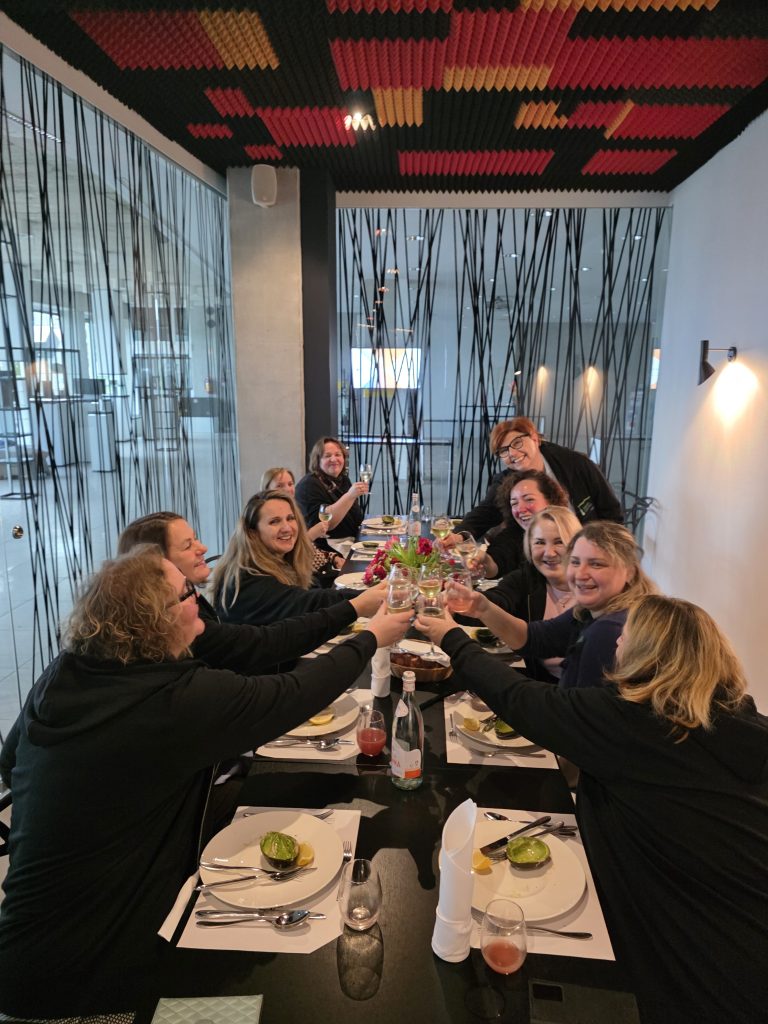
Silvija čvrsto vjeruje da žene obogaćuju poljoprivredu posebnom kreativnošću i inovativnošću. Iako se njihov doprinos često podcjenjuje, njezina je priča dokaz rušenja barijera, pomicanja granica i potvrde da tradicija i inovacija mogu ići ruku pod ruku – osobito kada se promatraju kroz prizmu odlučnosti i vizije.

Silvija je istinski primjer žena inovatorica koje nastavljaju inspirirati, uvoditi novitete i slaviti jedinstvenu baštinu Istre.

Od skepticizma do uspjeha: Silvijino postignuće u poljoprivredi Read More »

From scepticism to success: Silvija Terlevic’s triumph in agriculture

Silvija Terlević is a dynamic innovator from the picturesque region of Istria. On her farm, she has cultivated a harmonious blend of tradition and modern farming. Silvija breeds sheep, majestic heavy draught horses and a traditional Istrian breed of cattle (Boškarin).

Silvija’s entrepreneurial spirit is based on years of practical experience running a thriving fruit store and a cosy coffee bar. Despite the challenges of entering the traditionally male-dominated field of animal production, Silvija has created a space for herself where passion and resilience lead to success.

Starting her farm was not without its hurdles. The local community often met her ambition with scepticism and had difficulty imagining that a woman could succeed in a field that many consider a “man’s business”. But Silvija turned these challenges into impetus for growth. Her determination and innovative approach not only sustained her business, but also redefined what it means to be a successful woman in agriculture.

Silvija firmly believes that women bring unparalleled creativity and innovation to agriculture. Although women’s contribution is often underestimated, her story is a testament to breaking barriers, redefining norms and proving that tradition and innovation can go hand in hand, especially when viewed through the lens of determination and vision.

Silvija is a true example of female innovators who continue to inspire, innovate and celebrate the unique heritage of Istria.

From scepticism to success: Silvija Terlevic’s triumph in agriculture Read More »

Gail Daniels

From dairy farm to skincare success: Kilkenny farmer Gail Daniels & Bó Bar Soap’s unique journey

In the lush countryside of South Kilkenny, Ireland, Gail Daniels is redefining what it means to be a modern rural entrepreneur. As a dairy farmer with deep roots in her community, Gail has taken a bold step by creating Bó Bar Soap, a company that produces natural, handmade soap using cow’s milk directly sourced from her family farm.

The inspiration behind Bó Bar Soap is deeply personal. Gail’s daughter struggled with eczema, a condition that prompted her to seek gentle, chemical-free alternatives for skincare. While researching, Gail discovered the benefits of goat’s milk soap but realised she could not find a similar product made from cow’s milk, a staple on her farm. Driven by this gap in the market, she experimented with using milk from her grass-fed cows, which are known for their rich and nourishing properties similar to those of goat’s milk. “After trying the soap on my family, I noticed it didn’t cure eczema, but it significantly reduced redness, itching, and irritation,” Gail explains. Encouraged by positive feedback from friends and family, she transformed her homemade remedy into a viable business.

Bó Bar Soap stands out in Ireland as a pioneering product, combining traditional farming with innovative craftsmanship. Gail’s approach highlights a growing trend among rural entrepreneurs, finding new ways to add value to their agricultural products while preserving the authenticity of their local heritage.

However, Gail admits that the biggest challenge in her journey has been overcoming self-doubt. “The main barrier was myself — having the confidence to start something new,” she shares. Despite limited direct obstacles from outside, stepping into entrepreneurship required determination and a willingness to learn. The COVID-19 lockdown period unexpectedly allowed Gail to deepen her knowledge through online research. Yet, as she neared the launch of Bó Bar Soap, she realised the need for more specialised support. Turning to the Local Enterprise Office in her county proved crucial, offering guidance and resources to help her navigate the business landscape.

As Bó Bar Soap continues to grow, Gail hopes her journey encourages more women in rural areas to explore entrepreneurship. “With the right support and belief in yourself, anything is possible,” she says.

From dairy farm to skincare success: Kilkenny farmer Gail Daniels & Bó Bar Soap’s unique journey Read More »

Emer Lawrence

Sowing the seeds of health: Emer Lawrence’s microgreens venture flourishes in Kilkenny

At just 28 years old, Emer Lawrence is carving out a green future in southeast Ireland. She runs a thriving microgreens business that supplies local shops, restaurants, and private customers with highly nutritious greens harvested at their peak.

Her journey into horticulture began by taking over a fellow participant’s business from the GRASS CEILING project. “I had a huge interest in getting into the horticultural sector,” she explains. “When Gina, who was also part of the programme, wanted to sell her business, I accepted”.

Microgreens, young edible seedlings of vegetables and herbs, are at the heart of her enterprise. “They have 40 times the level of nutrients that the mature vegetable has”, she says. “People who are interested in their general health, or those who are ill and want to boost their nutrient intake, often turn to microgreens. Mine are grown in organic soil and are pesticide-free”.

Innovation is already a growing focus of her work. She’s experimenting with sustainable uses for the compost left after each harvest. “I’m trying to decide whether to reuse it, grow other vegetables like potatoes with it, or sell it on. I’m still figuring out the best approach”.

But like many entrepreneurs, Emer’s path has not been without challenges. “Probably the biggest obstacle is myself—dealing with confidence and impostor syndrome,” she admits. Beyond the personal, she also points to broader structural issues: “There aren’t as many grants or supports for getting into horticulture compared to the dairy and beef industries”. Support systems, she says, are crucial for growth. “We import a lot of our vegetables and fruits from Ireland. Helping people get into this sector could make a real difference”.

What she values most about her work is the autonomy. “Working around life has been fantastic,” she says. “It also allows me to explore my interest in horticulture, pursue training, and build a network”.

She’s already active in the local enterprise board, which provides training, mentoring, and networking events. “It’s a great way to meet other entrepreneurs, especially women”, she adds. Her participation in GRASS CEILING has also been transformative. “It helped me build a network; more importantly, it’s how I came to have this business in the first place”. With roots firmly planted and ambition blooming, Emer is growing more than microgreens—she’s cultivating a sustainable and empowering model for young rural entrepreneurs across Ireland.

Emer Lawrence

Sowing the seeds of health: Emer Lawrence’s microgreens venture flourishes in Kilkenny Read More »

Aileen Barron

Aileen Barron and Green Acre Marketing, revolutionising agribusiness marketing in Ireland

When Aileen Barron founded Green Acre Marketing in 2013, she wasn’t just launching a business but challenging the conventions of a traditionally conservative sector. Based in County Waterford, Ireland, her company focuses exclusively on marketing for agribusinesses, filling a vital niche at a time when the digital revolution was only beginning to touch the agricultural world. “We were the first to push those boundaries with agribusinesses,” she explains, “to get away from traditional marketing styles and to bring innovation and new technology.”

Aileen, now Managing Director of the company, identified early on that agriculture needed more than just visibility; it needed tailored communication tools, primarily as marketing evolved rapidly in the digital age. “Marketing was in a space where things were changing,” she recalls, “and we felt that digital marketing was going to become a real factor for agribusiness.” What makes Green Acre Marketing stand out is its forward-thinking approach: not just adapting marketing tools to the sector, but helping clients imagine possibilities they hadn’t considered. This proactive innovation means understanding what currently exists and what can be developed. “We’re constantly asking ourselves, are there other support mechanisms we can bring to them regarding that marketing space?”

Despite the excitement of entrepreneurship, Aileen acknowledges the challenges, especially the emotional and strategic pressures of growing a business. “There’s a kind of loneliness,” she admits, “because you’re making that decision on your own regarding how your business will push forward.” The most challenging hurdles for her were scaling the business, handling finances, and building a team. However, she quickly highlights the importance of surrounding herself with the right people: “I’ve always been fortunate to have a powerful team behind the business.”

For Aileen, support is both internal and external. She knows her limitations and recruits people who can complement her strengths. “Recognising where the weaknesses are in the business, and even within yourself, and putting those systems and people in place to fill those gaps” is her formula for sustainable growth.

When asked what she enjoys most about her job, she doesn’t hesitate: it’s the people. “My customers and probably the people I work with,” she smiles. With clients across Ireland and beyond, and a deep passion for agriculture, her enthusiasm for the sector is evident. “It is an amazing industry to work in. I’m very passionate about agriculture and the future of agribusiness.”

Aileen Barron

Aileen Barron and Green Acre Marketing, revolutionising agribusiness marketing in Ireland Read More »