Human Stories

Picture of Jenny grant

Rooted in the Highlands: Jenny Grant’s vision for Croft and the Loch

On the shores of Loch Broom, near Ullapool, Jenny Grant is slowly weaving together a life and business that reflects her deep connection to the land. Her enterprise, Croft and the Loch, launched in 2021, is not just a croft but a holistic project that brings together food production, environmental education, and art.

For Jenny, the seeds of this journey were sown in childhood. Growing up, she was captivated by natural heritage, eager to help neighbouring farmers with lambing and assisting her mother in growing vegetables. “Anything to do with the land and being outdoors fascinated me”, she recalls. Alongside this passion was a strong creative streak: she spent hours sketching animals, merging her love of nature with artistic expression. These two elements—land and creativity—would eventually become the backbone of her crofting vision.

The path to establishing a croft, however, was anything but straightforward. After years of travelling and searching for a place to settle, Jenny realised how difficult it was to secure a croft tenancy. She attended courses, asked for advice, and persisted, even while raising her young son. “It was a real moment of determination”, she says, describing how motherhood fuelled her resolve. “I wanted this not just for me, but for him too”. Eventually, a series of fortunate turns led her to the land she now manages—a stunning croft with ancient oak, ash, birch, and hazel trees, flower meadows, and a shoreline that runs directly into the sea loch.

Since then, Jenny has been steadily developing the project. She has fenced the land, planted fruit trees and bushes, and is preparing to install a polycrub to extend her growing season. She also raises seedlings from native trees to enrich biodiversity. “It doesn’t make money yet”, she admits, “so I fit it in when I can”. Alongside crofting, she works, studies to become a teacher, and raises her son as a single mother.

What makes Croft and the Loch unique, Jenny explains, is its interwoven nature. It is not a single activity, but a network of interconnected elements. As an environmental educator, she incorporates her expertise into the croft through illustration, nature journaling, and wildlife books. She envisions the site becoming a place where people can not only learn about nature but also connect with it on a deep level. This could mean schoolchildren discovering crabs on the shore, individuals seeking mental health support in a calming space, or visitors contributing to the project through agritourism.

“The golden thread is the land”, she says. “Everything comes back to appreciating and caring for it: for wildlife, for future generations, and for ourselves”.

Innovation, in her case, lies in bridging tradition and modernity. A Highlander by birth, Jenny draws on her rural roots while bringing in ideas gathered from travel and education. She applies forward-thinking approaches to biodiversity and sustainability, ensuring her croft reflects both heritage and future needs.

Yet, the challenges she faces are significant. Chief among them is childcare. As a single mother, the lack of support systems limits the time she can dedicate to the croft. Financial sustainability is another hurdle, as crofting rarely offers immediate returns. “I could take a better-paid job and walk away”, she acknowledges, “but it’s important to me that crofting continues, and that women can continue to croft despite the barriers”.

For Jenny, Croft and the Loch is more than a livelihood; it is a calling shaped by resilience, creativity, and the determination to carve a future where land, people, and community remain deeply connected.

Rooted in the Highlands: Jenny Grant’s vision for Croft and the Loch Read More »

Karis Beattie picture

Karis Beattie’s journey: Sustaining tradition and community through crofting on the Isle of Lewis

Karis Beattie is a dedicated crofter living on the Isle of Lewis, a remote and beautiful island in Scotland’s Outer Hebrides. Since taking on her croft tenancy in 2017, Karis has been committed to nurturing the land and sustaining a way of life that balances tradition with community focus and personal passion.

Her croft covers two hectares and includes a small flock of sheep, hens, and a polycrub used for growing vegetables. Karis’s approach to crofting reflects a deep connection to the land and an appreciation for the communal aspects of rural living. She learned from years tending an allotment in Aberdeen before deciding to expand her involvement with the land by taking on a whole croft. This step marked the start of a meaningful journey toward creating a sustainable and fulfilling rural livelihood. As she says, “I feel very fortunate for how I got access to a croft, which is very difficult for a lot of young people”.

When asked about innovation in her work, Karis offers a thoughtful perspective. While some might see crofting as traditional rather than innovative, she points out that the practice requires constant adaptability. The unpredictable weather and the isolation of island life demand creative problem-solving and resilience. Karis highlights the challenge and opportunity of living on a remote island, which shapes the very nature of crofting as a dynamic and evolving practice: Crofting is innovative in the way that you never know what the weather is going to chuck at you”.

A key aspect of Karis’s story is that she gained access to a croft, an opportunity that many young people find hard to come by. She also secured social housing on the island, which supported her transition to crofting life. Motivated by her own experience, Karis has become involved in community projects aimed at increasing access to social housing and crofts for others. She is passionate about fostering opportunities for new generations to engage with rural life, helping to ensure the continuity and vitality of her island community. “I am inspired by that and want to help others to be able to do the same thing”, she explains.

Karis does not focus on radically differentiating her products. Instead, she is dedicated to learning and preserving the traditional practices of crofting from her village and neighbours. She emphasises managing the croft well, handling sheep properly, and working collaboratively within the community, values that underline the social fabric of crofting life.

Challenges certainly exist. Funding, for example, can be a significant hurdle, as accessing Crofting Agricultural Grants (CAGS) requires upfront capital that not all can afford. While this is not a challenge unique to women, it is a significant barrier for many aspiring crofters. However, Karis is quick to acknowledge the strong support she has received from her local community, which has helped her overcome obstacles and feel welcome in the crofting world. “I find the community has been incredibly supportive of me coming into crofting anyway”.

What Karis enjoys most about her work is the sheep. She describes working with them as a source of happiness and fulfilment. The connection to the land, the physical activity of walking the hills, and the daily interactions with neighbours enrich her life. This joy and sense of belonging are core motivations behind her dedication.

Community involvement is central to Karis’s vision. She actively participates in the local community council. She supports projects that aim to build social housing, improve early years education, and sustain vital community services such as the shop, hostel, and café. She believes that working collectively through group projects is key to keeping rural communities vibrant and resilient.

For women starting their rural businesses, Karis’s advice is practical and encouraging: learn from others, collaborate, but also be brave enough to try your way and innovate where you see fit. She stresses the importance of taking breaks and recharging, recognising that entrepreneurship is a demanding path that requires balance and self-care.

Karis Beattie’s journey: Sustaining tradition and community through crofting on the Isle of Lewis Read More »

Picture from Jenny Hart on Scotland Living lab encounter

Jenny Hart: Cultivating community and innovation through crofting in the Scottish Highlands

Jenny Hart is a passionate crofter living and working in the south-west Highlands of Scotland. Since moving to the croft in 2021, Jenny and her family have dedicated themselves to regenerating the land and producing local, sustainable food for their community (Cormonachan Croft). Their journey reflects a commitment not only to agriculture but to preserving a way of life deeply connected to nature and local traditions.

When asked about the origins of her business, Jenny admits that it was “what I’ve always wanted to do”. The opportunity to establish their croft was a fortunate moment that allowed her to follow this lifelong ambition. From the start, the goal was simple yet powerful: to grow and produce food sustainably for themselves and their neighbours, creating a living that is closely tied to the land.

What distinguishes Jenny’s products in the marketplace is their transparency and authenticity. Customers have the unique advantage of knowing exactly where their food comes from. They can visit the croft, meet the animals, and witness first-hand the care and respect given to every aspect of production. This openness has garnered positive feedback, particularly about the quality of the meat and the other products derived from the croft.

Innovation is also a significant part of Jenny’s crofting approach. In 2022, they expanded into beekeeping, despite facing difficult weather conditions that prevented a honey harvest. Rather than letting this setback discourage them, Jenny and her family seized the opportunity to utilise the by-product of beeswax creatively. They developed a small line of beeswax-based cosmetic products, transforming what could have been a loss into a valuable new offering. This kind of resourcefulness is emblematic of the adaptive and sustainable ethos that underpins their business.

Navigating the crofting industry as a female entrepreneur has not been without challenges. Jenny acknowledges that entering a traditionally male-dominated sector meant facing a lack of confidence and difficulty in accessing industry knowledge and networks. Finding reliable sources of information and connecting with supportive groups took time, but these efforts were crucial to building her confidence and advancing the business.

Jenny emphasises that peer support is crucial for growth, especially for women in rural entrepreneurship. “Having a network of other women doing similar things is the richest source of support, enthusiasm, and inspiration”, she says. Financial challenges are also a reality, especially for small innovative projects. Jenny emphasises the difficulty in securing funding for grassroots ideas, which is crucial for transforming visions into tangible outcomes.

Beyond the business side, Jenny cherishes the lifestyle that crofting offers. The daily experience of working outdoors, caring for animals, and breathing fresh Highland air is “enriching for the soul”. Living in a small community naturally fosters daily interactions and connections, creating a network of mutual support among local businesses. Jenny notes that local establishments, such as pubs and bed-and-breakfasts, have taken an interest in and shown support for their work, reinforcing the sense of shared purpose and community.

Jenny Hart’s story is one of dedication, innovation, and community spirit. It offers a hopeful example of how rural women can thrive by blending traditional practices with modern entrepreneurship and mutual support, enriching both their lives and their communities.

Jenny Hart: Cultivating community and innovation through crofting in the Scottish Highlands Read More »

Portrait of Ivonne White

The story of Ivonne White: passion and perseverance in highland cattle farming on the Isle of Skye

Ivonne White is the driving force behind Romesdal Highlanders, a family-owned business dedicated to raising Highland cattle on a croft on the picturesque Isle of Skye. With deep roots in farming and a lifelong connection to the land, Ivonne has built a business based on tradition, care, and high standards.

Growing up around livestock, Ivonne was “earmarked to spot” from a young age; a phrase that hints at her early involvement in farming life. Although she worked outside agriculture for many years, she returned to her family’s croft and formally started her own business in 2012 after leaving her previous employment. This transition marked the beginning of a passionate commitment to the Highland cattle breed and crofting way of life.

What sets Ivonne’s Highland cattle apart is their pedigree, health, and natural upbringing. She emphasises that the animals are never forced or pushed but are “well-handled” and bred to the highest standards of welfare. This careful approach ensures that her livestock thrives in the rugged island environment while maintaining the qualities that make Highland cattle unique.

Innovation plays a crucial yet subtle role in Ivonne’s work. While crofting is steeped in tradition, keeping up to date with scientific advances and new technology is vital for animal welfare and efficient farming. She stays informed about new technical equipment and methods that can support the health and well-being of her herd. This blend of respect for tradition and openness to innovation defines her farming philosophy.

Ivonne openly acknowledges that one of her biggest challenges as a female entrepreneur and crofter has been her attitude, both within her community and beyond. Many questioned why she chose to raise Highland cattle instead of more commercially popular breeds, and some doubted the viability of her approach. Although those attitudes were often polite rather than overtly dismissive, they reflected an underlying scepticism that she has had to overcome throughout her career.

In addition to social challenges, Ivonne faces practical obstacles linked to the environment and geography of Skye. The island’s remote location means greater distances to markets and agricultural shows, higher expenses, and more logistical challenges compared to mainland farming. These factors increase costs and complicate business growth, demanding resilience and careful planning.

Despite these hurdles, Ivonne credits community connections as a vital support network. She engages with neighbours through local forest trusts and regularly meets other farmers at cattle sales. These relationships provide not only camaraderie but also valuable knowledge sharing and validation, which Ivonne found especially empowering through her participation in the GRASS CEILING project. Attending cattle shows with other experienced Highland cattle breeders reinforced her confidence and helped her refine her practices.

When asked what she enjoys most about her work, Ivonne says simply: “Everything”. She treasures being outdoors regardless of the weather and finds deep satisfaction in working closely with her livestock. This passion is the engine that drives her business forward, through both challenges and successes.

Her advice for women starting their rural businesses is straightforward and heartfelt: “Don’t be put off”. Ivonne encourages aspiring entrepreneurs to follow their passion while remaining pragmatic. She advises learning from others but not allowing negative attitudes or doubts to undermine personal vision and determination. Every journey is unique, and success often means adapting and evolving beyond original expectations.

Ivonne White’s story is a powerful example of perseverance, community, and commitment to rural traditions. On the Isle of Skye, her work with Highland cattle honours a legacy while building a sustainable future, inspiring others to pursue their dreams with passion and resilience.

The story of Ivonne White: passion and perseverance in highland cattle farming on the Isle of Skye Read More »

Sowing change with Haley Shepherd: Scotland’s only seed farm champions local, climate-adapted agriculture

In a quiet corner of rural Scotland, Seeds of Scotland is growing something rare—both literally and figuratively. Co-founded by Haley Shepherd in 2023, the small farm is the only seed producer in the country dedicated to increasing open-pollinated, organic vegetable seeds specifically adapted to the Scottish climate.

“We grow seeds for people to grow vegetables at home”, says Haley. “They’re a mix of Scottish varieties and other types selected from similar short-season climates. The goal is to grow varieties that will thrive here”.

The idea took root after Haley and her partner spent years learning how to grow vegetables commercially. “We realised that most seeds come from far away and aren’t adapted to Scottish conditions. There was no one producing seeds here anymore—something that used to be common”. Haley finds joy in her work. Her favourite part? Watching plants go through a full life cycle. “Seeing a leek grow for two years, flower, and produce seed again—it’s amazing. Most people never see that. It makes you appreciate the whole process”.

Now, Seeds of Scotland is not only filling that gap but doing so in a way that blends traditional knowledge with a spirit of innovation. “Saving seeds isn’t new—it’s a practice that’s thousands of years old”, Haley explains. “But doing it in Scotland is the innovation. It’s not easy here with the climate. You have to get creative just to dry the seeds properly because of all the rain”.

To combat the damp conditions, the farm has added extra drying stages and is building a custom seed drying machine based on a design from the United States. “We adapted it for our needs and had someone build it here”, she says. “And we plan to share it with other small growers. It’s part of creating a more resilient network”.

That network is already taking shape. Seeds of Scotland works with other small farms across the country to grow seed crops, helping to decentralise production and support Scotland’s food sovereignty. “A farm might grow one seed crop alongside their vegetables, and we all contribute to a more resilient seed system”, Haley notes.

But running such a business isn’t without its hurdles, especially for women in farming. “It’s a male-dominated industry”, Haley says. “It can be intimidating, and I don’t always feel confident calling myself an entrepreneur or innovator, even though I suppose I am”. Beyond gender dynamics, there are more structural issues. “Access to land is complicated, and we’ve received no government funding”, she explains. “We’ve only been able to start thanks to the support of our landowner and some private charities. Without them, we couldn’t have done this”.

One dream that Haley believes could transform businesses like hers is a basic income for farmers. “It would give us stability and the ability to reinvest in the business. Weather is increasingly unpredictable, and that kind of safety net would let us build something sustainable that could outlast us”.

Community engagement is also a central part of their mission. Seeds of Scotland recently took part in an exhibition at the V&A, and they’re working with Trellis Scotland to provide discounted seeds to community gardens. “Helping community gardens grow more, and more climate-adapted vegetables is a big goal”, she says. Haley and Seeds of Scotland are demonstrating that meaningful change can begin with a single seed, especially when it’s planted close to home.

Sowing change with Haley Shepherd: Scotland’s only seed farm champions local, climate-adapted agriculture Read More »

Picture of Beth Rose during the Scotish Living lab

Innovation from the land: How the Scottish crofter Beth Rose turned variety into strength

Nestled just south of Inverness, Beth Rose runs Birch Wood, a croft that reflects both the resilience of rural life and the creativity of its people. What began as a desire to “work the land” has evolved into a multifaceted business, and a way of life, that includes livestock, crops, wool, preserves, and community-led initiatives.

“Our main product is beef from the cows”, Beth explains, “but we also keep sheep, grow crops, use the wool, and make by-products like chutneys and jams. It all depends on the season and what’s needed in the community”.

Beth’s croft is a story of adaptation. With no single focus, she responds to local needs, allowing the business to remain flexible and sustainable. This responsiveness is especially evident in the way she applies innovation. One unexpected tool in her arsenal is Strava —a fitness tracking app typically used by runners. Beth uses it to log her time on the tractor, which helps her calculate the actual cost of producing hay. “Otherwise, it’s hard to know how to price things,” she says. “Strava helps me keep track of the hours spent on each task”.

Her journey from nursing to crofting wasn’t just a career shift; it was a lifestyle transformation. Like many women in rural enterprises, Beth has faced the challenge of juggling work, family, and community responsibilities. “Probably the hardest thing as a woman entrepreneur is just managing everything—childcare, work, and the community work I do at the hall”, she says.

That community involvement is a central pillar of Beth’s life. She volunteers at the local hall and helps run a community café, a space that brings people together and ensures inclusivity. “The croft is part of it, but the community is what helps us all thrive”, she reflects. “Doing things at the hall makes it a functioning place. It secures the future not just for now, but for the next generation”.

The GRASS CEILING project, which aims to empower women in rural innovation, has played a pivotal role in shaping Beth’s perspective on her work. “Before the GRASS CEILING, I saw the croft as a business, but I didn’t have much knowledge behind it”, she admits. Now, I use my time better and I’ve become more business-minded”.

Support tailored to small-scale and diverse rural enterprises like hers remains scarce. “Most farming training and support is aimed at much bigger, commercial farms”, Beth says. “What we need is help with pricing, marketing, and knowing how to take an idea forward”.

Although Beth doesn’t have a strong network of business peers in her immediate area, the GRASS CEILING project has helped her forge new connections. “Locally, there’s not much, but through GRASS CEILING, I now know other women running businesses and we share advice and ideas”. With a unique blend of innovation, adaptability, and a commitment to her community, Beth represents a new kind of rural entrepreneur, one rooted in tradition, yet looking to the future with creativity and purpose.

Innovation from the land: How the Scottish crofter Beth Rose turned variety into strength Read More »

Picture of Aoife Gould during the last Scotish Living Lab

Turning waste into worth: Aoife Gould’s wool revolution on the Isle of Skye

On the remote and windswept Isle of Skye, Aoife Gould is quietly transforming what was once seen as agricultural waste into something of beauty and value. A crofter and textile producer, Aoife had no agricultural background when she and her husband moved to the Isle of Skye. However, their shared desire to keep sheep led them down an unexpected entrepreneurial path (Facebook).

“When we took ownership of the flock in 2020, we couldn’t find shearers because of the pandemic”, Aoife recalls. “There was no outlet for the wool, and it would have gone to waste”. Instead of letting it pile up unused, Aoife began researching Hebridean fleece —from the breed they raise— and discovered it was perfect for felting.

What began as a hobby during lockdown has since evolved into a fully-fledged business. Aoife now processes the fleece entirely by hand, using only rainwater, soap, and a considerable amount of elbow grease. Every stage, from shearing to crafting, is handled by her and her husband. “Everything is done locally, and all our fields are within half a mile of our house”, she says with pride.

It’s this complete control over the production process that makes Aoife’s products so unique. “They are deeply tied to the land. Each piece reflects the place it comes from”, she explains. Her creations —felted rugs and practical woollen items— carry the natural colour variations of each sheep, offering buyers a tangible connection to the croft.

Though she never saw herself as an innovator, Aoife now embraces the label. “I’ve learned techniques through online communities and applied ideas from different areas of life”, she says. “We wanted zero waste, so I looked for ways to turn wool, often viewed as a waste product, into a valuable income stream”.

But running a small rural enterprise comes with its own set of challenges, especially as a woman. “Self-belief and access to finance have been the biggest hurdles”, she admits. Aoife is not chasing rapid growth or big profits; her goal is simple: to make enough to contribute to the mortgage and sustain the croft. Yet, most funding models reward scale, not sustainability. “I don’t want to turn over a million or employ 20 people. I just want to employ myself. But there’s little support for that”.

All the investment in her workshop has been privately funded, something she acknowledges wouldn’t have been possible without her partner’s steady income and inheritance money. “It shouldn’t require this level of personal sacrifice to build something so valuable to the community and the environment”, she says.

Looking ahead, Aoife sees mentorship and digital support as key to her business’s growth. She’s working on launching a website —something that was previously eligible for funding but is no longer— and is seeking shops to stock her products. “I often spend more time on peripheral business tasks than actually working with the fleece”, she laughs. “Support to go digital and keep making a living would help”.

Despite the obstacles, Aoife finds deep satisfaction in her work. “I love Hebridean wool, the colours, the texture. Seeing people’s reactions to my products and the connection they feel to the animals is the most rewarding part”.

From humble beginnings and a pandemic-induced challenge, Aoife has woven a story of resilience, creativity, and meaningful entrepreneurship, rooted in tradition, driven by passion, and sustained by community.

Turning waste into worth: Aoife Gould’s wool revolution on the Isle of Skye Read More »

Picture of Elin Skörde during the 8th Swedish living lab

From forest to freedom: Elin Skörde’s vision for a regenerative rural life in Sweden

Elin Skörde, a 44-year-old teacher and forester, lives in a quiet village in Sweden. Balancing a career in education with a deep-rooted passion for sustainable forestry, she is building a unique business that connects people with nature while respecting the land’s rhythms.

“I started my business because I have a forest farm, and I want to use it for more than just forestry”, she explains. Elin’s desire to spend more time at home and less on salaried work led her to explore creative ways to develop her land. Her ventures include a forest garden, silent walks in the woods, and a unique solo camping experience—all designed to offer people a meaningful connection with nature.

One of the cornerstones of her business is the “Eremit” app (Android, iOS), which allows guests to book a secluded parking spot for camper vans in her forest. “You’re completely alone in the woods. No one else will come there,” Elin says. This promise of solitude and stillness is a powerful draw for those looking to disconnect from everyday noise.

Elin also cultivates a forest garden—a self-sustaining system where everything she grows is edible or useful. “There’s no watering, no added nutrients. It takes care of itself”, she says. The garden features a variety of perennial plants, vegetables, and crops that benefit pollinators, including bees and bumblebees. “I grow things you can eat or make something edible out of”, she adds. Her goal is not only to feed people, but also to regenerate the ecosystem around her.

Another innovative project is “Forest Hang-out With Elin”, a sensory forest experience where small groups walk silently among the trees. “You use your sight, hearing, taste—all your senses”, she explains. The experience ends with a meal prepared in the forest, reinforcing her belief in nature as both a healer and a host.

Despite her enthusiasm, Elin acknowledges the challenges of launching a rural business. “Time is the biggest problem. I want to spend more time on the farm and less in my salaried job”, she admits. She also mentions the need for start-up capital and access to training. “I would need help to join courses, and money to dare to invest and get started”.

Her participation in the Living Labs programme has been a source of inspiration and motivation. “I’m in the early stages of my business. Listening to the other women—who are much further along—has been educational and encouraging”, she says.

When asked what advice she would give to a friend considering a similar path, Elin doesn’t hesitate: “Take your time. Know what you want to do and how to do it”. For her, success isn’t about rushing into entrepreneurship, it’s about basing the process on clarity and intention. Elin’s story is one of quiet innovation. It is not driven by scale or speed but by a thoughtful approach to land, life, and livelihood. She represents a growing movement of women in rural Sweden who are redefining entrepreneurship on their terms, rooted in place, sustainability, and self-determination.

From forest to freedom: Elin Skörde’s vision for a regenerative rural life in Sweden Read More »

Picture of Josefin Levinsson at her family business

A new generation: Josefin Levinsson and her sisters breathe new life into their family farm

On a quiet stretch of countryside in southern Sweden, three sisters are redefining what it means to run a modern rural business. Josefin Levinsson, 30, along with her two sisters, has turned the family farm where they grew up into a thriving enterprise that blends tradition with innovation and community with sustainability (Flättinge Gård web).

“We started the company in 2014, when we were all still studying”, Josefin explains. “It began as a summer job; we just wanted to see if we could create something of our own on the farm”. What began as a seasonal experiment quickly evolved into a full-time endeavour. Today, the sisters operate a farm shop and café, grow and process lupin beans, and produce a range of homemade products, including juices, chutneys, and pastries.

A key feature of their business is the use of lupin-based food. “The new part is when we started growing lupin beans”, says Josefin. “It’s still quite unusual in Sweden, especially to grow and process them on-site and use them as the main protein source in food products”. From these beans, they make burgers and patties that are sold to cafés, restaurants, and shops. The sisters do every step—from growing and drying to processing—on the farm itself. “It doesn’t leave the farm until it’s a finished product”, Josefin points out.

This hands-on, circular approach applies to everything they do. Their café serves pastries made from scratch with local and Swedish ingredients, and the farm shop offers not only prepared foods but also eggs from their chickens and beef from their cattle. “We try to use what we have here as much as possible”, she adds.

Her motivation goes beyond profit. “We like this place. We grew up here and want to preserve it, but not necessarily in the traditional way it’s been done before”, Josefin explains. Instead, they’ve carved out their path—one that values both sustainability and creativity. “Baking one day, building furniture the next, taking care of the animals… It’s the variety that makes it so fun”.

While their journey has been largely positive, it hasn’t been without challenges. “Some people assume our father built everything and gave us jobs, that we’re just tinkering”, she says. “They think we can’t handle the animals or the machines. But honestly, we hear that less and less”. For the most part, their experience as women entrepreneurs has been empowering, if occasionally marked by outdated assumptions.

One ongoing difficulty lies in navigating rural development policies. Because their business is not classified as agricultural—despite being located on a farm—they fall between categories and are therefore ineligible for certain EU subsidies. “It’s more difficult to apply for those funds”, Josefin notes. “We’re somewhere in between”. Support, she says, would be most helpful in helping to structure the many parts of their business and reach a wider audience. “Like many rural businesses, we do a bit of everything. Finding effective ways to manage that and scale up would help”.

A bright spot has been their involvement in local networks. Through the “Food Around Gränna” project, they collaborate with nearby businesses and farms. “It’s great to be able to cooperate with others and help each other”, says Josefin. “That kind of collaboration is wonderful”.

A new generation: Josefin Levinsson and her sisters breathe new life into their family farm Read More »

Picture of Emma Hartelius during the 8th Swedish Living Lab

Rooted in responsibility: How Emma Hartelius is reimagining cattle farming in Sweden

At Grimstorps farm in Sandhem, 36-year-old Emma Hartelius is leading a quiet revolution. As the head of an organically certified beef production business, she is building not just a farm but a new way of living—rooted in sustainability, resilience and community.

“I started in 2019 because I wanted to keep farming on my parents’ land”, Emma explains. From that desire grew a multifaceted business that now includes direct meat sales and even a restaurant run by her siblings. “We sell meat directly to the customer, and we’ve also started a farm restaurant. My brother is the chef, my sister grows the vegetables, and I deliver the meat”, she says with pride.

Her business stems from a deep respect for animals and the land. “We’re organically certified, and our production is based on letting the animals graze outside as much as possible”, she says. This method ensures high animal welfare standards and supports biodiversity on the farm. It also aligns with growing consumer interest in sustainable and ethical food sources.

But Emma’s work doesn’t stop at the gates of the pasture. She’s also innovating in how she brings her product to market. “Some say it’s an innovation that I sell some of my meat through a box system via social media”, she says. Customers place orders online and receive meat packages directly from the farm, eliminating intermediaries and fostering a stronger connection between producers and consumers.

Like many rural entrepreneurs, Emma faces the constant challenge of balancing work and life. “I don’t know if I have any challenges as a woman specifically”, she reflects. “It’s about combining the puzzle of life with entrepreneurship”. She adds that in her field, she’s treated equally: “In the green industries, I feel that I am treated just like my father, who is also involved in the company”.

Still, the workload is intense. When asked what kind of support she would need, Emma answers candidly: “Am I allowed to say ‘an extra mum’? Someone who can take care of my family?” She quickly adds, “No, but better profitability so I can hire someone and not have to work quite so many hours”.

Emma finds the greatest joy in the hands-on nature of her work. “Working outside with the animals, and that I get to learn so many new things—that’s what I love most”, she says.

Her sense of connection extends beyond the farm. She is active in multiple organisations that support the local community, including farmers’ groups and producer associations. Her involvement in the GRASS CEILING project has been particularly valuable. “Being able to be honest and open about how you feel and what you think, without feeling labelled as weak—that’s been the best part”, she says.

Her story is one of quiet determination, steady innovation, and deep respect—for tradition, for family, and for the land. In building a modern farm rooted in organic principles and family collaboration, Emma Hartelius is showing that sustainable farming is not just possible—it’s powerful.

Rooted in responsibility: How Emma Hartelius is reimagining cattle farming in Sweden Read More »

Picture of Annika Palmer - Swedish living lab

Breaking stereotypes: Annika Palmér brings smart tech to Swedish dairy farming

In the heart of Sweden’s agricultural landscape, Annika Palmér is challenging outdated perceptions of what a farmer looks like, and how modern dairy farming is done. Together with her husband, she manages a third-generation dairy farm that is home to 165 Swedish Red Breed (SRB) cows. But what sets her apart isn’t just the herd, it’s her passion for animals, her embrace of innovation, and her quiet determination to reshape the image of rural entrepreneurship.

“I have a big interest in animals”, Annika says simply. “That’s why I started”. Her farming journey wasn’t inherited or expected, but rather a personal calling to work with nature and livestock. Though the farm has been passed down on her husband’s side, the couple now co-manages the daily operations, blending tradition with cutting-edge practices.

When asked what she enjoys most about her work, her answer comes easily: “The freedom to work with animals and nature. To be able to develop your business, see it improve, and know that you’re making a difference”.

Like many contemporary farmers, Annika integrates technology into her daily routine. “We use GPS in our tractors and have a robot that milks the animals”, she explains. They’ve also adopted AI-powered activity tracking to monitor the health and behaviour of their herd. While she downplays the novelty of these tools— “Not very innovative”, she says modestly— they reflect a forward-thinking approach that prioritises efficiency and animal welfare.

Still, not all challenges are technical. Annika notes that the biggest obstacle she faces as a female farmer isn’t physical labour or complex machinery—it’s perception. “People have preconceived ideas about what a farmer is like”, she says. “That can be a challenge. I am not the stereotypical image of a farmer”.

Her concerns also reflect broader issues in Swedish agriculture. “There is a huge shortage of skilled labour”, Annika explains. “We need more training opportunities so that we can employ competent staff and make the business more sustainable”. She emphasises the need for financial support and community-based solutions to help farms like hers thrive.

Annika is active in several organisations, including LRF (the Federation of Swedish Farmers), the SRB breeders’ association, and a dairy cooperative. For her, these networks provide not only practical support but also connection and inspiration, especially in initiatives that bring together women in the agricultural sector.

She also joined the GRASS CEILING project. “It has been fun and interesting”, she says. “Meeting others in the green industries, especially women, and getting inspired by their stories—that’s been the best part”.

In a field often dominated by traditional expectations, Annika Palmér Werthén is a reminder that farming today is as much about innovation and mindset as it is about land and livestock. With her commitment to animal care, openness to technology, and grounded leadership, she is helping build a more inclusive and resilient future for Sweden’s rural economy.

Breaking stereotypes: Annika Palmér brings smart tech to Swedish dairy farming Read More »

Ulrica, sustainable farmer, in a garden

Ulrica Björnhag: Pioneering sustainable meat production with retired dairy cows in southern Sweden

Ulrica Björnhag runs a unique and sustainable farm just south of Jönköping in southern Sweden, dedicated to raising retired dairy cows for meat. Her innovative approach gives a new lease of life to cows that have spent years producing milk, turning them into sources of high-quality, grass-fed meat.

“We run a retreat for dairy cows”, Ulrica explains. “They move to us, and we feed them only grass. They grow fat and make lovely meat”. This practice differs significantly from conventional meat production, as it utilises animals that have already contributed to milk production, providing an ethical and sustainable alternative to the typical beef industry.

Ulrica and her team started the business with a clear mission: to create a meat production system that respects the animals’ lifetime contribution while producing healthy, sustainable meat. “This is kind of a way of saying thank you for all they have delivered over time” she says, “but also of producing healthy, sustainable meat. We thought we could make a win-win with this: a win for the animals and a win for us with good, healthy meat”.

What sets Ulrica’s product apart is its focus on retired dairy cows, which are fed exclusively on grass, allowing them to develop muscle and fat naturally over time. Unlike some farmers who may process one or two animals sporadically, her farm maintains continuous production throughout the year, ensuring a consistent supply of high-quality meat that has become highly appreciated by local restaurants.

Despite her success, Ulrica has faced notable challenges as a female entrepreneur in a predominantly male farming sector. “Mainly, it’s men that have a farm and work like this”, she remarks. Additionally, she was not raised on a farm herself but transitioned into agriculture from a different profession, which initially raised doubts among her peers. “People have been suspicious, thinking that you cannot do this, mainly because they say that you cannot take an old dairy cow and transform her from giving milk to eating grass and growing fat. It’s not possible. But we have proven them wrong”.

Growth and expansion remain essential goals. Ulrica emphasises the need for more resources to further develop the farm, particularly to accommodate visitors and increase sales through the farm shop. Increasing public awareness about food origins and production methods is a key aspect of her business vision.

Networking and learning from others are also fundamental to Ulrica’s approach. She actively seeks connections with other producers and entrepreneurs, recognising the value of exchanging knowledge and skills to foster innovation. “More than ever, you need to do that to succeed”, she states. She highlights the importance of meeting female entrepreneurs and others working in different fields, as this diversity of ideas can inspire new solutions and improvements.

Ulrica credits the GRASS CEILING project with providing a safe environment to share experiences, challenges, and ideas with other women entrepreneurs in rural areas. “It has helped me to build a new network with other female entrepreneurs and discuss things that are issues for us or that we are trying to develop”, she explains. The project offers not just professional support but also a chance to relax and openly discuss business in a supportive community.

In Ulrica’s words, success in rural entrepreneurship is not only about the business itself but also about community, learning, and courage. Her work with retired dairy cows represents a thoughtful, sustainable model that honours the animals and connects consumers to the true origins of their food.

Ulrica Björnhag: Pioneering sustainable meat production with retired dairy cows in southern Sweden Read More »

Ida Besten: a farmer’s commitment to community and social innovation in rural Netherlands

Ida Besten, a 59-year-old dairy farmer from Haarle, a small village in the Netherlands, is deeply committed not only to her family farm but also to the well-being of her local community. Her journey as a farmer and community leader exemplifies the vital role women play in rural areas, bridging agriculture, social care, and local activism.

Ida began her involvement with the GRASS CEILING project two and a half years ago, after years of developing a “farmers pilgrimage” initiative. Initially aiming to expand her farming activities, she soon realised her true passion was to care for her community and to ensure that residents and farmers had a voice in political decisions affecting their area.

In response to political developments that overlooked the input of farmers and residents, Ida took the initiative to foster close cooperation among local farmers and residents. Together, they created a shared vision for the future of their agricultural region, emphasising community involvement and sustainable land management. Through cultural-historical research and collaboration with experts, the group analysed the area’s heritage and current challenges, building a comprehensive understanding to guide plans.

Ida’s role as a female farmer and community advocate emerged naturally from her love for the land and her desire to secure a place for future generations of farmers. She describes her work as a form of social innovation—bringing people together to collaboratively shape the future of their rural environment with respect and care.

Despite her achievements, Ida acknowledges the challenges she faces as a woman in a traditionally male-dominated field. She often worries about maintaining the integrity of her family and the well-being of those around her. Political and business interests add complexity to her efforts, making her commitment all the more significant.

What has helped Ida the most is the support she found within the GRASS CEILING group for women, as well as mentorship from Bettina Bock, who guided her throughout the project. These connections strengthened her resolve and reminded her of the importance of vulnerability, courage, and mutual encouragement among women.

From her experience, Ida encourages other women in rural areas to step forward as guardians of their communities. She emphasises the importance of women’s sensitivity to social bonds and their ability to connect with political decision-makers. For Ida, women’s leadership is essential in preserving community cohesion and ensuring that rural voices are heard in times of change. Ida Besten’s story is a testament to the power of social innovation and female leadership in rural farming communities. Her dedication extends not only to agriculture but also to nurturing the social fabric that sustains her village, demonstrating how farming can be both a livelihood and a force for community resilience.

Ida Besten: a farmer’s commitment to community and social innovation in rural Netherlands Read More »

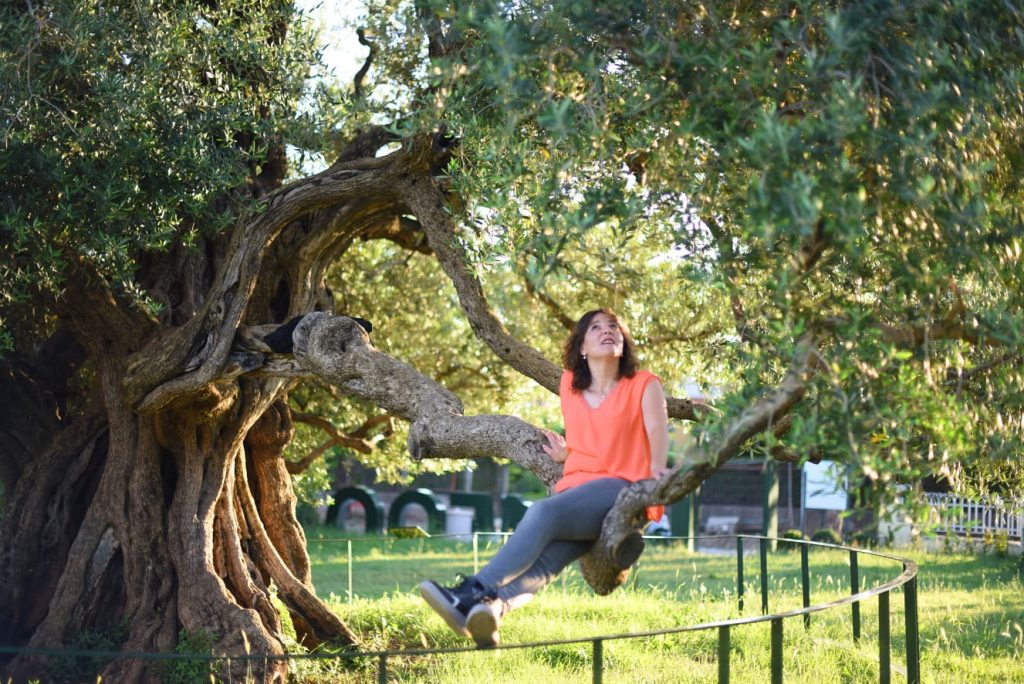
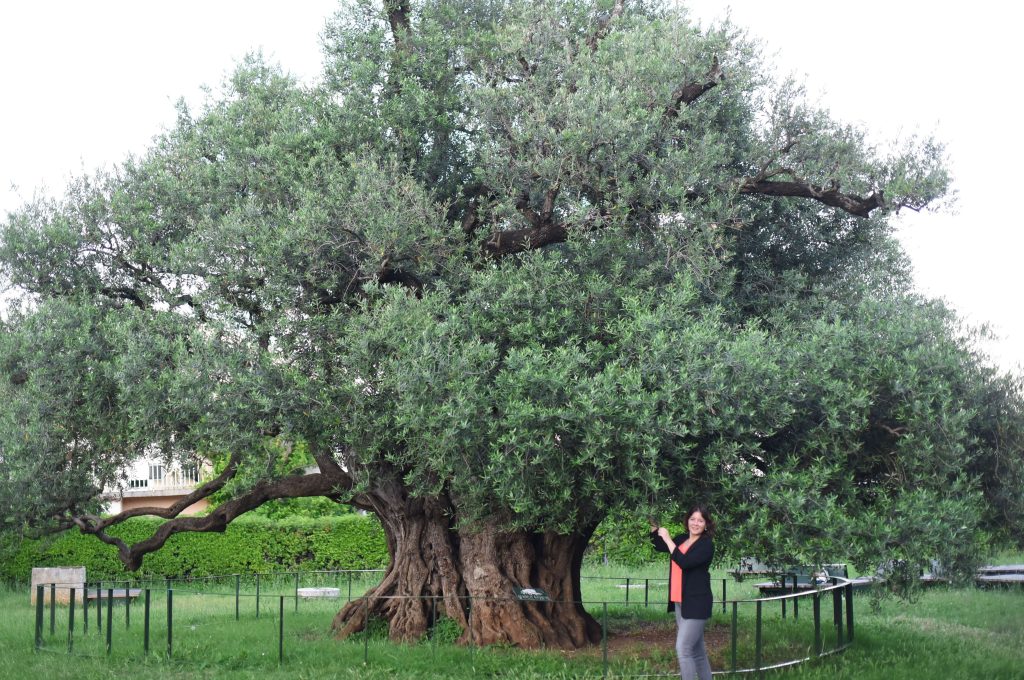
Upoznajte Tatjanu Klepo: znanstvenicu, aktivisticu i čuvaricu maslinarske baštine

Tatjana Klepo dolazi iz Kaštela u Dalmaciji, regije duboko ukorijenjene u maslinarsku tradiciju. Ona je znanstvenica i docentica na Sveučilištu u Splitu, a ujedno i strastvena ekološka aktivistica.

Kao potpredsjednica Udruge maslinara Kaštela “Mastrinka” i članica Upravnog odbora Društva za očuvanje kulturne baštine Kaštela – “Bijaći”, Tatjana je posvećena očuvanju i promicanju prirodne i kulturne baštine Hrvatske. Njezin rad usmjeren je na zaštitu i revitalizaciju tradicionalnih hrvatskih sorti maslina, kako bi se ovo dragocjeno nasljeđe prenijelo budućim generacijama.

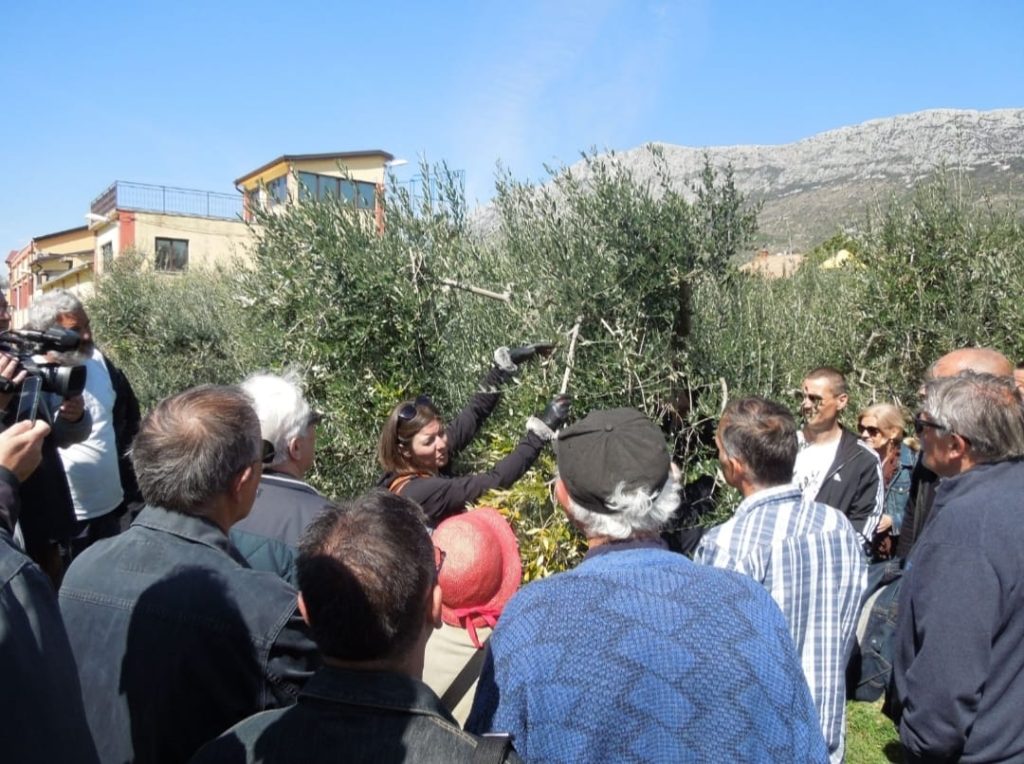
Uz znanstvena istraživanja, Tatjana je osnovala ekološki maslinik koji služi kao edukativno mjesto za maslinare. Kroz ovu inicijativu pruža praktična znanja i iskustvo izravnog rada, podržavajući održive poljoprivredne prakse. Vođena uvjerenjem da je znanje ključ bolje budućnosti, Tatjana nastavlja nadahnjivati druge i stvarati pozitivne promjene u svojoj zajednici i šire.

Upoznajte Tatjanu Klepo: znanstvenicu, aktivisticu i čuvaricu maslinarske baštine Read More »

Meet Tatjana Klepo: scientist, activist, and guardian of olive heritage

Tatjana Klepo comes from Kaštela in Dalmatia, a region deeply rooted in olive-growing traditions. She is a scientist and assistant professor at the University of Split. Tatjana is also a passionate environmental activist.

As vice-chair of the Association of Olive Growers of Kaštela “Mastrinka” and a member of the Steering Committee of the Society for the Preservation of Cultural Heritage of Kaštela – “Bijaći”, Tatjana is dedicated to preserving and promoting Croatia’s natural and cultural heritage. Her work focuses on protecting and reviving traditional Croatian olive cultivars, ensuring that this valuable legacy is passed on to future generations.

In addition to her research, Tatjana established an organic olive farm that serves as a training ground for olive growers. Through this initiative, she provides practical knowledge and hands-on experience to support sustainable farming practices. Driven by the belief that knowledge is the key to a better future, Tatjana continues to inspire others and create positive change in her community and beyond.

Meet Tatjana Klepo: scientist, activist, and guardian of olive heritage Read More »

Sonja van Uden: “I wanted to create something that reflects a new relationship with land”

At 45, Sonja van Uden lives in a small Dutch village just five kilometres from the farmland where she’s launching her boldest project yet. After working as a freelancer, Sonia has spent the last four years designing an innovative land-use model that combines agriculture, nature, and temporary living, all in one place.

“I wanted a different kind of life”, she says. “Years ago, I lived off-grid in a small cabin in Norway, surrounded by nature. That experience completely changed how I viewed society and land. I came back to the Netherlands wanting to recreate something similar, but in a way that would also contribute to this place, where I come from”.

That desire sparked Landdrift Foundation, an initiative that challenges conventional land use in the Netherlands. “Here, everything is divided: you either have farmland, or nature, or a place to live. You can’t combine them. That separation is written into law”, she explains. “What I’m doing is bringing those elements together in one shared space. It’s never been done here before”.

The idea may sound simple, but putting it into practice is anything but. “People struggle to understand the concept”, Sonia admits. “Farmers, municipalities, even neighbours, they’re used to thinking in fixed categories. It takes time to explain that what I want is not chaotic, but a model for more flexible, sustainable living”.

One of the most significant barriers has been access to land and money. “You either buy it, which is extremely expensive, or rent it — but then the landowner must share your vision, and that’s rare,” she says. “And the income models for land use today are mostly bankrupt. There’s very little financial logic to support new ideas”.

Sonia doesn’t come from an agricultural background, which has also raised eyebrows. “People see me as an outsider, and there’s scepticism. Like, ‘Who is she to question this system?’ That makes it even harder to get a foot in the door”.

But it hasn’t stopped her. It’s what fuels her drive to build something radically different, not just for herself, but for others looking for alternatives. “I think it’s challenging as a woman to find space in innovation, especially in rural areas. That’s why we need more support, not only financial, but in the form of coaching, networks, and being taken seriously”.

The GRASS CEILING project became a key source of support. “At first, I wasn’t sure if I fit in, because it was so focused on agriculture. But it’s been great. We support each other as women, and that matters”. What Sonia enjoys most about her work is the challenge it presents. “No day is the same. I’m trying to do something that hasn’t been done before, and that means solving a lot of problems creatively. I love that process, the inventiveness it requires”.

Sonja van Uden: “I wanted to create something that reflects a new relationship with land” Read More »

Irene Beukeveld: “I wanted to do something of my own, with our milk”

At 45, Irene Beukeveld lives with her family on a dairy farm in Holthon, a small village in the northeastern Netherlands. The milk from their cows has long been at the heart of their livelihood, but for Irene, it also became the starting point for something more personal: a new ice cream business.

“I had been thinking about making ice cream for years”, she explains. “The milk from our cows is such a beautiful product, and I wanted to create something of my own with it. That was my dream”.

The opportunity came when a local ice cream parlour shut down. Irene saw the chance and took it, but she credits the GRASS CEILING project for helping her make that decision. “The project gave me structure, a network, and above all, the confidence to take the first step”.

Before launching her business, Irene had worked outside the farm. “I needed to find something that was mine. Something I could build myself”, she says. That personal motivation, combined with the desire to connect visitors with the land and the farm’s story, shaped the concept of her ice cream parlour.

Today, she has developed over 40 recipes using natural ingredients: from classic vanilla to strawberry, lemon, and other seasonal flavours. “I test them one by one, and customers love them”, she says. The farm now includes a cosy terrace, a play area for children, and even fresh flowers from Irene’s garden. “It’s a welcoming place where people can enjoy the ice cream and also learn about the history of the farm”.

Still, the road wasn’t easy. “The biggest challenge was my insecurity, and the fact that people around me weren’t very optimistic about my idea”, she recalls. “But thanks to GRASS CEILING, I found a support network and gained the confidence I needed”.

For women considering launching a business in a rural area, Irene is clear: “Just start. Everyone feels insecure at the beginning. Find people you trust, talk about your ideas, and take small steps. You can do more than you think”.

Irene Beukeveld: “I wanted to do something of my own, with our milk” Read More »

Marloes Van Schaik: “We need to adapt policies so women can feel confident on agricultural boards”

Marloes Van Schaik is a 40-year-old organic dairy farmer based in the Dutch province of Utrecht. Alongside her daily work managing the family farm, she also serves as a policy advisor for the Dutch Agriculture and Horticulture Organisation, focusing on multifunctional agriculture. This field of study examines how farming can provide environmental and economic benefits in food production.

Her involvement in the GRASS CEILING project began when she came across a book that briefly mentioned the role of women in shaping agricultural processes in an area on an island in the Netherlands. “It was just a few sentences”, she explains, “but it struck a chord”. The author stated that women, whether as farmers themselves or as their spouses, had a significant impact on the success of these processes: “I wanted to understand why and how”. That moment of curiosity became the seed for her project.

Her initiative is centred on increasing the presence of women on agricultural boards, spaces where key decisions are made and where female voices are still underrepresented. What sets her project apart is its practical, grassroots methodology. “It’s very hands-on”, she says. “I’ve interviewed many people — both women and men, some of whom are already on boards, and others who aren’t — to understand the motivations, barriers and perceptions around these positions”.

From these conversations, she has compiled a set of clear, actionable recommendations that she now offers to cooperatives and agricultural associations. “Saying that you want more women on boards is not enough. You have to change internal policies, structures, and culture to create an environment where women feel welcome, safe, and confident that their contributions will be valued”.

Although the topic can be sensitive, she found people were open and willing to share their experiences. “At first, I was worried people might be reluctant to speak. But actually, they were enthusiastic. They recognised the issue and wanted to help. The biggest obstacle wasn’t resistance, it was time”.

Like many rural women, Marloes juggles multiple roles: the farm, her external job, her children, household duties, and social life. “Time is always a challenge”, she says. “But I get so much energy from the project that I try to make time for it, even if it’s not easy”.

The GRASS CEILING project has played a crucial role in keeping her on track. “This project gives me individual support through mentoring, but also collective support. We share challenges, exchange experiences, and use each other’s talents. It helps to know I’m not doing this alone. And when there’s a meeting coming up, it motivates me to make progress”.

Marloes Van Schaik: “We need to adapt policies so women can feel confident on agricultural boards” Read More »

Albertine Ekkels, pioneers innovative rural experiences to reconnect with nature

For Albertine Ekkels, farming is about more than food production, it’s about connection. At 34, she runs a mixed farm in the northern Netherlands alongside her husband and two other partners. Together, they care for 70 cows and almost 700 sheep, selling products such as meat, milk, and cheese directly from their small farm shop. But the farm is not just a food place, it’s a destination. “It’s a place for tourists”, she explains, “where people can come, see what we do and enjoy nature”.

This belief in the power of the countryside to inspire and connect people has led Albertine to her newest project: an online platform where people can book meeting spaces on farms. “There are a lot of beautiful, unused spaces on farms across the Netherlands”, she says. “I want to make them visible and bookable — for business meetings, training sessions, or simply for people to spend time in nature”.

The idea came to her after many years of contemplating a personal project. “Last year, everything came together”, she recalls. She shared the idea with her mentor from the GRASS CEILING project, and this year she was nominated as one of the talents in the “Young Farmer Talent 2025” competition. “That was the moment I decided: yes, I’m going to do this”.

The platform’s goal extends far beyond bookings. For Albertine, it’s about helping people reconnect with the land. “I want people to come to the farm and feel what it’s like. To learn, to feel the nature, the animals — everything”. She dreams of a world where people from cities and rural areas alike have easy access to farm life, not just as spectators, but as participants.

Currently, Albertine is working on developing the website, contacting other farmers to gauge interest in listing their spaces, and promoting the idea to potential visitors. “This year is a big one”, she says with excitement. “It will either go well… or not. But we have to try”.

Her initiative is grounded in a deep desire to open the doors of the countryside and create a bridge between rural and urban communities. As she puts it: “I dream that people see what we do on the farm, and like what we do”.

Albertine Ekkels, pioneers innovative rural experiences to reconnect with nature Read More »

From farmer to teacher: Petra Commijs’ mission to prepare the next generation

At just 28 years old, Petra Commijs has already experienced the highs and lows of running a family farm, and the painful decision to let it go. She was part of the fourth generation of dairy farmers in her family. Together with her brother, she ran a mixed business producing milk, yoghurt, ice cream, and butter, which they sold directly to consumers. “The passion was big”. she recalls. “I liked working outside, with cows and with people”.

But despite their dedication, growing financial insecurities and policy uncertainties forced them to make the difficult decision to sell their farm near Rotterdam. Now, her family keeps a few cows as a hobby — a far cry from their former herd of 200.

Rather than stepping away from agriculture entirely, Petra chose a new path. Today, she works as a teacher at an agricultural school, where she instructs young people — many of whom come from farming families — on dairy production and essential soft skills for the future. “They are 16 or 17 years old”, she explains. “They’ve chosen this path with passion, but I want to help them make clear, carefully considered choices”.

Petra knows first-hand how overwhelming it can be for young farmers to navigate the sector. She highlights several of the most pressing issues facing agriculture in the Netherlands today: “The insecurities from government regulations, new laws, the difficulty of taking over the farm from their parents, the high cost of feed, and environmental pressures like manure regulations”. These uncertainties, she says, can be paralysing for students trying to plan their future.

When asked what kind of support would be most helpful, Petra is clear: “Clarity. They need a goal to work towards”. She wants to equip her students not only with technical knowledge but with the ability to step back from pure passion and evaluate the risks and realities of farming. “They want to take over no matter what it costs, but I want to teach them to look further, to make decisions that are sustainable for their future”.

Petra also participates in the GRASS CEILING project, a rural development initiative that has provided her with the tools and support she needs during this transitional period. Although she no longer owns a farm, she remains connected to the farming world and is committed to shaping its next generation.

Her advice for young women considering launching an agriculture business? “Don’t get defeated. Stay strong, get back on your feet, choose a new path, and, with passion, you’ll get to wherever you want to be”.

From farmer to teacher: Petra Commijs’ mission to prepare the next generation Read More »

Dorieke Goodjik: from camels to leadership, a vision for social innovation in agriculture

In the rural town of Berlicum, Netherlands, Dorieke Goodijk is redefining what it means to be a farmer, and a leader. A camel farmer and entrepreneur, Dorieke is building a unique bridge between hands-on agricultural work and broader policy engagement, driven by her conviction that social innovation is just as crucial as technical know-how in the future of farming.

The camel farm was started 15 years ago by her husband, but Dorieke joined the business 12 years ago and soon launched her entrepreneurial ventures alongside it. “I’ve always loved to be an entrepreneur”, she explains. One of her key initiatives is a leadership training programme aimed at developing both farmers and farm leaders, based on the belief that “if the farm leaders advance in their development, they inspire farmers to do the same”.

Unlike traditional agricultural enterprises, Dorieke’s vision includes a “living lab”: a space to explore how rural families, especially those with children, can better balance business demands with family life. “The balance between being a farmer, having your own business, and having kids is an interesting one” she notes. It was this challenge that led her to reflect on work conditions and family roles, not just on her farm but as a model for others.

While technological innovation plays a crucial role in modern agriculture, Dorieke believes that focusing solely on machines and methods overlooks the broader perspective. “In the Netherlands, we know so much about technical stuff already but the real problem is that we don’t have the social connection to go with it”. For her, innovation means connecting technological solutions with social context to make real, sustainable progress.

Unlike many rural entrepreneurs, Dorieke has deliberately chosen to stay independent. She collaborates with governments, consultants, and stakeholders, but prefers not to join formal associations. “I love to be independent”, she says, “so, I will never have any personal favours for either governments or for policy”.

Her participation in the GRASS CEILING project has been transformative. It helped her clarify her role on the farm and rethink the division of responsibilities with her husband and team. “My role at the farm was not clear”, she admits. “Now it’s clearer for me: I’m an advisor at the farm, and I help my husband to develop further, while I also continue to develop as an entrepreneur”.

When asked what she enjoys most about her work, Dorieke highlights the unique intersection between practice and policy. “Most people are either policymakers or farmers, but I love being in between. Then you can get results”.

Her advice for other women considering rural entrepreneurship is profound but straightforward: “Think about what you love most. Don’t start with ‘How can I earn money?’ or ‘How can I help my husband?’ Start with yourself, your values, your passions. Then you can always make a business with that”.

Dorieke Goodjik: from camels to leadership, a vision for social innovation in agriculture Read More »

The Keane sisters’ sweet success: a story of an Irish chocolate brand rooted in sustainability and female leadership

Nestled in County Wexford, Ireland, Bean and Goose Chocolate has crafted distinctive, sustainable chocolates for over a decade. Co-founded by Karen and Natalie Keane, this family business has blossomed from a humble kitchen startup into a vibrant workshop employing a dozen people.

Karen, 54, shares how Bean and Goose began 11 years ago with a vision to create a chocolate brand that delighted the palate and celebrated Ireland’s unique landscapes and flavours. “We wanted to create a chocolate brand that was sustainable and ethical and celebrated Ireland, the landscape, and the form that we have”, she explains.

Innovation plays a crucial role in Bean and Goose’s identity. The Irish countryside inspires the chocolates’ shapes, and a dedicated design team carefully crafts designs. Karen and Natalie develop every flavour in-house, showcasing local ingredients and collaborating with Irish producers and illustrators to tell a story through their products.

However, Karen is candid about her challenges as a female entrepreneur in the food industry. “Being a female entrepreneur does have its challenges. I think you have to explain yourself and your business more than a man would have to”, she admits. Early on, their chocolate business was not always taken seriously, a situation Karen believes would have been different had they been men.

Balancing multiple roles is also a reality for many women on her team, who often juggle work with caregiving and other commitments. Bean and Goose strives to accommodate these demands with flexible working hours, fostering an inclusive environment that supports women’s workforce participation.

Reflecting on the support needed to grow the business, Karen highlights the importance of financial assistance and mentorship. “We have had financial help from Enterprise Ireland and our local leader funding, which is excellent. Mentorship is critical as well. Networking with people and having business mentors helps you along the journey”. Bean and Goose’s journey exemplifies how passion, innovation, and community support can transform a small home venture into a thriving business honouring its roots while pushing boundaries. Their story is not just about chocolate, it’s about resilience, female empowerment, and celebrating the richness of Ireland in every bite.

The Keane sisters’ sweet success: a story of an Irish chocolate brand rooted in sustainability and female leadership Read More »

Balancing family and entrepreneurship: the journey of Gina Ryan, the Microgreen Queen

Gina Ryan, a 39-year-old entrepreneur, shares her inspiring journey of building a successful business while prioritising her family. Starting in the network marketing industry ten years ago, Gina sought flexibility to recover from a serious surgery and generate income from home. This initial step into entrepreneurship planted the seeds for her passion project: microgreens.

Gina launched The Micro Green Queen three years ago, a business focused on growing and selling microgreen vegetables. She identified a clear market gap and was captivated by the nutritional benefits and ease of incorporating microgreens into daily diets. Her venture quickly outpaced her expectations, growing rapidly and gaining traction among health-conscious consumers.

However, Gina faced a critical decision. As a mother of two young children, she struggled to balance her ambitions with the demands of full-time childcare. The challenge of expanding her business clashed with her desire to dedicate more time to her children, leaving her at a crossroads. “There’s this expectation that women can do it all, but without a support system, it quickly becomes overwhelming”. Ultimately, she decided to step back from direct management and find someone ready to take the business to the next level, prioritising her family’s needs.

Gina’s story highlights female entrepreneurs’ unique challenges, especially when balancing family responsibilities. Reflecting on the lack of communal support compared to previous generations, she notes how the busy pace of modern life has eroded the “village” mentality that once helped parents raise children collectively. Her experience underscores a broader issue many women face in entrepreneurship: juggling the pressure to succeed professionally while fulfilling caregiving roles. Despite these challenges, Gina remains optimistic about building a successful business while maintaining her role as a dedicated mother, embodying the resilience and determination of many female entrepreneurs.

Through initiatives like the Grass Ceiling project, Gina connected with other women entrepreneurs, fostering a community of support and collaboration. Her journey is a testament to entrepreneurship’s complex but rewarding path for women who refuse to choose between family and career.

Balancing family and entrepreneurship: the journey of Gina Ryan, the Microgreen Queen Read More »

Gail Daniels

From dairy farm to skincare success: Kilkenny farmer Gail Daniels & Bó Bar Soap’s unique journey

In the lush countryside of South Kilkenny, Ireland, Gail Daniels is redefining what it means to be a modern rural entrepreneur. As a dairy farmer with deep roots in her community, Gail has taken a bold step by creating Bó Bar Soap, a company that produces natural, handmade soap using cow’s milk directly sourced from her family farm.

The inspiration behind Bó Bar Soap is deeply personal. Gail’s daughter struggled with eczema, a condition that prompted her to seek gentle, chemical-free alternatives for skincare. While researching, Gail discovered the benefits of goat’s milk soap but realised she could not find a similar product made from cow’s milk, a staple on her farm. Driven by this gap in the market, she experimented with using milk from her grass-fed cows, which are known for their rich and nourishing properties similar to those of goat’s milk. “After trying the soap on my family, I noticed it didn’t cure eczema, but it significantly reduced redness, itching, and irritation,” Gail explains. Encouraged by positive feedback from friends and family, she transformed her homemade remedy into a viable business.

Bó Bar Soap stands out in Ireland as a pioneering product, combining traditional farming with innovative craftsmanship. Gail’s approach highlights a growing trend among rural entrepreneurs, finding new ways to add value to their agricultural products while preserving the authenticity of their local heritage.

However, Gail admits that the biggest challenge in her journey has been overcoming self-doubt. “The main barrier was myself — having the confidence to start something new,” she shares. Despite limited direct obstacles from outside, stepping into entrepreneurship required determination and a willingness to learn. The COVID-19 lockdown period unexpectedly allowed Gail to deepen her knowledge through online research. Yet, as she neared the launch of Bó Bar Soap, she realised the need for more specialised support. Turning to the Local Enterprise Office in her county proved crucial, offering guidance and resources to help her navigate the business landscape.

As Bó Bar Soap continues to grow, Gail hopes her journey encourages more women in rural areas to explore entrepreneurship. “With the right support and belief in yourself, anything is possible,” she says.

From dairy farm to skincare success: Kilkenny farmer Gail Daniels & Bó Bar Soap’s unique journey Read More »

Emer Lawrence

Sowing the seeds of health: Emer Lawrence’s microgreens venture flourishes in Kilkenny

At just 28 years old, Emer Lawrence is carving out a green future in southeast Ireland. She runs a thriving microgreens business that supplies local shops, restaurants, and private customers with highly nutritious greens harvested at their peak.

Her journey into horticulture began by taking over a fellow participant’s business from the GRASS CEILING project. “I had a huge interest in getting into the horticultural sector,” she explains. “When Gina, who was also part of the programme, wanted to sell her business, I accepted”.

Microgreens, young edible seedlings of vegetables and herbs, are at the heart of her enterprise. “They have 40 times the level of nutrients that the mature vegetable has”, she says. “People who are interested in their general health, or those who are ill and want to boost their nutrient intake, often turn to microgreens. Mine are grown in organic soil and are pesticide-free”.

Innovation is already a growing focus of her work. She’s experimenting with sustainable uses for the compost left after each harvest. “I’m trying to decide whether to reuse it, grow other vegetables like potatoes with it, or sell it on. I’m still figuring out the best approach”.

But like many entrepreneurs, Emer’s path has not been without challenges. “Probably the biggest obstacle is myself—dealing with confidence and impostor syndrome,” she admits. Beyond the personal, she also points to broader structural issues: “There aren’t as many grants or supports for getting into horticulture compared to the dairy and beef industries”. Support systems, she says, are crucial for growth. “We import a lot of our vegetables and fruits from Ireland. Helping people get into this sector could make a real difference”.

What she values most about her work is the autonomy. “Working around life has been fantastic,” she says. “It also allows me to explore my interest in horticulture, pursue training, and build a network”.

She’s already active in the local enterprise board, which provides training, mentoring, and networking events. “It’s a great way to meet other entrepreneurs, especially women”, she adds. Her participation in GRASS CEILING has also been transformative. “It helped me build a network; more importantly, it’s how I came to have this business in the first place”. With roots firmly planted and ambition blooming, Emer is growing more than microgreens—she’s cultivating a sustainable and empowering model for young rural entrepreneurs across Ireland.

Emer Lawrence

Sowing the seeds of health: Emer Lawrence’s microgreens venture flourishes in Kilkenny Read More »

Aileen Barron

Aileen Barron and Green Acre Marketing, revolutionising agribusiness marketing in Ireland

When Aileen Barron founded Green Acre Marketing in 2013, she wasn’t just launching a business but challenging the conventions of a traditionally conservative sector. Based in County Waterford, Ireland, her company focuses exclusively on marketing for agribusinesses, filling a vital niche at a time when the digital revolution was only beginning to touch the agricultural world. “We were the first to push those boundaries with agribusinesses,” she explains, “to get away from traditional marketing styles and to bring innovation and new technology.”

Aileen, now Managing Director of the company, identified early on that agriculture needed more than just visibility; it needed tailored communication tools, primarily as marketing evolved rapidly in the digital age. “Marketing was in a space where things were changing,” she recalls, “and we felt that digital marketing was going to become a real factor for agribusiness.” What makes Green Acre Marketing stand out is its forward-thinking approach: not just adapting marketing tools to the sector, but helping clients imagine possibilities they hadn’t considered. This proactive innovation means understanding what currently exists and what can be developed. “We’re constantly asking ourselves, are there other support mechanisms we can bring to them regarding that marketing space?”

Despite the excitement of entrepreneurship, Aileen acknowledges the challenges, especially the emotional and strategic pressures of growing a business. “There’s a kind of loneliness,” she admits, “because you’re making that decision on your own regarding how your business will push forward.” The most challenging hurdles for her were scaling the business, handling finances, and building a team. However, she quickly highlights the importance of surrounding herself with the right people: “I’ve always been fortunate to have a powerful team behind the business.”

For Aileen, support is both internal and external. She knows her limitations and recruits people who can complement her strengths. “Recognising where the weaknesses are in the business, and even within yourself, and putting those systems and people in place to fill those gaps” is her formula for sustainable growth.

When asked what she enjoys most about her job, she doesn’t hesitate: it’s the people. “My customers and probably the people I work with,” she smiles. With clients across Ireland and beyond, and a deep passion for agriculture, her enthusiasm for the sector is evident. “It is an amazing industry to work in. I’m very passionate about agriculture and the future of agribusiness.”

Aileen Barron

Aileen Barron and Green Acre Marketing, revolutionising agribusiness marketing in Ireland Read More »

Catherine Kinsella

Catherine Kinsella: reviving traditional dairy with modern sustainability in rural Ireland

In the quiet countryside near Gorey, in Ireland’s southeast, Catherine Kinsella has built something that feels both nostalgic and forward-thinking. At Salt Rock Dairy, Catherine and her family produce milk, yoghurt and butter — all on their small coastal farm. But what truly distinguishes her work is not only the range of products, it’s the circular system behind them.

“We produce and sell directly to the customer via a self-vending machine”, she explains. The vending machine on the farm allows customers to fill and refill their own bottles. “People buy their bottles, fill their milk, and reuse those bottles constantly. It’s a whole self-service system”.

This simple but innovative setup embodies a deep respect for both tradition and sustainability. Once they had the milk operation running, Catherine began making yoghurt with leftover milk from the day. “Whatever milk is left over, we convert that into yoghurt before putting in the fresh tank the next day”, she says.

From there, she and her husband decided to experiment further, producing butter, but not just any butter. “There’s no local butter being made, and very little cultured butter really being made in Ireland”, Catherine notes. “So that’s what we’re doing now”. Their cultured, salted butter is made from cream separated on-site, to which they add gut-healthy bacteria, then ferment it before churning. The process also produces buttermilk, a by-product that customers eagerly buy for baking breads, scones, and pancakes. Even the skimmed milk finds new life as kefir, ensuring nothing goes to waste.

Salt Rock Dairy’s story began with a revelation. The family converted from dry stock to dairy farming in 2013, and for the first time, Catherine was drinking milk fresh from her own cows. “We were drinking our own milk and realised: this is not like the milk we’ve been drinking in the supermarket for the last 20 years”, she recalls. That discovery led to years of research into how they could bring that authentic flavour to others.

During the pandemic, with extra time at home, Catherine began researching self-vending systems she’d seen in the UK. By October 2021, Salt Rock Dairy opened its doors with its first vending machine — offering pasteurised, but non-homogenised milk straight from the farm. “We’re pasteurising because that’s required,” she explains, “but we’re not homogenising the milk. So when you buy milk from us, the cream rises to the top, like it used to in the 1970s”.

That decision, she says, makes all the difference. “It’s a richer product. It tastes richer. And it’s the same milk every dairy farm in Ireland produces; we’re just letting it be itself”.

There’s also a unique coastal character to Salt Rock Dairy’s milk. “We’re on the coast, with fabulous grassland,” Catherine says. “As Paul, my husband, would say: he doesn’t really farm cows, he farms grass, and the cows deal with the grass. Once he looks after the grass, we get good milk”. She suspects that the salty sea air contributes to the distinctive flavour and quality of their milk.

Despite its success, Catherine acknowledges the challenges of building a business in a rural area. “Accessing the market is the biggest challenge”, she says. “I live in a very rural area, which means there’s a very small population base, and a lot of our population in Ireland is focused in the bigger cities”.

Even so, Catherine’s drive and creativity have turned a family farm into a self-sufficient dairy hub that reflects her values. Salt Rock Dairy is not just a local enterprise, it’s a model of how small farms can combine old-fashioned craftsmanship with sustainable innovation. “We’re part of the circular economy”, she says simply. “And that means producing food that’s good for people, for the land, and for the future”.

Catherine Kinsella: reviving traditional dairy with modern sustainability in rural Ireland Read More »

Silvia González

Silvia González’s journey: a woman’s commitment to agriculture in rural Spain

Silvia González, a woman with a deep commitment to her vocation, shares her journey in the rural agricultural sector. At 40 years old, she manages an agriculture business located in Villaconancio, a small village in the province of Palencia, Spain. Silvia operates an extensive rainfed farming operation, specialising in herbaceous crops. Her path into agriculture began 13 years ago, after completing her university studies in agricultural engineering. Silvia’s decision to enter the agricultural business coincided with her mother’s retirement. As an only child, this presented an opportunity for Silvia to take over the family farm as part of a generational transition. “It was a natural progression, taking on the responsibility of the farm at the same time that I finished my degree”, she says.

Despite the lack of cutting-edge technology, Silvia’s agricultural knowledge has been crucial to optimising her production process. “We don’t have access to irrigation, so we rely heavily on weather conditions, which makes our operation quite vulnerable”, she explains. Her educational background and the experience passed down from her mother have allowed her to make informed decisions that maximise her land’s potential.

Silvia is actively involved in various agricultural and rural development associations. She is part of ASAJA Palencia (Association of Young Farmers), a trade union organisation dedicated to promoting participation and leadership in the rural world. Through this association, she works on projects that aim to empower local women and foster sustainable agricultural practices.

Silvia believes that improving infrastructure in rural areas would be one of the key ways to help businesses like hers thrive. “Better roads, internet access, and access to healthcare are all things that make rural life more bearable and make it easier for us to focus on our work,” she states. Additionally, providing more financial support, such as loans and grants, to women entrepreneurs in agriculture could make a significant difference.

Silvia also expresses her frustration with the Common Agricultural Policy (CAP), stating that she dislikes being told what to cultivate. She believes the PAC imposes restrictions that don’t always align with the needs of her land or her farming practices, and she feels that these directives often limit her ability to make independent decisions about what is best for her farm.

Despite the difficulties she faces, Silvia finds great satisfaction in her work. “What I love most about my job is that every day brings something new. The cycle of planting and watching crops grow gives me a sense of accomplishment and a connection to the land,” she says. “It’s the hardest thing I’ve ever done, but also the most rewarding”.

Silvia González’s journey: a woman’s commitment to agriculture in rural Spain Read More »

Marta Llorente

Marta Llorente: Passion for pork, sustainability, and family-driven agriculture

Marta Llorente, a 40-year-old farmer from Zazuar, Burgos, is the driving force behind a sustainable pig farming operation that she runs in partnership with her husband. She has been managing her farm, under shared ownership with her husband, for several years, focusing on producing high-quality pork products free from artificial additives. Marta’s work revolves around promoting sustainability, local produce, and offering healthier alternatives to traditional meat products.

Marta’s journey into farming began out of necessity when she got fired from her previous job for being pregnant. Then the family moved to the countryside, and she and her husband decided to take on the challenge of farming together. What started as a small family project quickly grew into a thriving farm. “We wanted to create something that would provide for us and for future generations, aligned with our values of sustainability and healthy food”, Marta shares. Today, the farm raises pigs fed on a natural, chemical-free diet, in a controlled, free-range environment, prioritising animal welfare.

Marta’s farm focuses not only on raising pigs but also on processing the meat to offer premium, healthier products. Production includes cured meats and sausages free from preservatives and additives, made using traditional methods. “Our main goal is to provide our community with fresh, high-quality pork that is as natural as possible”, she explains with pride in her work. Social media plays a key role in Marta’s business model, where she showcases the farm’s transparent practices, her commitment to animal welfare, and the stories behind each product.

In addition to the pig farming, Marta also manages an extensive dryland farming operation, spanning 60 hectares of crops. The crops are mainly cereals, rotated with oilseeds or legumes, and alfalfa is grown under irrigation. Moreover, the farm cultivates 20 hectares of vineyards under the Ribera del Duero Designation of Origin, which includes a mix of century-old vineyards, young vines, and newly planted vines. While the farm practices traditional agronomic management, Marta is committed to transitioning to herbicide-free practices in pursuit of more sustainable farming methods.

Thanks to European subsidies, Marta has been able to improve the farm’s infrastructure, including the installation of a new barn and improved pig pens. Recently, she also received support to purchase machinery that makes the meat processing more efficient. “These grants have been crucial in making the farm more sustainable and competitive,” she says.

Despite the challenges of rural depopulation and ageing of the agricultural workforce, Marta has found ways to innovate. She’s started marketing her products in nearby cities, including Burgos, where she has built a loyal customer base. “The key is to keep innovating while staying true to our roots. It’s about making local, sustainable food accessible to more people”, she says.

For Marta, success is not just about the farm’s growth, but also about inspiring other women to follow in her footsteps. Her message is clear: with hard work, dedication, and community support, anything is possible. “If I can do it, anyone can. We just need to believe in our strength and our potential”, she concludes with a smile.

Marta Llorente

Marta Llorente: Passion for pork, sustainability, and family-driven agriculture Read More »

Lucía Velasco

Lucía Velasco: A life between pastures and perseverance

Lucía Velasco Rodríguez didn’t plan to become the head of a livestock farm — life simply led her in that direction. Raised among animals and open fields in the Asturian countryside, she had always been deeply connected to rural life. But it wasn’t until a turning point — the birth of her daughter — that she decided to take over the family farm herself. “When I gave birth to my daughter, my husband thought of selling the few cows we had. But I didn’t want to lose that way of life. I told him I’d take over. I had just become a mother, but I felt I could manage both things”, she recalls. It was the start of a new chapter — one in which she would lead the farm herself, defying both expectations and tradition.

Taking on this role wasn’t always easy. “At first, the cattle buyers wouldn’t even talk to me. They asked to speak to my husband. I had to fight for my place, to be taken seriously”, she explains. Little by little, she gained their trust — and, more importantly, her own confidence.

Today, Lucía runs a traditional cattle farm that continues the practice of moving livestock to mountain pastures in summer. The animals graze freely and are tended to daily with care and patience. She uses social media to share the realities of rural life and challenge stereotypes about farming. “What people see as ‘rural’ is actually complex. Behind each animal, there are families, culture, landscapes, and stories that deserve to be told”, she says.

In 2019, she became a founding member of Ganaderas Asturianas, a group of women farmers from the region. “We started with a lot of energy. We travelled, shared ideas, and pushed each other forward”, she explains. While the group is less active today, its spirit of solidarity remains a vital part of her work.

Lucía is also committed to the GRASS CEILING project, which led her all the way to Brussels — and to another personal milestone. “I had to pitch my project in English. So… I had to learn English too! To be honest, the GC Project has taught me many things; I am so grateful to participate in it”.

For her, being a farmer is not a burden — it’s a form of peace. “Some people don’t like going to work, for me it is just the opposite, I am looking forward to doing it. When I’m with my animals, I disconnect from everything. It’s the only time I feel truly calm. I’m part of something bigger, and that’s a feeling I wouldn’t trade for anything.”

Lucía Velasco

Lucía Velasco: A life between pastures and perseverance Read More »

Ana María Olmo

Ana María Olmo: empowering rural women through agriculture and beekeeping

Ana María Olmo, a 35-year-old farmer from Collazos de Boedo in the province of Palencia, has transformed her family’s farm into a thriving agricultural and beekeeping business. After inheriting the farm from her mother, who had to retire due to a serious arm injury, Ana María decided to diversify the family business. She introduced beekeeping to supplement the farm’s traditional agricultural activities, and this move has helped secure her family’s financial future while revitalising the farm.

Bees are vital to both her work and the broader ecosystem, as they pollinate around 70 % of the fruits, vegetables, and forage crops we rely on. Without their tireless activity, many plant species would fail to reproduce, threatening biodiversity and food security. By maintaining healthy apiaries and practising responsible beekeeping, she not only harvests high-quality honey but also ensures that surrounding crops benefit from robust pollination, sustaining yields and preserving the delicate balance of our rural landscape.

But her story doesn’t stop at innovation in bee farming; Ana María is also considering expanding into apitourism, hoping to attract tourists to the rural area. This project would combine her agricultural knowledge with the growing trend of rural tourism, offering visitors the chance to experience life on the farm while learning about beekeeping.

Ana María emphasises that rural women face unique challenges in the agricultural sector. Bureaucratic barriers, outdated gender perceptions, and a lack of recognition are just a few of the obstacles she has faced as a woman trying to succeed in what is still seen by many as a male-dominated field. However, she is optimistic about the changing attitudes toward women in farming, and she is dedicated to proving that women can not only survive but thrive in rural entrepreneurship. She believes that rural businesses, especially those led by women, need visibility and empowerment in order to succeed.

She pointed out that one of the most crucial factors in overcoming these challenges is local support, buying km 0 products, such as hers (those grown, processed, and sold right here in our villages). When neighbours choose locally sourced honey, cereals, vegetables… they help keep money circulating within the area, strengthen small family farms, and reduce the carbon footprint associated with long-distance transport. This commitment to “eat where we live” not only supports local livelihoods but also fosters a sense of pride and resilience, ensuring that our traditions and natural resources continue to thrive for generations to come.

Ana María’s experiences also serve as a reminder that while rural women face many challenges, they also have the power to reshape their futures through entrepreneurship, creativity, and a strong sense of community. With more women like Ana María taking charge, the future of rural entrepreneurship looks bright.

Ana María Olmo

Ana María Olmo: empowering rural women through agriculture and beekeeping Read More »

Amada de Salas

A legacy of the land: Amada de Salas and her commitment to rural winemaking

Amada de Salas, 44, is a farmer and winemaker who runs a diversified agricultural business, cultivating cereals, oilseeds, legumes, and, most notably, grapes. Her vineyard spans 87 hectares and is registered under the Cigales Designation of Origin. In addition to growing the grapes, Amada and her family produce and market their wines, maintaining complete control over the quality and winemaking process: from vine to bottle.

Her journey into the business was a natural progression. After completing her university studies, she joined the family winery and expanded her role to include the broader agricultural operations. The estate, rooted in family tradition, has been passed down through five generations—a legacy Amada is proud to continue.

What sets her business apart is a blend of tradition and innovation. “We work with old vineyards”, she explains, “which produce exceptional fruit. And we are located in the Cerrato Palentino, one of Spain’s oldest winemaking regions, where the tradition of Rosé—historically known as Claretes—runs deep.” The winery is housed in a traditional underground cellar, providing optimal conditions for wine ageing and a unique historical setting.

Yet, tradition is only part of the story. Amada is also deeply committed to innovation, both in terms of winemaking and visitor experience. Her team is developing new lines, including wines aged in the natural cellar, and has embraced wine tourism. “We’re offering theatrical tours, wine-paired meals inside the winery, and other immersive experiences”, she says. This dual focus on quality production and value-added tourism gives the winery a competitive edge.

However, life in the rural business world is not without its challenges. Amada highlights the obstacles faced by small rural entrepreneurs, especially women. “We struggle with undervaluation of our products, the weight of bureaucracy, and the need to balance work with family responsibilities”, she explains. Being self-employed in a rural area, she faces the added difficulty of operating within systems that are not always designed to support small-scale or female-led enterprises.

What would help? “We need real, not theoretical, support from public institutions”, she says. “This includes financial incentives, improved infrastructure, reduced bureaucracy, and accessible training and credit. Supporting those of us who choose to remain in and invest in rural areas should be a priority”.

Amanda’s story is one of resilience, heritage, and vision. Her dedication to sustaining and growing her family’s business reflects a broader movement among rural women who are shaping the future of agriculture and rural entrepreneurship in Spain, not just preserving the past, but innovating for the future.

Amada de Salas (Spain)

A legacy of the land: Amada de Salas and her commitment to rural winemaking Read More »

Rosangela Belifemmine

Rosangela Belifemmine: “We combine the discovery of books with the knowledge of our rural area”

Rosangela Belifemmine, a 60-year-old bookseller, has spent her career nurturing a love for reading, especially among children. Her passion for books led her to start her business in 1994, and since then, her library has become a space dedicated to introducing people of all ages to the joys of reading. For Rosangela, “work is more than just selling books—it’s about helping people discover the beauty of reading”, an experience she believes can be transformative.

“My work is special because it’s my mission”, says Rosangela. “I want to help people discover the beauty of reading, especially in kids and adults. There’s always time to make this discovery, which happens when someone comes across a good book”. Rosangela loves the opportunity to engage with people. She finds no age limit to the joy of learning and sharing whether it’s kids or adults. “I can talk easily with anyone, from housewives to teachers”, she says. “This ability to connect with people from all walks of life is an added value to my work”.

Rosangela is also involved in cultural associations that support women. She sees these groups as a source of strength. “Our work is supported by cultural associations, many of which are attended by women. We see women as protagonists”, she explains.

The GRASS CEILING project has also benefited her business, providing a platform to combine her love for books with a deeper connection to the land. Through the project, Rosangela and her team have organised walks in the Alta Murgia park, where participants can enjoy readings in a beautiful natural setting. “We combine the discovery of books with the knowledge of our area, and this strategy has been beneficial for our activities“, says Rosangela.

Her advice to other women starting projects is clear: “Start with determination and network. Share your dreams and challenges with other women, as this will strengthen your projects”. Rosangela’s story is a testament to the power of passion and perseverance. Through her work, she continues to inspire others to discover the beauty of reading and find strength in collaboration.

Rosangela Belifemmine

Rosangela Belifemmine: “We combine the discovery of books with the knowledge of our rural area” Read More »

Marilena Ciocia

Marilena Ciocia: “My advice is to study and take training courses that support your idea”

Marilena Ciocia is a dedicated advocate for environmental protection and the inclusion of people with disabilities. As the founder of an association that focuses on these areas, her work is rooted in personal experience and a deep sense of responsibility towards vulnerable communities. Marilena’s path to this vital work began with a personal necessity: Her daughter has a disability, which fuelled her desire to make a difference in the lives of others facing similar challenges. “I am very attentive to the needs of fragile people”, she explains, emphasising the compassion that drives her efforts. 

What makes her work unique is her deep connection with the people she serves. “My job is special because of the people I work with, mainly those who are fragile. They are often naive, genuine, and special”, Marilena shares. This heartfelt approach to supporting individuals with disabilities sets her apart from others in her field.

However, being a woman in this space has not been without challenges. Marilena describes one of the main difficulties she has encountered whilst working to support disabled individuals throughout their lives, especially in terms of work inclusion. “There is still no culture of acceptance for people with disabilities”, she says. This includes societal and corporate viewpoints that must evolve to embrace greater inclusion. Marilena highlights the need for more resources, including training, easier access to credit, and increased support from public institutions and organisations. She believes this cultural shift is vital for creating an environment where people with disabilities can thrive.

Despite these challenges, Marilena finds great joy in her work. “I love to experiment”, she says, excited about the opportunities the GRASS CEILING project offers. It’s giving me valuable insights into organising the future. “The project has inspired Marilena and provided the platform and support that she needs to further her mission of advocating for people with disabilities.

Although she does not have direct experience with women’s entrepreneurial aggregation, Marilena is committed to learning and growing through her involvement with initiatives like GRASS CEILING. She encourages other women starting their businesses to embrace learning and seek support. “My advice is to study and take training courses that support your idea. While it is possible to work alone, having support makes things much easier”.

Marilena Ciocia: “My advice is to study and take training courses that support your idea” Read More »

Marilena Ciocia

Liliana Tangorra: “In our cooperative, women are driving change in culture and the environment”

Liliana Tangorra is 39 years old and serves as the vice president of the Ulixes Cooperative, an organisation with over two decades of experience in the tourism and environmental sectors. Her journey within the cooperative began eight years ago as a volunteer, later becoming an employee, and eventually taking on her current role. 

The cooperative operates in a challenging territory on the outskirts of touristic cities such as Bari, Polignano, and Monopoli. For years, Bitonto had a poor reputation, making it difficult to promote its artistic and environmental heritage. Today, Ulixes is dedicated to changing that by enhancing the area’s cultural wealth, particularly its agricultural tradition linked to extra virgin olive oil production.

Being a woman in a male-dominated institutional sector has shaped her experience. To many, I am nothing more than a ‘young girl’. We are often called ‘girls’, ‘students’, or ‘young ladies’, as if our professionalism is always in question“, she explains. However, over time, she has overcome these barriers by establishing direct relationships with municipalities and public and private institutions that have gradually come to recognise her work.

Communication has been a key factor in stabilising the cooperative and making its efforts visible. Establishing their headquarters in Bitonto’s historic centre was challenging, as the area had long been considered unsafe and avoided by locals. Although it has been revitalised today, keeping it vibrant remains a complex task. Working in a community is not always straightforward, so she considers training programmes for professionals and users essential.

What she values most about her work is the freedom it provides. “It allows me to decide what I want to do based on my experience and skills, to organise my days, and to design projects that align with our vision. Additionally, my relationship with my colleagues is fundamental. We are like a family, and that, combined with our autonomy when applying for public calls, is the best part of my job”.

Ulixes is part of Confcooperative, a network of cooperatives in the Bari region that collaborates with public and private institutions, from religious organisations to municipal authorities. For her, forming alliances is essential. “Our cooperative has been fighting in this field for 20 years, proving it is possible. Ulixes was founded by three women and one man, demonstrating that women can have a significant impact on fields such as culture and the environment”.

Liliana Tangorra

Liliana Tangorra: “In our cooperative, women are driving change in culture and the environment” Read More »

Miriam del Re

Miriam del Re: “When a project becomes real, even if it’s small at first, it makes you happy”

Miriam, a 27-year-old hen breeder is passionate about her profession. She has made her way in the poultry industry, running a free-range hen farm. With 500 hens in her care, Miriam handles everything from feeding and cleaning the chicken coop to collecting the eggs. She even makes home deliveries, a part of her job that she particularly enjoys—interacting with customers and having direct contact with them as she delivers the fresh eggs. “That is when I can provide information about the eggs or the hen breeding process. I enjoy this close contact with my customers“, Miriam explains.

Miriam’s passion for animals started early, mainly influenced by her veterinarian aunt. Although she has a degree in Business and Economics, she was constantly drawn to starting a business with animals. After graduation, Miriam and her boyfriend decided to venture into chicken farming, choosing Colle di Seta as the location for their farm.

Miriam is very open about the obstacles she faced when starting her business, including navigation of bureaucratic issues and lack of information for people new to poultry farming. Additionally, Miriam faced scepticism from others, who questioned why she would transition from studying business to working in agriculture. “It made me feel bad at first”, she admits. However, her determination and love for animals kept her going. Another challenge was building the farm’s infrastructure with the chicken coops. Miriam had to start from scratch, but she succeeded.

Miriam’s family was one of the most valuable supports throughout these difficulties. “Talking about my project with my relatives gave me strength”, she says. Their advice was helpful, and I was lucky to have their support”. Miriam advises anyone pursuing their own business to surround themselves with people who can offer support and, most importantly, to be determined. “When a project becomes real, even if it’s small at first, it makes you happy“, she reflects.

Miriam is proud of how far she has come on her own. She credits the GRASS CEILING project for offering her new opportunities and connections with other women who share similar struggles and aspirations. “It was a great opportunity for me”, she says. “I met so many women I didn’t know before, and it helped me focus on my project and explore ways to evolve”.

Miriam’s journey teaches us that even small beginnings can lead to significant achievements. “Jump into whatever you want to do”, she advises. “Even if it’s difficult at first, it’s worth it. And always talk about your ideas, thoughts, and emotions—sharing them with others is important”.

Miriam del Re

Miriam del Re: “When a project becomes real, even if it’s small at first, it makes you happy” Read More »

Miriam del Re

Francesca Sardano: “I often work with people who don’t always recognise women as an authority or someone who can offer valuable insights”

For Francesca, social work is not just a job—it’s a mission. “I’m a social worker and work for a cooperative. I manage the educational area of a therapeutic community that cares for people with drug addiction”, she explains. At 54, she has dedicated the past decade to this work and led a social farming project within the community for the last five years.

What makes her work unique is the depth of human connection: “It’s not just a material service provided in a basic way—it’s a journey”, she says. “It involves not only the person receiving care but also the professionals who support them, helping them find the motivation to break free from addiction”.

However, working in a male-dominated environment has presented challenges. “I often work with people who don’t always recognise women as an authority or someone who can offer valuable insights”, she admits. “But over time, trust and understanding break down barriers. As treatments last several months, people become more open and gradually accept the role of women within a project like social farming—an area traditionally dominated by men”.

Despite these obstacles, Francesca feels fortunate to be part of an organisation that values training and development. “The cooperative enterprise supports us by investing in worker education and actively seeking regional and European funding. We regularly apply for grants to improve our services and better support those in need. Education is crucial for our role as social workers”, she notes.

Her passion for people goes beyond her profession. “I love connecting with individuals and looking past labels and prejudices”, she says. I don’t just see the addiction or the diagnosis—I see the person. I enjoy discovering strengths in others that they may not recognise themselves”.

Francesca is also involved in several volunteer associations focused on social inclusion. “Besides the GRASS CEILING Living Lab, I participate in various voluntary organisations that support people facing difficulties. These experiences help me grow, even outside my professional work”.

Francesca Sardano

Francesca Sardano: “I often work with people who don’t always recognise women as an authority or someone who can offer valuable insights” Read More »

Catia Scarimbolo

Catia Scarimbolo: “We need more space for women, training spaces, spaces to listen to women’s needs”

For Catia Scarimbolo, theatre is not just a profession but a way of preserving identity, strengthening connections, and creating space for unheard voices. “I have a touring theatre company that also manages a municipal theatre”, she explains. In her dual role, Catia leads the organisational side of the theatre while also writing the plays for her company. Her journey into theatre stems from a passion she developed in her youth. “We were about 20 years old, doing amateur dramatics at university. We decided not to leave Puglia but to continue working here. There was nothing similar back then”.

What makes her company unique is its emphasis on the audience. “Our acting is youthful but also intergenerational. The artist must always engage with the audience in the final production, during rehearsals and in the creation process. The audience is always at the centre of our attention”, she says.

While she feels fortunate to work within a supportive team, stepping outside that environment highlights women’s challenges. “Inside our group, there is great complicity and collaboration, even regarding female matters”, she shares. “But when you compare yourself with the outside world, you see the difference—especially in southern Italy. You feel alone as a woman because male figures are predominant. Sometimes what a woman does is not considered a priority or given much attention. But despite this, we are a solid presence, and we are becoming an example for other theatre companies”.

When asked about the resources needed for improvement, she is clear: “We need more opportunities for women—training opportunities, spaces to listen to women’s needs. Sometimes we don’t even recognise our needs as individuals and as workers. Creating opportunities like our Living Lab meetings is essential because they can offer impactful experiences and good practices to share”.

Her connection with the GRASS CEILING project has reinforced her belief in staying true to her roots. “We chose to stay in our region, not to leave, because we didn’t want to give up our identity. This project helped me understand our roots better—our connection to the land and countryside. Just as we produce good oil, we can also produce good theatrical performances. Our performances have a unique identity that cannot be found elsewhere”, she explains. The experience has also sparked new collaborations: “Being here with all these female colleagues has been inspiring. Now, so many ideas and projects are taking shape”. For Catia, theatre is an ever-evolving creative process. “I love that there is never a boundary between different languages. You can find connections between an agricultural company and a theatre company, or between a theatre director and a farmer. Research always brings surprises—it’s vital for me because life works like this too. Acting, much like agricultural activities, is a ritual in itself”.

Catia Scarimbolo: “We need more space for women, training spaces, spaces to listen to women’s needs” Read More »

Annalisa Pellegrini: “Women can only succeed if we are strong and self-confident”

Annalisa Pellegrini is not just a producer of lavender essential oil—she is an entrepreneur with a clear vision of sustainability, independence, and personal growth. “I have been in charge of the cultivation of medicinal plants, specifically lavender, for about five or six years”, she explains. Her journey into this field of work began in 2019 when she and her brother decided to use an unused piece of family land. Seeing the resilience of lavender and its minimal water consumption, she realised its potential as an agricultural crop for the future, particularly in light of climate change.

What sets her products apart is the craftsmanship and the knowledge that comes with them. “Together with the sale of the product, we always provide information to help our customers make the most of the lavender essential oil”, she says. While many people know about lavender’s relaxing properties, Annalisa highlights its holistic benefits, noting that it contains around 130 different substances that interact with the body, mind and soul.

Like many women in business, she has had to overcome challenges, though she insists that her main obstacle was economic rather than societal. “Certainly, there was scepticism from the agricultural sector, but I haven’t encountered many difficulties other than financial ones”, she admits. Unlike many entrepreneurs, she has consciously chosen not to rely on public funding. “I never believed in public financing, so I never relied on it, even if I could. A public fund pushes people to be productive immediately. However, on the contrary, I intended to study, understand, and sometimes even fail“. This approach has allowed her to experiment and refine her business at her own pace.

At present, Annalisa is focused on rebranding. Initially centred solely on lavender, her business has expanded to include other medicinal plants, requiring a complete redesign of her brand, packaging, and marketing materials. “To do the rebranding, I need economic resources, since everything—from graphic design to packaging—requires investment”, she explains. However, she is true to her philosophy and financing this change through sales rather than seeking external support.

For Annalisa, the most fulfilling aspects of her work are the human connections and the creative process. “I like the interaction with people and the fact that they benefit from my work. It’s not just a sales project; it’s an energetic exchange“, she says. Through her business, she has formed lasting friendships and found immense satisfaction in developing new products.

Her advice to women looking to start their ventures is clear: “Firstly, I recommend them to believe in themselves and not seek external help. There will be moments of discouragement and closed doors, but we can only succeed if we are strong and self-confident. So be brave! It takes a lot of courage.”

Annalisa Pellegrini: “Women can only succeed if we are strong and self-confident” Read More »

Letizia Cuonzo

Letizia Cuonzo: “If more incentives were given to encourage organic farming, we could create larger organic areas”

For Letizia Cuonzo, olive trees symbolise more than just agriculture—they represent resilience. At 45, she owns Azienda Cuonzo, an organic olive farm in Palombaio, a suburb of Bitonto. Her father founded the business in the early 1970s, installing a traditional oil mill. When he passed the company on to her in 2010, she boldly decided to convert the entire farm to organic agriculture. “My business is special because of the organic nature of my product“, she says. But it’s not just about producing high-quality olive oil—Letizia has also opened her farm to tourists and schoolchildren. “I want people to see first-hand the journey of our oil, from harvesting to bottling, and to understand the stories behind the product they buy”.

Taking over a male-dominated business was not easy. “I wasn’t just a businesswoman—I was also a mother”, she explains. “Managing everything was complicated, especially since I inherited a farm that men had always run. I had to change the mindset of my employees and everyone in the company. I had to balance my work with my family life, my children’s schedules, and the demanding nature of running a business”. Bureaucracy has also been a significant challenge. “Financial support is crucial, but Italy’s slow bureaucratic system makes it difficult”, she notes. “Applying for funding often means facing endless paperwork, which slows down our progress. Regional and European public grants help, especially for young and female entrepreneurs, but the process needs to be simplified”.

Despite these challenges, Letizia is committed to staying ahead through knowledge and innovation. “I’ve implemented a state-of-the-art olive planting system to improve oil quality and make my business more competitive. Keeping up with industry advancements is key”.

Letizia is generally optimistic about EU agricultural policies but sees room for improvement. Policies should do more to support organic conversion. “It’s not ideal for small organic farms like mine to have non-organic farms nearby—we must constantly be on alert for cross-contamination. If more incentives were given to encourage organic farming, we could create larger organic areas, adding value to our work, and strengthening the reputation of Italian and Puglian olive oil”.

What Letizia loves most about her work is the human connection. “I enjoy the care that goes into every step of production—monitoring the harvest, overseeing the bottling process. But even more than that, I love sharing our story”, she says. My farm isn’t just about oil—culture and tradition. I open my business to those who want to learn, hear about my family’s journey, and recover and preserve the history of our region”.

Letizia is part of Biodistretto delle Lame, an organisation of organic farms. But the GRASS CEILING project has been of great significance to her. “Meeting seven other female innovators has been an incredible experience. I realised that the struggles I faced were not mine alone—other women had gone through the same. It was a moment of growth, inspiring us to think about future collaborations and business networks”.

Her ultimate advice? Learn from olive trees. They withstand storms, adapt, and endure. That’s what makes them extraordinary. So be like the olive tree—resilient, strong, and unwavering in the pursuit of your dreams”.

Letizia Cuonzo

Letizia Cuonzo: “If more incentives were given to encourage organic farming, we could create larger organic areas” Read More »

Jasminka Gršković

Jasminka Gršković: Creating a sustainable business from recycled sheep wool

Jasminka Gršković, a 50-year-old family farm manager, has built a unique business that combines tradition, sustainability, and innovation. She specialises in processing sheep wool into eco-friendly products such as dryer balls and lavender-scented anti-stress balls for therapeutic use. In addition, she produces high-quality extra virgin olive oil, making the most of the natural resources available on her farm.

Her journey into entrepreneurship began eight years ago when she noticed something most people overlooked—the vast amount of wool discarded after sheep shearing. “I watched my husband shear the sheep and throw away the wool, considering it useless because it was smelly and dirty”, she recalls. “That’s when I realised this so-called waste could be turned into something valuable”. Driven by this idea, she started working on ways to process the wool and officially launched her business that same year. She then took the next step and decided to brand her products, ensuring they stood out in the market.

However, running a small business comes with challenges; for Jasminka, bureaucracy has been one of the biggest obstacles. “I am often told that my business is too small to receive any kind of support or encouragement”, she says. The complex administrative procedures required to access funding and assistance make it difficult for small producers like her to expand or maintain their operations. When asked about the support she needs to overcome these challenges, she highlights several key areas: “Balancing family life and business is a constant struggle. I also need further training to develop new skills, and most importantly, I wish the paperwork and bureaucracy could be reduced. I don’t want to become a large-scale business—I just want to sustain my small enterprise without unnecessary hurdles”.

Despite these difficulties, her love for her work keeps her going. “I love spending most of my time in nature and especially enjoy working with children through wool workshops. It’s gratifying to teach them about traditional crafts and sustainability. I also love that my business is based on reusing waste in an environmentally friendly way”.

One of the most significant advantages of her participation in the GRASS CEILING project has been the opportunity to connect with other women entrepreneurs in her area. “Thanks to this initiative, I’ve strengthened my relationships with other women farmers and business owners. It has helped me stay informed and solve problems more quickly.” 

Jasminka Gršković

Jasminka Gršković: Creating a sustainable business from recycled sheep wool Read More »

Ana Kovačić

Ana Kovačić: “GRASS CEILING is eye-opening because it connects us with decision-makers”

Ana Kovačić, a farmer and artisan from Zagreb and one of the Croatian Living Lab women participants, runs a farm in Vrbovec on the city’s outskirts, where she cultivates berries and aromatic plants. Passionate about tradition, she processes her fruits at home, using old family recipes to create unique, handcrafted products.

Her farming journey began in 2009, driven by necessity after losing her job. “There was no work for me, so I started my plantation. Soon after the first harvest, I realised that selling raw fruit wasn’t financially viable, so I turned to processing”, she explains. From there, her business evolved organically, one product at a time.

According to Ana, what sets her work apart is the deep connection to heritage: “I produce something beautiful and natural—something people love. All our products are made using my grandmother’s recipes”. She also personalises her products with hand-painted bottles and eco-friendly packaging, ensuring that every item is both delicious and visually captivating. However, her biggest challenge was introducing her product to a market that didn’t yet appreciate them. “At the time, blueberries weren’t well-known or valued in Croatia. I had to teach people about their benefits and convince them that my products were worth trying”.

Ana’s business grew through word-of-mouth marketing, reaching customers of all ages—from children to older people. Now she wants to expand further by opening a tasting point but faces challenges due to a lack of support from the local government. “I need backing from the local administration to take that next step”, she explains. Despite her dedication, she struggles to access EU agricultural funding due to the small scale of her business. “I would love to receive support, but I don’t qualify. Being part of the GRASS CEILING project is eye-opening because it connects us with decision-makers. I hope we can find solutions together”.

Ana is deeply engaged in supporting other women in agriculture. She serves on committees for women, youth, and fruit producers. In 2018, she was recognised as an Exemplary Rural Woman by the City of Zagreb. “From these positions, I help other women by sharing experiences and creating opportunities for collaboration.”

Ana Kovačić: “GRASS CEILING is eye-opening because it connects us with decision-makers” Read More »

Ines Dundović

Ines Dundović: “We all have innovative ideas, but the key is determination”

Ines Dundović, a passionate agronomist from Croatia and participant in the Croatian Living Lab of the GRASS CEILING project, has dedicated her career to sustainable vegetable production, processing, and distribution. At 38—almost 39—she has built a business around locally grown food, ensuring that fresh, high-quality produce reaches the tables of families, kindergartens, and schools in her community.

Her journey began in 2015 when she and her family purchased an estate and cultivated vegetables. “Growing food locally was always my goal,” she explains. “I wanted local citizens to have access to fresh, healthy food and, at the same time, encourage others to do the same. It’s not just about farming—it’s about changing awareness and fostering a stronger agricultural community”.

What makes her business unique is its deep-rooted commitment to sustainability and local supply chains. By prioritising short distribution routes, she ensures that her produce maintains its nutritional value while reducing environmental impact. More importantly, her work serves as a model for others, proving that small-scale farming can thrive when integrated into local food systems.

However, the road to success has not been without challenges. “When I first started, agriculture in my area was dominated by older men,” she recalls. “As a young woman, I wasn’t taken seriously. When I got on a tractor for the first time, people assumed I was just pretending. They thought I didn’t belong.” Over time, however, attitudes shifted. As more women entered the industry and proved their capabilities, the landscape of Croatian agriculture began to change.

Despite this progress, bureaucratic hurdles remain one of the biggest obstacles for small farmers. “Paperwork and long administrative processes slow everything down. Many great projects have failed because it can take a year or two just to get approval. By then, many farmers run out of financial resources or lose motivation,” she says. While her location in Križ, just 20 km from Zagreb, provides good logistical connections, access to funding remains a critical issue. “Local funds exist, but they’re small. National and EU agricultural funds are available, but they are underutilised. Farmers need more support”.

For Ines, the most rewarding part of her work is knowing that she is contributing to the health of her community. “I produce healthy food, and I see the impact it has. We always say that food is the best form of prevention—eating fresh, local food keeps us healthy and reduces the need for medicine. I love knowing that people recognise what we’re doing and that others are starting to follow the same path”.

She is also well-connected with other women in agriculture. “Many female farmers are in our area, and we support each other. Initially, some of them were sceptical about how I was doing things, but now we collaborate and share our experiences”. Across Croatia, more and more women are stepping into leadership roles in agriculture, proving that farming is no longer just a man’s world.

Her advice to other women looking to start their businesses? “Find your idea and believe in it. We all have innovative ideas, but the key is determination. Start doing, don’t give up, and keep pushing forward. The challenges will come, but so will the rewards.”

Ines Dundović

Ines Dundović: “We all have innovative ideas, but the key is determination” Read More »

Silvija Terlević

Silvija Terlević: “Women need to be well informed about opportunities and resources”

Silvija Terlević, a farmer from the Poreč area in Istria, has dedicated her life to breeding autochthonous livestock. She raises the Istrian Boškarin cattle breed and the Croatian Coldblood horse, both deeply rooted in the region’s heritage. She is one of the Croatian Living Lab members of the GRASS CEILING project.

Her farming journey began after closing the fruit and vegetable shops she had run for years. “When we closed the shops, we started the farm with Istrian cattle breeds. It completely changed our way of life”, she explains. By focusing on these traditional breeds, she continues the legacy of her ancestors, ensuring the survival of animals that were once essential to Istrian agriculture. One of the biggest challenges she has faced is securing land. “The hardest part was obtaining land from Croatian forests or agricultural land from the municipality. That was the main struggle”, she recalls. Resource access remains a significant barrier for many small farmers, particularly women.

Silvija believes better access to information would be the most valuable support for women in agriculture. “You can never have too much information. Women need to be well informed about opportunities and resources”, she emphasises. Education, training, and guidance on agricultural policies could significantly improve conditions for female entrepreneurs in rural areas. She sees collaboration with other women as an essential part of progress. “It’s always easier to find solutions through communication with women. Working together would be motivating and encouraging”, she notes. Strengthening networks among female farmers could lead to new opportunities and shared solutions to common challenges.

What she loves most about her work is her deep connection with animals. “I love my animals, being with them day and night. I love to ride, hug the horses, and feed them. You can’t describe it; you have to experience it”, she says. Her passion for farm life reflects a broader commitment to preserving traditional rural practices.

Her advice for those considering starting a rural business is clear: “Life in the countryside, working with animals, is a great choice, and also an important one. If there are no villages, there is no life.” Her words highlight the importance of maintaining rural communities and traditions, ensuring they remain vibrant for future generations.

Silvija Terlević

Silvija Terlević: “Women need to be well informed about opportunities and resources” Read More »

Vesna Jakić

Vesna Jakić: “the most important thing is networking, learning from others, and having support when facing challenges”

Vesna Jakić, a textile designer from the Croatian island of Cres, has been working on wool-related projects for 24 years. Her journey began in 2000 with the Ruta Association. “Sheep wool in Croatia is still wasted; it is not properly processed and is only seen in a few woollen jackets and hats”, she explains. Determined to change this, Vesna introduced felting techniques, demonstrating wool’s potential beyond traditional uses.

Education is at the heart of her work. She organises workshops for children and adults, teaching them wool processing, creativity, and sustainability. “By processing wool and using new designs, we show that all kinds of things can be made”. She goes on to say, “These workshops preserve traditional skills and promote sustainable practices”.

She recalls that building her business was not easy. “No one understood, accepted, or supported it at first. Progress was slow in introducing innovative ways to work with wool”. Despite these challenges, she expanded her network, gained experience, and eventually founded her brand, Ruta Wool & Design.

Vesna explains that she comes from an artistic background, and has had to learn business skills to sustain her enterprise. “I had to master finances, which was essential for my business. But the most important thing is networking—meeting people, learning from their experiences, and having support when facing challenges”.

Actively involved in rural development projects, particularly those supporting women, Vesna believes in paving the way for future generations. “We create a new path, carry out our projects, and make way for others, so eventually, discussions about gender will no longer be needed”.

One of the most fulfilling aspects of her work is sharing knowledge. She teaches children, design students, and even tourism students about the importance of craftsmanship. “It’s essential to show visitors who we are and what we do”.

Her advice for women starting their own business is clear: “What you know now is not enough. You need time to learn many things. The key is patience and having a strong network. Every challenge is part of your personal and professional growth.”

Vesna Jakić

Vesna Jakić: “the most important thing is networking, learning from others, and having support when facing challenges” Read More »

Marijana Svetić, Croatia

Marijana Svetić: “to improve my products, I need better engraving equipment, but access to funding can be complicated”

Marijana Svetić is a multifaceted entrepreneur from the village of Lički Novi in Lika-Senj County, Croatia. At 40, she balances multiple roles—mother, student, civil service officer, and manager of a family farm. Established in 2017, the farm focuses on cattle breeding, vegetable production, and, more recently, the creation of handcrafted wooden products.

The business began with livestock, including the native Buša cattle, a small, autochthonous breed known for its rich but limited milk production. Over time, the farm expanded into greenhouse vegetables and later into woodworking. “We started making wooden table lamps from old oak beams, incorporating engraved images and quotes from Nikola Tesla. Living just 10 kilometres from his birthplace, it felt natural to honour him in our designs,” Marijana explains. This unique touch has set her products apart and highlights the cultural significance of her region.

Like many rural entrepreneurs, she has faced significant challenges. “Balancing family, work, and business is demanding, but I see it as a normal part of life rather than an obstacle,” she says. However, financial constraints remain a significant hurdle. “To improve my products, I need better engraving equipment, but accessing funding can be complicated.” She has previously used EU agricultural funds for greenhouse development and remains optimistic about future opportunities despite the bureaucratic barriers.

Marijana finds greatest fulfilment in passing knowledge and skills to her children. “My 15-year-old daughter is now the main producer of our lamps. She’s taken pride in what I started, and seeing her enthusiasm makes every challenge worthwhile”. This intergenerational transfer of skills is key to preserving traditional craftsmanship while fostering innovation.

Networking is another vital element of her success. She is an active member of Cluster Lika Destination, an organisation promoting local businesses and agricultural ventures. “It helps connect farmers and artisans, making our products more visible,” she notes. However, she points out the absence of specialised local women’s associations, which led her to seek external opportunities like the GRASS CEILING Project. Her advice to women starting a business is clear: “If you have a strong idea and believe in your product, don’t give up. The desire to succeed will push you past obstacles. Persistence is key—sooner or later, the community will recognise your effort and dedication.”

Marijana Svetić

Marijana Svetić: “to improve my products, I need better engraving equipment, but access to funding can be complicated” Read More »

Marthe Kilen

Marthe Kilen: “My husband has been a crucial partner, taking care of our young children so I could focus on my passion”

Marthe Kilen, the founder of Frühnelik, is a pastry chef with a deep passion for creating cakes, chocolates, and sweets. At 37 years old, Marthe has spent over a decade honing her skills in the kitchen. She began her business 11 years ago after realising her talent was baking and pastry-making. “It’s always been my passion making food”, she explains, noting that her transition into the world of cakes and pastries felt like a natural progression.

For Marthe, quality is at the heart of everything she makes. She prioritises using the best ingredients and sourcing locally whenever possible. Her cakes boast exceptional taste and feature creative designs and playful names, making them stand out in a competitive market. Her attention to detail in flavour and presentation has earned her a loyal customer base.

Marthe has faced few challenges as a woman in the business world. “I just have positive things to say”, she asserts. Despite being a mother of two, Marthe credits her supportive husband for helping balance her career and family life. While many entrepreneurs face difficulties in managing work and home life, Marthe has found that her husband has been an essential partner, allowing her to focus on her passion while he took care of their children when they were younger. “I think I married the best man in the world”, she says, laughing with gratitude.

When it comes to developing her business, Marthe believes the key to success is focusing on what she does best. As her business grew, Marthe recognised the importance of delegating tasks that didn’t align with her strengths. “I have to pay someone to help me with the marketing, financial economics, and everything else that comes with the business”, she says. By focusing her time and energy in the kitchen, she can maintain the quality and creativity her customers expect.

Despite the challenges of running a small business in a rural area, Marthe thrives in a close-knit community of entrepreneurs. “We are very good at using and helping each other”, she explains. Marthe has a network of people in the area she can turn to for help, whether it is delivering goods or offering advice. Her collaboration with other local businesses has been instrumental in getting her products to a broader market, including partnerships with different shops that distribute her sweets.

Marthe also credits the GRASS CEILING Project with connecting her with other women entrepreneurs. This initiative has enabled her to exchange knowledge and experiences with other women in various industries. Despite the differences in their businesses, Marthe notes that the challenges they face are often quite similar. “We can debate and talk about it and find a solution to many problems together”, she says, highlighting the value of collaboration in overcoming the obstacles of entrepreneurship.

Marthe Kilen: “My husband has been a crucial partner, taking care of our young children so I could focus on my passion” Read More »

Liv Aas

Liv Aas: “Using high-quality, local ingredients provides the beers with a unique flavour profile, which mass-produced malts do not give”

Liv Aas is a manager at Hognobring Croft Brewery, a small brewery located just south of Trondheim in Norway. They specialise in crafting beer with local ingredients, using locally sourced grains from nearby farms. The brewery, which started in 2016, was initially a hobby that Liv and her co-founder, who left his job in the oil industry, turned into a business driven by the desire to create local jobs and offer high-quality, locally produced beer. Liv, who left her previous career in farming and accounting, was able to turn her passion for craft beer into a successful business venture.

Liv’s brewery stands out for its commitment to using local malts and real fruits, avoiding additives, and not pasteurising its beers. This results in a fuller, richer taste than many industrially produced beers. Liv explains that the brewery’s focus on these natural ingredients differentiates its products from others in the market. She emphasises that using high-quality, local ingredients provides its beers with a unique flavour profile that isn’t possible with mass-produced malts. This unique flavour profile is what entices beer enthusiasts to try their products.

Despite working in an industry traditionally dominated by men, Liv has not faced significant challenges as a female entrepreneur. Her product knowledge helps her gain recognition, which counters potential gender bias. One of the biggest hurdles for Liv and her business is navigating the strict regulations and high fees associated with selling beer in grocery stores in Norway. She explains that most sales must go through wholesalers, significantly reducing their profit margins and making it challenging to grow the business financially. Because of this, Liv is dedicated to expanding the brewery, diversifying its beer offerings, and improving access to the market. In addition to selling her beers, Liv actively collaborates with other local businesses. They work with food producers, restaurants, and caterers to create complete event experiences, from conferences to dinners, pairing their beers with regional cuisine. These collaborations are a valuable way to promote their beers and expand their reach while building relationships with other entrepreneurs in the community. Liv believes such partnerships strengthen local businesses and create more opportunities for everyone.

Liv also participates in the GRASS CEILING Project, which has been instrumental in helping her connect with other women in similar positions. Through the project, she has been able to share experiences and receive advice on how to overcome challenges. She highlights the support network within the GRASS CEILING Project, where women can reach out to each other for advice and solutions to problems, making them feel less isolated in their entrepreneurial journeys.

Liv Aas: “Using high-quality, local ingredients provides the beers with a unique flavour profile, which mass-produced malts do not give” Read More »

Anita Galåen

Anita Galåen: “It’s important to find balance, slow down when needed, and ensure that your work enhances your life instead of consuming it”

Anita Galåen is not just a farmer but an innovator dedicated to transforming agricultural production into a more sustainable and cooperative model. Living in Røros, Norway, she has spent years developing a working method that reduces waste, fosters collaboration among local producers, and ensures every resource is used to its full potential. Her approach is rooted in a deep commitment to sustainability in terms of environmental impact and creating a more balanced and fulfilling way of life for those involved in food production.

Her project, Green Co-creation, is an initiative that focuses on making the most of existing resources on farms, repurposing materials that would otherwise go to waste, and fostering partnerships between different producers. Her philosophy is simple yet powerful: rather than working in isolation, farmers and food producers can support each other, creating products together and ensuring that no valuable ingredient is wasted. A great example of this philosophy is the new line of sustainable desserts she has developed, which are now sold in shops across Norway, an achievement she is very proud of. These desserts are not just about taste; they tell a story of sustainability and collaboration. One of them incorporates honey that would otherwise be discarded—specifically, the honey that gets stuck in machinery during the extraction process and is difficult to package. Although this honey is delicious, it often goes unused. By incorporating it into her desserts, Anita reduces waste and highlights local beekeepers’ work. One of the desserts also has a cookie base made out of the leftover crumbs from a local cookie factory’s production. These are just two examples of how, with imagination and initiative, Anita manages to create delicious, sustainable, and unique products through cooperation between local producers. For Anita, sustainability goes beyond food production. She is deeply committed to building a work-life balance that allows farmers, especially women, to thrive professionally and personally. “Sustainability isn’t just about the products you make—it’s about life itself. It’s important to find balance, slow down when needed, and ensure that your work enhances your life instead of consuming it.”

Participating in networks like Rørosmat –a collective of local food and drink producers– or the GRASS CEILING project, has been essential in fostering her collaboration to ensure that small-scale farmers can compete in the marketplace. These networks provide mutual support and a space to share challenges and solutions, highlighting the importance of community in entrepreneurship.  Anita continues to reap success with her project and is clear about the next step. “I would like to export the Green Co-creation model so anyone can use it. I firmly believe that the way to stand out in the market is through alliances between small producers to create something unique, something sustainable, and something that tells a story.

Anita Galåen: “It’s important to find balance, slow down when needed, and ensure that your work enhances your life instead of consuming it” Read More »

Juste Jankauskienė

Juste Jankauskienė: “Family life is tricky in the summer, with more work and the children off school”

Juste Jankauskienė , a beekeeper from Lithuania, has chosen a life deeply connected to nature. With a focus on sustainable beekeeping, her work is not about competing with large producers but about keeping her bees happy and healthy. To achieve this, she plants specific flowers that help her bees collect high-quality honey and promotes eco-friendly practices within her community. “We’re trying to be small, but in that sense, we’re trying to keep our bees happy,” Juste explains.

In addition to caring for her bees, Juste dedicates herself to educating her community about the importance of beekeeping. She participates in local fairs, where she teaches people about the ecological role of bees, how they produce honey, and why it is crucial to protect them. This educational effort also includes promoting innovative products like whipped honey. “We’re trying to go to these fairs and explain to them what bees do, how they do it, what’s going on, and the ecological side of keeping bees.”

However, Juste’s life as a beekeeper is not without its challenges. Balancing her work in the fields with family responsibilities is particularly difficult in summer when schools and kindergartens close. “It’s a massive issue. In summer, while the bees are collecting honey, you have to look after your children, and you don’t know where to put them. Grandparents are also working… It’s chaos,” she admits. While her older children are more independent, her youngest daughter requires constant attention, adding another layer of complexity to her already busy days.

Despite the difficulties, Juste finds joy and peace in working with bees. “I love being in nature, working with the bees, and just hearing all that buzz. It makes you so relaxed. And the smell of honey… it’s amazing.”

Juste is also part of Grass Ceiling, a network of entrepreneurial women that has provided her with invaluable knowledge and support. “I’m so happy to participate in Grass Ceiling. There are so many ladies who share all their knowledge. They give you a lot of advice on how to do this or that,” she says gratefully. This community has enabled her to access information that would otherwise be scattered and hard to find, strengthening her work and confidence.

Juste shows that beekeeping is not just an economic activity but a lifestyle combining sustainability, a connection to nature, and mutual support among women. Her message underscores the importance of valuing bees and fostering strong, supportive rural communities.

Juste Jankauskienė: “Family life is tricky in the summer, with more work and the children off school” Read More »