Spain

Woman innovators of the Spanish Living Lab (last meeting)

Three years of female-led innovation conclude at the final meeting of the Spanish GRASS CEILING Living Lab

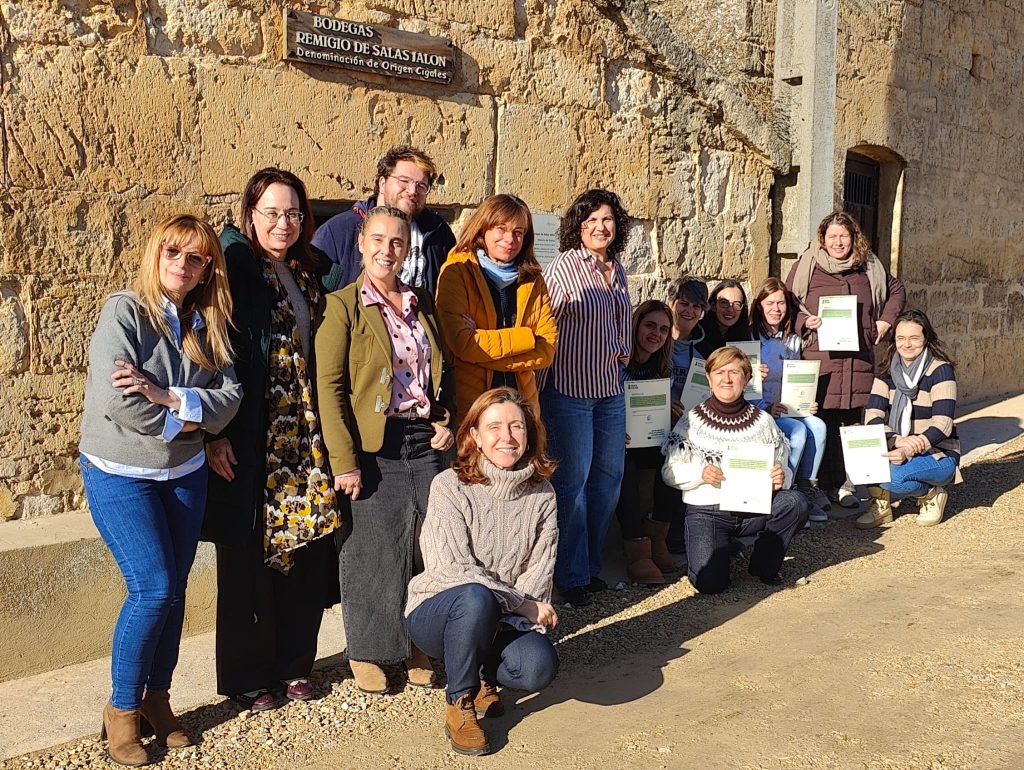
After three years of exchange, learning, and collaboration, the women of the Spanish Living Lab of the GRASS CEILING project held their final meeting at the Remigio Salas Winery, a space where they shared achievements, challenges, and future commitments.

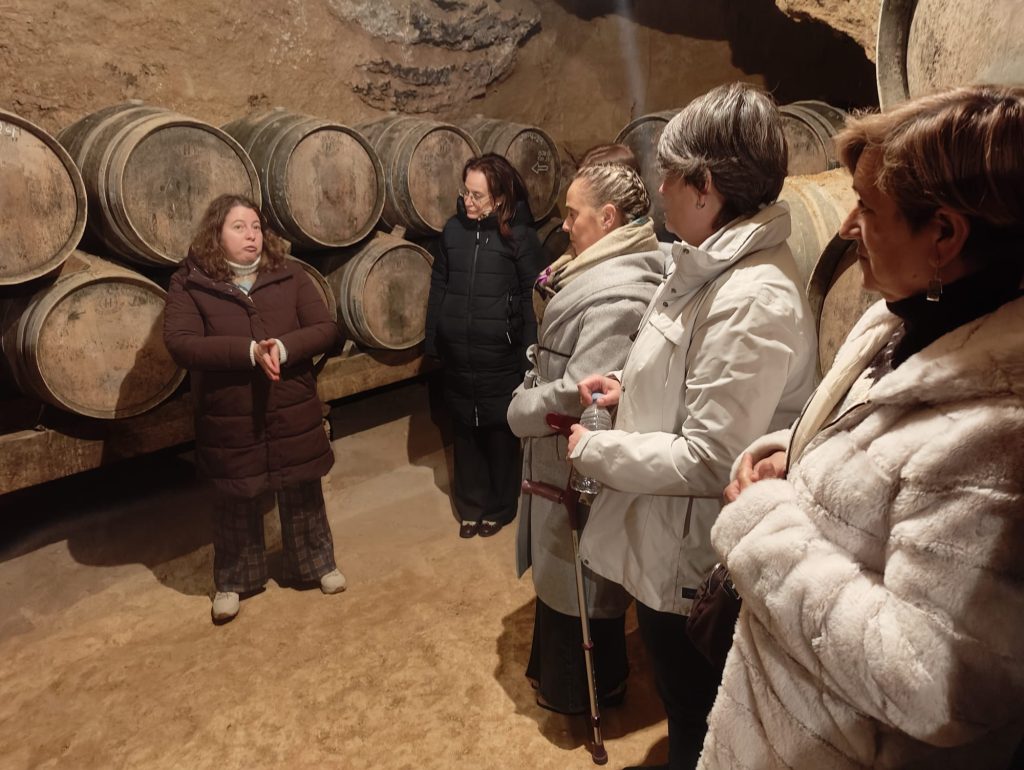
The Spanish Living Lab of the European GRASS CEILING project, dedicated to promoting women-led innovation in the agricultural sector, held its ninth and final meeting this Wednesday. The event took place at the Remigio Salas Winery, a symbolic setting that reflects the territorial roots and success of an agri-food activity in a rural area that combines innovation and tradition, led by a woman, Amada de Salas, who has recently been recognized with several regional and national awards.

The meeting was attended by participating women farmers and livestock producers; the academic team from the Palencia University Campus (University of Valladolid), responsible for the scientific coordination of the Living Lab and led by Professor Margarita Rico; and a representative from Cooperativas Agro-alimentarias de España, another of the project’s partner entities.

Final Spanish living lab meeting - innovators, academics, stakeholders...

The final session had a special tone, combining collective reflection with recognition of the path travelled during the three years of work. Throughout the day, a synthesis of some of the conclusions was presented, highlighting the diversity and relevance of the agricultural innovations led by women, which encompass not only technological dimensions but also sustainability, diversification, sector visibility, and network creation. The need to strengthen gender-sensitive public policies was also emphasized—policies that support women in accessing resources, training, financing, and work–life balance. Spaces like this Living Lab reflect the importance of networking to reinforce innovative identity, confidence, and cooperation among rural women in the agricultural sector.

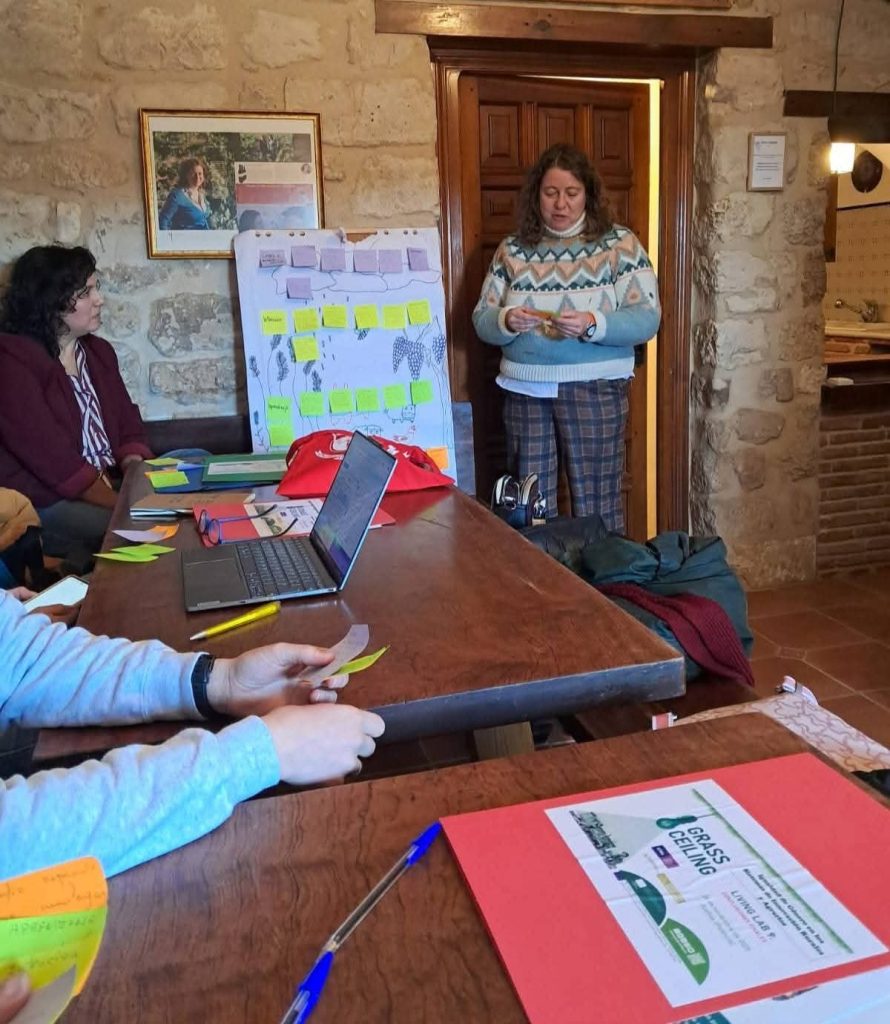
Through a final dynamic, all participants expressed what this three-year journey of reflection had meant to them, making visible the human, professional, and emotional value of the process and reinforcing the sense of belonging to a network of women leaders in rural areas. Particular emphasis was placed on the significant changes still needed for these women to fully develop their work, with explicit reference to bureaucratic burdens, financial difficulties in making necessary investments to digitalize processes—given the medium size of their farms—and barriers to accessing management positions in sector organizations, often driven by established patriarchal power structures.

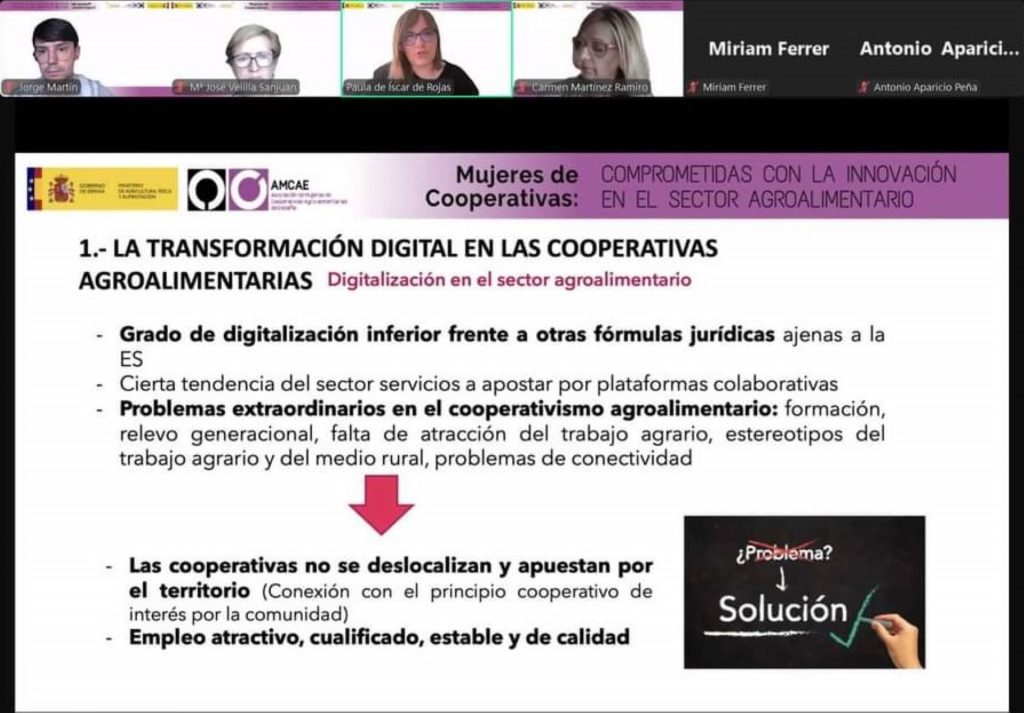
The representative from Cooperativas Agro-alimentarias de España highlighted the value of such initiatives in giving visibility to female leadership and strengthening women’s participation in decision-making bodies in the agricultural sector, particularly within cooperatives. The UVa team stressed that the learnings and connections generated go beyond the project itself and should serve to promote gender-sensitive public policies that support innovative processes led by women in rural areas most affected by depopulation and socioeconomic deterioration.

Next week, the final closing meeting of the project will take place in Brussels, with representatives from all GRASS CEILING consortium countries. The general conclusions reached will be presented, and an event showcasing women-led innovative best practices will be held. Representing Spain will be the project coordinator and Marta Llorente, a pig farmer and wine producer from Zazuar (Burgos), who will present her initiative and her experience as a participant in the Spanish Living Lab.

Final Spanish Living Lab meeting - winery picture
final Spanish living lab - meeting - innovators talking

Three years of female-led innovation conclude at the final meeting of the Spanish GRASS CEILING Living Lab Read More »

Woman innovators of the Spanish Living Lab (last meeting)

El Living Lab español de GRASS CEILING cierra tres años de innovación y liderazgo rural femenino

Tras tres años de intercambio, aprendizaje y colaboración, las mujeres del Living Lab español del proyecto GRASS CEILING celebraron su último encuentro en la Bodega Remigio Salas, un espacio donde compartieron logros, desafíos y compromisos de futuro.

El Living Lab español del proyecto europeo GRASS CEILING, dedicado a impulsar la innovación liderada por mujeres en el sector agrario, celebró este miércoles su noveno y último encuentro. La reunión tuvo lugar en la Bodega Remigio Salas, un escenario simbólico que refleja el arraigo territorial y el éxito de una actividad agroalimentaria en una zona rural, que combina innovación y tradición, al frente de la cual está una mujer, Amada de Salas, recientemente reconocida con varios premios regionales y nacionales.

Al encuentro asistieron las mujeres agricultoras y ganaderas participantes, el equipo académico del Campus Universitario de Palencia (Universidad de Valladolid), responsable de la coordinación científica del Living Lab y dirigido por la Profesora Margarita Rico y una representante de Cooperativas Agro-alimentarias de España, otra de las entidades socias del proyecto.

Final Spanish living lab meeting - innovators, academics, stakeholders...

La sesión final tuvo un carácter especial, combinando reflexión colectiva con reconocimiento del camino recorrido durante los tres años de trabajo. A lo largo de la jornada se presentó una síntesis de alguna de las conclusiones obtenidas, destacando la diversidad y relevancia de las innovaciones agrarias impulsadas por las mujeres, que abarcan no solo la dimensión tecnológica, sino también la sostenibilidad, la diversificación, la visibilidad del sector y la creación de redes. Además, se puso de manifiesto la necesidad de reforzar políticas públicas sensibles al género, que acompañen a las mujeres en el acceso a recursos, formación, financiación y conciliación. Espacios como este Living Lab reflejan la importancia del trabajo en red para fortalecer la identidad innovadora, la confianza y la cooperación entre mujeres rurales del sector agro.

A través de una dinámica final, todas las participantes del encuentro manifestaron qué había significado para ellas este viaje de reflexión a lo largo de tres años, lo que permitió hacer visible el valor humano, profesional y emocional del proceso y reforzó el sentimiento de pertenencia a una red de mujeres líderes en el medio rural. Se hizo especial hincapié en que aún se requieren cambios significativos para el pleno desempeño del trabajo de estas mujeres, haciendo referencia explícita a la carga burocrática, a la dificultad financiera para acometer inversiones necesarias para digitalizar procesos, dado el tamaño mediano de sus explotaciones y a las trabas para poder acceder a puestos de gestión en las organizaciones del sector, motivadas por las estructuras patriarcales de poder establecidas.

La representante de Cooperativas Agro-alimentarias de España destacó el valor de este tipo de iniciativas para dar visibilidad al liderazgo femenino y fortalecer la participación de las mujeres en los órganos de decisión agrarios y más concretamente en el ámbito de las cooperativas. El equipo de la UVa subrayó que los aprendizajes y vínculos generados trascienden el proyecto y han de servir para impulsar políticas públicas de apoyo con enfoque de género, que faciliten los procesos innovadores de las mujeres en los territorios rurales más afectados por la despoblación y el deterioro socioeconómico.

A partir de aquí, la semana próxima se celebrará en Bruselas la reunión final del cierre del proyecto, en la que participarán representantes de todos los países del consorcio GRASS CEILING. Se expondrán las conclusiones generales alcanzadas y se celebrará un evento de muestra de buenas prácticas innovadoras lideradas por mujeres. En el caso español acudirá la coordinadora del proyecto y Marta Llorente, ganadera de porcino y viticultora en Zazuar (Burgos), que expondrá su iniciativa y su experiencia como participante del Living Lab español.

Final Spanish Living Lab meeting - winery picture
final Spanish living lab - meeting - innovators talking

El Living Lab español de GRASS CEILING cierra tres años de innovación y liderazgo rural femenino Read More »

Silvia González

Silvia González’s journey: a woman’s commitment to agriculture in rural Spain

Silvia González, a woman with a deep commitment to her vocation, shares her journey in the rural agricultural sector. At 40 years old, she manages an agriculture business located in Villaconancio, a small village in the province of Palencia, Spain. Silvia operates an extensive rainfed farming operation, specialising in herbaceous crops. Her path into agriculture began 13 years ago, after completing her university studies in agricultural engineering. Silvia’s decision to enter the agricultural business coincided with her mother’s retirement. As an only child, this presented an opportunity for Silvia to take over the family farm as part of a generational transition. “It was a natural progression, taking on the responsibility of the farm at the same time that I finished my degree”, she says.

Despite the lack of cutting-edge technology, Silvia’s agricultural knowledge has been crucial to optimising her production process. “We don’t have access to irrigation, so we rely heavily on weather conditions, which makes our operation quite vulnerable”, she explains. Her educational background and the experience passed down from her mother have allowed her to make informed decisions that maximise her land’s potential.

Silvia is actively involved in various agricultural and rural development associations. She is part of ASAJA Palencia (Association of Young Farmers), a trade union organisation dedicated to promoting participation and leadership in the rural world. Through this association, she works on projects that aim to empower local women and foster sustainable agricultural practices.

Silvia believes that improving infrastructure in rural areas would be one of the key ways to help businesses like hers thrive. “Better roads, internet access, and access to healthcare are all things that make rural life more bearable and make it easier for us to focus on our work,” she states. Additionally, providing more financial support, such as loans and grants, to women entrepreneurs in agriculture could make a significant difference.

Silvia also expresses her frustration with the Common Agricultural Policy (CAP), stating that she dislikes being told what to cultivate. She believes the PAC imposes restrictions that don’t always align with the needs of her land or her farming practices, and she feels that these directives often limit her ability to make independent decisions about what is best for her farm.

Despite the difficulties she faces, Silvia finds great satisfaction in her work. “What I love most about my job is that every day brings something new. The cycle of planting and watching crops grow gives me a sense of accomplishment and a connection to the land,” she says. “It’s the hardest thing I’ve ever done, but also the most rewarding”.

Silvia González’s journey: a woman’s commitment to agriculture in rural Spain Read More »

Marta Llorente

Marta Llorente: Passion for pork, sustainability, and family-driven agriculture

Marta Llorente, a 40-year-old farmer from Zazuar, Burgos, is the driving force behind a sustainable pig farming operation that she runs in partnership with her husband. She has been managing her farm, under shared ownership with her husband, for several years, focusing on producing high-quality pork products free from artificial additives. Marta’s work revolves around promoting sustainability, local produce, and offering healthier alternatives to traditional meat products.

Marta’s journey into farming began out of necessity when she got fired from her previous job for being pregnant. Then the family moved to the countryside, and she and her husband decided to take on the challenge of farming together. What started as a small family project quickly grew into a thriving farm. “We wanted to create something that would provide for us and for future generations, aligned with our values of sustainability and healthy food”, Marta shares. Today, the farm raises pigs fed on a natural, chemical-free diet, in a controlled, free-range environment, prioritising animal welfare.

Marta’s farm focuses not only on raising pigs but also on processing the meat to offer premium, healthier products. Production includes cured meats and sausages free from preservatives and additives, made using traditional methods. “Our main goal is to provide our community with fresh, high-quality pork that is as natural as possible”, she explains with pride in her work. Social media plays a key role in Marta’s business model, where she showcases the farm’s transparent practices, her commitment to animal welfare, and the stories behind each product.

In addition to the pig farming, Marta also manages an extensive dryland farming operation, spanning 60 hectares of crops. The crops are mainly cereals, rotated with oilseeds or legumes, and alfalfa is grown under irrigation. Moreover, the farm cultivates 20 hectares of vineyards under the Ribera del Duero Designation of Origin, which includes a mix of century-old vineyards, young vines, and newly planted vines. While the farm practices traditional agronomic management, Marta is committed to transitioning to herbicide-free practices in pursuit of more sustainable farming methods.

Thanks to European subsidies, Marta has been able to improve the farm’s infrastructure, including the installation of a new barn and improved pig pens. Recently, she also received support to purchase machinery that makes the meat processing more efficient. “These grants have been crucial in making the farm more sustainable and competitive,” she says.

Despite the challenges of rural depopulation and ageing of the agricultural workforce, Marta has found ways to innovate. She’s started marketing her products in nearby cities, including Burgos, where she has built a loyal customer base. “The key is to keep innovating while staying true to our roots. It’s about making local, sustainable food accessible to more people”, she says.

For Marta, success is not just about the farm’s growth, but also about inspiring other women to follow in her footsteps. Her message is clear: with hard work, dedication, and community support, anything is possible. “If I can do it, anyone can. We just need to believe in our strength and our potential”, she concludes with a smile.

Marta Llorente

Marta Llorente: Passion for pork, sustainability, and family-driven agriculture Read More »

Lucía Velasco

Lucía Velasco: A life between pastures and perseverance

Lucía Velasco Rodríguez didn’t plan to become the head of a livestock farm — life simply led her in that direction. Raised among animals and open fields in the Asturian countryside, she had always been deeply connected to rural life. But it wasn’t until a turning point — the birth of her daughter — that she decided to take over the family farm herself. “When I gave birth to my daughter, my husband thought of selling the few cows we had. But I didn’t want to lose that way of life. I told him I’d take over. I had just become a mother, but I felt I could manage both things”, she recalls. It was the start of a new chapter — one in which she would lead the farm herself, defying both expectations and tradition.

Taking on this role wasn’t always easy. “At first, the cattle buyers wouldn’t even talk to me. They asked to speak to my husband. I had to fight for my place, to be taken seriously”, she explains. Little by little, she gained their trust — and, more importantly, her own confidence.

Today, Lucía runs a traditional cattle farm that continues the practice of moving livestock to mountain pastures in summer. The animals graze freely and are tended to daily with care and patience. She uses social media to share the realities of rural life and challenge stereotypes about farming. “What people see as ‘rural’ is actually complex. Behind each animal, there are families, culture, landscapes, and stories that deserve to be told”, she says.

In 2019, she became a founding member of Ganaderas Asturianas, a group of women farmers from the region. “We started with a lot of energy. We travelled, shared ideas, and pushed each other forward”, she explains. While the group is less active today, its spirit of solidarity remains a vital part of her work.

Lucía is also committed to the GRASS CEILING project, which led her all the way to Brussels — and to another personal milestone. “I had to pitch my project in English. So… I had to learn English too! To be honest, the GC Project has taught me many things; I am so grateful to participate in it”.

For her, being a farmer is not a burden — it’s a form of peace. “Some people don’t like going to work, for me it is just the opposite, I am looking forward to doing it. When I’m with my animals, I disconnect from everything. It’s the only time I feel truly calm. I’m part of something bigger, and that’s a feeling I wouldn’t trade for anything.”

Lucía Velasco

Lucía Velasco: A life between pastures and perseverance Read More »

International Symposium on Women's Empowerment in Mediterranean Agrifood Systems (CIHEAM Zaragoza)

GRASS CEILING participated in the International Symposium on Women’s Empowerment in Mediterranean Agri-food Systems held in Zaragoza

From 10 to 12 June 2025, CIHEAM Zaragoza and the Union for the Mediterranean, in collaboration with the CIHEAM General Secretariat and the Spanish Agency for International Development Cooperation (AECID), organised an international symposium to promote women’s empowerment through innovation and pave the way for more inclusive and sustainable agri-food systems in the region.

The event brought together over one hundred participants from 15 countries, primarily from the Mediterranean region, as well as international organisations (FAO, OECD, European Commission, EESC, ICARDA, IWMI, GWP-Med), and stakeholders from civil society, the business sector, and the field of innovation. The symposium laid a solid foundation for driving transformative interventions ahead of the International Year of Rural Women in 2026.

Key experiences and approaches to female empowerment highlighted during the symposium included:

  • Multilateral Organisations and Women-Led Rural Innovation: It was emphasised that, despite women constituting 36% of the global agri-food workforce, they face significant inequalities, such as limited access to land (only 7% of women in North Africa are landowners). Successful initiatives were showcased, including the FAO’s Greater Empowerment of Rural Women Project in Turkey and the GREAT Project in Albania, which established agribusiness incubators.
  • Challenges and Transformative Approaches: Despite the challenges, Mediterranean women are emerging as environmental leaders. Innovative models were shared, such as the Gender Up training programme and the Pro-Women Index in Lebanon, ICARDA’s initiatives with mobile technology and youth participation, and the role of cooperatives in Tunisia in empowering less educated women. Theatre of the Oppressed was highlighted as a methodology for challenging social norms.
  • Rethinking Education and Economic Empowerment: The need for participatory educational models that combine technical skills with personal confidence was stressed. Projects like those from the Association of Upper Egypt for Education and Development (funded by AECID) and the FOODTECH agricultural business incubator in Tunisia demonstrated how technical training, mentoring, and continuous support achieve significant impact.
  • The Case of Spain: Spain was presented as an inspiring model, showcasing the transformative impact of associationism and political engagement by rural women. The Spanish Association of Families and Women in Rural Areas (AFAMMER), with over 40 years of experience, and Law 35/2011 on Shared Ownership of Farms, served as examples of how economic independence is promoted. Also, FADEMUR is now working with other rural women’s organisations to build global momentum in addressing rural inequality.
  • The Role of Cooperatives and Associations: It was evident how female leadership in agricultural cooperatives generates positive outcomes in community resilience, environmental sustainability, and economic development. Cases such as the Arab Olive Oil Women’s Network (Jordan), the Association of Rural Women-AFUD (Algeria), Darmmess Social Enterprise (Lebanon), and the Association of Women in Agrifood Cooperatives in Spain (AMCAE), women’s association of Cooperativas Agro-alimentarias de España, demonstrated women as agents of change.
  • Innovation in the Mediterranean Food System through Female Entrepreneurship: The final session presented remarkable examples of innovation driven by women, from techniques to reduce livestock methane to projects transforming cheese industry waste into bread ingredients. Initiatives like the FoodSight platform in Lebanon and the Amal Association in Morocco, which empowers over 400 women through culinary training, were highlighted. The role of structured platforms and the EU’s GRASS CEILING project, of which CIHEAM Zaragoza is a partner, in supporting women-led innovation initiatives for socio-ecological transition was emphasised.

The symposium was closed by the project coordinator, Sally Shortall (watch below her closing intervention), who presented the event’s conclusions and the Grass Ceiling project. The symposium’s overall conclusions highlighted that women’s leadership in food systems is fundamental not only for equity but also for building resilient and sustainable food systems in the Mediterranean, involving the entire community, including men. CIHEAM’s Secretary General, Teodoro Miano, reaffirmed the organisation’s commitment to promoting gender equality, a central pillar of its 2030 Strategic Action Plan.

GRASS CEILING participated in the International Symposium on Women’s Empowerment in Mediterranean Agri-food Systems held in Zaragoza Read More »

Ana María Olmo

Ana María Olmo: empowering rural women through agriculture and beekeeping

Ana María Olmo, a 35-year-old farmer from Collazos de Boedo in the province of Palencia, has transformed her family’s farm into a thriving agricultural and beekeeping business. After inheriting the farm from her mother, who had to retire due to a serious arm injury, Ana María decided to diversify the family business. She introduced beekeeping to supplement the farm’s traditional agricultural activities, and this move has helped secure her family’s financial future while revitalising the farm.

Bees are vital to both her work and the broader ecosystem, as they pollinate around 70 % of the fruits, vegetables, and forage crops we rely on. Without their tireless activity, many plant species would fail to reproduce, threatening biodiversity and food security. By maintaining healthy apiaries and practising responsible beekeeping, she not only harvests high-quality honey but also ensures that surrounding crops benefit from robust pollination, sustaining yields and preserving the delicate balance of our rural landscape.

But her story doesn’t stop at innovation in bee farming; Ana María is also considering expanding into apitourism, hoping to attract tourists to the rural area. This project would combine her agricultural knowledge with the growing trend of rural tourism, offering visitors the chance to experience life on the farm while learning about beekeeping.

Ana María emphasises that rural women face unique challenges in the agricultural sector. Bureaucratic barriers, outdated gender perceptions, and a lack of recognition are just a few of the obstacles she has faced as a woman trying to succeed in what is still seen by many as a male-dominated field. However, she is optimistic about the changing attitudes toward women in farming, and she is dedicated to proving that women can not only survive but thrive in rural entrepreneurship. She believes that rural businesses, especially those led by women, need visibility and empowerment in order to succeed.

She pointed out that one of the most crucial factors in overcoming these challenges is local support, buying km 0 products, such as hers (those grown, processed, and sold right here in our villages). When neighbours choose locally sourced honey, cereals, vegetables… they help keep money circulating within the area, strengthen small family farms, and reduce the carbon footprint associated with long-distance transport. This commitment to “eat where we live” not only supports local livelihoods but also fosters a sense of pride and resilience, ensuring that our traditions and natural resources continue to thrive for generations to come.

Ana María’s experiences also serve as a reminder that while rural women face many challenges, they also have the power to reshape their futures through entrepreneurship, creativity, and a strong sense of community. With more women like Ana María taking charge, the future of rural entrepreneurship looks bright.

Ana María Olmo

Ana María Olmo: empowering rural women through agriculture and beekeeping Read More »

Mujer rural_web

Empowering rural women in Aragon (Spain)! Telegram group connects women around shared interests

Did you know that the Planning and Equality Section of the regional Ministry of Agriculture, Livestock, and Food in Aragón, led by Miriam Ferrer Dufol, is actively working to promote the presence of women in rural areas?

Their commitment is highly necessary and truly impressive! They maintain a dedicated section on their institutional website, exclusively focused on rural women, offering a wealth of valuable information.

This section includes:

Statistics on women’s involvement in rural life
Details on relevant courses and workshops
Information on upcoming events and conferences.
Guidance on available grants and subsidies
Access to useful publications

Beyond the website, they also run an active Telegram group! 📣 This fosters connection and information sharing among women interested in all kinds of activities relevant to rural women in Aragón. You can access this fantastic channel via @MujeresRurales/Aragon.

It’s inspiring to see such dedicated efforts to support and empower women in rural communities. Let’s celebrate these initiatives!

The Government of Aragón, through its Planning and Equality Section, actively participates in the work developed by the Spanish Living Lab of the GRASS CEILING project. They are considered one of the project’s stakeholder in Spain, alongside others such as the Ministry of Agriculture. Among many other activities carried out by this area of the Government of Aragón, we’d like to share some stories of rural women entrepreneurs who, just like in our GRASS CEILING project, highlight the value of female entrepreneurship in rural areas. Video coming up!

Empowering rural women in Aragon (Spain)! Telegram group connects women around shared interests Read More »

Mujer rural_web

¡Impulsando a las mujeres en el ámbito rural de Aragón! Telegram une a mujeres rurales en torno a actividades de interés común

¿Sabías que la Sección de Planificación e Igualdad de la Consejería de Agricultura, Ganadería y Alimentación del Gobierno de Aragón, liderada por Miriam Ferrer Dufol, está trabajando activamente para promover la presencia de las mujeres en el medio rural?

Su compromiso es muy necesario, ya que mantienen una sección dedicada en su sitio web institucional, enfocada exclusivamente en la mujer rural, ofreciendo una gran cantidad de información de alto valor.

Esta sección incluye:

Estadísticas sobre la participación de las mujeres en la vida rural.
Detalles sobre cursos y talleres relevantes.
Información sobre próximos eventos y conferencias.
Orientación sobre subvenciones y ayudas disponibles.
Acceso a publicaciones útiles.

Más allá del sitio web, ¡también gestionan un grupo activo de Telegram! 📣 Este grupo fomenta la conexión y el intercambio de información entre mujeres interesadas en todo tipo de actividades relevantes para la mujer rural en Aragón. Puedes acceder a este canal a través de @MujeresRurales/Aragon.

Es inspirador ver tanto esfuerzo y dedicación para apoyar y empoderar a las mujeres en las comunidades rurales. ¡Celebremos estas iniciativas!

El Gobierno de Aragón, a través de la Sección de Planificación e Igualdad, participa de forma activa en el trabajo que desarrolla el Living Lab español del proyecto GRASS CEILING y es uno de los considerados socios locales institucionales del proyecto en España, junto a otros como el Ministerio de Agricultura, por ejemplo. Entre otras muchas actividades realizadas desde este área del Gobierno de Aragón compartimos algunas de las historias de mujeres emprendedoras rurales que, al igual que en nuestro proyecto GRASS CEILING, ponen de manifiesto el valor del emprendimiento femenino en el medio rural. ¡Dentro vídeo!

¡Impulsando a las mujeres en el ámbito rural de Aragón! Telegram une a mujeres rurales en torno a actividades de interés común Read More »

Amada de Salas

A legacy of the land: Amada de Salas and her commitment to rural winemaking

Amada de Salas, 44, is a farmer and winemaker who runs a diversified agricultural business, cultivating cereals, oilseeds, legumes, and, most notably, grapes. Her vineyard spans 87 hectares and is registered under the Cigales Designation of Origin. In addition to growing the grapes, Amada and her family produce and market their wines, maintaining complete control over the quality and winemaking process: from vine to bottle.

Her journey into the business was a natural progression. After completing her university studies, she joined the family winery and expanded her role to include the broader agricultural operations. The estate, rooted in family tradition, has been passed down through five generations—a legacy Amada is proud to continue.

What sets her business apart is a blend of tradition and innovation. “We work with old vineyards”, she explains, “which produce exceptional fruit. And we are located in the Cerrato Palentino, one of Spain’s oldest winemaking regions, where the tradition of Rosé—historically known as Claretes—runs deep.” The winery is housed in a traditional underground cellar, providing optimal conditions for wine ageing and a unique historical setting.

Yet, tradition is only part of the story. Amada is also deeply committed to innovation, both in terms of winemaking and visitor experience. Her team is developing new lines, including wines aged in the natural cellar, and has embraced wine tourism. “We’re offering theatrical tours, wine-paired meals inside the winery, and other immersive experiences”, she says. This dual focus on quality production and value-added tourism gives the winery a competitive edge.

However, life in the rural business world is not without its challenges. Amada highlights the obstacles faced by small rural entrepreneurs, especially women. “We struggle with undervaluation of our products, the weight of bureaucracy, and the need to balance work with family responsibilities”, she explains. Being self-employed in a rural area, she faces the added difficulty of operating within systems that are not always designed to support small-scale or female-led enterprises.

What would help? “We need real, not theoretical, support from public institutions”, she says. “This includes financial incentives, improved infrastructure, reduced bureaucracy, and accessible training and credit. Supporting those of us who choose to remain in and invest in rural areas should be a priority”.

Amanda’s story is one of resilience, heritage, and vision. Her dedication to sustaining and growing her family’s business reflects a broader movement among rural women who are shaping the future of agriculture and rural entrepreneurship in Spain, not just preserving the past, but innovating for the future.

Amada de Salas (Spain)

A legacy of the land: Amada de Salas and her commitment to rural winemaking Read More »

Ciheam Zaragoza Symposium

CIHEAM Zaragoza, a Spanish partner of GRASS CEILING, is organising a Symposium on Women’s Empowerment through Innovation in Mediterranean Agro-food Systems

Zaragoza will host from 10 to12 June the International Symposium “Women’s Empowerment through Innovation in Mediterranean Agro-food Systems.”

Organised by CIHEAM Zaragoza and the Union for the Mediterranean (UfM), in collaboration with the CIHEAM General Secretariat and with the support of the Spanish Agency for International Development Cooperation (AECID), this scientific, technical, and professional event will bring together representatives from FAO, IFAD, OECD, the European Commission, ICARDA, IWMI, PRIMA, Global Water Partnership Med, as well as actors from civil society, the private sector, and the field of innovation. (Register here)

This international meeting will feature a strong representation from the GRASS CEILING project.

Firstly, Alun Jones from CIHEAM Zaragoza and Patrizia Pugliese from CIHEAM Bari will be acting as rapporteurs in two of the working sessions. Furthermore, Professor Margarita Rico, from the Palencia Campus of the University of Valladolid, another of the Spanish partner organisations in the project, will be participating in the session on ‘Needs in education and economic issues for women’s empowerment and innovation‘. Finally, Professor Sally Shortall from South East Technological University (SETU) in Ireland, and the coordinator of the GRASS CEILING project, will be speaking during the session dedicated to the reading of the event’s conclusions, which will take place on the 11th of June.

Against a backdrop of climate challenges, resource scarcity and the need to feed a growing population, this symposium aims to explore the crucial role of women in transforming Mediterranean agrifood systems towards greater sustainability and equity. Recognising women as key players in these systems, the event will highlight their essential contributions to the inclusion, resilience and prosperity of communities. It aims to be a catalyst for concrete solutions to empower women.

Key objectives of the symposium
  • To identify and examine the main obstacles encountered by women in entrepreneurship and innovation in agricultural and rural contexts, in order to develop innovative and sustainable projects
  • Analyse international and national work programmes aimed at stimulating women-led innovation ecosystems
  • Strengthening alliances between international organisations, public institutions, civil society and the private sector to influence innovation through cooperation
A rich and diverse programme focused on solutions

The symposium will offer a comprehensive and dynamic programme, firmly focused on identifying and promoting effective solutions for empowering women in the Mediterranean agri-food sector. It will include:

  • Plenary conferences with high-level experts from international and national organisations, including FAO, IFAD, OECD, European Commission, ICARDA, IWMI, as well as leading representatives from civil society and the business world.
  • Round tables addressing the major challenges facing women in the Mediterranean agrifood sector, as well as the educational, economic and access to resources needs to empower them.
  • Case studies highlighting inspiring examples of women’s empowerment and innovation in the agrifood sector in Spain and the Mediterranean region, with a particular focus on initiatives led by women entrepreneurs.
  • An interactive workshop dedicated to social and technological innovation for women entrepreneurs in the agrifood value chain. This workshop will provide a forum for presenting innovative solutions, sharing experiences and networking, including a pitch session where entrepreneurial initiatives led by women will be highlighted.
  • Field trips to discover local initiatives led by women, offering concrete examples of success and impact, and illustrating the potential of women as agents of change in their communities.
A call for cooperation and action to find concrete solutions

This symposium is intended to be a catalyst for cooperation and action, promoting dialogue and partnerships between all the players involved. By bringing together key players from the public and private sectors, international organisations, research institutions, representatives of civil society, entrepreneurs and professionals, the event aims to strengthen synergies and promote concrete, sustainable solutions for the empowerment of women and innovation in Mediterranean agrifood systems.

About the Symposium

Draft programme: Women’s Empowerment through Innovation in Mediterranean Agro-food Systems

Date: 10-12 June 2025

Place: CIHEAM Zaragoza, Spain

Participation: The symposium is open for in-person participation and online

Working language: English, Spanish

CIHEAM Zaragoza, a Spanish partner of GRASS CEILING, is organising a Symposium on Women’s Empowerment through Innovation in Mediterranean Agro-food Systems Read More »

Aragón TV recording

El programa ‘Tempero’ de Aragón TV dedica un reportaje a la situación de la mujer rural española desde el proyecto GRASS CEILING

El programa ‘Tempero’ de Aragón TV ha cubierto la octava reunión del ‘Living Lab’ español GRASS CEILING.

Esta reunión tuvo lugar en el CIHEAM Zaragoza – Instituto Agronómico Mediterráneo de Zaragoza, y fue organizada por los tres socios españoles del proyecto: la Universidad de Valladolid – Campus de Palencia, Cooperativas Agro-alimentarias de España, y CIHEAM Zaragoza.

Un equipo del programa “Tempero” de Aragón Televisión se desplazó para hacer un reportaje sobre la situación de las mujeres emprendedoras rurales en España y en el resto de Europa.

“Tempero” es un programa que comparte y promueve la actualidad del sector agroalimentario y ganadero de Aragón. El programa se centra en el sector rural y el medio natural, prestando especial atención a las personas involucradas y a su futuro.

Puedes ver el programa completo aquí.

También hemos incluido un enlace en nuestro canal de YouTube donde puedes acceder directamente a este reportaje: https://youtu.be/SO5Ml_9PJtM?si=j9k5ImiLS2ZOH6iB

El programa ‘Tempero’ de Aragón TV dedica un reportaje a la situación de la mujer rural española desde el proyecto GRASS CEILING Read More »

Aragón TV recording

Aragón TV’s programme ‘Tempero’ has covered the eighth meeting of the Spanish GRASS CEILING ‘Living Lab’

Aragon TV’s programme ‘Tempero’ has covered the eighth meeting of the Spanish GRASS CEILING ‘Living Lab’.

This meeting took place at the CIHEAM Zaragoza – Mediterranean Agronomic Institute of Zaragoza (Spain), and was organised by the three Spanish project partners: the University of Valladolid – Campus of Palencia, Agri-food Cooperatives of Spain, and CIHEAM Zaragoza.

A crew from Aragón Televisión’s “Tempero” programme came along to do a report on the situation of rural women entrepreneurs in Spain and across the rest of Europe.

“Tempero” is a programme that shares and promotes current affairs in Aragon region agri-food and livestock sector. The programme focuses on the rural sector and the natural environment, paying particular attention to the people involved and their future.

You can watch the full programme here: https://alacarta.aragontelevision.es/… We’ve also popped a link on our YouTube channel where you can get straight to this report: https://youtu.be/SO5Ml_9PJtM?si=j9k5ImiLS2ZOH6iB

Aragón TV’s programme ‘Tempero’ has covered the eighth meeting of the Spanish GRASS CEILING ‘Living Lab’ Read More »

8ª reunión Living Lab español en CIHEAM Zaragoza

Spanish women entrepreneurs in agriculture and the rural world confront lack of infrastructure, excessive bureaucracy, and leadership inequality

CIHEAM Zaragoza hosts the eighth meeting of Spain’s agricultural entrepreneurs under the GRASS CEILING project on 8-9 April, organized by Campus de Palencia of the University of Valladolid and Cooperativas Agro-alimentarias de España.

The latest meeting of the Spanish Living Lab, part of the European GRASS CEILING project, has concluded today. During the two-day event, participants have echoed sentiments shared across the project’s international network, highlighting that the gender gap remains a persistent obstacle in rural areas and the agricultural sector. Despite their vital role, women entrepreneurs continue to face significant barriers, even though they bring expertise, innovation and meaningful contribution to local economies and social development.

As a member of the GRASS CEILING consortium, CIHEAM Zaragoza hosted the two-day event, which brought together twenty Living Lab members and stakeholders, including eight women entrepreneurs leading agrifood businesses in scarcely populated territories of Aragon, Asturias, Castile and León.

These entrepreneurs are implementing innovative processes on their farms, ranging from the adoption of high-tech equipment to the digitalisation of technical operations, and management and administrative processes. They are also incorporating new crop rotations to promote environmental sustainability.

A notable distinction in their approach, compared to many of their male peers, is the integration of social innovation. These women are working actively to increase the visibility of women’s roles in rural life by establishing networks, offering training opportunities and facilitating knowledge exchange. Several participants are already involved in such initiatives and others are planning to do so in the near future.

Environmental stewardship is another defining feature of their work. Many women are creating sustainable business models that make use of local materials and food products, often delivering direct to customers so as to minimise dependence on complex and costly supply chains.

The women gathered in Zaragoza have demonstrated that women-led businesses help local communities to thrive. However, they continue to face deep-rooted stereotypes and traditional gender roles that make their work invisible. Many also struggle to find time to develop their businesses, either because of the demands of farm work or because they have to tend to family responsibilities.

Women in the farming sector also have to address a number of specific issues that hinder their innovation work. The high costs of advanced agricultural technology, together with structural difficulties in the sector such as volatile markets, rising production costs, and complex European regulations, etc. deter many women from investing in innovation because of the technical and economic risks involved.

During the meeting they also discussed the lack of telecommunication infrastructures in rural areas, inadequate general services, the burden of excessive bureaucracy and inappropriate regulations for rural areas.

The women explored ways to overcome these obstacles and studied a range of potential public and private support mechanisms, exchanging ideas on how institutions could be reinforced or reoriented to improve the welfare of rural women and integrate more women entrepreneurs in the agricultural sector. The support mechanisms are based on four pillars: individual empowerment to break down stereotypes and traditional expectations; improved rural services and infrastructure; financial support for women in agriculture; and reforms to governance and agricultural policies.

Other topics debated during the meeting included the importance of training and advisory services in sustainable innovation, the value of collaborative work via associations, cooperatives and support networks, the need for greater representation of women in decision-making roles, promotion of shared family responsibilities, and actions to elevate the status and quality of life in rural areas.

How does GRASS CEILING contribute to the EU gender equality objectives?

The project offers practical solutions for rural and gender policy-making by identifying inequalities in agriculture and rural communities across the EU. It is drawing up policy recommendations based on in-depth analysis to help the European Commission better deliver on its gender equality commitments. The Living Lab model supports innovating women and helps to create employment in remote rural areas and improve the situation of women running their own business.

GRASS CEILING has worked closely with women from local communities in the nine countries engaged in the project, developing a model that provides access to training, mentorship, resources, and a platform for debate and exchange of ideas. This participatory research approach empowers women to develop new business ideas and strengthen the local economic and social fabric of their regions. The Living Labs are an essential part of the GRASS CEILING project. They are interactive innovation hubs, led by and for women. They support women entrepreneurs as well as policy-makers and support organisations in the countries involved in the consortium and across the EU.

Spanish women entrepreneurs in agriculture and the rural world confront lack of infrastructure, excessive bureaucracy, and leadership inequality Read More »

8ª reunión Living Lab español en CIHEAM Zaragoza

La escasez de infraestructuras rurales, la falta de liderazgo femenino o la excesiva burocracia del sector agrario: grandes retos para la mujer emprendedora rural en España

El CIHEAM Zaragoza ha acogido los días 8 y 9 de abril la octava reunión del grupo de emprendedoras agrarias españolas del proyecto europeo GRASS CEILING, organizada por el Campus de Palencia de la Universidad de Valladolid y por Cooperativas Agro-alimentarias de España.

La reunión del ‘Living Lab’ español del proyecto europeo GRASS CEILING ha concluido hoy poniendo de manifiesto, como ocurre en el resto de países que integran el consorcio del proyecto, que la brecha de género persiste cuando se habla de territorio rural y sector agrario. Las mujeres emprendedoras en áreas rurales enfrentan desventajas significativas, a pesar de que representan un importante papel debido a su formación cualificada, sus ideas innovadoras y su contribución al mantenimiento económico y social del entorno rural.

El encuentro se ha celebrado durante los días 8 y 9 de abril en el CIHEAM Zaragoza, entidad que forma parte del consorcio internacional de este proyecto, y ha reunido a una veintena de personas, incluidas ocho emprendedoras que lideran iniciativas agroalimentarias en territorios despoblados de Aragón, Asturias y Castilla y León.

Las mujeres participantes en el proyecto están desarrollando en la actualidad procesos innovadores en sus explotaciones, que conllevan el empleo de maquinaria de tecnología avanzada y digitalización de procesos técnicos y también administrativos y de gestión. Asimismo, tienden hacia la búsqueda de nuevos cultivos para realizar rotaciones en el terreno y conseguir así una mayor sostenibilidad.

Una característica que diferencia su proceso innovador en relación con emprendedores masculinos en este mismo sector es que las mujeres destacan la necesidad de llevar a cabo innovaciones de tipo social, apoyando la visibilización del colectivo femenino en el campo, creando redes de trabajo o facilitando la adquisición de formación e información. Varias de las mujeres del proyecto están llevando a cabo innovaciones sociales en este ámbito o tienen planeado ponerlas en marcha en un futuro próximo.

Otro elemento importante a destacar del modelo de emprendimiento rural femenino es que, cada vez más, las mujeres están desarrollando iniciativas respetuosas con el medio ambiente, por ejemplo, utilizando métodos sostenibles para crear productos a partir de materiales y alimentos locales, que en muchas ocasiones suministran directamente a los clientes para minimizar los costes de cadenas de distribución complejas.

El grupo de mujeres reunidas en Zaragoza han constatado que las empresas dirigidas por mujeres ayudan a que las comunidades locales prosperen, a pesar de que actualmente aún existen estereotipos y roles asignados a las mujeres rurales que hacen que su trabajo no sea suficientemente valorado. Otra barrera personal con la que las mujeres reconocen enfrentarse a la hora de poner en marcha una innovación en su explotación agraria está relacionada con la falta de tiempo (bien por un exceso de trabajo en la propia explotación o por sus responsabilidades familiares).

Existen también una serie de problemas específicos que encuentran en el sector agrícola y ganadero y que les frena en el proceso de innovación. Una de esas limitaciones son los elevados costes que supone la adquisición de instalaciones y maquinaria de alta tecnología. Este problema financiero se magnifica debido a los problemas estructurales a los que se enfrenta el sector agrario (mercados inestables, costes de producción crecientes, dependencia de exigente normativa europea, etc.), lo que hace que en muchas ocasiones no compense asumir el riesgo técnico y económico que conlleva una innovación.

La falta de infraestructuras de telecomunicaciones en el ámbito rural y en general la escasa dotación de servicios básicos en estas zonas, es otro de los problemas que mencionan. También manifiestan que la excesiva burocracia y la existencia de normativa no adecuada al medio rural son otros frenos a tener en cuenta.

Por todo ello, en este encuentro se han debatido las principales medidas de apoyo que desde diferentes estamentos públicos y privados habría que reforzar o reconducir para mejorar el bienestar de las mujeres del campo y conseguir una mayor incorporación de emprendedoras al sector agrario. Estas medidas se han estructurado en torno a cuatro ejes: medidas de apoyo personal a las mujeres para derribar roles y estereotipos; medidas relacionadas con la falta de servicios e infraestructuras rurales; medidas relacionadas con el sector agrario de especial trascendencia para las mujeres; y medidas relacionadas con la gobernanza y las actuales políticas agrarias.

La formación y el asesoramiento en nuevos manejos innovadores y sostenibles, el fomento del trabajo colaborativo (asociaciones, cooperativas y redes de apoyo), los mayores niveles de liderazgo de las mujeres en puestos de toma de decisiones, la corresponsabilidad de las tareas familiares, las medidas de apoyo al medio rural, o las acciones de apoyo para lograr una mayor dignificación del campo, han sido alguno de los aspectos acerca de los cuales se ha debatido más intensamente a lo largo de estas dos jornadas de trabajo.

¿Qué aporta GRASS CEILING a los objetivos de igualdad de género de la UE?

Este proyecto aporta soluciones prácticas para la política rural y de género. Ha identificado las disparidades de género existentes en la agricultura y las comunidades rurales de toda la UE. Formula recomendaciones de política basadas en análisis profundos que destacan cómo la Comisión Europea puede cumplir su compromiso con la igualdad de género de forma más eficaz. Los ‘Living Labs’ o laboratorios de experiencias son un modelo que trabaja con mujeres innovadoras y ayuda a la creación de empleo en zonas rurales remotas y a mejorar la situación de las mujeres que ya se encuentran al frente de su propia empresa.

En GRASS CEILING se ha trabajado estrechamente con mujeres de comunidades locales en los nueve países participantes para desarrollar un modelo que proporcione a las mujeres formación, acceso a recursos, tutoría y un foro de debate y de opinión. Este enfoque participativo de la investigación apoya a las mujeres para desarrollar nuevas innovaciones empresariales y fortalecer el tejido económico y social de las regiones locales. Los laboratorios de experiencias de GRASS CEILING, que son parte indispensable y fundamental de este proyecto, son iniciativas de innovación interactivas, dirigidas por y para mujeres, que aumentarán el conocimiento y proporcionarán herramientas para ayudar a las innovadoras y a las organizaciones de apoyo y políticas a nivel de los Estados que conforman el consorcio y del resto de países de la UE.

La escasez de infraestructuras rurales, la falta de liderazgo femenino o la excesiva burocracia del sector agrario: grandes retos para la mujer emprendedora rural en España Read More »

Reunión del Living Lab español del proyecto Grass Ceiling

Women agricultural entrepreneurs gather in Zaragoza on 8-9 April for the European GRASS CEILING project’s Spanish Living Lab meeting

The Spanish group of women entrepreneurs in the GRASS CEILING European project will convene for their eighth meeting on 8-9 April 2025 at CIHEAM Zaragoza, a member of the project consortium. Meeting agenda here.

The University of Valladolid and the agrifood cooperative Cooperativas Agro-alimentarias de España, also consortium members, will be responsible for the academic and technical organisation of the event.

These agricultural entrepreneurs participate in the project’s Spanish Living Lab – a hub for social innovation where academics, agricultural and gender experts, and specialists in rural innovation and equality, collaborate in a network to discuss common challenges, identify needs and propose strategies for improvement.

The Spanish group focuses on initiatives in agriculture and food led by women living in less populated rural areas in the north of Spain. Their stories showcase the wide range of opportunities that the crop and livestock farming sectors can offer as key elements of rural development, food production, and the socioeconomic revitalisation of the rural area.

During their time in Zaragoza, they will be participating in several working sessions to analyse and propose support measures for women innovating in agriculture. They will also visit the Aragonese sheep cooperative Pastores Group to learn more about its organisational model where women play a prominent role as decision-makers.

The entrepreneurs share their experience though the project’s communication and dissemination channels that showcase entrepreneurship and innovation initiatives in the primary sector.

As part of this meeting, GRASS CEILING’s Spanish Living Lab will feature insights from eight entrepreneurs:

  • Lucía Velasco, a livestock farmer from Somiedo in Asturias, who describes herself as a guardian of the transhumant Vaqueira culture. She is also a social media influencer with over 73,000 followers on Instagram and 142,000 on Facebook.
  • Marta Llorente, a pig farmer and co-manager of an extensive rainfed farm and vineyard in Zazuar (Burgos). She was named Woman Entrepreneur of the year at the 2024 awards of the newspaper El Norte de Castilla.
  • Amada de Salas owns a rainfed cereal farm and a vineyard, and runs an underground craft winery in Dueñas (Palencia). This year, she was also a finalist for the MujerAgro 2024 award presented in Madrid in February.
  • Silvia González, a farmer from Palencia and owner of a rainfed cereal and oilseed crop farm in Villaconancio.
  • Ana María Olmo, from Collazos de Boedo (Palencia), manages a rainfed cereal farm and a small irrigated plot where she cultivates potatoes, onions and pulses. She also has a flourishing beekeeping business.
  • María José Velilla, from Alfamén (Aragon), is an extensive livestock farmer raising the Rasa Aragonesa sheep breed, producing high-quality meat under the Ternasco de Aragón Designation of Origin label. She is a member of the Oviaragón-Pastores cooperative.
  • Pilar Monferrer, owner of a family-run rainfed crop farm in Jorcas (Teruel). She also grows organic crops.
  • Laura Polo, who will attend the meeting online, runs the egg farm Granja Pepín in Alba de Cerrato (Palencia), raising and feeding free-range hens following the family tradition.

The meeting on 8-9 April will be led by a team of five women from academia at the University of Valladolid led by Professor Margarita Rico, together with Carmen Martínez, technical specialist from the Department of Equality of Cooperativas Agro-alimentarias de España. They will be joined by professionals from the public administration in different parts of the country, agricultural associations and experts in rural innovation and gender-related issues, all regular collaborators of the project.

María José Velilla
Marta Llorente
Marta Llorente
Amada de Salas
Lucía Velasco
Lucía Velasco
Silvia gonzalez
Silvia González
Ana M Olmo
Ana M. Olmo
Pilar Monferrer
Pilar Monferrer
Laura Polo
Laura Polo
A Spanish-language radio interview with Margarita Rico, the academic coordinator of the Spanish Living Lab, regarding their forthcoming meeting in Zaragoza

Alun Jones from CIHEAM Zaragoza was on Radio Nacional de España talking about the 8th Spanish Living Lab, which was held in Zaragoza, Spain.

Women agricultural entrepreneurs gather in Zaragoza on 8-9 April for the European GRASS CEILING project’s Spanish Living Lab meeting Read More »

Reunión del Living Lab español del proyecto Grass Ceiling

Emprendedoras agrarias se reúnen el 8 y 9 de abril en Zaragoza con motivo del ‘Living Lab’ español del proyecto europeo GRASS CEILING

La octava reunión del grupo de emprendedoras agrarias españolas del proyecto europeo GRASS CEILING se va a celebrar los días 8 y 9 de abril de 2025 en el CIHEAM Zaragoza, entidad que forma parte del consorcio internacional de este proyecto. Ver agenda completa aquí.

La Universidad de Valladolid y Cooperativas Agro-alimentarias de España, también miembros del consorcio, están a cargo de la organización académica del evento y comparten coliderazgo, de carácter académico en el caso de la Universidad de Valladolid y de tipo técnico en el de Cooperativas Agro-alimentarias de España, dentro de este grupo de trabajo.

Las emprendedoras agrarias participan, dentro del proyecto, en un espacio de innovación social o laboratorio de experiencias (‘Living Lab’) en el que, de la mano de académicas y expertas en sector agrario y género, junto con otros agentes especialistas en innovación e igualdad en el medio rural, conforman una red de trabajo para debatir sobre sus intereses y necesidades y plantear posibles medidas de acción.

El grupo español está centrado en iniciativas agroalimentarias lideradas por mujeres que viven en territorios despoblados del norte españoly que representan las amplias oportunidades que ofrecen los sectores agrícola y ganadero como elementos clave en el desarrollo territorial, la producción de alimentos y la revitalización económica y social del medio rural.

En Zaragoza, se desarrollarán varias sesiones de trabajo con el objetivo de analizar y proponer medidas de apoyo a las mujeres innovadoras en el sector agrario. Además, se realizará una visita a las instalaciones de la cooperativa aragonesa Grupo Pastores, en la que se presentará el modelo cooperativo de esta organización, donde la mujer tiene un papel crucial y ocupa puestos de decisión

Asimismo, las participantes contarán su experiencia para ser publicada dentro de una tarea de difusión audiovisual del proyecto, con la que se pretende visibilizar sus iniciativas de emprendimiento e innovación dentro del sector primario.

En el ‘Living Lab’ español de GRASS CEILING participan ocho agricultoras y ganaderas (cinco castellanas y leonesas, dos aragonesas y una asturiana):

  • Lucía Velasco, ganadera trashumante en Somiedo, “mantenedora de la cultura vaqueira”, como ella misma dice, e influencer asturiana con más de 73.000 seguidores en Instagram o 142.000 en Facebook.
  • Marta Llorente, ganadera de porcino y cogestora de una explotación extensiva de secano y otra de viñedo en Zazuar (Burgos) y Mujer Emprendedora 2024 en los Premios del Campo del periódico El Norte de Castilla.
  • Amada de Salas es propietaria de una explotación de cereales de secano y viñedo, así como de una bodega subterránea de producción artesanal en Dueñas (Palencia). Este año, además, ha sido nominada al premio MujerAgro 2024 que se entregó el pasado mes de febrero en Madrid.
  • Silvia González, agricultora palentina y titular de una explotación de cultivo de secano de cereales y oleaginosas en Villaconancio.
  • Ana María Olmo, de Collazos de Boedo (Palencia), que gestiona una explotación de cereales de secano y una pequeña parcela de regadío donde cultiva patatas, cebollas y legumbres, además de una floreciente explotación apícola.
  • María José Velilla, aragonesa de Alfamén, es ganadera en extensivo de ovejas de raza Rasa Aragonesa, productora de carnes con sello de calidad y denominación de origen Ternasco de Aragón. Es socia de la cooperativa Oviaragón-Pastores.
  • Pilar Monferrer, titular de una explotación familiar de secano en extensivo en Jorcas (Teruel), con parte de los cultivos en manejo ecológico.
  • Laura Polo, que seguirá el encuentro de Zaragoza de manera virtual, es propietaria de Granja Pepín, una explotación de huevos de gallinas de corral criadas y alimentadas tal y como lo hacían nuestros abuelos en la localidad palentina de Alba de Cerrato.

La reunión del 8 y 9 de abril será conducida por cinco académicas de la Universidad de Valladolid, lideradas por la Profesora Margarita Rico, junto con Carmen Martínez, técnica del departamento de Igualdad de Cooperativas Agro-alimentarias de España. Participarán también profesionales pertenecientes a administraciones públicas de diverso ámbito territorial, asociaciones sectoriales y expertos en innovación y género en el ámbito rural, todos ellos colaboradores habituales del proyecto.

María José Velilla
Marta Llorente
Marta Llorente
Amada de Salas
Lucía Velasco
Lucía Velasco
Silvia gonzalez
Silvia González
Ana M Olmo
Ana M. Olmo
Pilar Monferrer
Pilar Monferrer
Laura Polo
Laura Polo
Entrevista radiofónica en Aragón Radio con Margarita Rico, coordinadora académica del Living Lab español, sobre la reunión que tendrá lugar en Zaragoza.
Alun Jones, responsable de la Unidad de Proyectos en CIHEAM Zaragoza, habla en Radio Nacional de España, sobre la reunión del Living Lab español en Zaragoza

Emprendedoras agrarias se reúnen el 8 y 9 de abril en Zaragoza con motivo del ‘Living Lab’ español del proyecto europeo GRASS CEILING Read More »

FADEMUR-Catalogo-Buenas-Practicas-web-2024

FADEMUR plasma en un libro las mejores iniciativas inspiradoras de mujeres rurales

La Federación de Asociaciones de Mujeres Rurales presenta una reedición de su catálogo de buenas prácticas con historias reales de proyectos que han transformado su entorno.

FADEMUR (Federación de Asociaciones de Mujeres Rurales) ha presentado una reedición del “Catálogo de Buenas Prácticas en el Medio Rural”, una publicación que recoge las historias de catorce mujeres rurales que han desarrollado proyectos que combinan tradición, innovación y sostenibilidad, generando un alto impacto positivo en su entorno.

Se trata de historias reales que demuestran las experiencias positivas y el potencial del medio rural, impulsadas por mujeres que han sido capaces de «unir, con gran esfuerzo, tradiciones y avances”, demostrando que innovación y sostenibilidad se dan la mano en este tipo de proyectos: diferentes emprendimientos puestos en marcha por asociaciones de mujeres u organizaciones que trabajan en el territorio por el desarrollo local y comunitario.Teresa López, president of FADEMUR, describes the publication: “These pages tell the stories of our entrepreneurs and their constant efforts to achieve their goals, giving rural communities the recognition they deserve”.

Teresa López, presidenta de FADEMUR, ha destacado que “en estas páginas podemos conocer historias de vida, de nuestras emprendedoras que luchan cada día para hacer realidad los objetivos y las metas para dar el valor que realmente se merece el mundo rural”.

Este catálogo, que ha contado con el apoyo del Ministerio para la Transición Ecológica y el Reto Demográfico, pretende ser una guía de experiencias que inspiren en la construcción de comunidades más sostenibles, inclusivas y vivas. Este año, gracias a la colaboración de la FEMP (Federación Española de Municipios y Provincias), FADEMUR ha realizado una versión impresa del libro y los ejemplares se están distribuyendo a todos los municipios de España.

FADEMUR ha recogido estos ejemplos como modelos de “nuevas formas de hacer las cosas, comprometidas con el planeta, innovaciones desde el propio terreno, vidas que hablan de la importancia de la sostenibilidad para las personas, para nuestra tierra, para un crecimiento económico que no deje a nadie atrás”.

El catálogo cuenta en sus últimas páginas con unos vídeos donde pueden conocerse cinco de estas historias ejemplares como la de las emprendadoras de la Asociación Rural Las Moreras en Carboso (Plasencia), la de Lana Marimorena en Cortegana (Huelva o, la del Obrador Fusaiola en Insua-Villalba (Lugo).

FADEMUR plasma en un libro las mejores iniciativas inspiradoras de mujeres rurales Read More »

FADEMUR-Catalogo-Buenas-Practicas-web-2024

FADEMUR publishes a collection of inspiring women-led initiatives in rural Spain

The Spanish Federation of Associations of Rural Women (FADEMUR) has released a revised edition of its Catalogue of Good Practices in the Rural Environment, featuring the stories of fourteen remarkable rural women who have launched projects that combine tradition, innovation, and sustainability, making a significant positive impact on their communities.

These real-life stories of amazing experiences highlight the potential of the rural environment through initiatives led by women’s associations and grassroots organisations dedicated to local and community development. They illustrate how rural women have worked hard to combine tradition and progress, proving that innovation and sustainability can go hand in hand.

Teresa López, president of FADEMUR, describes the publication: “These pages tell the stories of our entrepreneurs and their constant efforts to achieve their goals, giving rural communities the recognition they deserve”.

Supported by the Spanish Ministry for Ecological Transition and the Demographic Challenge, this catalogue serves as an inspiring collection of experiences that will motivate others to build more sustainable, inclusive, and thriving communities. This year, thanks to collaboration with the Spanish Federation of Municipalities and Provinces (FEMP), FADEMUR has produced a printed edition, now being distributed to towns and villages across Spain.

Through these personal accounts from rural women, FADEMUR demonstrates how rural projects can thrive, while remaining committed to environmental responsibility and community-led management. The catalogue underlines the importance of sustainable initiatives in rural areas, ensuring that economic growth leaves no one behind.

The publication also includes video features on three of the initiatives: the Asociación Rural Las Moreras in Carboso (region of Extremadura); the Lana Merimorena in Cortegana (province of Huelva); and the Obrador Fusaiola in Insua-Villalba (Galicia).

It is a valuable resource for anyone interested in the transformative role of rural women in their communities. It not only celebrates the diversity of projects taking shape across rural Spain but also demonstrates the power of innovation and sustainability in these environments.

FADEMUR publishes a collection of inspiring women-led initiatives in rural Spain Read More »

Informe_Jóvenes_Emprendedoras_Rural

Young rural women: driving change and development in depopulated Spain

At GRASS CEILING, we are committed to highlighting and valuing the role of women entrepreneurs, especially those who  are transforming their rural communities. A recent study (see here) by the Spanish Entrepreneurship Observatory (Observatorio de Emprendimiento de España) and Reale Seguros, focusing on women aged 18 to 45 in Spanish municipalities with fewer than 5,000 inhabitants, confirms the crucial impact of this group.

A key group for rural revitalisation

The report highlights that young rural woman are an essential driving force for the development and revitalisation of less populated areas. Their entrepreneurial initiatives generate a significant economic and social impact on the local territory, offering valuable opportunities for those who wish to start businesses in rural areas.

Historically, rural women have played a fundamental role in supporting their families, combining domestic tasks with agricultural and livestock work. However, they have often been excluded from management and decision-making. This study reveals a positive change, where young rural women are taking on leadership and entrepreneurial roles.

Revealing data and opportunities

Entrepreneurial participation: Young rural women participate more in entrepreneurship than rural men but less so than urban women.

Long-term success: Young rural female entrepreneurs are more successful at consolidating long-term businesses than both urban women and rural men.

Motivation: Job scarcity is the main driver of entrepreneurship for rural and urban women, as well as for rural men.

Skills and knowledge: Nine out of ten young rural women feel capable of starting a business but this is slightly lower than among urban women and rural men.

Support networks: Four out of five young rural female entrepreneurs maintain contact with other entrepreneurs.

Opportunities and perception: Although they identify fewer opportunities than urban women, most rural women see entrepreneurship as a good career option.

Economic and social impact: More than half of young rural female entrepreneurs have employees, and two thirds plan to create more jobs. Seven out of ten prioritise social and environmental impact over profitability.

Innovation and technology: Young rural female entrepreneurs use technology at a moderate to high level, with one third innovating in products and services. Forty percent export to international markets.

Sustainability: A third of rural female entrepreneurs are aware of the UN Sustainable Development Goals, and many implement measures to reduce their environmental impact.

Digital adaptation: More than half of rural female entrepreneurs have adapted their use of digital technologies during the pandemic, and many plan to increase their use in the future.

GRASS CEILING: Supporting Rural Female Entrepreneurship

At GRASS CEILING, we celebrate this data and reaffirm our commitment to continue supporting women entrepreneurs in rural areas. We believe in their potential to transform their communities and build a more prosperous and sustainable future. This study provides us with valuable information to continue working on creating opportunities and strengthening support networks for these inspiring women.

This article highlights the importance of rural female entrepreneurship and how GRASS CEILING aligns with this movement.

Images: some of the rural women entrepreneurs participating in the Spanish Living Lab of this project. Cover image: Extracted from the Spanish Entrepreneurship Observatory website.

Marta Llorente, entrepreneur in the province of Burgos
Ana M Olmo
Ana María Olmo, entrepreneur in the province of Teruel
Laura Polo, entrepreneur in the province of Palencia
Lucía Velasco, entrepreneur in the region of Asturias
Amada de Salas, entrepreneur in the province of Valladolid
silvia gonzalez
Silvia González, entrepreneur in the province of Palencia

Young rural women: driving change and development in depopulated Spain Read More »

Informe_Jóvenes_Emprendedoras_Rural

Mujeres rurales jóvenes: motor de cambio y desarrollo en la España vaciada

En Grass Ceiling, nuestro compromiso es visibilizar y poner en valor el papel de las mujeres emprendedoras, especialmente aquellas que, desde el medio rural, están transformando sus comunidades. Un reciente estudio del Observatorio de Emprendimiento de España y Reale Seguros, centrado en mujeres de 18 a 45 años en municipios españoles con menos de 5000 habitantes, confirma el impacto crucial de este colectivo. (Ver estudio aquí)

Un colectivo clave para la revitalización rural

El informe destaca que las mujeres rurales jóvenes son un motor esencial para el desarrollo y la revitalización de las zonas menos pobladas. Sus iniciativas emprendedoras generan un impacto económico y social significativo en el territorio local, ofreciendo oportunidades valiosas para quienes desean emprender en el mundo rural.

Históricamente, las mujeres rurales han sido pilares fundamentales en el sostén familiar, combinando tareas domésticas con labores agrícolas y ganaderas. Sin embargo, a menudo han sido excluidas de la gestión y la toma de decisiones. Este estudio revela un cambio positivo, donde las mujeres jóvenes rurales están asumiendo roles de liderazgo y emprendimiento.

Datos reveladores y oportunidades

Participación emprendedora: Las mujeres jóvenes rurales participan más en el proceso emprendedor que los hombres rurales, aunque menos que las mujeres urbanas.

Éxito a largo plazo: Las emprendedoras rurales jóvenes tienen mayor éxito en la consolidación de negocios a largo plazo que las mujeres urbanas y los hombres rurales.

Motivación: La escasez de trabajo es la principal motivación para emprender, tanto en mujeres rurales como urbanas, y en hombres rurales.

Habilidades y conocimientos: Nueve de cada diez mujeres jóvenes rurales se sienten capacitadas para emprender, un porcentaje ligeramente inferior en mujeres urbanas y hombres rurales.

Redes de apoyo: Cuatro de cada cinco emprendedoras rurales jóvenes mantienen contacto con otros emprendedores.

Oportunidades y percepción: Aunque identifican menos oportunidades que las mujeres urbanas, la mayoría de las mujeres rurales ven el emprendimiento como una buena opción profesional.

Impacto económico y social: Más de la mitad de las emprendedoras rurales jóvenes tienen empleados, y dos de cada tres planean crear más empleo. Siete de cada diez priorizan el impacto social y medioambiental sobre la rentabilidad.

Innovación y tecnología: Las emprendedoras rurales jóvenes utilizan la tecnología a un nivel medio o alto, y un tercio innova en productos y servicios. Un 40% exporta a mercados internacionales.

Sostenibilidad: Un tercio de las emprendedoras rurales conocen los Objetivos de Desarrollo Sostenible de la ONU, y muchas implementan medidas para reducir su impacto medioambiental.

Adaptación digital: Más de la mitad de las emprendedoras rurales han adaptado el uso de tecnologías digitales durante la pandemia, y muchas prevén aumentar su uso en el futuro.

Grass Ceiling: Apoyando el emprendimiento femenino rural

Desde Grass Ceiling, celebramos estos datos y reafirmamos nuestro compromiso de seguir apoyando a las mujeres emprendedoras del medio rural. Creemos en su potencial para transformar sus comunidades y construir un futuro más próspero y sostenible. Este estudio nos brinda información valiosa para seguir trabajando en la creación de oportunidades y el fortalecimiento de redes de apoyo para estas mujeres inspiradoras.

Este artículo destaca la importancia del emprendimiento femenino rural y cómo Grass Ceiling se alinea con este movimiento.

En imágenes, algunas de las mujeres emprendedoras rurales que participan en el Living Lab español de este proyecto. Imagen de portada: Extraída de la página web del Observatorio de Emprendimiento de España

Marta Llorente, emprendedora en Burgos
Ana M Olmo
Ana María Olmo, emprendedora en Teruel
Laura Polo, emprendedora en Palencia
Lucía Velasco, emprendedora en Asturias
Amada de Salas, emprendedora en Valladolid
silvia gonzalez
Silvia González, emprendedora en Palencia

Mujeres rurales jóvenes: motor de cambio y desarrollo en la España vaciada Read More »

GRASS CEILING rural entrepreneur Amada de Salas nominated for MujerAGRO Award 2024

Amada de Salas, a rural entrepreneur and member of the Spanish Living Lab within the Grass Ceiling project, has been nominated as one of the eight women in the running for the Mujer 2024 award at the 7th annual MujerAGRO Awards.

De Salas is a winegrower from Castile and León region, owning a dryland cereal and vineyard farm in Dueñas (Palencia). She also manages the family winery, where they process grapes and sell wine. “My main responsibilities include task planning, staff coordination, and winery management. Within the winery, I am responsible for tasks related to enological decision-making and wine tastings, as well as providing personalised attention to wine tourism visitors,” explains De Salas in her presentation within the Grass Ceiling project.

Recently, Amada de Salas joined, together with eight other women from various European countries, the 2nd Showcase Event of women-led rural enterprises, held in Vilnius, Lithuania, and organised by Grass Ceiling project. During her participation, she showcased the core principles of her innovative approach: integrating primary production, processing, and distribution, covering all stages of the food chain; conserving ancestral knowledge adapted to current market demands; complementing agricultural activity with wine tourism; and committing to rural development through active participation in fairs, conferences, and other promotional events.

However, her journey has not been without its challenges. These include barriers to entrepreneurship in rural communities due to an ageing population and, at times, a lack of interest in improvement; operating within an individualistic social context that doesn’t always foster synergies through cooperatives or associations; excessive bureaucracy that reduces the time available for productive activities; the difficulty for traditional family businesses to compete with large multinational corporations; a scarcity of sufficient incentives for medium- and long-term investments, coupled with high taxation; and a lack of qualified personnel for jobs related to agriculture and tourism.

Despite these obstacles, De Salas has a clear vision: “My goal has always been to strike a balance between ancestral wisdom and the demands of today’s society. Authenticity in agricultural production should be an inspiration as we move towards the future. We have a social responsibility to preserve our agricultural heritage for the sake of future generations.”

The women finalists represent sectors such as wine growing, plant nutrition, olive growing, livestock farming, rural development, beekeeping, and education.

De Salas’ candidacy competes with those of Camino García de Morentín, Christina Fischer Aguirre, Esther Ferrero González, Macarena Díaz González, Matilde Esteo Domínguez, Raquel Adalid Botía and Rosa Gallardo Cobos.

As stated by the MujerAGRO award organisers, “today, being a woman and a role model for others in the field of equality is of exceptional value. It is these women who, with great capacity, talent, and drive, are demonstrating that goals and challenges can be achieved, and dreams can be fulfilled within a traditionally male-dominated sector such as agri-food.”

The MujerAGRO project is a professional network of women, men, and organisations committed to the empowerment of women in agricultural professions, increasing their visibility within the agri-food sector and its entire value chain, with the ultimate goal of achieving real equality in this field. It is an open, plural space for communication, awareness-raising, and action to achieve equal opportunities for professional women, facilitate their socio-professional integration, and promote diversity within the agri-food sector.

Amada de Salas intervention – Vilnius (Lituania)

GRASS CEILING rural entrepreneur Amada de Salas nominated for MujerAGRO Award 2024 Read More »

Amada de Salas, integrante del Living Lab español de GRASS CEILING, nominada al Premio MujerAGRO 2024

Amada de Salas, emprendedora rural e integrante del Living Lab español del proyecto Grass Ceiling ha sido nominada como una de las ocho mujeres que en la VII edición de los Premios MujerAGRO podrían recibir el premio en la categoría Mujer 2024.

Amada de Salas es una viticultora castellano leonesa propietaria de una explotación de cereal de secano y viñedo situada en Dueñas (Palencia). Además, dirige la bodega familiar donde transforman la uva y venden el vino. “Mis principales responsabilidades incluyen la planificación de tareas, la coordinación de personal y la gestión de la bodega. Dentro de la bodega, me encargo de las tareas relacionadas con la toma de decisiones enológicas y las catas de vino, así como de la atención personalizada a los visitantes de enoturismo”, según explica Amada en su presentación en el marco del proyecto Grass Ceiling.

Recientemente, Amada de Salas, participó junto con otras ocho mujeres de diferentes países europeos, en el II Certamen de Demostración de emprendimientos impulsados por mujeres desde el medio rural, que se celebró en Vilna (Lituania), organizado por el proyecto Grass Ceiling.

Durante su participación en este evento Amanda demostró los principales pilares sobre los que se asienta su viaje innovador:  la integración de la producción primaria, la transformación y la distribución, abarcando todos los eslabones de la cadena alimentaria; la conservación de conocimientos ancestrales, adaptados a las demandas actuales del mercado; la actividad agrícola complementada con el enoturismo y, además, el compromiso con el desarrollo rural a través de la participación activa en ferias, jornadas y otros eventos de promoción y visibilidad.

Eso sí, un viaje no exento de obstáculos como las barreras a la iniciativa empresarial en la sociedad rural debido al envejecimiento de la población y, en ocasiones, a la falta de interés por mejorar; el emprendimiento desarrollado en un contexto social individualista que no siempre busca sinergias a través de cooperativas o asociaciones; la excesiva burocracia que reduce el tiempo disponible para actividades productivas en las empresas; la dificultad como empresa familiar tradicional para competir con grandes empresas multinacionales; la escasez de incentivos suficientes para las inversiones a medio y largo plazo y una fuerte presión fiscal y, la falta de personal cualificado para los trabajos relacionados con la agricultura y el turismo.

Y frente a todo esto, Amada tiene muy claro lo que quiere: “Mi objetivo siempre ha sido lograr un equilibrio entre la sabiduría ancestral y las exigencias de la sociedad actual. La autenticidad en la producción agrícola debe ser una inspiración a medida que avanzamos hacia el futuro. Tenemos la responsabilidad social de preservar nuestro patrimonio agrícola por el bien de las generaciones futuras”.

Las mujeres finalistas representan a sectores como el vitivinícola, la nutrición vegetal, el olivar, la ganadería, el desarrollo rural, la apicultura y la educación.

La candidatura de Amada de Salas compite con la de Camino García de Morentín, Christina Fischer Aguirre, Esther Ferrero González, Macarena Díaz González, Matilde Esteo Domínguez, Raquel Adalid Botía y Rosa Gallardo Cobos.

Tal y como indica la organización del premio, MujerAgro, “hoy ser mujer y referente para otras en el ámbito de la igualdad es algo que tiene un valor excepcional. Pues son ellas, las que con gran capacidad, talento e impulso están demostrando que se puede llegar, que son alcanzables las metas y los retos, cumplir los sueños dentro de un ámbito, como el agroalimentario, que tradicionalmente ha sido un sector tan masculinizado”.

El proyecto MujerAGRO es una red profesional de mujeres, hombres y entidades con vocación hacia el empoderamiento de la mujer agroprofesional, visibilizar su presencia en el sector agroalimentario y toda la cadena de valor, con el fin último de lograr una igualdad real en dicho ámbito.

Un espacio abierto, plural de comunicación, sensibilización y acción para conseguir la igualdad de oportunidades para las mujeres profesionales, facilitar su integración socio-laboral y fomentar la diversidad dentro del sector agroalimentario.

Amada de Salas, durante su reciente intervención en Vilna (Lituania)
Presentación de la intervención de Amada de Salas en Vilna (Lituania)

Amada de Salas, integrante del Living Lab español de GRASS CEILING, nominada al Premio MujerAGRO 2024 Read More »

Marta Llorente, participante del Living Lab español de GRASS CEILING, Mujer Emprendedora 2024 por los Premios del Campo del periódico El Norte de Castilla

Marta Llorente, una de las 8 participantes en el Living Lab español del proyecto GRASS CEILING acaba de ser galardonada con el Premio del Campo a la Mujer Emprendedora del año por el periódico El Norte de Castilla, decano de la prensa castellana.

Marta, criadora de cerdos en la localidad de Zazuar (Burgos), dijo en su discurso de agradecimiento al recoger el premio que muchas veces la han calificado de valiente por haber emprendido en el sector primario y haber dejado la ciudad para volverse a vivir a un pueblo de la provincia de Burgos, pero yo creo que “los valientes somos todos los que apostamos por este trabajo, que más que un trabajo es una forma de vida. Valientes somos todos los que vivimos en el medio rural y los que sabemos reponernos a las adversidades”.

Según el jurado que ha galardonado a Marta Llorente, esta emprendedora rural conjuga a la perfección su labor ganadera con la gestión, junto con su marido, de una explotación de 70 hectáreas de cultivos extensivos, con más de 20 hectáreas de viñedo. Además, considera que Marta hace una importante labor de divulgación a través de las redes sociales y está muy comprometida con la visibilización de la mujer en el ámbito rural.

Licenciada en Administración y Finanzas, dejó Madrid al finalizar sus estudios para instalarse en Zazuar (Burgos), el pueblo de su familia. Tras ser madre, decidió dar un giro a su vida y asumir las tierras de sus progenitores en el pueblo. Y ahí empezó su andadura, primero por la agricultura a través del cultivo de la vid y, posteriormente, poniendo al frente de una granja de cebo de porcino. No es habitual ver a una mujer al frente de una ganadería porcina, pero Marta lo ha conseguido no sin antes formarse y prepararse para ello.

Durante la entrega del premio, en su discurso de agradecimiento, ha querido reconocer también las trabas que le pone la propia administración pública con el exceso de burocracia a la que tienen que hacer frente explotaciones como la suya: “las tareas burocráticas merman nuestra capacidad productiva”, ha recalcado Llorente. Tal y como le reconoció a El Norte de Castilla, “de cara al futuro, la búsqueda de la calidad y conseguir crecer de manera sostenida son los retos más inminentes que se plantea dentro de su granja de cebo de porcino”.

Al recoger el premio Marta ha querido hacer un llamamiento a toda la sociedad para pedirle que siga valorando el esfuerzo de quienes se dedican a producir alimentos y a criar animales “para llenar nuestras mesas de productos sanos, saludables y seguros. El campo español es la mejor garantía de seguridad alimentaria”, ha dicho.

Los Premios del Campo suman seis categorías y en este 2024 se conmemora el 170 aniversario del decano de la prensa en España. Entre los premiados de este año merece también una mención especial el otorgado a URCACYL, la Unión Regional de Cooperativas de Castilla y León, organización que forma parte del proyecto GRASS CEILING a través de nuestro Socio Cooperativas Agroalimentarias de España.

URCACYL ha recibido el premio Miguel Delibes al Desarrollo Rural de los XI Premios del Campo de El Norte de Castilla , entre otras razones por la defensa que hace del sector cooperativo ante la Administración, la industria y otros agentes clave o la promoción de un modelo de economía social que impulsa el desarrollo rural y fortalece el tejido económico de la región. 

Si quieres seguir a Marta Llorente en redes: X (Twitter), Facebook, Instagram y Linkedin

Las imágenes que ilustran este artículo, correspondientes a la entrega de premios, son propiedad de El Norte de Castilla. Las imágenes de Marta Llorente en su granja, son propiedad de la protagonista de esta historia.

Marta Llorente, participante del Living Lab español de GRASS CEILING, Mujer Emprendedora 2024 por los Premios del Campo del periódico El Norte de Castilla Read More »

Marta Llorente, participant in the Spanish GRASS CEILING living lab, wins female entrepreneur of the year at El Norte de Castilla Rural Awards

Marta Llorente, a pig farmer from Zazuar in Burgos and one of eight participants in the Spanish Living Lab of the GRASS CEILING project has been named Female Entrepreneur of the Year  at the 2024 El Norte de Castilla Rural Awards. The awards, which recognise achievements across six categories, are organised by El Norte de Castilla, one of Spain’s leading regional newspapers.

In her acceptance speech, Marta reflected on the challenges and rewards of her decision to leave Madrid and return to her family’s village. “Many people have called me brave for venturing into the primary sector, leaving the city to return to rural Burgos. But I believe that real bravery lies with everyone who commits to this work – it’s not just a job; it’s a way of life. All of those who live in rural areas and know how to recover from adversity are brave”.

The awards jury praised this rural entrepreneur for balancing her livestock business with the management of a 70-hectare extensive crop farm, with more than 20 hectares of vineyards. They also praised Marta for her outreach through social media and her commitment to making the work of rural women visible.

With a degree in Administration and Finance, Llorente left Madrid to settle in Zazuar and after becoming a mother took over her parents’ land. She began with viticulture before training to run a pig-fattening farm, an unconventional role for a woman in the livestock industry. But Marta achieved it through her determination.

During the ceremony she highlighted the administrative obstacles that women farmers have to overcome. She criticised the excessive bureaucracy imposed on farms which, she said “reduces our productive capacity”. Looking to the future, she stressed the importance of focusing on quality and achieving sustainable growth for her business.

Marta concluded her acceptance speech with a broader message for society, urging people to continue to appreciate the dedication of the crop and livestock farmers “that fill our tables with healthy, safe and wholesome products. The Spanish countryside is the best guarantee of food security,” she said.

This year’s El Norte de Castilla Rural Awards coincide with the newspaper’s 170th anniversary. Among the winners was an affiliate of GRASS CEILING – the Regional Union of Cooperatives of Castilla y León URCACYL, that participate in the project through our partner Cooperativas Agroalimentarias de España.

URCACYL received the Miguel Delibes Rural Development Award in recognition of its support of the cooperative sector, its work with the administration, industry, and other stakeholders, as well as its promotion of a social economy model that strengthens rural development and the economy of the region.

To follow Marta Llorente on social media: X (Twitter), Facebook, Instagram and Linkedin

Copyright of the photographs from the Rural Awards gala belongs to El Norte de Castilla. Copyright of the photographs of Marta Llorente and her farm belongs to Marta Llorente.

Marta Llorente, participant in the Spanish GRASS CEILING living lab, wins female entrepreneur of the year at El Norte de Castilla Rural Awards Read More »

María José Velilla: “I enjoy working in my village and setting my hours, even if sometimes it means working all day.”

We visited Alfamén, a small town near Zaragoza, Spain. María José has been working here for over 25 years. She owns a livestock farm with her husband, where they raise lambs of a native Aragonese breed known as Ternasco de Aragón, certified under the Protected Geographical Indication (PGI) label.

Products with the Protected Geographical Indication (PGI) label are, by definition, distinguished by a specific quality, reputation, or characteristic attributable to their geographical origin. Their production, processing, or preparation must occur in the defined geographical area that gives them their name, as detailed on the Spanish government website www.administracion.gob.es.

María José tells us she loves her work because it allows her to choose her hours and be her own boss—though not always.
“During lambing season, I don’t get to choose; I’m here all day.” The workload during breeding season is intense because, under the quality standards of the Ternasco de Aragón certification, lambs are slaughtered before they are fifty days old. This makes that time of year especially demanding.

“When I started, I knew nothing, but my family helped me a lot.” María José’s beginnings, like many in Spain’s primary sector, are rooted in family tradition. Her father-in-law already owned a farm, and later she and her husband started their own with the support of their extended family. She says the work is very tough; the farm doesn’t stop for holidays, long weekends, or vacations. Even on Christmas Day, the animals must be fed and taken to pasture. María José shares that they haven’t been able to vacation their entire lives.

This hard work has its rewards, and she wouldn’t trade it for anything. “I like working outdoors, and I like working in my village. I don’t feel like I’m missing anything here.” In Alfamén, just a few kilometers from Zaragoza, she finds everything she needs. However, María José tells us that not all rural areas are so fortunate. “Many women farmers and ranchers miss having more services, which is why there are fewer of us.” In a society that still upholds some patriarchal traditions, many rural women find it difficult to balance roles like raising children and managing household duties with the dedication their work and projects require. “If you don’t have daycare centers or health centers nearby, you can’t focus on your business as much as you’d like.”

For this rural entrepreneur, linking her livestock farm with a social economy organization, such as a cooperative, has been a huge help. Through her cooperative, OviAragón – Pastores, she has found the necessary support to channel her product sales, obtain the best feed for her animals, and manage administrative processes of all kinds. The cooperative also assists with veterinary control of the animals. “The cooperative has been a key pillar that allows me to do this work. It’s an essential support system that lets me focus on raising animals, knowing that I have the structure of OviAragón – Pastores by my side,” María José tells us.

María José also combines her work with intense advocacy for rural women and the primary sector. She serves on the board of AMCAE, la Asociación de Mujeres de Cooperativas Agroalimentarias de España, which is a partner in the Grass Ceiling project. The association holds annual meetings where women farmers and ranchers from across the country come together to share ideas and learn from one another. “It’s important for us women to participate and take action. We’ve always been here (in the primary sector), but often in the shadow of men. That’s why it’s essential to make our presence known.”

María José Velilla: “I enjoy working in my village and setting my hours, even if sometimes it means working all day.” Read More »

Rural women take center stage at GRASS CEILING showcase in Vilnius

The GRASS CEILING Project consortium is excited to announce its participation in AgriFood Lithuania 2024. The event will serve as the backdrop for the project’s second Showcase event, highlighting the remarkable achievements of its first year.


Showcase and Consortium Meeting. The annual Showcase event will take place on 26th November, followed by the 3rd Consortium meeting on 27th November. The Showcase will offer a platform to inform partners and external stakeholders about the project’s progress, including key deliverables and the pivotal role of Living Labs. Here you will find the agenda for this event.

Spotlight on Women Entrepreneurs. A particular highlight of the event will be the inspiring stories of nine women entrepreneurs participating in national Living Labs. These women will share their entrepreneurial journeys, goals, and how their involvement in the Living Lab is supporting their aspirations. Participants include Ines Dundovic (Croatia), Karen Keane (Ireland), Annalisa Pellegrini (Italia), Juste Jankauskiene (Lithuania), Anita Rennemo Galaen (Scotland), Aoife Gould (Scotland), Amada de Salas (Spain), Emma Hartelius (Sweden), and Irene Beukeveld-Evers (Netherlands).

Project Results and Future Directions GRASS CEILING will also present findings from various work packages. Topics include:

The consortium meeting on 27th November will delve deeper into the project’s work plan, with a special focus on the Online Training Academy and MOOC modules workshop, led by Laura Quijano from CIHEAM Zaragoza.

Rural women take center stage at GRASS CEILING showcase in Vilnius Read More »

Spanish women farmers left out: work-life balance and transparency issues hinder their leadership roles in agrarian cooperatives

Spanish GRASS CEILING Living Lab organized a new workshop as a dialogue forum among women farmers and other agri-food actors. This event highlighted the lack of access of women to management positions in cooperatives, as well as their position on the CAP’s policies.

The University of Valladolid’s Palencia Campus, as academic co-leader, and Cooperativas Agroalimentarias de España, as practical co-leader of the European GRASS CEILING Project, have jointly organized the workshop “Dialogues with Women Farmers: Cooperatives and the Common Agricultural Policy”, at the headquarters of the Agropal Agri-Food Cooperative in Palencia (Spain).

This event served as a forum for reflection and dialogue, bringing together women farmers participating in the project with key stakeholders in the agricultural sector. The main objective was to delve into the challenges facing rural areas and the agricultural sector, emphasizing the role of women as drivers of rural development and generational renewal within the cooperative movement and the Common Agricultural Policy (CAP).

The workshop aimed to strengthen knowledge and promote best practices with a gender perspective. The event focused on the women participating in the Spanish Living Lab as the primary protagonists of the Grass Ceiling Project.

The event was opened by Margarita Rico, professor at the Higher Technical School of Agricultural Engineering (University of Valladolid’s Palencia Campus) and Spanish project coordinator, Julia Gómez, deputy director of AGROPAL, and Ángel María Gómez Rivero, director general of the Common Agricultural Policy of the Regional Government in Castilla y León.

The first panel discussion focused on participation and decision-making within agri-food cooperatives. Moderated by Ana de Coca of URCACYL, the panel included Jerónima Bonafé, member of the governing council of Cooperativas Agroalimentarias de España and president of AMCAE (Association of Women in Agri-food Cooperatives of Spain), Javier Narváez, secretary of the governing council of URCACYL, Amada de Salas, winegrower and winemaker in Dueñas (Palencia), and Lucía Velasco, transhumant cattle farmer in Asturias. The debate centered on the underrepresentation of women in cooperative governing boards and the underlying causes, such as limited time availability due to work-life balance challenges and lack of transparency.

The second panel discussion, moderated by Tomás García Azcárate, a researcher at the CSIC, examined the role of women in the new Common Agricultural Policy. Participants included Nuria Ruiz, manager of ASAJA Castilla y León, Ángel María Gómez Rivero, Marta Llorente, pig farmer and winegrower in Zazuar (Burgos), and Silvia González, farmer from Villaconancio (Palencia). The panel discussed critical aspects of the new CAP and broader challenges facing the sector, including increased bureaucracy, an aging rural population, and a lack of generational renewal.

Amalia Rodríguez, professor at the Faculty of Commerce and Labor Relations-Palencia (University of Valladolid), and Jerónima Bonafé delivered the closing remarks. They emphasized the need for greater visibility of women farmers and their proportional representation in decision-making bodies. The importance of gathering the experiences of rural women and creating spaces for dialogue was also highlighted.

The meeting served to strengthen the network established through the project and to deepen discussions on key issues facing the agricultural sector.

Spanish women farmers left out: work-life balance and transparency issues hinder their leadership roles in agrarian cooperatives Read More »

Spanish women entrepreneurs from the GRASS CEILING Living Lab participate in a workshop on digitisation and women leadership in agrifood cooperatives

Women entrepreneurs participating in the Spanish Living Lab of the GRASS CEILING project have participated in a workshop on digitisation and leadership of women in agrifood cooperatives, organised by the Spanish Association of Women’s Agrifood Cooperatives (AMCAE).

This activity is part of the training journey of the Spanish Living Lab, developed as part of the fifth meeting of its members.

The meeting was characterised by the active participation of the attendees, who spoke of motivation, learning, acquisition of new tools, evolution, training and inspiration, when describing the event. The speakers at the meeting underlined the significant participation of women in the agricultural cooperative sector.

Ana Gargallo, representative of the University of Zaragoza, highlighted the importance of managing talent and in particular of exploring the talent of women. She referred to social and economic sustainability as key factors to achieving more competitive cooperatives with greater benefits.

Antonio Aparicio, from the Pastors Cooperative Group, gave a presentation on the link between equal opportunities and the SDGs and presented the ‘Extraordinary Women’ initiative within the livestock farming community of Pastores Group, where many women leaders have been discovered by the cooperative’s own team of veteran women members.

Finally, Paula de Íscar de Rojas, researcher at the University of Valladolid, reviewed the main regulatory provisions on equality and highlighted the importance of digitisation and training to advance social sustainability in cooperatives.

A stimulating discussion followed the round of interventions, led by María José Velilla, advisor of Oviaragón, member of the AMCAE Board of Directors and the GRASS CEILING Living Lab in Spain.

This workshop has taken place with the financial support of the Spanish Ministry of Agriculture, Fisheries and Food to carry out activities of special interest that promote the role of women in rural development.

Spanish women entrepreneurs from the GRASS CEILING Living Lab participate in a workshop on digitisation and women leadership in agrifood cooperatives Read More »

Grass Ceiling project webinar focuses on enhancing social media management for rural businesses

The GRASS CEILING project hosted a webinar on improving social media management, bringing together project partners and innovative women from the project’s Living Labs. The webinar, led by CIHEAM Zaragoza, underlined the importance of starting with a solid strategic communication plan.

Throughout the session, three women entrepreneurs from the GRASS CEILING project’s Living Labs, with extensive experience in social media management, shared their experiences in managing their social media presence. These were Lucía Velasco, a rural influencer and a cowgirl from the Principality of Asturias (Spain) – as she likes to define herself, passionate about promoting rural life and traditions; Karen and Natalie Keane, two chocolatier sisters and promoters of the Bean and Goose brand in Ireland, known for their innovative and delicious creations; and Jasminka Gršković, a teacher and entrepreneur, inventor of lavender-scented wool sensory balls for hand muscles.

The importance of a strategic communication plan

“Effective social media management depends on a well-developed communication plan,” explained Laura Gil, a journalist from the CIHEAM Zaragoza Communication Unit and responsible for speaking on Social Media Content Strategy. “This plan should carefully consider the target audience, desired outcomes, communication channels, and messaging strategies. Identifying the right platform to reach your audience is crucial, and it can be a complex task.”

Laura Gil stressed the importance of consistently publishing content with a pre-established calendar because it helps to build audience loyalty and avoid losing momentum. She also spoke about continuously monitoring trends in each sector to stay up to date and adapt your own approach if necessary, aligning it with goals and interests of the target audience. Finally, knowing how to use the right tools is essential, taking advantage of social media management platforms to optimise tasks, scheduling and monitoring processes.

Lucía Velasco: authenticity and empathy for greater impact

Lucía Velasco offered a captivating presentation that served as a powerful reminder of several key principles. She emphasised the importance of authenticity, “being true to what you do and who you are”. Her message defended the value of positive communication, advocating for the use of motivating and inspiring language. Lucía also underlined the importance of empathy, urging the women to connect deeply with the work they do to achieve a more impactful outcome.

In addition, she highlighted the need to establish a clear communication process, “because it ensures that information is disseminated efficiently and accurately” and to always be very well informed “to avoid disinformation and be more credible.” Finally, Lucía emphasised the opportunity to be a spokeswoman for women in rural areas. “Our networks are a platform to amplify our voices and defend our causes.”

Bean and Goose, or the power of pursuing dreams from home

Sisters Karen and Natalie Keane, the creative minds behind Bean and Goose, exemplify the power of pursuing dreams from the heart of the home. Their passion for creating something meaningful and offering delicious chocolate experiences is evident in everything they do.

Driven by a clear vision of building a strong brand, the Keane sisters ingeniously use chocolate as a medium to celebrate Ireland’s rich cultural and natural heritage.

Social media is a vital platform for them. They use it to connect with customers and followers, highlighting the unique value proposition of their products. Their approach goes beyond simply selling chocolate. They strive to provide useful information and cultivate a sense of connection with their audience, ultimately generating trust and loyalty to the Bean and Goose brand.

Jasminka Gršković: constant learning

For Jasminka, the importance of mentors cannot be overstated when it comes to shaping the business model. She pointed out that their guidance can help us navigate challenges and pave the way to success. “Learning how to create a business plan that leverages the power of social media is essential”. Jasminka also highlighted the value of both professional training and observation. “By establishing a strong online presence and becoming a reliable source of information, we can position ourselves as thought leaders for our target audience, including potential customers seeking solutions.”

While she acknowledges that video content may not be her personal preference, Jasminka recognises the importance of exploring different communication channels. This openness to learning and embracing new approaches is a valuable lesson for any entrepreneur.

Jasminka’s perspective highlights the valuable insights we can gain from unexpected sources. Young people, often considered digital natives, can offer valuable guidance and expertise in navigating the ever-evolving landscape of social media. “I, in fact, learn every day from my daughter”.

Grass Ceiling project webinar focuses on enhancing social media management for rural businesses Read More »

Laura, a Spanish poultry farmer, happily surrounded by hundreds of happy hens

Laura has found happiness among hundreds of hens, who are also happy thanks to her. This is not the beginning of a children’s story. It is the real story of Laura Polo, a Spanish woman who decided to swap the hustle and bustle of the big city, Bilbao, for the noisy clucking of lots and lots of hens.

She is one of the participants in the GRASS CEILING Spanish Living Lab, an initially self-taught entrepreneur who later trained in agriculture and livestock farming to be able to set up her happy hen farm. However, she claims that there is still not enough training in poultry farming for those who, like her, want to earn a living by raising hens.

Her company is called Avicultura Granja Pepín and it is located in a small village in the province of Palencia, called Alba de Cerrato. “Hens are my passion,” she told the Spanish public television programme “La Aventura del Saber” (La 2 TVE), “and they must be given the care they deserve.”

Her hens eat noble cereals such as wheat, barley, corn, and sunflower seeds, when there is no soya. They do not consume animal or vegetable fats, nor do they consume colourants or palm oil. And as a supplement, they eat vegetable waste from the family garden that Laura tends with her husband. “The eggs that our hens produce have the quality seal that comes from the way we care for them: good food, respect and a large natural space where they can move around. The hens know us and that shows in the flavour of the eggs,” says Laura.

Laura has learned to live without a clock, although she works from dawn to dusk. “We use sunlight as a natural clock.”

In 2017 she opened her first shed with 500 hens. Four months later she set up the second shed with 740 hens. In 2018 the third shed arrived to house another 450 hens. In 2019 she reached maximum capacity: a fourth shed where she halted expansion. “We don’t want to lose the essence of the care and craftsmanship of our final product. With this number of hens we can earn a good living, manage the farm and care for our animals.

She says that GRASS CEILING is providing a great opportunity for the voices of rural women to be heard in European institutions. She has met other women in the sector with similar problems, and sharing their experiences helps them to find joint solutions. “We must continue to enhance the visibility of rural women. We are gradually making progress, but there is still much to be done”. However, the main drawbacks they have are the low population density in rural areas and the limited services available. “It is essential that small towns have access to basic services that allow us the quality of life we deserve. This would attract new residents and entrepreneurs”, Laura says.

“I hope, at least, that we can continue to make a living and our brand can become well-known… I am happy here … no one can change that”.

Laura, a Spanish poultry farmer, happily surrounded by hundreds of happy hens Read More »

New meeting for GRASS CEILING Living Lab Spain to discuss various support actions for women in agriculture

A group of women participating in the Spanish Living Lab of the Grass Ceiling project met on March 8th with representatives from various national, regional, and local public institutions, and members of agricultural organisations. The meeting aimed to make a critical examination of the key action measures being implemented to assist women farmers and to support and promote equality policies. Eight women participated in the meeting, along with a group of external stakeholders and regular collaborators of the project’s working groups.

The meeting fostered debate on the measures being taken by the responsible entities to enhance the situation of rural women. It also emphasized the importance of maintaining active networks for sharing different perspectives, opinions, knowledge, and experiences, given the need for comprehensive analyses. The meeting has enabled participants to generate synergies and promote joint actions that will benefit rural women, especially those working in the primary sector.

The event was attended by representatives of public institutions such as the Ministry of Agriculture, Fisheries and Food (Government of Spain), Department of Agriculture, Livestock and Food (Government of Aragon), Department of Rural Environment and Agrarian Policy (Government of the Principality of Asturias), Territorial Service of Agriculture, Livestock and Rural Development in the Province of Palencia (Government of Castile and León) and private entities such as Alliance for Sustainable Agriculture Association and Agrifood Cooperatives of Spain.

New meeting for GRASS CEILING Living Lab Spain to discuss various support actions for women in agriculture Read More »

GRASS CEILING features on Spanish TV programme “La Aventura del Saber”

In an in-depth interview, the coordinators explain the objectives and methodology of this European project that supports rural women in their innovative proposals.

The TV show included the report “Demolishing the Glass Ceiling in the Rural World” that follows eight Spanish women farmers throughout their participation in the project.

The Spanish TV programme “La Aventura del Saber”, wanted to showcase the often-invisible work of women in the rural world, and devoted a large part of yesterday’s episode to the European project GRASS CEILING.

The European Union launched the GRASS CEILING project in March 2023 to address the need to empower rural women and support the sustainable innovation initiatives they are leading in agriculture and livestock farming. Including Spain, nine EU countries are taking part in the project, which involves the creation of Living Labs engaging innovative rural women. Sixty women are participating in these Labs, eight of whom are from Spain.

“La Aventura del Saber” (the Adventure of Knowledge), is one of the longest-running programmes of Spain’s state-owned television station. The producers were keen to feature the GRASS CEILING project and interviewed two of the coordinators in the studio: Margarita Rico González, lecturer at the Higher Technical School of Agricultural Engineers of the University of Valladolid (Palencia Campus) and Carmen Martínez Ramiro, head of the Equality Department of Agrifood Cooperatives in Spain. During the interview both spoke about gender barriers and the main challenges that women face every day on their farms. They highlighted the importance of education, training and knowledge-sharing in order to progress towards sustainable, balanced and competitive rural development.

After the interview, the programme transmitted the report “Demolishing the Glass Ceiling in the Rural World” thatlooks intothe project’s objectives and progress in Spain and follows the work of eight women farmers in the autonomous communities of Asturias, Aragon, and Castile and León.

The daily programme “La Aventura del Saber” has been running for over thirty years, exploring the world of education, environment, science and technology. Focusing on training and outreach, the programme aims to be entertaining and educational through in-depth interviews and investigative reports.

GRASS CEILING features on Spanish TV programme “La Aventura del Saber” Read More »

EU CAP Network workshop ‘Women-led innovations in agriculture and rural areas’

The EU CAP Network workshop ‘Women-led innovations in agriculture and rural areas’ will take place in Krakow, Poland from Wednesday 17 April to Thursday 18 April 2024.

Women play a vital role in civil society and economic growth in rural areas. They are at the helm of viable farm businesses, and vibrant rural areas and communities. Women are key actors in the rural economy as farmers and other entrepreneurs engaged in off-farm work in multiple sectors. Additionally, women often assume responsibility for the care and welfare of their family members. Yet, despite their crucial contribution, many women suffer from a rather ‘invisible role’, facing numerous challenges such as discrimination and difficulties in accessing the labour market. This situation is exacerbated by the prevalence of rural women participating in informal and vulnerable employment. Often, such employment is inadequately compensated and lacks connections to social protection or pension schemes, which could potentially leave women vulnerable to increased levels of poverty (OECD, 2019).

Women make up 51% of the EU population and, in 2021, 67.3% of all working age women (20-64 years) were employed in rural areas, yet the gender pay gap still stands at 12.7% (Eurostat, 2022). What’s more, in almost all Member States, the gender gap in employment rates is higher in rural areas than urban ones.

In particular, farming is viewed as a male-dominated profession, with women making up 31.6% of EU farmers (Eurostat, 2022). Additionally, women in farming face issues around access to land, training and education, and equal treatment from financial and farming organisations. To counteract this, gender mainstreaming has become an important principle in the CAP. The CAP Strategic Plans (2023-2027) promote the increased participation of women in farming and require a gender equality approach in addition to the assessment of the position of women in agriculture, forestry and rural areas, and the challenges they face.

Various projects, supported by different EU programmes show how barriers to the empowerment of women in rural areas can be mitigated or overcome, with socio-economic benefits through social and other types of innovations. Moreover, women represent a significant driving force for prosperity and social inclusion in rural areas, notably through innovative actions and entrepreneurship. This has been recognised by the European Commission in A Union of Equality: Gender Equality Strategy 2020-2025, which is committed to empowering women by supporting gender equality and entrepreneurship in Europe, including rural areas.

Taking into account the above, the EU CAP Network support unit for Innovation and Knowledge exchange | EIP-AGRI is organising a workshop on women-led innovations to demonstrate that farming and rural areas can be attractive places for women, especially for developing their business ideas and applying their innovative approaches.

Objectives

The overall aim of the workshop is to empower women in farming and rural areas by exchanging knowledge, identifying successful initiatives and projects led by female innovators, and networking.

Specific objectives:

  • Explore opportunities offered under different EU programmes to support women in agriculture and rural areas.
  • Showcase innovative initiatives, businesses and start-ups led by women entrepreneurs in rural areas with a particular focus on innovative farming practices and farm diversification strategies.
  • Identify the needs of and barriers to women entrepreneurs to develop their businesses in rural areas.
  • Promote women-friendly entrepreneurship ecosystems within local rural communities.
  • Activate networking among workshop participants in order to support women-driven innovation and entrepreneurship in rural areas.

The main target groups:

This workshop will focus on good practices of women-led initiatives from EU rural areas, at different stages of development. This includes, but is not limited to, farming, forestry, and environmental productions and services. Other participants that we are looking for include advisors, researchers, representatives from farmers associations, chambers of agriculture, industry, managing bodies, local authorities, press, etc. from across Europe.

EU CAP Network workshop ‘Women-led innovations in agriculture and rural areas’ Read More »

GRASS CEILING Living Lab Spain celebrates a new meeting in Palencia

The Grass Ceiling Project, academically coordinated by the Palencia Campus of the University of Valladolid (UVa), continues its journey, celebrating an interesting meeting where the main challenges faced by women working in agriculture were discussed. The University Campus of Palencia has once again hosted the third meeting of the Grass Ceiling Project. The objective of the working session was to identify the main challenges, barriers, and limitations that women face daily in their agricultural and livestock operations, from personal, sectoral, regulatory, and rural environment perspectives.

To achieve this, the eight women participating permanently in the project and a diverse group of external agents from the associative and cooperative sector, the public sector, local action groups, and several male farmers, have participated in various work dynamics. The research team from the Palencia Campus, led by Professor Margarita Rico, along with several members of the Agri-food Cooperatives of Spain, organized and moderated the event.

The main problems detected are mainly related to the excessive and convoluted bureaucracy that professionals in the field must comply with, often redundant and unnecessary, which takes away time that could be devoted to their own farmers. Other limitations are related to the poor living conditions in smaller municipalities, especially regarding the scarcity of health, education, care, cultural, and leisure services. The scarcity of public transportation and inefficient internet and mobile phone connectivity were also cited as significant barriers. Finally, sector-specific issues inherent to agriculture also pose important obstacles, such as high production costs, limited influence over prices, sector undervaluation, and low representation of women in leadership positions in various representative organizations.

Ultimately, the last discussion focused on proposing an exploratory plan for possible generic action strategies to overcome the identified barriers in the preceding work dynamics. The project concludes its first year of work, with very positive results in terms of conclusions drawn and the participation and commitment of the eight women involved in the experiential laboratory, as well as other collaborating agents. The creation of the working and support network generated around the project itself, constitutes an innovation in supporting women actively working in agrarian activities.

GRASS CEILING Living Lab Spain celebrates a new meeting in Palencia Read More »

Second meeting of the Spanish Living Lab about women and innovation in agriculture and livestock

The main topic of the meeting was the analysis of innovative initiatives by participating female farmers and livestock keepers, their objectives, the support they have received, and the various barriers they face.

Continuing with the task agenda of the European Project Grass Ceiling, the second meeting of the Spanish Living Lab was held, with the participation of eight female farmers and livestock keepers from Castilla y León, Aragón, and Asturias. This time, the meeting took place virtually, and over the course of five hours, discussions revolved around the innovative initiatives of each participant. The research team from the Campus of Palencia at the University of Valladolid and Agri-food Cooperatives were responsible for conducting the meeting.

The innovations these women are implementing are related to improvements in the production processes of their respective farms, as well as other social activities aimed at supporting the visibility of women in the sector, creating networks, and acquiring training and information. The main barriers they face are primarily related to numerous and complex bureaucratic procedures and regulations they must comply with, which reduce the time they can dedicate to productive work. Other limitations are related to gender stereotypes, lack of guidance, connectivity issues, and rural decline, which they also consider significant.

Therefore, the proposed action measures to improve the current situation of women in the agricultural sector are related to continuing education, especially in digitalization, showcasing their work and the experiences of influential women, creating networks of mutual support, improving the living conditions in rural areas, strengthening the support role of associations and cooperatives, and promoting their representation in political and decision-making bodies.

Second meeting of the Spanish Living Lab about women and innovation in agriculture and livestock Read More »

Supporting rural communities by improving women’s access to financial services

  • The UN theme for this year’s International Day of Rural Women is “Financing for rural women’s empowerment”.
  • 15 October recognises the work of rural women in the food systems of the world, and claims rural areas with equal opportunities for all.

The International Day of Rural Women is an opportunity to celebrate women and girls who play a key role in rural areas, developing innovations in response to socio-ecological challenges and strengthening the resilience of rural areas.

According to the Committee on World Food Security (CFS, 2023), the lack of financial capital and financial inclusion are significant constraints to women’s entrepreneurial activities and engagement all along the food system and value chains, from investment in land to agrifood businesses. Structural constraints to women’s access to financial services such as credit and insurance are often based on restricted access to assets, including land and property, that could be used as collateral for loans; family indebtedness; limited knowledge and training of financial services; restricted availability of appropriate loan products for women led micro, small, medium businesses and smallholders; statutory and customary laws that are discriminatory and/or do not respond adequately to women’s needs and priorities; and negative social norms that prevent women from developing and growing their enterprises and productivity. At the same time, fair and equitable access to financial services is a prerequisite for overall societal economic security and prosperity.

While women often lead on socio-ecological transitions and progressive farming methods, they often face significant discrimination when it comes to land ownership, equal pay, participation in decision-making entities, and access to resources, credit and markets. GRASS CEILING is working with women socio-ecological innovators across nine European countries and facilitating interactions with bank managers, agricultural advisers and entrepreneurial experts, and on the occasion of this International Day the project would like to showcase the women in the Living Labs who are breaking new ground, developing innovations and co-learning through mutual support. They are sowing the seeds for future generations of women to lead rural development and agriculture innovations by sharing their stories on how they have overcome challenges accessing financial services:

Birgit Boljun, owner of Val Madorso olive farm in Istria (Croatia) decided to continue the family tradition of olive oil production and was faced with several challenges when trying to raise the necessary funds. Since the bank could not support her, and she did not have sufficient resources for investment, Birgit looked for other funding opportunities and finally decided to apply for an EU project. Based on her experience, she recommends setting multi-year goals, planning well in advance, making adjustments to be eligible to obtain EU funding, as it usually takes a long time to fulfil the tender conditions, reviewing past year’s tenders to see what is generally needed, continuing the basic work to avoid being left without income until the obstacles are overcome, and not being disappointed when things take longer and don’t go according to plan. According to Birgit, it is important to have a vision and be realistic about physical and financial possibilities and set a series of smaller attainable goals.

Letizia Cuonzo took over the family business Azienda Agricola Cuonzo in Puglia (Italy) and used subsidised finance and bank credit tools to expand and transform the company. The major challenges she faced were related to the lengthy bureaucratic procedures, but she was lucky to count on the support of the bank; in her experience, many institutional entities, even at the regional level, now support women’s entrepreneurship and startups, but nonetheless she recommends trying to secure funds by networking with other businesses and building synergies with competent people and entities who can guide entrepreneurs towards the best solutions. The success criteria for addressing and overcoming the main barriers in accessing financial instruments are, in her opinion: developing financial skills and literacy and being able to engage competent people who can provide advice in fields where their specific skills are needed.

Annalisa Pellegrini decided in 2020 to recover an unused family plot and grow lavender to produce essential oils. Her company, Lavanda Ruvo di Puglia, is also based in Puglia (Italy) and focuses on environmental sustainability and circular economy. In her experience, having had access to technical information on production earlier and more easily would have helped her to optimise the timing of the project. As she didn’t meet the age requirements, Annalisa was not able to use most public funds, and thus suggests exploring these options, especially if own initial capital is not available. For her, having a good business plan helps, as well as support from professionals, who know how to navigate public funding programmes. In her opinion, the fundamental criterion for securing economic resources should be the ethicality of the project, its commitment to the environment, respect for biodiversity, and reliability.

Daiva Šinkevičienė has been running the organic blueberry farm Karališka uoga in Lithuania for the past 10 years. She cultivates 14 varieties of royal berries on a four-hectare plot. Over this time span, Daiva has received 15,000 euro support under a single measure of the CAP. Access to the support is still complicated as the farm is small and it is hard to meet the eligibility criteria for the support measures. The major source of the investments and, hence farm growth, is her own investment. Each year, Daiva allocates 40 % of her income for investments. She considers financial planning, budgeting, and saving as the core elements in achieving the goals of the activities. She provides an example of preventing birds from picking at the harvest, where acquiring a drone appeared to be a viable solution.

Sonja van Uden is the founder of the Landdrift Foundation in the Netherlands and has used her experience as an entrepreneur and manager in various industries and countries to develop a concept for multifunctional land use that promotes biodiversity. In her opinion, it is challenging to access any form of financial services when the innovation does not fit the standard model of economic value creation, which is the case for the multifunctional land use concept of Landdrift. She talks of the difficulty in obtaining funds and raising interest among potential investors in Landdrift, especially when it involves explaining that there is no economic return on investment within the Landdrift concept. She shows inspiring examples of combined land use in other parts of the world and how these projects have created much value for the natural environment and the people in these areas. Sonja suggests refraining from allowing dreams or visions for a better future to be diluted by the difficulties faced regarding access to financial services, and keep searching for the needles in the haystack! When encountering a challenge, she always tries to think out of the box to find a solution and adapt to the situation. A success criterion for Sonja is to stay flexible and open throughout the entrepreneurship journey.

Torunn Hernes Bjerkem owns Bjerkem Farm, an organic farm in Norway growing ancient heirloom grains, making healthy food, healthy soils, healthy plants, and healthy environments. The biggest challenge is that the farm is organised as a sole proprietorship. Because of the old Norwegian property law, where the oldest child in the family inherits the farm (called ‘odel’), any investment in a big project is dependent on the individual; the sole proprietor. For that reason she doesn’t have access to the big funds in agriculture and farming. According to the sole proprietorship system, people wishing to expand their business have to put their farm on the line for bigger loans and investments, which makes them very vulnerable, so Torunn opted for organising the farm into a Limited Liability Company. She considers that people who create jobs in rural areas shouldn’t have to take the risk all by themselves: They ought to be supported by a network where they can find solutions together. This is the case of Øyna Kulturlandskapshotell, a sustainable hotel wedged into nature overlooking the ocean, serving local food and beverages, a project in which owners have partnered with other collaborators so that they can take care of the natural resources, create jobs and livelihoods, and build a dream together.

Marta Llorente manages a family-owned intensive pig farm located in Zazuar (Burgos, Spain), in an integrated system with over 60 hectares of crop land and 20 hectares of vineyards. One of the issues she considers most relevant when embarking upon innovative projects within the livestock sector are the high costs that must be assumed. In her case, she did not have problems obtaining a loan from the bank, but points out the need for a prior analysis of profitability. There are public financial tools, such as subsidised interest loans, but on many occasions these require complying with numerous conditions and bureaucratic procedures, making it challenging to benefit from them. Her recommendation to women looking to make an investment to improve their farm is to conduct an analysis of the expenses and income that the improvement will entail in advance, to assess its profitability. Detailed administrative and financial management of the agricultural enterprise, as with any other business, is essential. The advice of consultants in this field is crucial to assist in making economic and financial decisions.

Further reading

CFS (2023). Voluntary Guidelines on Gender Equality and Women’s and Girls’ Empowerment in the Context of Food Security and Nutrition, agreed by the Open-Ended Working Group (OEWG) on Gender Equality and Women’s and Girls’ Empowerment.

FAO (2019). Women’s access to rural finance: challenges and opportunities. Rome. Licence: CC BY-NC-SA 3.0 IGO.

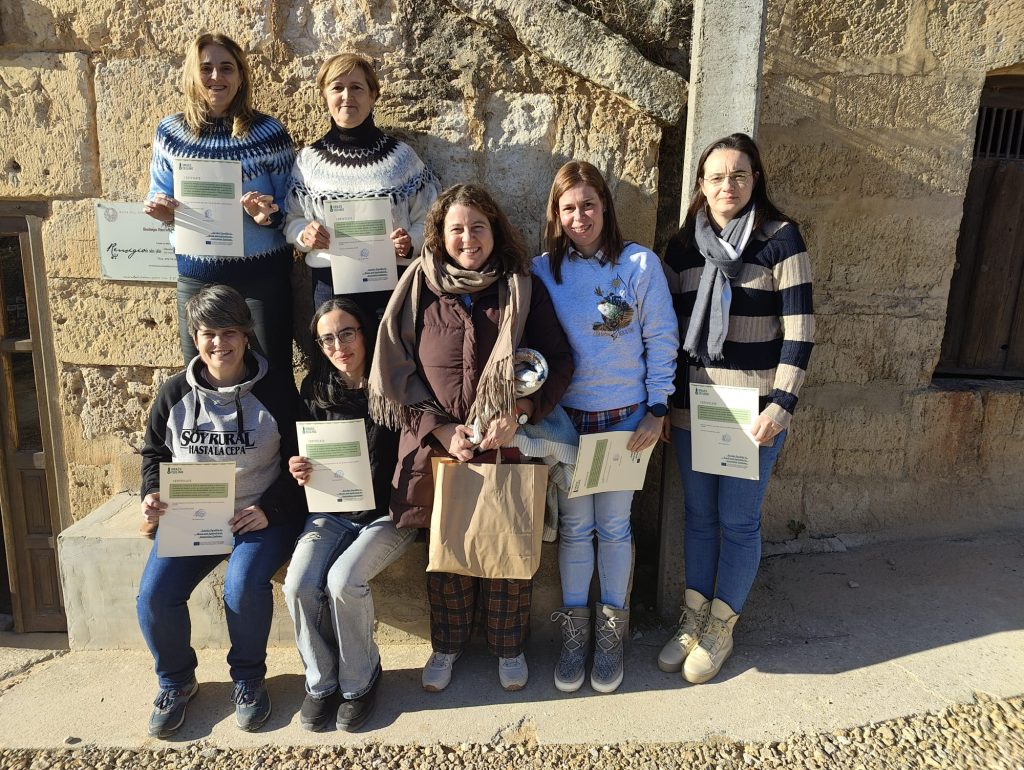
Supporting rural communities by improving women’s access to financial services Read More »

Debate session on the role of women in agriculture and livestock at the University Campus of Palencia

The event was organised by GRASS CEILING’s Spanish Living Lab, which aims to support innovative initiatives led by women in the agricultural sector. The session was hosted by a team of professors from the Palencia Campus of the University of Valladolid.

On June 12th, the first in-person meeting of the Living Lab took place on the University Campus of Palencia of the University of Valladolid (UVa), coordinated by the academic team of the University of Valladolid and Cooperativas Agro-Alimentarias de España. Eight women farmers from Castilla y León, Aragón, and Asturias took part in the session, together with nine external stakeholders related to the project’s theme.

Participants initiated the session by reflecting upon the concept of agricultural innovation, perceived as taking progressive and transformative steps aimed at generating value in both products and processes. This extends beyond production and englobes various aspects such as commercial, organisational, environmental, social, and business and institutional management scales.

The debate then focused on analysing the positive and negative factors currently influencing women when adopting leadership roles in the agricultural sector and explored potential actions that would give the work of women farmers and livestock breeders greater visibility.

The session received a high positive evaluation from all participants. They agreed on the importance of using participatory methodologies and networking approaches to analyse such a broad and complex reality and appreciated the opportunity to strengthen support networks and exchange perspectives, knowledge, and best practices. The project will conclude in December 2025 and continues to gather the necessary information to achieve the established milestones. The next LL meeting is scheduled for September.

Debate session on the role of women in agriculture and livestock at the University Campus of Palencia Read More »