GC WP6

Rural women take center stage at GRASS CEILING showcase in Vilnius

The GRASS CEILING Project consortium is excited to announce its participation in AgriFood Lithuania 2024. The event will serve as the backdrop for the project’s second Showcase event, highlighting the remarkable achievements of its first year.


Showcase and Consortium Meeting. The annual Showcase event will take place on 26th November, followed by the 3rd Consortium meeting on 27th November. The Showcase will offer a platform to inform partners and external stakeholders about the project’s progress, including key deliverables and the pivotal role of Living Labs. Here you will find the agenda for this event.

Spotlight on Women Entrepreneurs. A particular highlight of the event will be the inspiring stories of nine women entrepreneurs participating in national Living Labs. These women will share their entrepreneurial journeys, goals, and how their involvement in the Living Lab is supporting their aspirations. Participants include Ines Dundovic (Croatia), Karen Keane (Ireland), Annalisa Pellegrini (Italia), Juste Jankauskiene (Lithuania), Anita Rennemo Galaen (Scotland), Aoife Gould (Scotland), Amada de Salas (Spain), Emma Hartelius (Sweden), and Irene Beukeveld-Evers (Netherlands).

Project Results and Future Directions GRASS CEILING will also present findings from various work packages. Topics include:

The consortium meeting on 27th November will delve deeper into the project’s work plan, with a special focus on the Online Training Academy and MOOC modules workshop, led by Laura Quijano from CIHEAM Zaragoza.

Rural women take center stage at GRASS CEILING showcase in Vilnius Read More »

GRASS CEILING to spark discussion on empowering rural women and agricultural innovation at SERIGO event

The GRASS CEILING project will be a key focus point in a panel discussion organised by the SERIGO project. The panel will explore “Multistakeholder collaboration for innovation and inclusion of vulnerable communities.”

Blanca Casares, a Policy Expert for Horizon 2020 and Europe projects and a member of AEIDL, a partner in the GRASS CEILING project, will discuss how the project empowers rural women and fosters innovation in agriculture, rural economy, and rural communities. She will also highlight policy considerations to support these initiatives.

The panel will be moderated by Patricia Martínez (AEIDL) and will feature Sonia Marcos from the University of Burgos (coordinator of the ESIRA multi-actor platform) and Maura Farrell from the University of Galway (lead coordinator of the FLIARA CoP).

The virtual event will take place on 21st November from 1pm to 2pm. The SERIGO Horizon Europe project is conducting community-based research, fostering collaborations, and providing policy recommendations to enhance resilience, social inclusion, and well-being in European rural areas through social innovation.

To register for the webinar and view the agenda, click here.

GRASS CEILING to spark discussion on empowering rural women and agricultural innovation at SERIGO event Read More »

From Law to olive groves: Birgit Boljun’s journey of tradition, passion and empowerment from the Living Lab of the GRASS CEILING project

Birgit is a dynamic, determined woman from Istria, with a diverse background that spans law, business, and agriculture. Until recently, Birgit worked as a lawyer, while managing a successful security company with a team of 110 employees, predominantly men. However, her true passion lays elsewhere—olive growing, a hobby she inherited from her grandmother.

For Birgit, olive growing is a way to honour her grandmother’s legacy and preserve a piece of Istrian culture. It represents sustainability, tradition, and a personal commitment to cultivating something lasting and meaningful. Through her dedication to the craft, Birgit found a new passion, one that is as rich and enduring as the olive oil she produces.

After receiving a grant for young farmers through the Rural Development Programme, Birgit made the decision to transform her hobby into a full-fledged profession. Birgit had no formal background in agriculture, but her determination fuelled her to dive into the world of olive growing with full commitment. She sought out mentors, attended workshops, and learned everything from the science of soil health to the art of producing high-quality olive oil. Every step along the way was a learning process, but one Birgit embraced with enthusiasm.

Despite facing scepticism and derogatory remarks about women working in agriculture, Birgit never wavered.

Today, Birgit proudly identifies as a passionate advocate for justice, equality, animal rights, and women’s empowerment. She embodies the spirit of resilience.

The GRASS CEILING project is helping Birgit expand her network of Croatian women entrepreneurs. She’s also gaining valuable insights and knowledge that will undoubtedly support the growth of her olive tree business.

From Law to olive groves: Birgit Boljun’s journey of tradition, passion and empowerment from the Living Lab of the GRASS CEILING project Read More »

Legacoop Puglia presented the GRASS CEILING project at the 2024 Sustainability Report of Legacoop, in Rome

On September 25 in Rome, Legacoop’s national organization presented its new Sustainability Report 2024, a key tool for charting the path to a more sustainable and inclusive future. This year’s edition was enriched with specific tools and useful guidance for the entire cooperative ecosystem, encouraging active and informed participation by cooperatives.

On this occasion, Legacoop Puglia, the regional branch of Legacoop, proudly presented the “GRASS CEILING” project, an initiative created to promote gender equality and equal opportunities in the agricultural sector.

The project aims to break down invisible barriers that limit women’s access to leadership roles by creating opportunities for training and growth.

A big step towards a more equitable and sustainable society!

Legacoop Puglia presented the GRASS CEILING project at the 2024 Sustainability Report of Legacoop, in Rome Read More »

Spanish women farmers left out: work-life balance and transparency issues hinder their leadership roles in agrarian cooperatives

Spanish GRASS CEILING Living Lab organized a new workshop as a dialogue forum among women farmers and other agri-food actors. This event highlighted the lack of access of women to management positions in cooperatives, as well as their position on the CAP’s policies.

The University of Valladolid’s Palencia Campus, as academic co-leader, and Cooperativas Agroalimentarias de España, as practical co-leader of the European GRASS CEILING Project, have jointly organized the workshop “Dialogues with Women Farmers: Cooperatives and the Common Agricultural Policy”, at the headquarters of the Agropal Agri-Food Cooperative in Palencia (Spain).

This event served as a forum for reflection and dialogue, bringing together women farmers participating in the project with key stakeholders in the agricultural sector. The main objective was to delve into the challenges facing rural areas and the agricultural sector, emphasizing the role of women as drivers of rural development and generational renewal within the cooperative movement and the Common Agricultural Policy (CAP).

The workshop aimed to strengthen knowledge and promote best practices with a gender perspective. The event focused on the women participating in the Spanish Living Lab as the primary protagonists of the Grass Ceiling Project.

The event was opened by Margarita Rico, professor at the Higher Technical School of Agricultural Engineering (University of Valladolid’s Palencia Campus) and Spanish project coordinator, Julia Gómez, deputy director of AGROPAL, and Ángel María Gómez Rivero, director general of the Common Agricultural Policy of the Regional Government in Castilla y León.

The first panel discussion focused on participation and decision-making within agri-food cooperatives. Moderated by Ana de Coca of URCACYL, the panel included Jerónima Bonafé, member of the governing council of Cooperativas Agroalimentarias de España and president of AMCAE (Association of Women in Agri-food Cooperatives of Spain), Javier Narváez, secretary of the governing council of URCACYL, Amada de Salas, winegrower and winemaker in Dueñas (Palencia), and Lucía Velasco, transhumant cattle farmer in Asturias. The debate centered on the underrepresentation of women in cooperative governing boards and the underlying causes, such as limited time availability due to work-life balance challenges and lack of transparency.

The second panel discussion, moderated by Tomás García Azcárate, a researcher at the CSIC, examined the role of women in the new Common Agricultural Policy. Participants included Nuria Ruiz, manager of ASAJA Castilla y León, Ángel María Gómez Rivero, Marta Llorente, pig farmer and winegrower in Zazuar (Burgos), and Silvia González, farmer from Villaconancio (Palencia). The panel discussed critical aspects of the new CAP and broader challenges facing the sector, including increased bureaucracy, an aging rural population, and a lack of generational renewal.

Amalia Rodríguez, professor at the Faculty of Commerce and Labor Relations-Palencia (University of Valladolid), and Jerónima Bonafé delivered the closing remarks. They emphasized the need for greater visibility of women farmers and their proportional representation in decision-making bodies. The importance of gathering the experiences of rural women and creating spaces for dialogue was also highlighted.

The meeting served to strengthen the network established through the project and to deepen discussions on key issues facing the agricultural sector.

Spanish women farmers left out: work-life balance and transparency issues hinder their leadership roles in agrarian cooperatives Read More »

Marijana Svetić: The heartbeat of rural entrepreneurship in Lika (Croatia) and member of the Croatian Living Lab of GRASS CEILING

Located near the birthplace of the great Nikola Tesla, often credited as the inventor of the electric motor, Marijana’s family business thrives on innovation and tradition.

Marijana is a mother, human rights defender, student, farmer and innovator. On her path to rural entrepreneurship, she has combined the old with the new to create something truly unique and meaningful.

Her latest project involves breathing new life into discarded oak wood to create stunning table lamps, each named after the visionary Nikola Tesla. Marijana has also started to explore wood jewellery making and the endless possibilities of this beautiful, natural material.

She works in disaster management, making sure her community is safe and prepared every day. But her passion for sustainability and creativity doesn’t stop there! She produces fresh vegetables and high-quality meat on her family’s farm. She is also the proud winner of second place in the competition for the most exemplary village women in Croatia in 2021.

She believes in the power of education and wants to connect her work with educational institutions. She is a true inspiration for the next generation of rural entrepreneurs.

Marijana’s main message is: let’s be open-minded, innovative and support each other. Our potential is limitless and our contributions are invaluable!

Marijana Svetić: The heartbeat of rural entrepreneurship in Lika (Croatia) and member of the Croatian Living Lab of GRASS CEILING Read More »

The GRASS CEILING project is actively involved in commemorating the International Day of Rural Women on October 15

The GRASS CEILING project joins in commemorating and critically analysing the International Day of Rural Women on October 15. We strongly support this day to emphasise the need for reflection on how to improve the conditions of rural women.

As our project coordinator, Professor Sally Shortall, recently stated at the opening session of our first European Policy Forum on October 7,” We are working to develop policy recommendations and observations that can inform and guide future policies aimed at improving the conditions of rural women”.

GRASS CEILING is a project dedicated to better understanding, raising awareness of, and recognising the role of rural women. One of our key objectives is to contribute to transforming gender norms and stereotypes and enhancing the innovative capacity of rural women.

To achieve these goals, we are committed to political advocacy through dialogue with entities such as the EU’s Strategic Directorate for Agriculture. We aim to develop policy recommendations and observations that can inform future political decision-making and contribute to multidisciplinary dialogue promoting legal, social, political, and economic changes grounded in gender-responsive budgeting.

In alignment with the UN theme for this year’s celebration, GRASS CEILING is working to build resilience to climate change by supporting women who seek to conserve the rural environment through the application of conservation policies, sustainable resource management, circular economy principles, and natural space restoration. These efforts prioritise biodiversity conservation.

Throughout our work, we maintain a commitment to land stewardship, respect for women and girls, and, above all, the promotion of gender equality.

We recognise that the United Nations identifies the following key factors as essential for empowering rural women and girls:

  1. Decent work and social protection
  2. Education and training
  3. Sustainable energy and technology
  4. Clean water and sanitation
  5. Elimination of violence and harmful practices
  6. Women’s inclusion in decision-making and leadership
  7. Increased resilience to climate change

Therefore, on October 15, 2024, GRASS CEILING joins in celebrating the International Day of Rural Women and wholeheartedly supports the UN theme: “Rural Women Sustaining Nature for Our Collective Future: Building climate resilience, conserving biodiversity, and caring for land towards gender equality and empowerment of women and girls.”

The GRASS CEILING project is actively involved in commemorating the International Day of Rural Women on October 15 Read More »

Launch of the GRASS CEILING European Policy Forum for women-led innovation

On 7 October 2024, GRASS CEILING had the launch of its European Policy Forum for women-led innovation. This event was organised by AEIDL and Copa-Cogeca.

The GRASS CEILING project seeks to empower rural and farm women and enhance their role in driving socio-ecological innovations, addressing pressing challenges, and fostering resilience in rural areas across nine European countries.

The session brought together over 80 attendees from diverse backgrounds, including representatives from EU institutions, national and regional government and public authorities, researchers, NGOs, and other EU projects from 21 countries.

The European Policy Forum showcases the findings of GRASS CEILING to advance women-led socio-ecological innovations in farming, rural economies, and communities. Following the integrated transdisciplinary and multi-level approach of the project, the Forum aims to mobilise key stakeholders to drive meaningful change and promote gender-inclusive policies and innovations.

On the back of several pivotal European discussions, including the Political Guidelines for the European Commission (2024-2029), the results of the Strategic Dialogue on the Future of EU Agriculture, and the opening of debates on the Common Agricultural Policy (CAP) post-2027, and the design of the European Gender Strategy post-2025, the session  sought to introduce project insights, highlight its methodological foundations, and discuss with participants ideas to better integrate gender mainstreaming into relevant EU policies.

The event kicked off with a joint introduction on the role of the European Policy Forum for women-led innovation in agriculture and rural areas from Blanca Casares of AEIDL and Branwen Miles from Copa-Cogeca. Blanca Casares explained the progress of the Forum so far as well as the activities planned and in which external stakeholders can be informed and take part. Participants were invited to register as Forum’ members to co-design recommendations and tools together with the project partners.

Sally Shortall, project coordinator from The South East Technological University (SETU) in Ireland, followed with an overview of the first insights and findings of the GRASS CEILING project. It is necessary to reflect on how public policy can support women’s social entrepreneurship, which has a direct effect on the sustainability of rural areas. The private sector will never support childcare in remote rural areas for example, because it will not obtain an economic return from it. In addition, we need to rethink the concept of success when it comes to women’s innovative initiatives, Sally Shortall said.

Several key voices provided thought-provoking presentations. Elena Schubert, from the Directorate-General for Agriculture and Rural Development (DG AGRI), focused on the gender equality in the Common Agricultural Policy and its strategic role for sustainability.

Quoting Elena Schubert, there is a general and wide consensus about the crucial role of women in sustainable agriculture. We need women equally as we need men to cope with global challenges, and to preserve our European social model. Our priority is to attract more women into farming and forestry.  In this regard, equal opportunities and safe and healthy working conditions for women to fully harness their potential are essential. Overcoming gender stereotypes in agri-food sector is a must, women can be as competitive as men!  Innovation is key to offer practical, replicable and scalable solutions.

Maria Nikolopoulou, from the European Economic and Social Committee, discussed the significance of gender lens investing as a way to improve gender equality in the European Union based on an Opinion that the Committee prepared a couple of years ago. We call for an ambitious vision in the EU on gender lens investing and gender budgeting, including concrete targets and KPIs, updated criteria for public funding, intensified programs to improve female entrepreneurship and a plan for an inclusive financial ecosystem to accelerate the pace towards an effective gender equality. Furthermore, we need to develop gender dedicated funds to be sure that the investments reach women, and make sure that all big venture capital funds and private equity have a gender lens investment strategy, Maria Nikolopoulou explained.

Finally, Marta Dell’Aquila, Irina Kustova and Christian Dietz, from the Centre for European Policy Studies, presented the gender dimension in sustainable development, innovation and green transition. We discuss many different issues related to climate-related agricultural policy, but we need to focus more on the challenges of gender equality, as it is a cross-cutting, multi-dimensional issue. Specifically, when discussing gender in agriculture, we must ensure coherence with other climate policy areas that impact women in this field, such as the European Green Deal and the Fit for 55 legislation package, the CEPS team members stated during their speech.

Following the presentations, participants were engaged in four interactive workshops to collaboratively develop ideas and explore key topics affecting women in agriculture and rural innovation:

  • Cultural Norms and Stereotypes
  • Gender in the Existing Legal Framework
  • Data Gaps and Lack of Disaggregated Data
  • Structural and Financial Needs

The guiding questions focused on what are the most effective strategies to (i) reduce or eliminate the impact of gender-related cultural norms and stereotypes; (ii) review and enhance gender mainstreaming in existing policies and effectively integrate into new policies (iii) monitor and analyse the situation of women in agriculture and rural areas and (iv) promote women farmers’ access to appropriate financial services and resources. Participants also reflected on what can be done at Member State level and at European level.

The results of the discussion will be analysed and used to produce a first set of policy recommendations in the upcoming months.

For more information, see agenda and event materials here.

AEIDL and Copa-Cogeca are coordinating the European Policy Forum for women-led innovation to drive progress in women-led socio-ecological innovations within farming, rural economies, and communities. By mobilising a diverse range of stakeholders, the Forum fosters impactful dialogue and collaborative efforts toward sustainable change.

Do you want to be part?

Sign up here: https://ec.europa.eu/eusurvey/runner/GRASSCEILING_Forum

For any clarification contact Blanca Casares (bca@aeidl.eu) or Branwen Miles (branwen.miles@copa-cogeca.eu).

Launch of the GRASS CEILING European Policy Forum for women-led innovation Read More »

GRASS CEILING project hosts European Policy Forum for women-led innovation in agriculture and rural areas

The European Policy Forum for women-led innovation, part of the GRASS CEILING project kicks off on 7th October 2024.

This is a virtual event that requires prior registration through this link before 1st October. The event is organised by Copa-Cogeca and AEIDL (European Association for Innovation in Local Development) in collaboration with CIHEAM Zaragoza. The event aims to enhance exchange, learning, and interaction with key stakeholders in policy strategies for gender equality.

During the session, the project’s objectives and insights and the methodological basis for developing recommendations and policy instruments will be presented by Sally Shortall, the project coordinator; Blanca Casares and Serafin Pazos-Vidal from AEIDL; and Branwen Miles from Copa-Cogeca.

The event will feature interventions from Elena Schubert, representing the Directorate General for Agriculture and Rural Development (DG AGRI), who will speak on “Gender Equality in the Common Agricultural Policy”; Maria Nikolopoulou, from the European Economic and Social Committee, who will discuss “Gender-sensitive investment as a way to improve gender equality in the European Union”; and Marta Dell’Aquila, Irina Kustova, and Christian Dietz from the Centre for European Policy Studies, who will address “The gender dimension in sustainable development, innovation, and the green transition.”

The programme will be completed with a presentation by Blanca Casares, Serafín Pazos-Vidal, and Sally Shortall on the “Development of policy recommendations and tools within the GRASS CEILING project” and participatory workshops on “Gender Equality and Diversity” in which all attendees will participate and discuss their ideas for integrating gender mainstreaming into relevant policies.

To participate in this event, prior registration is required before October 1st through the project’s website, using this link.

The detailed programme for this event can be found here.

For further information about this event, please contact Blanca Casares or Branwen Miles

GRASS CEILING project hosts European Policy Forum for women-led innovation in agriculture and rural areas Read More »

The GRASS CEILING Project is heading to Barcelona this October to attend Synergy Days 2024

We’re heading to Barcelona! And why, you ask? Because on October 14th and 15th, we’ll be participating in Synergy Days 2024.

We’ll be presenting our project, sharing our experiences with other consortia, and discovering new projects to build new networks. Over these two days, you’ll find us at our project’s stand, where we’ll be happy to welcome you and provide detailed information about our work and achievements.

But that’s not all! Professor Sally Shortall, Duke of Northumberland Chair of Rural Economy at Newcastle University and coordinator of the Grass Ceiling project, will be in Barcelona to give a talk about the project and participate in the workshop “GRASS CEILING: Advancing equality for rural and farm women in Europe,”.

In the meantime, if you’d like to participate in this international forum, you can register for free here. We look forward to seeing you in Barcelona!

For more information about the event and the activities planned for the two days, visit https://www.smartagrihubs.eu/synergy-days.

See you there!

The GRASS CEILING Project is heading to Barcelona this October to attend Synergy Days 2024 Read More »

Rural Game Changer: Sally Shortall, GRASS CEILING project coordinator has been shortlisted for the Game Changers Awards 2024

Congratulations to Professor Sally Shortall FAcSS, Duke of Northumberland Chair of Rural Economy, who has been shortlisted for a special award celebrating game changers in the agriculture industry over the last twenty years.

Game Changers celebrates people who are making a significant contribution to UK farming – and shows how the ongoing success of UK agriculture is built on collaboration between people spearheading change within the industry. Sally has been chosen for her rural research work – particularly into the role of women in farm families which led to the creation of the Women in Agriculture Taskforce. Good luck to Sally!

Professor Sally Shortall has been nominated for her groundbreaking rural research, focusing on the critical role women play in agricultural families. This work directly led to the establishment of the Women in Agriculture Working Group.

Joining her in the nominations are scientists, professionals, academics, environmentalists, and farmers who are all making significant contributions to British agriculture.

The awards ceremony will be held on October 3rd in London.”

Read The Farmer’s Weekly article where Sally outlines why women are less likely to own farm land by clicking here.

Rural Game Changer: Sally Shortall, GRASS CEILING project coordinator has been shortlisted for the Game Changers Awards 2024 Read More »

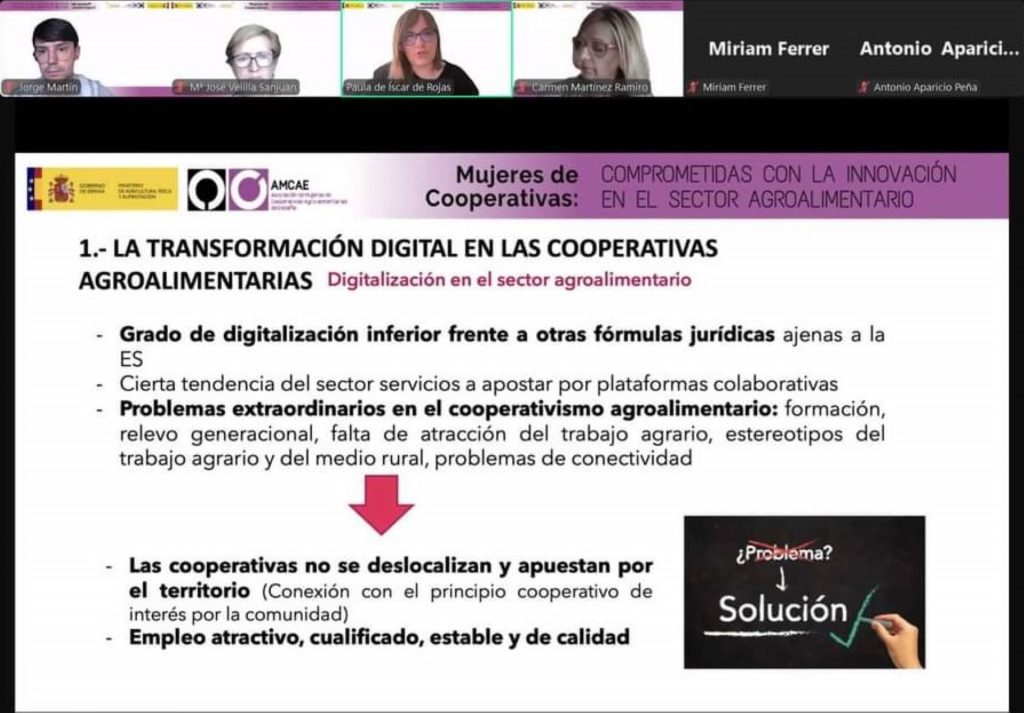
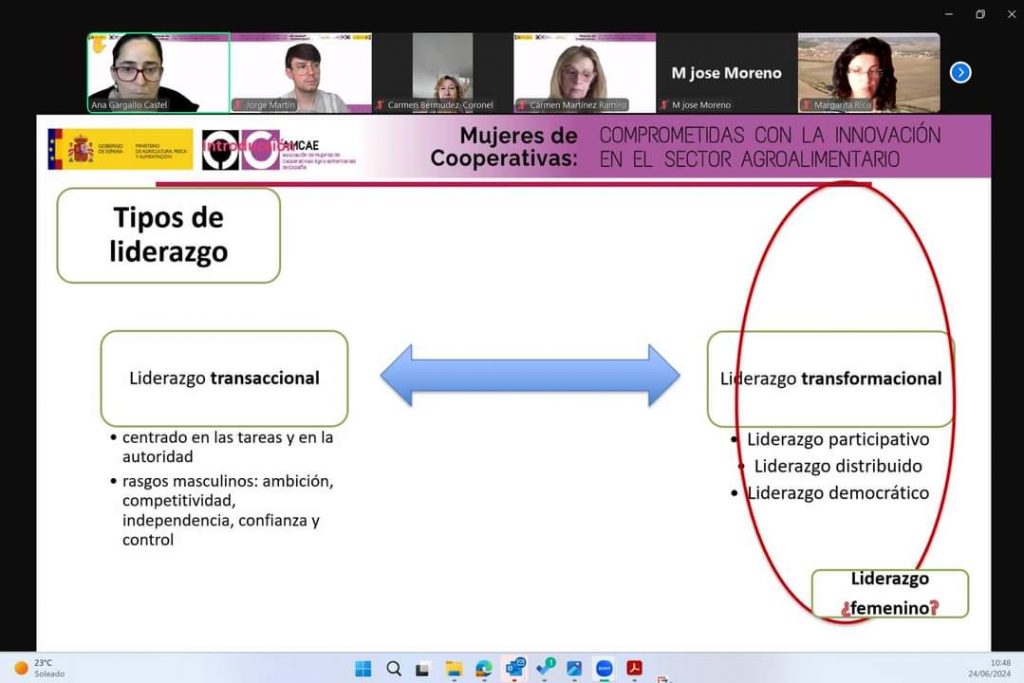
Spanish women entrepreneurs from the GRASS CEILING Living Lab participate in a workshop on digitisation and women leadership in agrifood cooperatives

Women entrepreneurs participating in the Spanish Living Lab of the GRASS CEILING project have participated in a workshop on digitisation and leadership of women in agrifood cooperatives, organised by the Spanish Association of Women’s Agrifood Cooperatives (AMCAE).

This activity is part of the training journey of the Spanish Living Lab, developed as part of the fifth meeting of its members.

The meeting was characterised by the active participation of the attendees, who spoke of motivation, learning, acquisition of new tools, evolution, training and inspiration, when describing the event. The speakers at the meeting underlined the significant participation of women in the agricultural cooperative sector.

Ana Gargallo, representative of the University of Zaragoza, highlighted the importance of managing talent and in particular of exploring the talent of women. She referred to social and economic sustainability as key factors to achieving more competitive cooperatives with greater benefits.

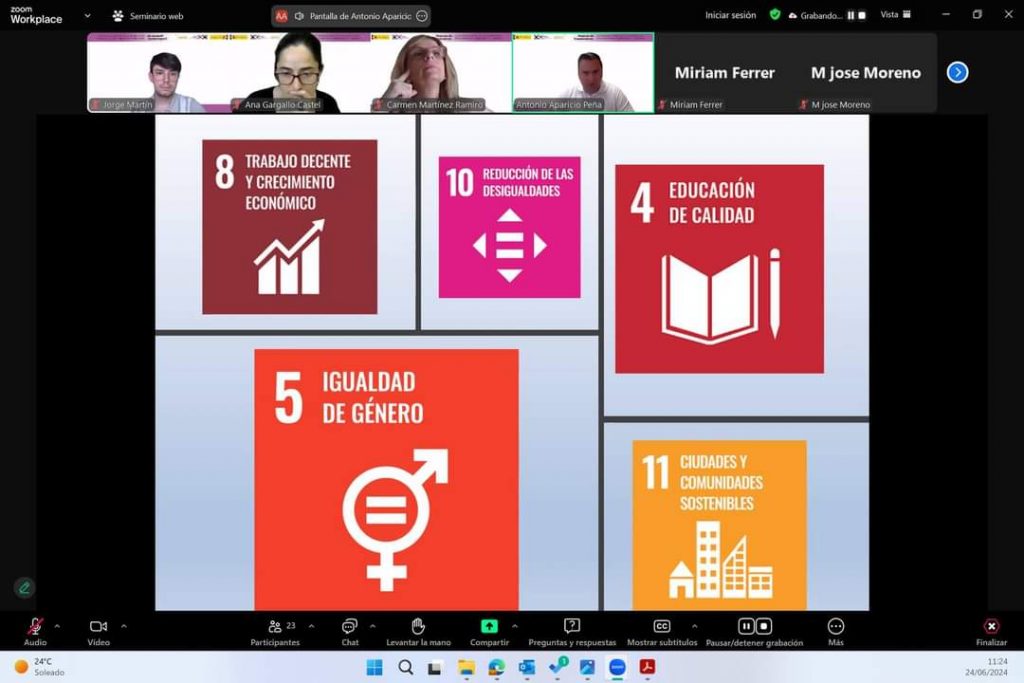
Antonio Aparicio, from the Pastors Cooperative Group, gave a presentation on the link between equal opportunities and the SDGs and presented the ‘Extraordinary Women’ initiative within the livestock farming community of Pastores Group, where many women leaders have been discovered by the cooperative’s own team of veteran women members.

Finally, Paula de Íscar de Rojas, researcher at the University of Valladolid, reviewed the main regulatory provisions on equality and highlighted the importance of digitisation and training to advance social sustainability in cooperatives.

A stimulating discussion followed the round of interventions, led by María José Velilla, advisor of Oviaragón, member of the AMCAE Board of Directors and the GRASS CEILING Living Lab in Spain.

This workshop has taken place with the financial support of the Spanish Ministry of Agriculture, Fisheries and Food to carry out activities of special interest that promote the role of women in rural development.

Spanish women entrepreneurs from the GRASS CEILING Living Lab participate in a workshop on digitisation and women leadership in agrifood cooperatives Read More »

GRASS CEILING Croatian Living Lab convenes to identify megatrends and key players in addressing challenges faced by rural women entrepreneurs

The 5th meeting of the GRASS CEILING Croatian Living Lab took place on May 27 and 28, 2024. On the first day, the Living Lab participants were warmly welcomed by Living Lab participant Ana Kovačić in Ledina (Zagreb County) at the Kovačić family farm.

Ana gave us a tour of her blueberry and currant plantation and showed us the fruit products. The positive energy of the Living Lab women stimulated a fruitful discussion about rural women and their future. It was a pleasure to see how enthusiastically the Living Lab participants talked about their progress and how supportive they were of each other.

The second day was reserved for Razljev, where the Veggie company of our Living Lab participant Ines Dundović is located.

The main event of the fifth Living Lab was the foresight analysis, where the Living Lab participants and stakeholders (in groups) identified some political, administrative, economic, technical, technological, social and environmental megatrends and key players for future challenges. After the foresight analysis, the Living Lab participants held a workshop on digital marketing.

There were several stakeholders participating in the 5th Living Lab and they were excited to see how much knowledge about rural entrepreneurship and innovations these women have and how many plans they have for the future.

GRASS CEILING Croatian Living Lab convenes to identify megatrends and key players in addressing challenges faced by rural women entrepreneurs Read More »

Grass Ceiling project webinar focuses on enhancing social media management for rural businesses

The GRASS CEILING project hosted a webinar on improving social media management, bringing together project partners and innovative women from the project’s Living Labs. The webinar, led by CIHEAM Zaragoza, underlined the importance of starting with a solid strategic communication plan.

Throughout the session, three women entrepreneurs from the GRASS CEILING project’s Living Labs, with extensive experience in social media management, shared their experiences in managing their social media presence. These were Lucía Velasco, a rural influencer and a cowgirl from the Principality of Asturias (Spain) – as she likes to define herself, passionate about promoting rural life and traditions; Karen and Natalie Keane, two chocolatier sisters and promoters of the Bean and Goose brand in Ireland, known for their innovative and delicious creations; and Jasminka Gršković, a teacher and entrepreneur, inventor of lavender-scented wool sensory balls for hand muscles.

The importance of a strategic communication plan

“Effective social media management depends on a well-developed communication plan,” explained Laura Gil, a journalist from the CIHEAM Zaragoza Communication Unit and responsible for speaking on Social Media Content Strategy. “This plan should carefully consider the target audience, desired outcomes, communication channels, and messaging strategies. Identifying the right platform to reach your audience is crucial, and it can be a complex task.”

Laura Gil stressed the importance of consistently publishing content with a pre-established calendar because it helps to build audience loyalty and avoid losing momentum. She also spoke about continuously monitoring trends in each sector to stay up to date and adapt your own approach if necessary, aligning it with goals and interests of the target audience. Finally, knowing how to use the right tools is essential, taking advantage of social media management platforms to optimise tasks, scheduling and monitoring processes.

Lucía Velasco: authenticity and empathy for greater impact

Lucía Velasco offered a captivating presentation that served as a powerful reminder of several key principles. She emphasised the importance of authenticity, “being true to what you do and who you are”. Her message defended the value of positive communication, advocating for the use of motivating and inspiring language. Lucía also underlined the importance of empathy, urging the women to connect deeply with the work they do to achieve a more impactful outcome.

In addition, she highlighted the need to establish a clear communication process, “because it ensures that information is disseminated efficiently and accurately” and to always be very well informed “to avoid disinformation and be more credible.” Finally, Lucía emphasised the opportunity to be a spokeswoman for women in rural areas. “Our networks are a platform to amplify our voices and defend our causes.”

Bean and Goose, or the power of pursuing dreams from home

Sisters Karen and Natalie Keane, the creative minds behind Bean and Goose, exemplify the power of pursuing dreams from the heart of the home. Their passion for creating something meaningful and offering delicious chocolate experiences is evident in everything they do.

Driven by a clear vision of building a strong brand, the Keane sisters ingeniously use chocolate as a medium to celebrate Ireland’s rich cultural and natural heritage.

Social media is a vital platform for them. They use it to connect with customers and followers, highlighting the unique value proposition of their products. Their approach goes beyond simply selling chocolate. They strive to provide useful information and cultivate a sense of connection with their audience, ultimately generating trust and loyalty to the Bean and Goose brand.

Jasminka Gršković: constant learning

For Jasminka, the importance of mentors cannot be overstated when it comes to shaping the business model. She pointed out that their guidance can help us navigate challenges and pave the way to success. “Learning how to create a business plan that leverages the power of social media is essential”. Jasminka also highlighted the value of both professional training and observation. “By establishing a strong online presence and becoming a reliable source of information, we can position ourselves as thought leaders for our target audience, including potential customers seeking solutions.”

While she acknowledges that video content may not be her personal preference, Jasminka recognises the importance of exploring different communication channels. This openness to learning and embracing new approaches is a valuable lesson for any entrepreneur.

Jasminka’s perspective highlights the valuable insights we can gain from unexpected sources. Young people, often considered digital natives, can offer valuable guidance and expertise in navigating the ever-evolving landscape of social media. “I, in fact, learn every day from my daughter”.

Grass Ceiling project webinar focuses on enhancing social media management for rural businesses Read More »

Ana’s Berry Haven: A story of tradition and entrepreneurship in the Croatian Living Lab of the GRASS CEILING project

Ana’s Orchard, an oasis of berries, herbs and flowers, is located in the rural part of Zagreb County. Ana is a spirited and determined entrepreneur who has turned her grandmother’s recipes into a thriving business that celebrates the rich flavours and healing properties of nature. Ana Kovačić is also an active participant in the Croatian Living Lab of the GRASS CEILING project.

Ana’s Orchard is a symphony of colours and flavours. Rows of chokeberries, blackberries, raspberries and blueberries thrive under her careful watch. Fragrant mint, soothing lavender and elderberry bushes prosper amongst the berry bushes.

But Ana’s work does not end in the orchard. In her cosy, sun-drenched kitchen, she uses her grandmother’s recipes to make a variety of traditional products, such as jams, tinctures, liqueurs and syrups, all made by hand using natural preservation methods.

Ana is not only a farmer and entrepreneur, she is also a mentor and advisor. Her passion for her business goes hand in hand with a desire to pass on her knowledge. She has summarised her years of experience in a booklet, “Health through berries” (“Bobicom do zdravlja“), a comprehensive guide on the benefits and uses of berries.

Her vision also extends to the next generation. Ana gives workshops on wild fruits in her orchard. She teaches children about the wonders of nature and the importance of preserving traditional practices.

Ana believes that women are creators, capable of nourishing both the land and the community. Ana is the best example of the incredible potential of women in agriculture.

Ana’s Berry Haven: A story of tradition and entrepreneurship in the Croatian Living Lab of the GRASS CEILING project Read More »

Annalisa Pellegrini (GRASS CEILING Italian Living Lab): “nothing should be lost but everything should be transformed, reducing waste by reusing products”

Annalisa’s world is full of beautiful colours, but “lavender” is the most important of them all! She is one of the eight women participating in the GRASS CEILING Living Lab in Italy.

Annalisa Pellegrini has an Art degree with a specialisation in Woodworking. For many years she worked as a lights designer and set designer in performing art. Then, she moved to Sicily to focus on marble working. Back in her homeland, she attended courses on medicinal plants and after self-taught study, still in progress, in 2019 she decided to recover an unused family plot with her brother. She began growing lavender and other medical and aromatic plants and started an essential oil business, paying attention to environmental sustainability.

The demand for her products increased during the COVID-19 pandemic due to their medical properties and ability to help with anxiety and stress. For these reasons, her passion soon turned into a business.

In her opinion “Every innovation starts with greater awareness”. She is a great lover of ‘vintage’ and she believes in circular economy practices.  “Nothing should be lost but everything should be transformed, reducing waste by reusing products. This process feeds an economic system that regenerates itself”.

This energy inspires her artistic creations, such as the ‘Soy Candles’ dedicated to spring. These handmade candles burn more slowly than traditional ones. It is a responsible and eco-friendly choice: once extinguished, the oil produced while the candles burn can be reused to moisturise hands and body. They are also often used for relaxing massages.

At ExpoLevante in Bari, one of the most important local craft fairs, Annalisa set up a stand to sell her products, recently: bath salts, oils, candles, balms and ointments.  Each item tells a story and describes a trait of her personality and passion for her work

Her natural products, with their soothing and anti-inflammatory properties, are the result of a production process whose flagship product is the essential oil, obtained by steam distillation, 100 % organic.

Lavender, bitter or sweet orange, and lemon: it’s a pleasure to smell her creations!

Annalisa Pellegrini (GRASS CEILING Italian Living Lab): “nothing should be lost but everything should be transformed, reducing waste by reusing products” Read More »

Rural women innovators in Trøndelag contribute to EU-level research

For the duration of three years, eight rural women innovators in Trøndelag are part of the research project GRASS CEILING. The project is funded by Horizon, the world’s largest funding programme for research and innovation, and an EU resource to acquire new knowledge in Europe. 

Oi! Trøndersk Mat og Drikke and Ruralis are the two Norwegian project partners among the nine European Union countries that are participating in the project. Countries like Spain, Italy, Lithuania and Croatia all ask their rural women innovators the same questions: What is it like being an entrepreneur in agriculture and local food production in rural areas? Do women have the same access to resources as men do, and what are possible barriers for women starting their own businesses and upscaling their companies?

I’m very happy with the Living Lab and I think it’s working really well. We’re a good mix of great women, and I’m very pleased to be part of the project, says Torunn Bjerkem.

Bjerkem has been part of building the heirloom flour mill company Gullimunn, and is now in a substantial restructuring and innovation process with her farm Kulturgården Bjerkem, offering local food, accommodation and cultural events.

It’s great that someone like Mikael Forselius will be at the next Living Lab, talking to us about networking and his diverse experiences in the local food and hospitality industry, says Bjerkem.

Three Living Lab gatherings a year for three years

During the three annual Living Lab gatherings the project managers exchange knowledge and experiences from the rural women innovators, in a data collection process. This data is analysed as research that is delivered to the top level of the EU project. In this way the European Commission can make informed decisions about how they can support rural women innovators in the future.

So far, research has shown that rural women innovators contribute to more business in rural areas, they create sustainable innovations, and initiate and build healthy social communities.

“I really enjoy the social aspect when we meet for our Living Lab gatherings. We support each other, and give each other ideas and perspectives on each other’s businesses and products. It’s a good thing to be able to share the things that can feel heavy about owning a business”, says Kari Øye.

Øye has created the company Havfruene, producing Omega 3-rich cod liver oil made from locally sourced ingredients. They have a stand at the annual food festival in Trondheim: Trøndersk Matfestival, and Øye attended the Grass Ceiling-showcase in Brussels, where she presented her business to the rural women innovators and project partners of the other countries, and to representatives from the European Commission.

Workshops and ‘homework’

In the Living Labs the participants have organised workshops and lectures by various consulting and funding agencies, such as Innovation Norway, Fosenregionen, SISU Business and Proneo. “They gave us homework to ask our customers why they choose our product”, says Sissel Langørgen.

In the coming year and a half, two more women innovators from the project will travel to Vilnius and Brussels respectively, to present their businesses to the project. The participants are excited to learn about the final results of the GRASS CEILING project, which will be presented by the end of 2025.

Torunn Bjerkem
Kari Øye

Rural women innovators in Trøndelag contribute to EU-level research Read More »

“Yesterday shock, today sadness, tomorrow action and we move on!” Ines Dundović recounts the fire in her company

One of our friends, a participant in this Project and manager of an entrepreneurial company in Croatia, is going through a difficult time. From this page and on behalf of the entire GRASS CEILING consortium, we want to show our support and solidarity with her.

Just a few days ago we were talking about Ines Dundović, a Croatian producer and processor of plant products, entrepreneur and director of the Veggie Company, with three stores in the Zagreb region.

This week we learned that an unfortunate accident caused a fire in their facilities, resulting in the loss of a significant part of their stock and warehouses.

She herself has recounted the episode on social media with the strength and drive that characterises her: “Yesterday shock, today sadness, tomorrow action and we move on!” As Ines has said before, proclaiming to the four winds and with energy “WHAT DOESN’T KILL YOU, MAKES YOU STRONGER!” She went on to thank everyone for the demonstrations of the physical, technical and moral support she has received and the invaluable collaboration of the firefighters in her area.

From this project website we want to highlight that our exceptional entrepreneur, Ines, even though she experienced a fire on her property, which shook her up, she has also demonstrated remarkable strength and resilience, continuing to work with enthusiasm as she prepares the property for renovation. We wish her every success!

And this is the spirit of GRASS CEILING’s entrepreneurial women. Nothing stops them, they are always looking ahead, never back.

So, Ines, we send you our heartfelt encouragement in the recovery of your business. We know that you are going to do very well and from here we will continue to share the news about everything you do to make your work and achievements visible.

A big hug from the entire human team of GRASS CEILING. We are all with you!

“Yesterday shock, today sadness, tomorrow action and we move on!” Ines Dundović recounts the fire in her company Read More »

Ines Dundović, director of Veggie, a company with three shops in the Zagreb region, participates in the Croatian GRASS CEILING Living Lab

Veggie is a vegetable production and processing company co-founded by Ines Dundović, one of the youngest participants in the Croatian GRASS CEILING Living Lab.

Veggie started out drying tomatoes and today supplies fresh and processed vegetables to restaurants, schools and Gruntek, the largest marketer of organic vegetables with direct sales to the end consumer through weekly vegetable boxes.

Since its inception in 2015, Ines has managed to open three Veggie shops, where she sells her fresh and processed vegetables, to which she has added the products of other local producers. Undoubtedly, Ines is contributing a lot to the development of agriculture in the Zagreb region.

Ines has been working on her parents’ farm all her life and it was after finishing her studies in horticulture at the Faculty of Agriculture in Zagreb that she started Veggie. Recently, the business has expanded to include rural tourism. Ines is a communicative woman who likes to share her knowledge. She is very active in her local community. In fact, she chairs her community’s agricultural committee, which she helped to set up. She has participated in many European projects which have allowed her to acquire new knowledge and to travel abroad a lot to learn about good practices.  

Ines stresses that the greatest benefit of the GRASS CEILING project lies in the creation of networks of women innovators.

Ines Dundović, director of Veggie, a company with three shops in the Zagreb region, participates in the Croatian GRASS CEILING Living Lab Read More »

United Nations declares 2026 as the International Year of the Woman Farmer

2026 has been declared the International Year of the Woman Farmer by the United Nations General Assembly.

The United Nations hopes that this will be an opportune moment to raise awareness of the crucial role of women farmers in the world’s food systems. Women farmers are key to ensuring food security, food access and nutrition for people, and therefore to eradicating poverty.

2026 is expected to be a year in which effective policies and actions are adopted to address the barriers and challenges faced by women farmers, and to promote gender equality and their empowerment.

According to the FAO’s report “The Status of Women in Agrifood Systems” (2023), despite the fact that women farmers represent 39 % of the global agricultural workforce, women suffer significant discrimination, continue to face challenges in land and livestock ownership, do not enjoy equal wages, are not taken into account in decision-making and have difficulty accessing credit or financial services.

The International Year of the Woman Farmer aims to enhance global commitment to addressing these disparities.

With this commemoration in 2026, the United Nations recognises “the fundamental role of rural women in global food systems and is committed to addressing the challenges they face” and expects the effort and collaboration of countries, UN entities, civil society, academia, the private sector, local communities, indigenous peoples… to raise awareness, implement concrete measures and pave the way for more efficient and inclusive, resilient and sustainable food systems.

María José Velilla (Spain)

United Nations declares 2026 as the International Year of the Woman Farmer Read More »

Many questions stimulated creativity at the 4th Italian GRASS CEILING Living Lab Meeting

The 4th Italian Living Lab, held on 11 May at the Officine Culturali in Bitonto (BA), reached a crucial point: the ideation phase.

In the previous stages of this dynamic Design Thinking journey, promoted as part of the three-year multi-actor project GRASS CEILING, eight rural women innovators explored the real needs of users to be involved in their future individual business projects.

It is finally time to step out of the comfort zone and think out of the box! The generation of ideas, in fact, is the beating heart of the method and requires creative efforts. The innovators tried to identify some possible alternatives to better define solutions to the problems detected in the initial context analysis.

During the morning they experienced how there are no good or bad ideas: at this stage the most important thing to do is to create, using specific facilitation methodologies such as the World Café technique.  

After meeting up with stakeholders in discussions around tables, they open the door to their imagination. The output of the activity was a colourful mosaic of ideas and questions to continue the journey in coming months. 

In the afternoon, the working group reasoned about the future through the practice of Foresight. It is certainly not easy to predict the future, but it is still possible to be prepared for what may happen. Through a group exercise, the innovators were able to build a medium/long-term vision, expanding the boundaries of perception.

In the next meeting, the eight participants will focus more on the realisation of their ideas and no longer rely simply on their imagination.

The work was led, as usual, by the two co-leads Legacoop Puglia and CIHEAM Bari, with some local stakeholders who collaborated in the morning activities. They included Mariano Frachiolla, agronomist for the Bio Distretto delle lame, Gianvito Turi, visual designer for corporate communication, Francesca Volpe, local food policy expert for CIHEAM Bari, and Vincenzo Fucilli, professor at the University of Bari.

The GRASS CEILING project is funded by the Horizon Europe programme and runs until December 2025, with several Living Labs held in the 9 countries involved in the European partnership.

The Living Lab is an opportunity to strengthen the relationship and discussion within the working group.

No need to wait long for upcoming activities: the next Living Lab will be held in June. Stay tuned!

Many questions stimulated creativity at the 4th Italian GRASS CEILING Living Lab Meeting Read More »

GRASS CEILING Lithuanian Living Lab gains insight into marketing and the circular economy in the agro-food sector

In 2024, the second meeting of the GRASS CEILING Living Lab took place in Zapyškis, Lithuania, featuring eight women innovators (Karališka Uoga, Šeimos ūkis “Geltoni botai”, Bačkonių ekologinis ūkis, Rasa Prusakova, 50 Arų. Darbo ir džiaugsmo, Saldūs žiedai, Justė Jankauskienė, Šamūkis, Gurkė, Justina Gikniūtė Kočetova, Rūta Aliukonienė, Lina Vysniauskaite, Aliejus- sveikatai ir grožiui) and two experts in marketing and the circular economy.

Greta Stasiulevičienė, a marketing consultant, delivered a presentation on social networks and advertising opportunities for small businesses. She introduced us to concepts such as warm/cool audiences and how to shape the format of advertising, budgeting, and management. We also learned about the potential of free advertising.

Virginija Kargytė, a lecturer at the Vytautas Magnus University VDU Bioekonomikos plėtros fakultetas and representative of Lithuania BIO, presented the key insights from the ongoing study “Circular Economy Development in the Agro-food Sector: the Potential of Industrial Symbiosis”, which creates future opportunities for cooperation among farms based on the management of material flows, involving local authorities, communities, and other businesses. Industrial symbiosis is presented as a process whereby one producer’s material residue becomes another producer’s resource.

We received a warm and hospitable welcome in Zapyškis, near St. Peter’s Church Senoji Zapyškio bažnyčia, by the “Stuba, House of Activity and Creativity”. Its founder and director, Daiva Vaišnorienė, presented the activities of the women-founded organisation and shared her experience.

GRASS CEILING Lithuanian Living Lab gains insight into marketing and the circular economy in the agro-food sector Read More »

Vesna Jakić: A sheep wool ambassador on the Croatian island of Cres

Vesna Jakić is a Croatian entrepreneur who participates in the GRASS CEILING project’s Living Lab in Croatia. She works with local wool as a raw material in her company RUTA Wool & Design. In addition to creating original wool designs, Vesna recovers sheep wool that is often abandoned in the fields of the island of Cres (Croatia), thus providing a solution to a serious environmental problem and allowing her to produce island souvenirs by processing the original wool.

Vesna’s work is making a difference on the island of Cres and her products are certified as Croatian island products.

However, Vesna, a textile designer, never knows what her next wool inspiration will be. Before her current business, she led the Ruta association for 20 years, focusing on improving the quality of life on Cres. Already then, her projects were based on the use of wool as a raw material, she taught felting courses and organised numerous craft and art events.

It can be said that Vesna is an ambassador of sheep wool, a material that is no longer used on the island of Cres.

Her greatest passion is working with young people and children. That is why she teaches felting in schools and students come to her to practise. She has led many local and European projects where children have acquired felting and sewing skills. As part of these projects, children also explore the island of Cres and learn about local plants, nature, and the sea… All with the aim of helping them become more aware of the importance of nature, their local environment and sustainable development.

This innovative woman began drawing clothing models at the age of nine and received her first sewing machine at the age of fourteen. She later graduated in Textile Design and Fashion from the Faculty of Textile Technology in Zagreb. After completing her studies, she returned to the island of Cres, where she now lives and has made, in her words, a dream come true.

For Vesna, GRASS CEILING is “a great opportunity to network with innovative Croatian women” and she assures that the biggest benefit of the GRASS CEILING project is “the exchange of knowledge, especially of solutions to the many obstacles they face on a daily basis.”

Vesna Jakić: A sheep wool ambassador on the Croatian island of Cres Read More »

The joy of working with animals: Miriam’s story in the GRASS CEILING project

Miriam del Re is the youngest farmer (26 years old) of the Italian Living Lab and one of the eight women innovators who participate in the GRASS CEILING project. She has a degree in economics, but while she was preparing for her final exams, she realised her passion lay elsewhere – with animals. This childhood love has led her to devote herself full-time to their care.

In 2021, Miriam decided to repurpose the disused land on her partner’s farm for raising laying hens. The business began modestly with 50 hens and has grown to include 250 free-range hens, along with goats and turkeys.

Looking ahead, Miriam aspires to open an educational farm to showcase the fulfilment that comes with working with animals. During the Easter break, her “Colle di Seta” and “Uova di Seta” Agricultural Society hosted a fun “Egg Hunt” event for curious children.

The event tagline playfully stated, “Come help us find our hens’ eggs! The rabbit ‘Pasqualino’ was very naughty and hid them!” This light-hearted invitation brought many families to spend weekends with the mischievous bunny. The festivities involved egg decoration, group games, and colourful make-up activities for children and their families.

Miriam was delighted with the outcome. “There was a very joyful feeling,” she remarked, “and seeing the excitement of even the adults in painting the eggs was wonderful. We received very positive feedback from many families who requested more events like this one.”

Well done, Miriam!

The joy of working with animals: Miriam’s story in the GRASS CEILING project Read More »

Laura, a Spanish poultry farmer, happily surrounded by hundreds of happy hens

Laura has found happiness among hundreds of hens, who are also happy thanks to her. This is not the beginning of a children’s story. It is the real story of Laura Polo, a Spanish woman who decided to swap the hustle and bustle of the big city, Bilbao, for the noisy clucking of lots and lots of hens.

She is one of the participants in the GRASS CEILING Spanish Living Lab, an initially self-taught entrepreneur who later trained in agriculture and livestock farming to be able to set up her happy hen farm. However, she claims that there is still not enough training in poultry farming for those who, like her, want to earn a living by raising hens.

Her company is called Avicultura Granja Pepín and it is located in a small village in the province of Palencia, called Alba de Cerrato. “Hens are my passion,” she told the Spanish public television programme “La Aventura del Saber” (La 2 TVE), “and they must be given the care they deserve.”

Her hens eat noble cereals such as wheat, barley, corn, and sunflower seeds, when there is no soya. They do not consume animal or vegetable fats, nor do they consume colourants or palm oil. And as a supplement, they eat vegetable waste from the family garden that Laura tends with her husband. “The eggs that our hens produce have the quality seal that comes from the way we care for them: good food, respect and a large natural space where they can move around. The hens know us and that shows in the flavour of the eggs,” says Laura.

Laura has learned to live without a clock, although she works from dawn to dusk. “We use sunlight as a natural clock.”

In 2017 she opened her first shed with 500 hens. Four months later she set up the second shed with 740 hens. In 2018 the third shed arrived to house another 450 hens. In 2019 she reached maximum capacity: a fourth shed where she halted expansion. “We don’t want to lose the essence of the care and craftsmanship of our final product. With this number of hens we can earn a good living, manage the farm and care for our animals.

She says that GRASS CEILING is providing a great opportunity for the voices of rural women to be heard in European institutions. She has met other women in the sector with similar problems, and sharing their experiences helps them to find joint solutions. “We must continue to enhance the visibility of rural women. We are gradually making progress, but there is still much to be done”. However, the main drawbacks they have are the low population density in rural areas and the limited services available. “It is essential that small towns have access to basic services that allow us the quality of life we deserve. This would attract new residents and entrepreneurs”, Laura says.

“I hope, at least, that we can continue to make a living and our brand can become well-known… I am happy here … no one can change that”.

Laura, a Spanish poultry farmer, happily surrounded by hundreds of happy hens Read More »

GRASS CEILING Croatian Living Lab’s 4th meeting hosted by two of its women innovators

The GRASS CEILING Croatian Living Lab (EWE) held its fourth meeting on the islands of Cres and Krk. These islands are home to two of our Living Lab participants, Vesna Jakić and Jasminka Gršković, who are innovators working with wool, olive oil, and wine production. The main programme took place at Moise Palace. Vesna hosted the Living Lab on Cres, and Jasminka hosted it on Krk.

Following the official meeting, which included an innovation process session and a stakeholder session, Vesna offered a wet felting workshop for the Living Lab participants and project team. She also introduced the team to her handicraft business and the Ruta Cres association.

On the second day, the Croatian Living Lab members visited Krk and Jasminka’s family farm. After a meeting with the city authorities, Jasminka hosted a dry felting workshop for their colleagues in her olive grove, where they learned how to make woollen Easter eggs.

GRASS CEILING Croatian Living Lab’s 4th meeting hosted by two of its women innovators Read More »

Letizia Cuonzo, a member of the Italian GRASS CEILING Living Lab, welcomed the students of CIHEAM Bari’s Master programme

Azienda Agricola Cuonzo welcomed CIHEAM Bari students from the Master programme in Open Innovation and Youth Entrepreneurship in the Agrifood Sector interested in learning more about the living lab implemented as part of the GRASS CEILING project

By applying organic farming methods, enhancing native olive varieties and using an innovative mill to produce organic oil from Ogliarola and Coratina cultivars, Cuonzo is a true beacon of sustainable agriculture. The company strives to connect theory and practice, bringing together ideas and action through the GRASS CEILING project.

The visit to Azienda Agricola Cuonzo was led by Letizia Cuonzo, a member of the Italian Living Lab for the GRASS CEILING project. Letizia has a background in Modern Literature and Art History studies.  In 2010, she became the owner of the farm previously run by her father with the help of PSR Puglia, a source of regional funding for young people starting agricultural businesses. She participates in the Italian Living Lab as a women innovator thanks to her experience in managing the family organic olive oil farm and processing olives. She is also an olive oil taster.  

During the harvesting and processing season, the farm welcomes schoolchildren and tourists, increasing awareness of production practices and offering basic information for tasting extra virgin olive oil. A few days ago, Letizia hosted the visit from the master’s students to tell them about her professional journey as a woman innovator in the GRASS CEILING project. 

This project involves eight inspiring women from the biodistrict of Lame and is expected to reshape Puglia’s agricultural landscape.

Letizia Cuonzo, a member of the Italian GRASS CEILING Living Lab, welcomed the students of CIHEAM Bari’s Master programme Read More »

A multitasking rural businesswoman turned Norwegian TV star

Marthe Kilen is a rural woman. She lives on the rural Fosen peninsula, and works in Rissa, a Norwegian town of just over 6000 inhabitants. She participates in the Living Lab of the GRASS CEILING project, as one of the innovative rural women in the agricultural sector and in food production.

As she defines herself, “I am a cook, baker and pastry chef by training, and I don’t know how to do anything else… but I do this very well”, although she is now also a pastry judge on a well-known Norwegian television program from the NRK Channel.

Last year she had to disappear, literally from her village, for six weeks to focus on filming the first season of a television program that has made her very well known in Norway. This spring, she will be filming season two of the baking show. But let’s not forget that she is a rural entrepreneur, owning and operating a small business, working with a small staff and living in a small town.

This time her going away for filming and appearing on TV will not come as much of a surprise. In fact, she is already training the workers of her business, Fru Nelik (Missis Nelik) to be able to operate the business during the two months that the new shooting will last.

It’s not easy for a rural entrepreneur to get ahead by managing a business, controlling purchases, maintaining equipment, designing new products, selling and distributing those products, and now… being a judge on a TV show. Teamwork is key for her, and she relies heavily on both her board of directors and the skills of her employees.

Each one of them is now receiving instructions to be able to undertake specific responsibilities, so that it will not be necessary that everything has to go through her.  Starting in April, she will be filming in the TV studio. The brand new ice cream she is launching for summer has to be tested and ready before she leaves, and the warehouse has to be stocked with products. Her small business produces for other suppliers who buy cakes and products from her and sell them in their stores. She also stocks a self-service Fru Nelik pastry store in downtown Rissa.

It is clear to Marthe that innovation is about exploring new opportunities and appreciating the effects that new challenges bring. That is why this year, she will continue to attend the biggest event for locally produced Norwegian food, the Trondelag Food Festival.She is committed to training and knowledge as a way, not only to learn, but also to obtain tools that will allow her to continue to open up avenues of expansion and growth that will benefit her business and, with it, her employees and her people.

Source: https://frunelik.no/om-oss/

A multitasking rural businesswoman turned Norwegian TV star Read More »

New meeting for GRASS CEILING Living Lab Spain to discuss various support actions for women in agriculture

A group of women participating in the Spanish Living Lab of the Grass Ceiling project met on March 8th with representatives from various national, regional, and local public institutions, and members of agricultural organisations. The meeting aimed to make a critical examination of the key action measures being implemented to assist women farmers and to support and promote equality policies. Eight women participated in the meeting, along with a group of external stakeholders and regular collaborators of the project’s working groups.

The meeting fostered debate on the measures being taken by the responsible entities to enhance the situation of rural women. It also emphasized the importance of maintaining active networks for sharing different perspectives, opinions, knowledge, and experiences, given the need for comprehensive analyses. The meeting has enabled participants to generate synergies and promote joint actions that will benefit rural women, especially those working in the primary sector.

The event was attended by representatives of public institutions such as the Ministry of Agriculture, Fisheries and Food (Government of Spain), Department of Agriculture, Livestock and Food (Government of Aragon), Department of Rural Environment and Agrarian Policy (Government of the Principality of Asturias), Territorial Service of Agriculture, Livestock and Rural Development in the Province of Palencia (Government of Castile and León) and private entities such as Alliance for Sustainable Agriculture Association and Agrifood Cooperatives of Spain.

New meeting for GRASS CEILING Living Lab Spain to discuss various support actions for women in agriculture Read More »

GRASS CEILING Living Lab Sweden fourth meeting with women rural innovators

The Swedish Living Lab held its fourth meeting February 6th at our participant Elin Skörde’s home and forest farm. The Lab’s co-leads Siv Lindén, Hela Sverige ska leva, and Dr Katarina Pettersson, SLU, introduced the meeting, and thanked Elin for having us. Then Dr Flora Hajdu, SLU, who is also part of the SLU GRASS Ceiling-team presented research on Sweden’s changing agriculture, that she has been part of doing Please find more information here (in Swedish). The research found that farmers use various strategies and resources, and make use of welfare systems. During the presentation the participating women were asked to reflect and discuss the findings – to see if they, for example, use a ‘maximization strategy’, an ‘optimization strategy’, or perhaps a ‘diversification strategy’.

The participants also discussed issues of social sustainability and social welfare systems, including parental leave and pensions, and how they have or may potentially use them in the future. In the afternoon Science Park Jönköping’s Emilia Sundberg joined us and introduced us to this stakeholder’s activities and offers to entrepreneurs and innovators. She also led the participants in an exercise to think creatively around new ideas when looking at two photos – one of a drone and one of a cheese. Different interesting and somewhat ‘crazy’ ideas came up – the point being nothing is too crazy and you should not filter away any ideas when being creative. We concluded the meeting with a discussion among the participants on what they want to do in the future Living lab workshops. The fifth Living lab workshop is planned to take place April 29th, 2024.

GRASS CEILING Living Lab Sweden fourth meeting with women rural innovators Read More »

The path to gender equality in the context of food security

On 14th February took place the seminar on gender equality in the context of food security  organised by FAO, the Government Offices of Sweden, Sida and SIANI. This event aimed to provide current facts and figures, as well as highlight the challenges and present the solutions for transforming policy to action.

Blanca Casares, policy expert at AEIDL (European Association for Innovation in Local Development), partner of GRASS CEILING Horizon Europe project followed the event given the relevance for the project’s European Policy Forum for women-led innovation, coordinated by AEIDL and COPA-COGECA and the established Rural Pact Community group on women in rural areas they coordiate.

The seminar kicked off with a warm welcome from Dan Ericsson, State Secretary to the Minister for Rural Affairs, Sweden. The session was moderated by Johanna Bergman Lodin, Division of Rural Development, Swedish University of Agricultural Sciences.

With a full agenda of knowledgeable speakers, Lauren Phillips, Deputy Director, Inclusive Rural Transformation and Gender Equality (FAO), set the stage by presenting FAO landmark report, The Status of Women in Agrifood Systems, providing the latest data, lessons learned and recommendations about how to do more, and better. Among the data she highlighted was the evolution over the last decade of the employability of women in agrifood systems and what this represents in terms of their income. Regarding the remaining gaps, Lauren pointed out that the gender gap in land productivity between female and male managed farms of same size is 24%.

Among other relevant presentations, Rebecka Ramsted, Programme and Policy Officer, Permanent Representation of Sweden (FAO) presented process and timeline for the adoption of the Voluntary Guidelines on Gender Equality and Women’s and Girl’s Empowerment in the Context of Food Security and Nutrition by the Committee on World Food Security (CFS).

She pointed out that for the first time bringing a full policy product on gender equality under the umbrella of foremost inclusive international and intergovernmental platform for all stakeholders to work together to ensure food security and nutrition for all. Endorsement took place at the CFS 51 session.

The seminar continued with presentations by Geovanny Enriquez, JP GTA National Program Coordinator (FAO) on Promoting gender transformative approaches for food security and nutrition in Ecuador. Followed by Elisabeth Simelton (Sida) who replaced Sofia Orrebrink, Lead Policy Specialist for Gender Equalityy (Sida) and who gave an overview of Sida’s work in gender equality by talking about various realities in sectors such as agriculture, fisheries, forestry,etc.

The seminar came to a close with a round table discussion about transforming policy into action for food security and gender equality. The different speakers of the session deepened their reflections on the usefulness of the guidelines, the capacity of use by the different countries, the inclusiveness of the implementation processes, the relevance of investment especially in reducing gender gaps and the adoption of the proposed solutions.

The event ended with some closing remarks from ambassador Ms.Nosipho Nausca-Jean Jezile, Chair of the Committee of World Food Security (CFS).

The path to gender equality in the context of food security Read More »

Fourth meeting of the Dutch Living Lab

Last week Dutch Living Lab hold its fourth meeting, as part of the EU GRASS CEILING Project. Dutch Living Lab were warmly welcomed to Op den Hoek, the farm of the Liza Simons who shared her powerful story with LL participants. She also grounded in the current moment and encouraged all to see ourselves as part of the ‘bigger picture’ which was enlightening and thought provoking for many.

The women entrepreneurs have come so far in their projects and it is always a treat to hear about their progress. It is clear how much they support one another as a group, and how there is a desire for it to go one further, outside of the meetings. These are 8 fantastic, motivated and talented women. To bring them together in one room, and for the facilitators to be able to share tools and methods to assist them in their projects, is a real joy to see. But the real excitement came when all brainstormed over solutions, per participant. Then you see just how much experience and talent these women have already, and how much they have to offer still. It is wonderful to be part of this progress and to feel the buzz of potential and possibilities.

Fourth meeting of the Dutch Living Lab Read More »

Italian Living Lab holds its third meeting

The third Living Lab under the Grass Ceiling project, which took place on 31 January at CIHEAM Bari, was lunched embracing the idea that ‘building a better world means destroying the old one’.

Seven women innovators, active in the field of open innovation, challenged themselves with exploration and design activities, focusing on the profiles and needs of their target users.

By using teamwork tools such as the Empathy Map and Persona Map, the participants were able to delve into the profiles of potential users of the innovation product and service they intend to develop.

The needs, the interests and even the dreams of the potential users of the innovative product or service pave the way for a broader design thinking process that will take place throughout the three-year course of the project.

After collecting the stories of the personas to address, the innovators, in small working groups, shared their views and concerns in order to better define the “Point Of View (POV) statement” that will help solve their business problems by adopting a creative and empathetic approach.

The users’ attitudes and their motivation, thus, represent the cornerstone of innovation to be promoted within the Living Lab network.

The teams of the two co-leads, Legacoop Puglia and CIHEAM Bari, conducted the sessions in the impressive setting of CIHEAM Bari’s campus.

The Grass Ceiling project is funded by the Horizon Europe programme and will run until next December 2025, with several labs to be held in the 9 countries that are part of the European partnership.

For almost a year now, the LIVING LAB has been a valuable opportunity for the participants to share their experiences of innovation through a direct and active exchange.

Italian Living Lab holds its third meeting Read More »

GRASS CEILING Living Lab Croatia third meeting with women rural innovators

In Living lab meeting 3 we dealt with the Reframe phase of the innovation process. The participants did a great job filling out the persona map and the empathy map for their current or prospective customers/users. They were also very articulate when it came to articulating their problems for which they will look for solutions (ideas) in the next step. The innovators seem to be prepared for making a POV statement at the next meeting.  Most of the innovators articulated problems for which they will look for solutions (ideas) in the next step (ideate).

As a part of the LL3 meeting, innovators attended the introductory training on digital marketing. Also, the short demonstration on operational groups (CAP) was presented to the innovators. The innovators expressed an interest for applying for operational groups (the call is expected in April 2024).

We have decided not to invite stakeholders to LL 3 meeting. It was an online meeting, and we had a lot to deliver (innovation process methodology – reframe phase).

LL3 meeting participants were: Jasminka Gršković, Ines Dundović, Birgit Boljun Čujo, Vesna Jakić, Marijana Svetić, Ana Kovačić, Tatjana Klepo.

The fourth Living lab workshop is scheduled for 21st – 22nd March 2024.

GRASS CEILING Living Lab Croatia third meeting with women rural innovators Read More »

GRASS CEILING features on Spanish TV programme “La Aventura del Saber”

In an in-depth interview, the coordinators explain the objectives and methodology of this European project that supports rural women in their innovative proposals.

The TV show included the report “Demolishing the Glass Ceiling in the Rural World” that follows eight Spanish women farmers throughout their participation in the project.

The Spanish TV programme “La Aventura del Saber”, wanted to showcase the often-invisible work of women in the rural world, and devoted a large part of yesterday’s episode to the European project GRASS CEILING.

The European Union launched the GRASS CEILING project in March 2023 to address the need to empower rural women and support the sustainable innovation initiatives they are leading in agriculture and livestock farming. Including Spain, nine EU countries are taking part in the project, which involves the creation of Living Labs engaging innovative rural women. Sixty women are participating in these Labs, eight of whom are from Spain.

“La Aventura del Saber” (the Adventure of Knowledge), is one of the longest-running programmes of Spain’s state-owned television station. The producers were keen to feature the GRASS CEILING project and interviewed two of the coordinators in the studio: Margarita Rico González, lecturer at the Higher Technical School of Agricultural Engineers of the University of Valladolid (Palencia Campus) and Carmen Martínez Ramiro, head of the Equality Department of Agrifood Cooperatives in Spain. During the interview both spoke about gender barriers and the main challenges that women face every day on their farms. They highlighted the importance of education, training and knowledge-sharing in order to progress towards sustainable, balanced and competitive rural development.

After the interview, the programme transmitted the report “Demolishing the Glass Ceiling in the Rural World” thatlooks intothe project’s objectives and progress in Spain and follows the work of eight women farmers in the autonomous communities of Asturias, Aragon, and Castile and León.

The daily programme “La Aventura del Saber” has been running for over thirty years, exploring the world of education, environment, science and technology. Focusing on training and outreach, the programme aims to be entertaining and educational through in-depth interviews and investigative reports.

GRASS CEILING features on Spanish TV programme “La Aventura del Saber” Read More »

EU CAP Network workshop ‘Women-led innovations in agriculture and rural areas’

The EU CAP Network workshop ‘Women-led innovations in agriculture and rural areas’ will take place in Krakow, Poland from Wednesday 17 April to Thursday 18 April 2024.

Women play a vital role in civil society and economic growth in rural areas. They are at the helm of viable farm businesses, and vibrant rural areas and communities. Women are key actors in the rural economy as farmers and other entrepreneurs engaged in off-farm work in multiple sectors. Additionally, women often assume responsibility for the care and welfare of their family members. Yet, despite their crucial contribution, many women suffer from a rather ‘invisible role’, facing numerous challenges such as discrimination and difficulties in accessing the labour market. This situation is exacerbated by the prevalence of rural women participating in informal and vulnerable employment. Often, such employment is inadequately compensated and lacks connections to social protection or pension schemes, which could potentially leave women vulnerable to increased levels of poverty (OECD, 2019).

Women make up 51% of the EU population and, in 2021, 67.3% of all working age women (20-64 years) were employed in rural areas, yet the gender pay gap still stands at 12.7% (Eurostat, 2022). What’s more, in almost all Member States, the gender gap in employment rates is higher in rural areas than urban ones.

In particular, farming is viewed as a male-dominated profession, with women making up 31.6% of EU farmers (Eurostat, 2022). Additionally, women in farming face issues around access to land, training and education, and equal treatment from financial and farming organisations. To counteract this, gender mainstreaming has become an important principle in the CAP. The CAP Strategic Plans (2023-2027) promote the increased participation of women in farming and require a gender equality approach in addition to the assessment of the position of women in agriculture, forestry and rural areas, and the challenges they face.

Various projects, supported by different EU programmes show how barriers to the empowerment of women in rural areas can be mitigated or overcome, with socio-economic benefits through social and other types of innovations. Moreover, women represent a significant driving force for prosperity and social inclusion in rural areas, notably through innovative actions and entrepreneurship. This has been recognised by the European Commission in A Union of Equality: Gender Equality Strategy 2020-2025, which is committed to empowering women by supporting gender equality and entrepreneurship in Europe, including rural areas.

Taking into account the above, the EU CAP Network support unit for Innovation and Knowledge exchange | EIP-AGRI is organising a workshop on women-led innovations to demonstrate that farming and rural areas can be attractive places for women, especially for developing their business ideas and applying their innovative approaches.

Objectives

The overall aim of the workshop is to empower women in farming and rural areas by exchanging knowledge, identifying successful initiatives and projects led by female innovators, and networking.

Specific objectives:

  • Explore opportunities offered under different EU programmes to support women in agriculture and rural areas.
  • Showcase innovative initiatives, businesses and start-ups led by women entrepreneurs in rural areas with a particular focus on innovative farming practices and farm diversification strategies.
  • Identify the needs of and barriers to women entrepreneurs to develop their businesses in rural areas.
  • Promote women-friendly entrepreneurship ecosystems within local rural communities.
  • Activate networking among workshop participants in order to support women-driven innovation and entrepreneurship in rural areas.

The main target groups:

This workshop will focus on good practices of women-led initiatives from EU rural areas, at different stages of development. This includes, but is not limited to, farming, forestry, and environmental productions and services. Other participants that we are looking for include advisors, researchers, representatives from farmers associations, chambers of agriculture, industry, managing bodies, local authorities, press, etc. from across Europe.

EU CAP Network workshop ‘Women-led innovations in agriculture and rural areas’ Read More »

Anita Galåen, member of the Norwegian Living Lab is at Grüne Woche Berlin

Anita Galåen, member of the Norwegian Living Lab in the GRASS CEILING project is at Grüne Woche in Berlin this week, representing her business and promoting local food production.

The International Green Week in Berlin is considered the world’s biggest consumer fair for the food, agricultural, and horticultural industries. It is one of the most traditional Berlin trade fairs and one of the best-known events in Germany.

Anita Galåen is the manager of a large family-run farm in the region of Røros in Trøndelag, Norway. They produce and sell eggs and desserts (like merengue, utilising the egg whites!), dairy products such as cheese, ready-made waffles and pancake batters, ice cream, mayonnaise, cakes and chocolate ice-cream cakes.

We are so proud and happy that we get to be part of the Norwegian delegation to the International Green Week here in Berlin, Anita Galåen

Wearing the traditional Røros-region costume Anita became very popular at the fair in Berlin with her farm’s ‘waffle on a stick’ and Norwegian Minister of Agriculture and Food Geir Pollestad joined in to have a bite of the fun.

The International Green Week in Berlin is held on Jan 19-28.

We have had a journalist from one of Berlin’s largest newspapers come and write about our waffles on a stick, and we have been featured in the paper back in Norway. We are building networks and making connections with people, which is so important for us to be able to produce locally made food in the future, Anita Galåen

Anita Galåen, member of the Norwegian Living Lab is at Grüne Woche Berlin Read More »

Eglė Valuckaitė-Stašauskienė wins the ‘Created in Kėdainiai district’ Award

Congratulations to Eglė Valuckaitė-Stašauskienė, a participant of the Lithuanian Living Labaratory, who won the competition “Created in Kėdainiai district”, organised by the Kėdainiai branch of the Kaunas Chamber of Commerce, Industry and Crafts in cooperation with the Kėdainiai district municipality. According to Eglė, she submitted 4 of her products for evaluation. The tomato crisps „Paduok pomidorų„ (in English „Pass the tomatoes“) and „Paduok aštrumo“ (in English „Pass the spiciness“) created on her farm were the winners.

This is the farm’s newest product, one of 74 available. It was created out of a desire to create a healthy, tasty snack with no added sugar, suitable for both children and adults – colourful and full of flavours. The crisps come in three different flavours and are made exclusively from the different varieties of tomatoes and herbs grown on the farm: with green tomatoes and basil; with red tomatoes, garlic and chilli peppers (for adults); with yellow tomatoes and garlic.

This type of appreciation encourages the development of other exceptional products. It encourages you to improve, to move forward and to keep going. It gives us confidence, but it also gives our customers confidence, because it means that the products are worth trying and tasting.

Eglė Valuckaitė-Stašauskienė wins the ‘Created in Kėdainiai district’ Award Read More »

Rasa Prusakova wins the Future Rural Creators Award

This year we would like to congratulate Rasa Prusakova, a participant of the Lithuanian Living Lab, and her family farm for winning the Future Rural Creators Awards presented by the Lithuanian Rural Network, which unites state and local self-government institutions, bodies and public legal entities involved in rural development processes related to agriculture, food, forestry and rural development. Here, the farm was recognised as the second best “Progressive Farm” for introducing innovations in agriculture.

This is not the only award for Rasa’s farm this year. Her family farm was also the winner of the “Good Farmer” championship. The championship is an initiative that brings together and showcases examples of farmers who farm in harmony with nature. Farmers are nominated by the public, then a panel of organisers selects the farms they visit and chooses them as ambassadors of the “Good Farmer” Championship. Rasa Prusakova’s farm, a participant in the Living Laboratory in Lithuania, has been nominated as one of the three Good Farmer Ambassadors for 2023 for its nature-friendly farming principles. The farm also won the event’s special nomination “Audience’s Sympathy”, i.e. Rasa’s farm received the most support from the voting public. The 40 hectare certified organic farm combines crop and livestock farming with a wide range of vegetables, chickens, turkeys and Highland cows. The farm’s aim is to create a food basket of healthy food for sale, primarily dominated by what they would love to eat themselves. Rasa says that taking part in competitions is like getting free advertisement, her family’s farm has become recognisable and new customers want to get to know and taste the products they grow.

The prize is presented to Rasa’s farm by the patron of the championship, Beata Nicholson, a culinary and environmental enthusiast.

Rasa Prusakova wins the Future Rural Creators Award Read More »

GRASS CEILING Living Lab Spain celebrates a new meeting in Palencia

The Grass Ceiling Project, academically coordinated by the Palencia Campus of the University of Valladolid (UVa), continues its journey, celebrating an interesting meeting where the main challenges faced by women working in agriculture were discussed. The University Campus of Palencia has once again hosted the third meeting of the Grass Ceiling Project. The objective of the working session was to identify the main challenges, barriers, and limitations that women face daily in their agricultural and livestock operations, from personal, sectoral, regulatory, and rural environment perspectives.

To achieve this, the eight women participating permanently in the project and a diverse group of external agents from the associative and cooperative sector, the public sector, local action groups, and several male farmers, have participated in various work dynamics. The research team from the Palencia Campus, led by Professor Margarita Rico, along with several members of the Agri-food Cooperatives of Spain, organized and moderated the event.

The main problems detected are mainly related to the excessive and convoluted bureaucracy that professionals in the field must comply with, often redundant and unnecessary, which takes away time that could be devoted to their own farmers. Other limitations are related to the poor living conditions in smaller municipalities, especially regarding the scarcity of health, education, care, cultural, and leisure services. The scarcity of public transportation and inefficient internet and mobile phone connectivity were also cited as significant barriers. Finally, sector-specific issues inherent to agriculture also pose important obstacles, such as high production costs, limited influence over prices, sector undervaluation, and low representation of women in leadership positions in various representative organizations.

Ultimately, the last discussion focused on proposing an exploratory plan for possible generic action strategies to overcome the identified barriers in the preceding work dynamics. The project concludes its first year of work, with very positive results in terms of conclusions drawn and the participation and commitment of the eight women involved in the experiential laboratory, as well as other collaborating agents. The creation of the working and support network generated around the project itself, constitutes an innovation in supporting women actively working in agrarian activities.

GRASS CEILING Living Lab Spain celebrates a new meeting in Palencia Read More »

GRASS CEILING Living Lab Sweden second and third meetings with women rural innovators

The Swedish Living Lab held its second meeting September 4th at our participant Sandra Levinsson’s farm café – Flättinge Gårdscafé – which she pursues on her family farm with her two sisters. The Lab’s co-leads Siv Lindén, Hela Sverige ska leva, and Dr Katarina Pettersson, SLU, led the participants to discuss how the women pursue their various rural and farm businesses. The participants prepared short presentations of their businesses, motivations, support – and then shared their experiences of their business development, including reflections on conditions and difficulties for development. For lunch we were served a lovely vegan burger produced of lupin beans grown at the farm.

The co-leads also led a focus group discussion with the women on innovation. We discussed if they do view themselves as innovators and what comes to mind when thinking about the concept ‘innovator’. For some of the women the general opinion is that an innovator is someone who invents something brand new, and that the women in the focus group rather are ‘entrepreneurs’. The concept of ‘innovation’ is associated with technology. For others being an innovator is the same as being an entrepreneur: which is about having an open mind to absorb new ideas on how to improve how they work and to have goals for what they do, and to become more effective – that this is what it means to be an entrepreneur. The women discussed that they have established rural companies that focus on other things that traditional farming, which could be seen as innovations only that they are unable to see it that way. The understanding in the group was that women and couples, to larger extent than men alone, establish new kinds of companies in rural areas, in particular in tourism and hospitality, and in the horse industry.

The third Living lab meeting was performed November 14th at Emma Hartelius’ farm – Grimstorps Gård – where she is producing ecologically certified beef from natural pasture fed cattle. The focus at this meeting was for the participants to get more knowledge on support opportunities in relation to the Regional Food Strategy as well as the Regional Tourism and Hospitality Strategy. We had stakeholders Bella Rådberg from the County Administrative Board in Jönköping; Christina Odén and Katrin Löwe from the Region Jönköping County (A Region is a self-governing local authority in Sweden. There are 21 regional councils each corresponding to a county in Sweden) with us and they presented theory work and available support for entrepreneurship and innovation. The participants engaged in feed-back and discussions on how their businesses can be better supported. At the workshop a couple of the participants also presented their businesses, as they had not had the opportunity to do so previously. Elin Skörde also presented her experiences from representing the Swedish team in Brussels for the show case event in September.

The fourth Living lab workshop is planned to take place February 6th, 2024, with a focus on business advice and support, and where a couple of stakeholders will be invited.

GRASS CEILING Living Lab Sweden second and third meetings with women rural innovators Read More »

GRASS CEILING LL Biodistretto delle Lame at “CIHEAM Bari Mediterranean Innovation Week”

The eight women innovators of the Living Lab ‘Biodistretto delle Lame’, one of the 9 LLs of GRASS CEILING project, were invited to participate to the activities of the Mediterranean Innovation Week, held at CIHEAM Bari on 22-24 November, with the participation of many actors of the local innovation ecosystem and various international experts and organisations.

The eight women innovators of the Living Lab ‘Biodistretto delle Lame’, one of the 9 LLs of GRASS CEILING project, were invited to participate to the activities of the Mediterranean Innovation Week, held at CIHEAM Bari on 22-24 November, with the participation of many actors of the local innovation ecosystem and various international experts and organisations. You can take a look at the video of the Mediterranean Innovation Week here.

Two women shared their innovation journey in a public panel contributing to a debate on ‘Creative Entrepreneurship 4 Mediterranean Rural Resilience’ (panel 1) during which GRASS Ceiling project was also presented.

One LL participant also took part to B2B matching event seizing the opportunity to get expert advice on digital marketing and innovation design.

A small exhibition of products and services of the LL Biodistretto delle Lame was set up.

The exchanges held during the week have also inspired the two LL co-leads, CIHEAM Bari and Legacoop Puglia, to replicate in the near future some activities to specifically address LL participants’ needs relying on the services and network of the ewly inaugurated Mediterranean Innovation Agrifood Hub.

GRASS CEILING LL Biodistretto delle Lame at “CIHEAM Bari Mediterranean Innovation Week” Read More »

Second Croatian LL EWE (LLHR) held on October 13 2023

The Living Lab Croatia (LLHR) called Eco-Women Entrepreneurs (EWE) held its second meeting. It was organized by the University of Zagreb Faculty of Agriculture and the Croatian Chamber of Agriculture (HPK) and took place on 13 October 2023 in Zagreb at the Department of Agricultural Economics and Rural Development.

The Living Lab meeting was divided into two parts. The first part was attended by women innovators (LL participants) and the second part by our innovators and stakeholders.

In the first part, after the introduction to the agenda, the previous and future activities of the project were briefly presented. One of the innovators presented her experiences from the Brussels Showcase event (September 2023).

The first part of the Living Lab meeting focused on the introduction to the innovation process with an emphasis on designer thinking and the double diamond methodology. Three main fears were also discussed: the fear that the idea is not innovative, the fear of criticism and the fear of uncertainty. It was agreed that in the time between Living Lab 2 and 3, each innovator should define a goal for the next year so that each woman’s needs and goals for the next year could be identified and explored.

The innovators identified their needs and/or ideas for future activities of the LL: (1) training on promotion in social networks, (2) the annual event where each woman can present herself and her products, (3) the establishment of an association to support women where Living Lab innovators can advise other women, (4) the development of a logo for the Croatian Living Lab. The need for networking was emphasized in the discussion.

The first part of the Living Lab meeting ended with an inventory of the participants’ activities between two Living Labs and the question of what goals and needs the participants currently have. All women have expanded their businesses or experienced changes in different areas of their lives (from brand registration of products to marriage). Their goals for the near future relate to the further expansion of their businesses. Their needs are mainly related to education and training: communication skills, stress management tools, digital marketing, agricultural knowledge, legislation, accounting basics.

In the second part of the Living Lab meeting, institutions that could provide educational content were discussed and identified together with the stakeholders. The innovators and stakeholders were divided into 4 groups. Discussion within the groups focused on identifying opportunities to meet educational needs. The discussion identified problems with information about different provision at a local level. The information about workshops in remote areas of Croatia is insufficient. The timing of workshops and the terminology used need to be adapted to the needs of rural areas (after 6pm, video material). One group expressed the intention and desire to share their knowledge and experience, pointing out problems with administration at the local level, land leasing, wool thrown into the environment and the idea of including felting in the education system.

The second part ended with the conclusion that the educational workshops (smaller groups) should not last longer than one hour, that the standard Croatian language should be used, that various study tours should be organized, that all educational materials/workshops should be recorded and available, and that the speakers should be experienced practitioners.

Second Croatian LL EWE (LLHR) held on October 13 2023 Read More »

Rural Women: community led-innovation and the consideration in the LTVRA

On Wednesday 22 November, the European Economic and Social Committee organised a thematic debate on gender equality and youth in rural areas organised by the Agriculture, Rural Development and Environment Section (NAT).

Blanca Casares, policy expert at AEIDL (European Association for Innovation in Local Development), was invited to present AEIDL’s work in this matter, which includes the GRASS CEILING Horizon Europe project, where Blanca leads the work package on co-creation of recommendations and tools for policy and knowledge and innovation systems that boost women’s role in the sustainable development of agriculture and rural areas.

Women in rural areas of the EU make up below 50% of the total rural population, they represent 45% of the economically active population, and about 40% of them work on family farms. The rate of self-employed women in rural areas is about 38%. Their importance in rural economy is even greater, since their participation through informal rural economy is not statistically recognised.

In her presentation, Blanca reviewed the consideration of rural women in the main policies such as the EU Gender Equality Strategy to 2025, the Common Agricultural Policy (CAP), the Green Deal and its Farm to Fork Strategy and EU long term vision for rural areas (LTVRA) by 2040.

In particular, the Council of Agriculture and Fisheries Ministers of the EU, held in Brussels on 20 November, gave the green light to the conclusions document on LTVRA, which advocates the implementation of initiatives that favour the development of these areas and the improvement of the living conditions of their inhabitants.

The Council welcomes the rolling out of the EU Rural Action Plan to achieve the goals of the LTVRA by 2040. It invites all national and regional administrations, local authorities and all stakeholders and communities to engage in the Rural Pact Community Platform.

The Council recognises that women represent a significant driving force for prosperity and social inclusion in rural areas, however they are facing additional challenges and in need of supporting measures to better integrate into the labour market, utilise existing and creating new opportunities for employment and innovation, and participate in decision making; and welcomes, in this respect, the inclusion of gender equality as one element of one specific objective of the new CAP, promoting the equal participation of women in farming and the socio-economic development of rural areas.

In response to the need for improving data collection and the quality of rural statistics, the conclusions underline the importance of expanding the EU Rural observatory, to municipal-level and, to include sex-disaggregated data and other types of functional areas, to inform the design and development of evidence-based and relevant rural policies.

Recent policy briefs published by AEIDL “Women in Rural Development: Integrating a gender dimension into policies for rural areas in Europe” as well as “The role of women in rural development and innovation or Women for a sustainable future of European rural areas” detail the main challenges for rural women in relation to the labour market, participation in public decision making, access to services or land. Furthermore, these policy briefs include the need of build statistics segregated by gender as well as region as well as develop more comparative studies on rural women across Europe.

Blanca also spoke about community-led innovation to encourage positive change and generate local socio-economic and environmental welfare. Available a briefing of what we mean by community-led local innovation prepared by AEIDL’s colleagues, among them Serafin Pazos-Vidal, Senior Expert. In 2022, AEIDL launched the European Local Innovation Forum (ELIF) to help drive a pan-European conversation about local innovation, enhance action on the ground, and put them on the EU agenda. 

As part of GRASS CEILING, AEIDL and COPA-COGECA run the European Policy Forum for women-led innovation in agriculture and rural areas and are the coordinators of the EU Rural Pact Community Group on Women in Rural Areas. Anyone interested can join and help bring ideas and good practices to improve the gender dimension of EU rural policies by subscribing here.

Author: Blanca Casares (AEIDL)

Rural Women: community led-innovation and the consideration in the LTVRA Read More »

Derde bijeenkomst van het Nederlandse Living Lab

Het Grass CEILING Project is een driejarig, door de EU gefinancierd project dat de barrières onderzoekt waarmee ondernemende vrouwen op het platteland in negen Europese landen worden geconfronteerd. Een belangrijk onderdeel van dit project zijn de Living Labs, waarin een groep innovatieve plattelandsvrouwen (acht in Nederland) drie keer per jaar samenkomt om een traject te volgen dat hen begeleidt bij hun eigen innovatieve ideeën en hen traint in relevante vaardigheden. Het leerproces beperkt zich niet tot de vrouwen, maar ook tot de facilitators die zich verdiepen in Living Labs als concept en de rol ervan in het faciliteren van leren.

Onlangs organiseerden wij (NL) ons derde Living Lab, op het kantoor van LTO Noord in Zwolle. Alle acht deelneemsters waren aanwezig en deelden de voortgang van hun empathiekaarten. Groepsdiscussie en feedback waren erg waardevol in deze sessie en de groep heeft hun onderlinge band versterkt door suggesties en inspiratie te delen. De structuur van de Living Labs is zo dat stakeholders worden uitgenodigd om hun kennis te delen met de innovatieve vrouwen. Voor deze sessie stimuleerde de geweldige Anne-Marie van Oldeniel-Boerhof uitdagende en emotionele onderwerpen, waarbij ze zich vooral richtte op de positie van familie in zakelijke partnerschappen en begeleiding gaf bij het respecteren van grenzen zonder de focus op het onderwerp te verliezen. De professionele input van stakeholders verrijkt de Living Lab-ervaring nog meer en we zijn enthousiast om de reis van de vrouwen te volgen wanneer we de volgende keer als groep samenkomen in februari.

Derde bijeenkomst van het Nederlandse Living Lab Read More »

Third meeting of the Dutch Living Lab

The GRASS CEILING Project is a three year EU funded project that explores the barriers facing entrepreneurial women in rural settings across nine European countries. A significant part of this project is the Living Labs, in which a group of innovative rural women (eight in the Netherlands) meet three times a year to follow a trajectory guiding them through their own innovate ideas and training them in relevant skills. The learning process is not limited to the women, but also to the facilitators who are studying Living Libs as a concept and its role in facilitating learning.

We (NL) hosted our third Living Lab recently, at the LTO Noord offices in Zwolle. All eight women participants were able to attend and shared progress on their empathy maps. Group discussion and feedback is so valuable in this session and this group have created a strong and supportive bond, sharing suggestions and inspiration. The structure of the Living Labs is as such that stakeholders are invited to share their knowledge with the innovative women. For this session the wonderful Anne Marie van Oldeniel-Boerhof stimulated challenging and emotive topics, focusing especially on the position of family in business partnerships, and giving guidance on how to respect boundaries without losing focus on the topic. The professional input from stakeholders further enrich the Living Lab experience and we are excited to follow the women’s journey when we next get together as a group in February.

Third meeting of the Dutch Living Lab Read More »

Second meeting of the Spanish Living Lab about women and innovation in agriculture and livestock

The main topic of the meeting was the analysis of innovative initiatives by participating female farmers and livestock keepers, their objectives, the support they have received, and the various barriers they face.

Continuing with the task agenda of the European Project Grass Ceiling, the second meeting of the Spanish Living Lab was held, with the participation of eight female farmers and livestock keepers from Castilla y León, Aragón, and Asturias. This time, the meeting took place virtually, and over the course of five hours, discussions revolved around the innovative initiatives of each participant. The research team from the Campus of Palencia at the University of Valladolid and Agri-food Cooperatives were responsible for conducting the meeting.

The innovations these women are implementing are related to improvements in the production processes of their respective farms, as well as other social activities aimed at supporting the visibility of women in the sector, creating networks, and acquiring training and information. The main barriers they face are primarily related to numerous and complex bureaucratic procedures and regulations they must comply with, which reduce the time they can dedicate to productive work. Other limitations are related to gender stereotypes, lack of guidance, connectivity issues, and rural decline, which they also consider significant.

Therefore, the proposed action measures to improve the current situation of women in the agricultural sector are related to continuing education, especially in digitalization, showcasing their work and the experiences of influential women, creating networks of mutual support, improving the living conditions in rural areas, strengthening the support role of associations and cooperatives, and promoting their representation in political and decision-making bodies.

Second meeting of the Spanish Living Lab about women and innovation in agriculture and livestock Read More »

Supporting Women in Agriculture

  • GRASS CEILING Project Coordinator Sally Shortall will participate in a panel discussion titled “Incentivise, Inspire and Include: Transatlantic views on supporting women in agriculture”
  • The event is organised by the Mission of Canada to the European Union, in collaboration with the European Commission DG Agriculture & Rural Development

The event will take place on 27 October from 14:00 to 17:00 CET and will feature a number of EU and Canadian delegates speaking on barriers and opportunities for women farmers and food business entrepreneurs and the welcome address will be delivered by H.E. Ailish Campbell, Ambassador of Canada to the European Union, and Mihail Dumitru, Deputy Director-General in charge of Directorates B, C, D, European Commission, DG Agriculture and Rural Development.

GRASS CEILING Project Coordinator Sally Shortall will moderate the first panel session on the challenges women face in the farming and food sectors. The panel includes Doris Letina (apple farmer from Slovenia, former Vice-president of CEJA), Nuria Alvarez (rural entrepreneur and farmer from Spain, owner of AGROBERRY), Shivani Dhamija (founder of Shivani’s Kitchen) and Alanna Coneybeare (cash-crop and dairy farmer, co-chair of the Canadian Agricultural Youth Council).

The second panel discussion will tackle funds and policies to support rural women and female farmers and will be moderated by Natasha Foote (Euractive), with the participation of Margaret Bateson-Missen (Head of unit, Social Sustainability and Equality Coordinator, DG Agriculture and Rural Development), Moa Vestman (European Investment Bank), Steven Jurgutis (Director General of Policy, Planning, and Integration Directorate, Agriculture & Agrifood Canada) and Heather Watson (Farm Management Canada).

Mary Robinson (Past President of the Canadian Federation of Agriculture (CFA), Vice President of the World Farmers Organisation, and General Manager of Island Lime Inc. and Francesca Gironi (Chair of Women’s Committee, COPA-COGECA) will close the event.

Date: 27 October 2023
Time: 14:00 – 17:00 CET
Free registration available here
Programme available here

Supporting Women in Agriculture Read More »

Gender equality in rural areas to be discussed during the European Gender Equality Week

  • The Committee on Agriculture and Rural Development (AGRI) of the European Parliament will exchange views on gender equality in rural areas and discuss the state of play and perspective in Europe and beyond.
  • This event is one of the activities organised within the framework of the EU Gender Equality Week taking place from 23 to 29 October 2023.

During the last week of October 2023, the European Parliament holds its fourth European Gender Equality Week. Following the success of the first three editions organised in October 2020, 2021 and 2022, the European Parliament continues this important initiative to highlight its continued efforts to place women at the centre of legislation.

Since the last edition of the European Gender Equality Week, important legislation was adopted: Women on boards, Equal pay, as well as the EU accession to the Istanbul Convention.

There is progress in this policy field, but much remains to be done. Therefore, the topic of focus this year is “Gender Equality: What’s next?”. The Parliament and its partners will be looking at what has been achieved so far and what still needs to be done.

All parliamentary committees and delegations, as well as many important partners of the Parliament will hold events addressing gender equality issues in their areas of competence.

On the 26 October, the Committee on Agriculture and Rural Development (AGRI) of the European Parliament will exchange views on gender equality in rural areas and discuss the state of play and perspective in Europe, and beyond, with Lauren Philips, Deputy Director of FAO’s Office on Inclusive Rural Transformation and Gender Equality and Marzia di Pastina, winner of the Innovation Award for Women farmers 2023 and member of Alleanza delle cooperative italiane agroalimentare. Here you have all the information to join this very interesting event:

Date: 26 October 2023
Time: 9:00 – 10:00
Webstreaming available here
Programme available here

Besides, on 23 October the European Parliament Committee on Fisheries (PECH) will exchange views with the Food and Agriculture Organisation of the United Nations (FAO) on the status of women in agri-food systems with a special focus on gender equality in fisheries and aquaculture. Here you have all the information to join the session:

Date: 23 October 2023
Time: 15:30 – 16:30
Webstreaming available here
Draft programme available here

Gender equality in rural areas to be discussed during the European Gender Equality Week Read More »

The Italian Living Lab of the GRASS CEILING project involves local stakeholders building an ecosystem of innovative solutions to support rural women

On 9th October, in Ruvo di Puglia (BA), during the second Italian Living Lab meeting of the GRASS CEILING project, we asked some women engaged in entrepreneurial activities in the agricultural sector, what “innovation” is for them.

“It’s a different crop. It’s the answer to a specific need. It’s knowledge, study and know-how. It means creating an ecosystem.” But also, “innovation is dynamism, explosion and rupture. It’s knowing the tradition in order to be able to transform it.”

These are the answers provided by the network of women innovators, sharing their individual experiences, and personal ideas about the concept of “innovation”. After a brief focus on the meaning of innovation processes, the network opened up to dialogue with some qualified local stakeholders actively involved in innovation and technology.  Representatives of Tecnopolis, ARTI Puglia, Abap, EIT food, PID Chamber of Commerce, Italian RSA and Biodistretto delle Lame took part in the event.

After a brief introduction of stakeholders and participants, the “Empathy Map” marketing tool was presented, in order to think about and discuss customers’ and users’ needs. The Italian Living Lab is run by partners CIHEAM BARI and Legacoop Puglia, in collaboration with the Biodistretto delle Lame. It is an opportunity to create connections between actors and women engaged in agriculture, to generate an agribusiness system that supports the role of women innovators in this historically male-dominated sector.

The Italian Living Lab of the GRASS CEILING project involves local stakeholders building an ecosystem of innovative solutions to support rural women Read More »